
Three years ago, I moved into a new apartment and filled every corner with furniture, decor, and things I thought I needed. Six months later, I felt exhausted just walking through the front door. The room was full — but it felt chaotic, not comfortable. Then I discovered minimalist home interior design, and everything changed. I cleared out the clutter, kept only what mattered, and suddenly the same apartment felt twice as spacious and ten times more peaceful. If your home feels overwhelming rather than restful, these 12 minimalist interior design ideas are exactly where to start.
Why Minimalist Home Interior Design Matters
Most of us are living in homes that are quietly stressing us out. Research shows that cluttered environments raise cortisol — the body’s primary stress hormone — while clean, open spaces actively calm the nervous system. Minimalist home interior design isn’t about owning nothing or living in a sterile white box. It’s about being intentional — choosing only what genuinely serves you, removing what doesn’t, and designing a space that supports your actual life. Whether you live in a studio apartment or a family home, minimalism makes every room feel more functional, more peaceful, and more truly yours.
12 Minimalist Home Interior Design Ideas
1. Start With a Warm Neutral Color Palette
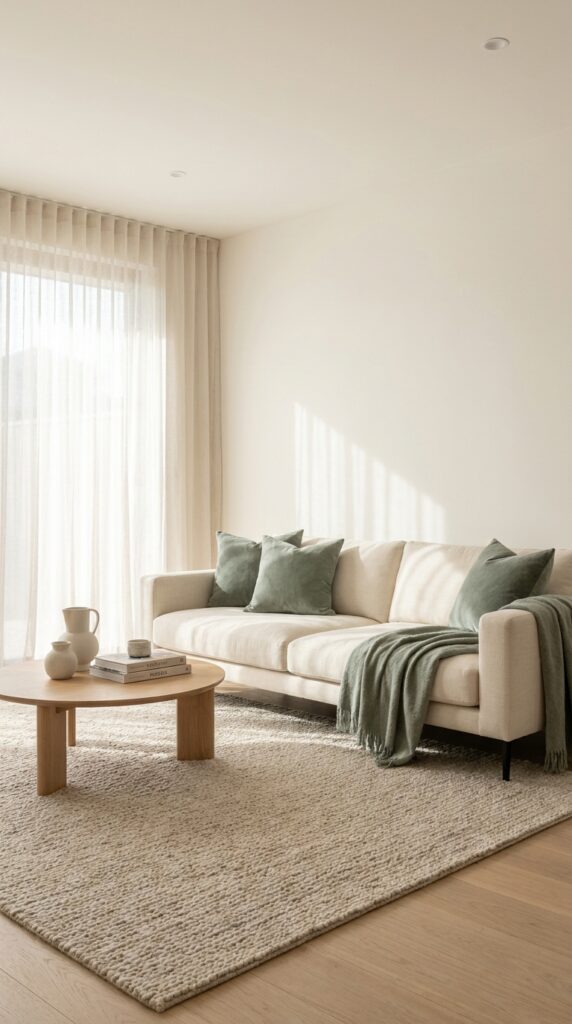
The color palette is the foundation of every successful minimalist interior. Warm whites, soft creams, muted beiges, and warm grays create a sense of calm flow that cool, bold colors rarely achieve. The trick is layering similar neutral tones across your walls, furniture, and textiles so the room feels unified rather than flat. Add one subtle accent — a dusty sage, soft terracotta, or warm sand — to prevent the space from feeling sterile. A warm neutral palette makes every room feel bigger, lighter, and more genuinely inviting.
2. Treat Empty Space as a Design Choice
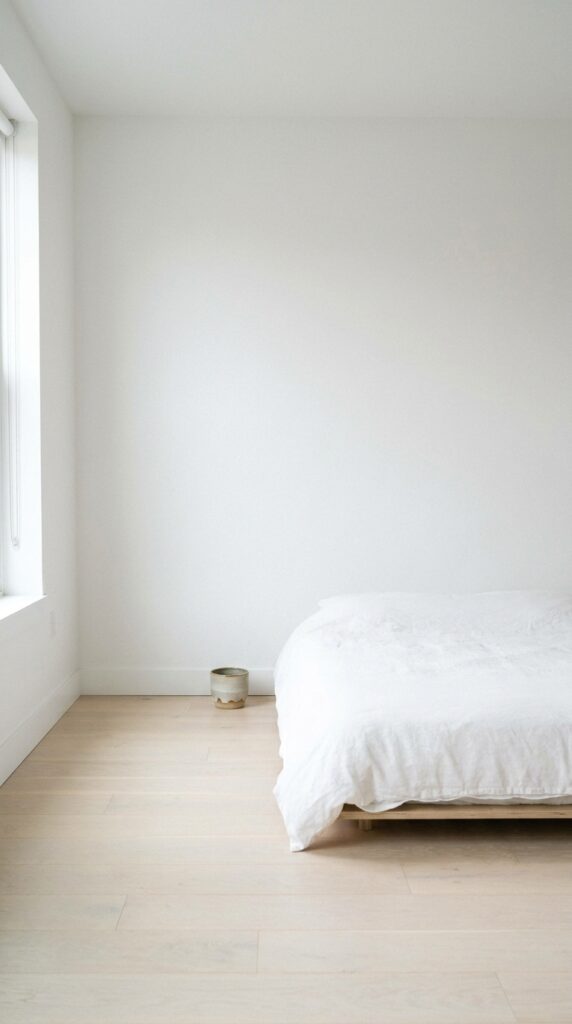
One of the biggest mindset shifts in minimalist home interior design is learning to see empty space as intentional rather than unfinished. Leaving a wall bare, keeping a surface completely clear, or placing just one piece of furniture in a room creates visual breathing room that actually feels luxurious. Interior designers call this negative space — and in 2025 it is being treated as a feature, not a gap. Resist the urge to fill every corner. When a room can breathe, it automatically feels more calm, open, and expensive.
3. Choose Furniture That Does More Than One Job
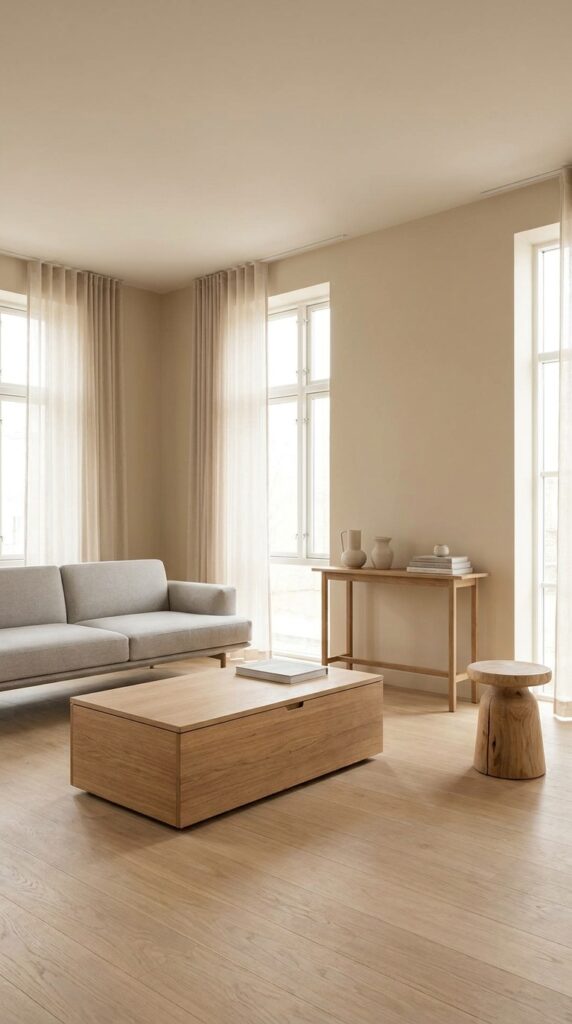
In a minimalist home, every single piece of furniture needs to justify its presence. Choose pieces with clean, simple silhouettes that serve more than one function — an ottoman with hidden storage, a bed frame with built-in drawers, a bench that doubles as a dining seat and hallway storage. Multi-functional furniture reduces the total number of pieces in a room while increasing what the room can do. This is especially powerful in smaller apartments where square footage is limited and every design decision carries serious visual weight.
4. Let Natural Light Do the Heavy Lifting
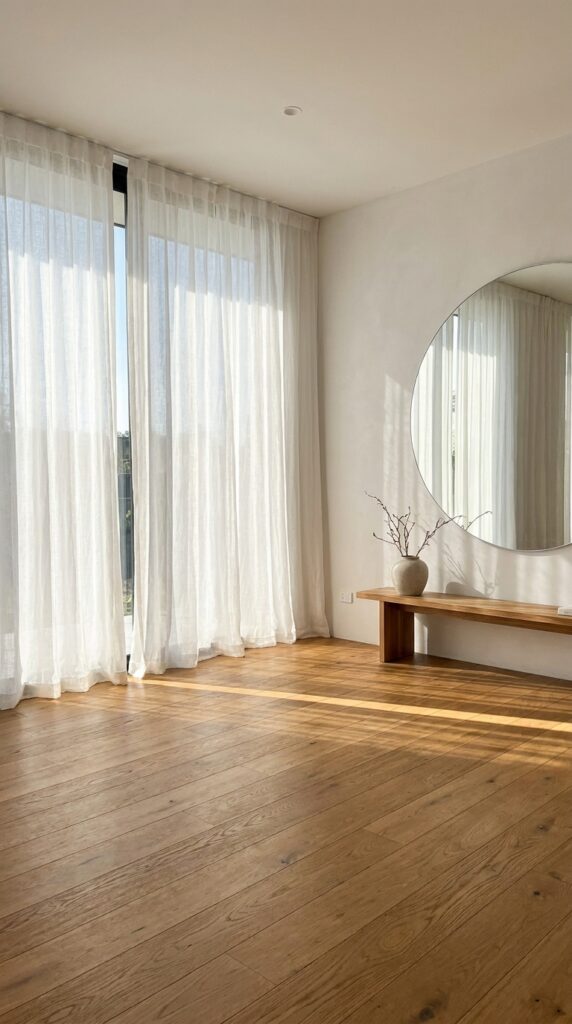
Natural light is the most powerful design tool in any minimalist interior — and it costs absolutely nothing. It opens up space, lifts mood, makes neutral palettes glow, and reduces dependence on artificial lighting that flattens a room. Keep window treatments simple: sheer linen panels or nothing at all. Position mirrors strategically to bounce daylight deeper into darker corners. Clear every windowsill completely. The more natural light you invite in, the less you need to fill the room with anything else. Light is the original minimalist design element.
5. Declutter Completely Before You Decorate
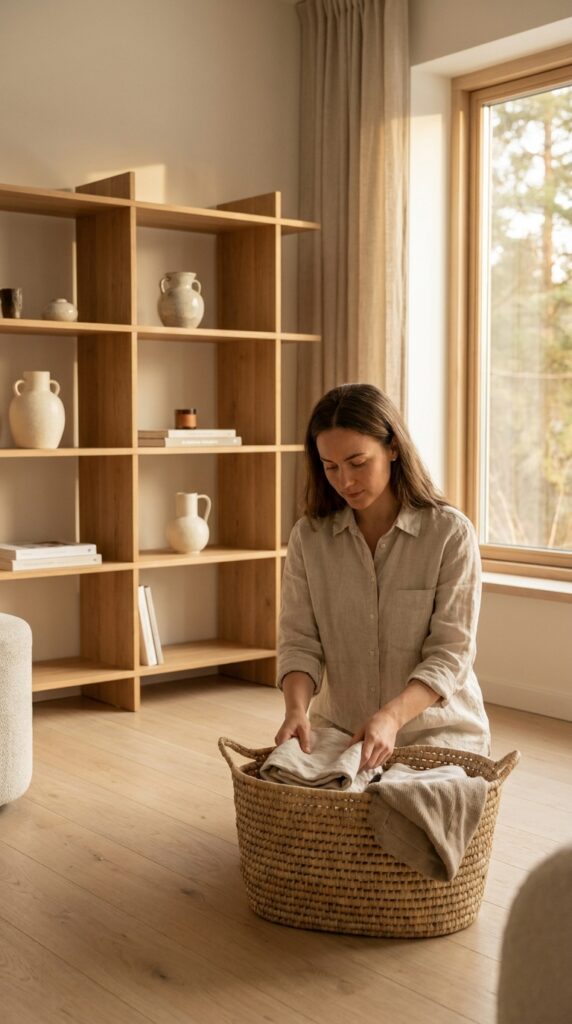
No styling choice, color palette, or furniture upgrade can fix a cluttered room. Decluttering is the non-negotiable first step in minimalist home interior design — and it costs nothing. Before moving or buying a single thing, go through every drawer, shelf, and surface and remove anything you haven’t used in a year, anything broken, and anything that no longer fits your life. Be completely honest with yourself. Once the excess is gone, you will be shocked at how different — how calm, how spacious, how intentional — your home already feels without changing anything else.
6. Add Nature Through Biophilic Design Elements
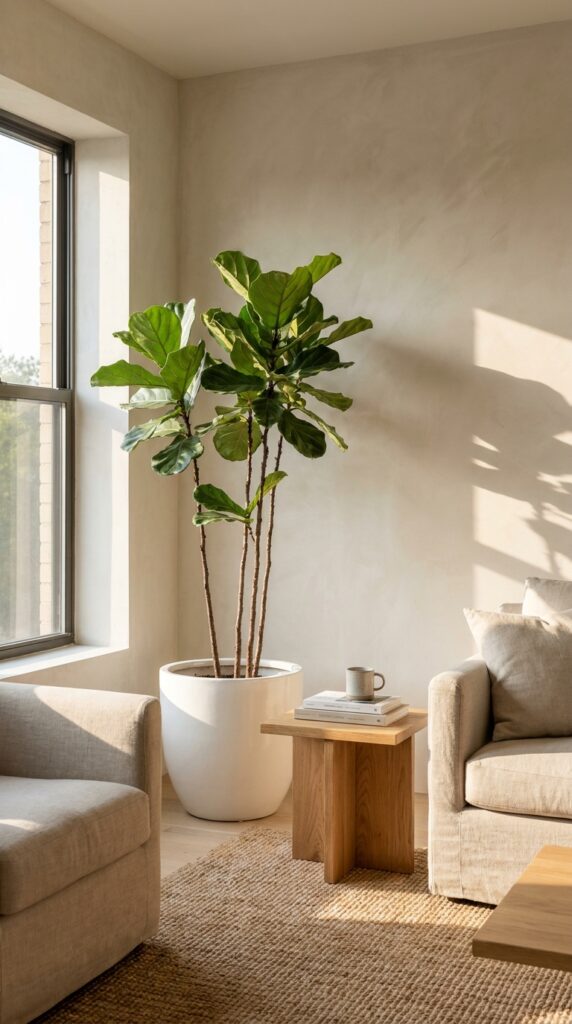
Biophilic design — bringing natural elements into interior spaces — is one of the most effective ways to keep a minimalist home from feeling cold or sterile. A single large statement plant in a simple ceramic pot, a narrow vase with a single branch, or a wooden bowl holding smooth river stones adds organic warmth and quiet life without introducing clutter. In 2025, designers are consistently pairing minimalist structure with natural living elements that ground a space and make it feel genuinely human — connected to the world outside without being overwhelmed by it.
7. Layer Textures Instead of Colors for Visual Warmth
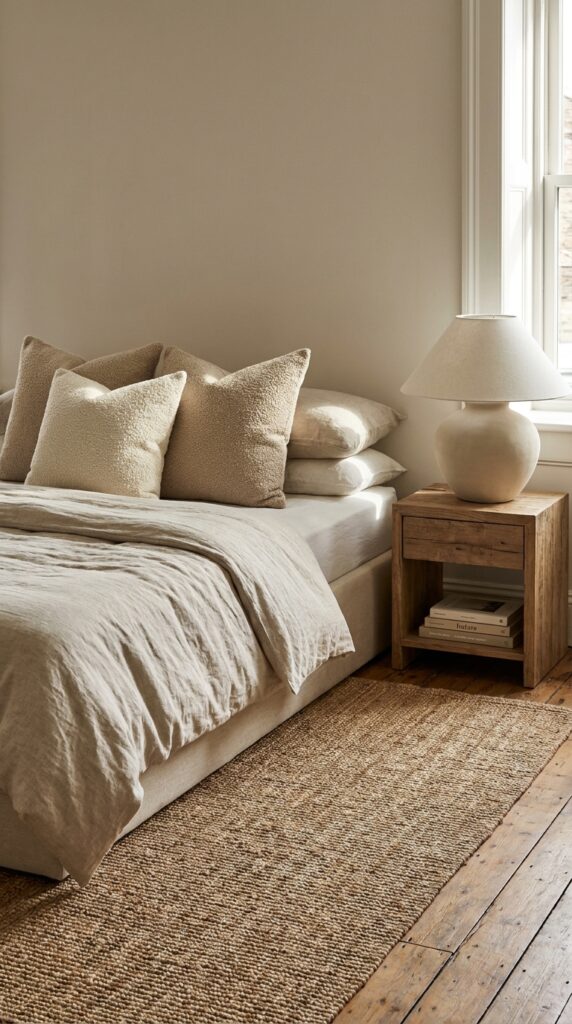
Minimalist spaces don’t have to feel flat or boring — and texture is the secret that makes the difference. By layering different tactile surfaces within the same neutral color palette, you create visual richness that feels sophisticated rather than busy. Think a chunky knit throw on a smooth linen sofa, a jute rug over a polished wood floor, a matte ceramic vase beside a marble tray. The colors stay consistent while the surfaces vary dramatically. This approach — often called layered minimalism — is one of the defining interior design moves of 2025 and beyond.
8. Go Vertical With Built-In Hidden Storage
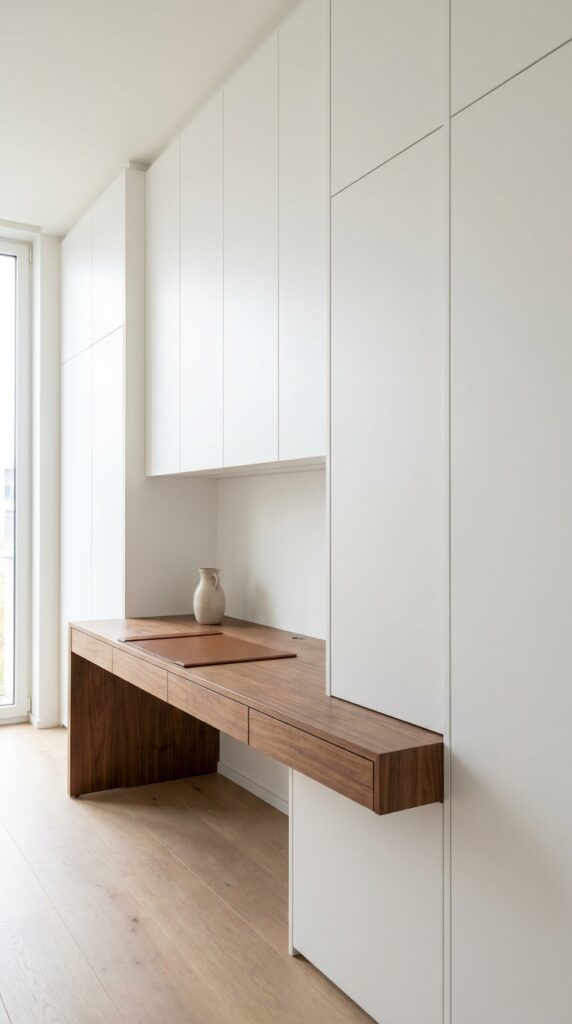
Clear surfaces are the visual hallmark of a minimalist home — but that doesn’t mean living without your belongings. The answer is going vertical and going hidden. Floor-to-ceiling built-in shelving, wall-mounted cabinets, under-bed drawers, and furniture with concealed compartments keep everyday items completely out of sight. When storage becomes architecture — built into the walls themselves — it stops competing visually with the room and becomes part of the clean, seamless design. Concealed storage lets you live fully in your home while still maintaining that essential sense of order and visual calm.
9. Invest in One or Two Statement Quality Pieces
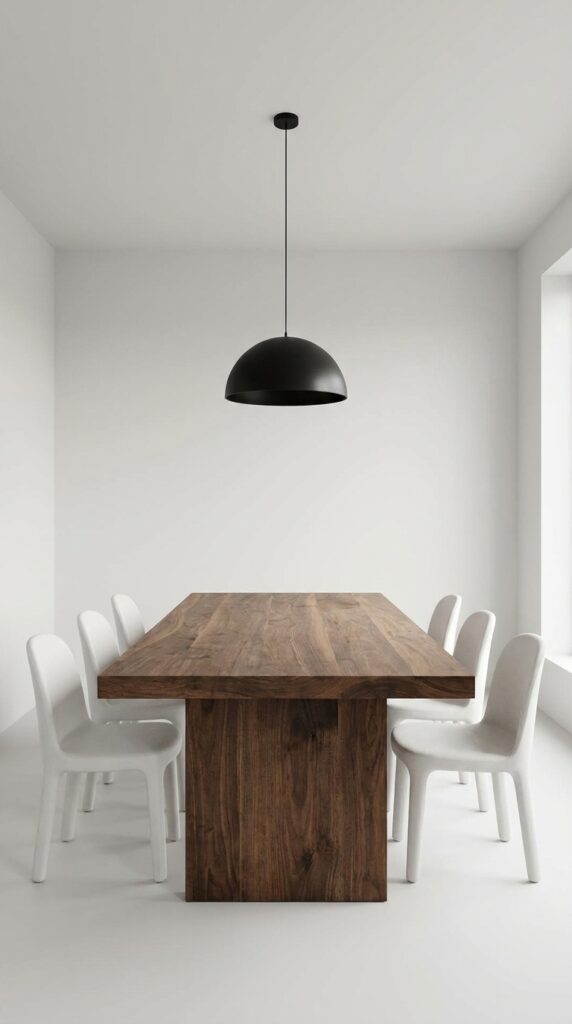
Minimalism is not about spending less — it is about spending better and choosing more carefully. Rather than filling a room with many average items, invest in one or two genuinely beautiful, well-made pieces and let everything else around them stay simple and quiet. A solid walnut dining table, a sculptural lounge chair, or a handcrafted ceramic pendant light — these single pieces become the soul of a minimalist room. One truly exceptional piece surrounded by simplicity will always create more visual impact than ten mediocre ones competing for attention in the same space.
10. Design Your Kitchen Around Hidden Appliances
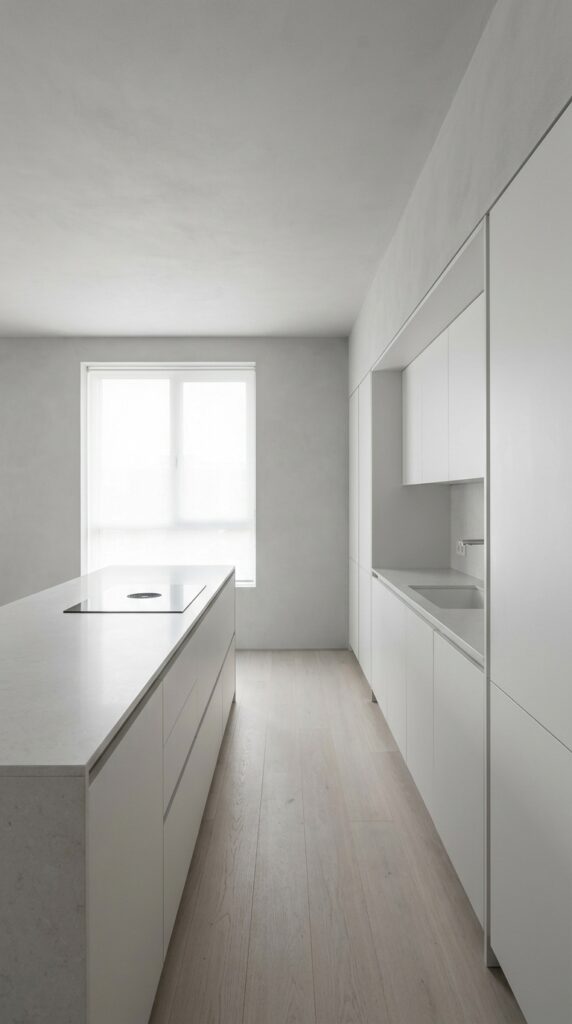
The kitchen is typically the most visually chaotic room in any home — and it is also one of the most transformative spaces for minimalist principles. A minimalist kitchen conceals as much as possible: appliances disappear behind panel-matched cabinet doors, countertops are kept completely clear, and flat-front handleless cabinets in a single consistent tone — warm white, soft greige, or sage — create a seamless, uninterrupted surface that reads more like architecture than cabinetry. The result is a kitchen that feels calm and clean to cook in, not stressful to look at.
11. Explore the Japandi Aesthetic for Warmth With Restraint
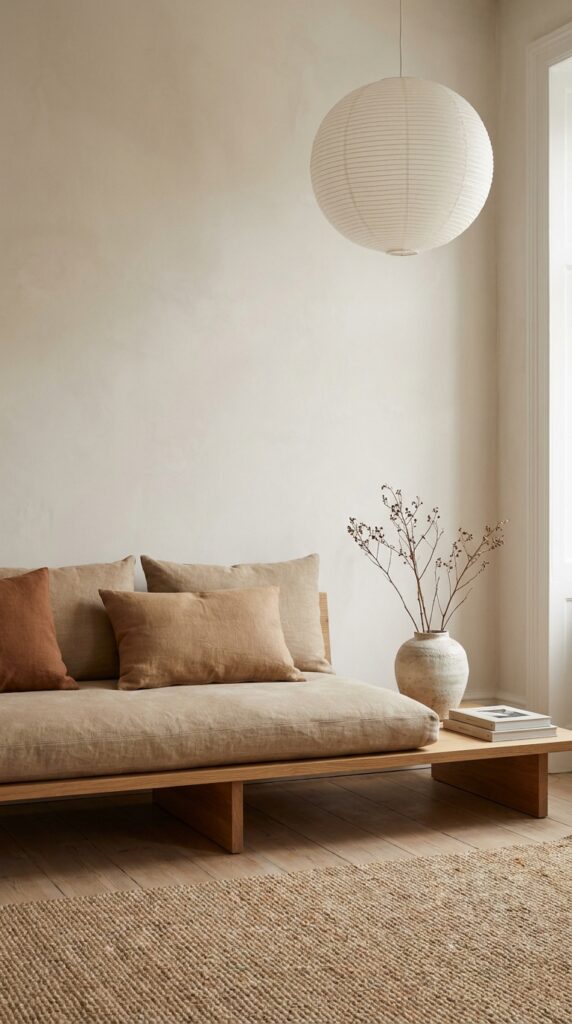
Japandi is the design hybrid that pairs Scandinavian warmth with Japanese restraint — and it remains one of the most beloved approaches to minimalist home interior design in 2025. Low-profile furniture in natural wood tones, handmade ceramics, washi paper lighting, muted earth tones, and deeply intentional negative space all come together in a way that feels cozy rather than cold. Japandi proves that minimalism doesn’t have to sacrifice comfort or personality. It is minimalism with genuine soul — structured and simple on the outside, warm and considered on the inside.
12. Make Your Bedroom a True Rest Sanctuary
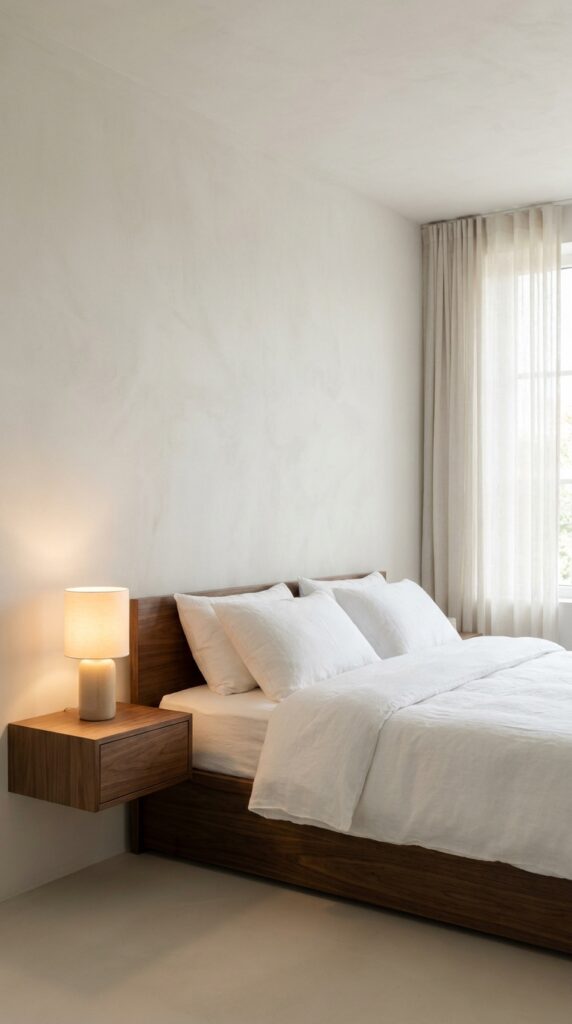
The bedroom is the single most important minimalist space in your home because it directly shapes your sleep quality, your stress levels, and how you begin every morning. In a minimalist bedroom, the rule is simple: if it doesn’t help you sleep or get ready, it doesn’t belong here. Remove work items, visible cables, exercise equipment, and anything that adds mental noise. Choose a low-profile bed, quality bedding in one or two tones, a single nightstand per side, and one warm light source per corner. The quieter this room is, the better your sleep will be.
FAQs: Expert Minimalist Interior Design
Conclusion
Minimalist home interior design is not about sacrifice — it is about clarity. When you clear the clutter, choose quality over quantity, let natural light work for you, and design around what genuinely matters in your life, your home transforms into something that actually supports you. It becomes a place where you rest better, think more clearly, and feel genuinely at ease. You don’t need a renovation or a big budget to get started. Pick one idea from this list and apply it this weekend. Start small, stay intentional, and watch your entire home begin to breathe again.