
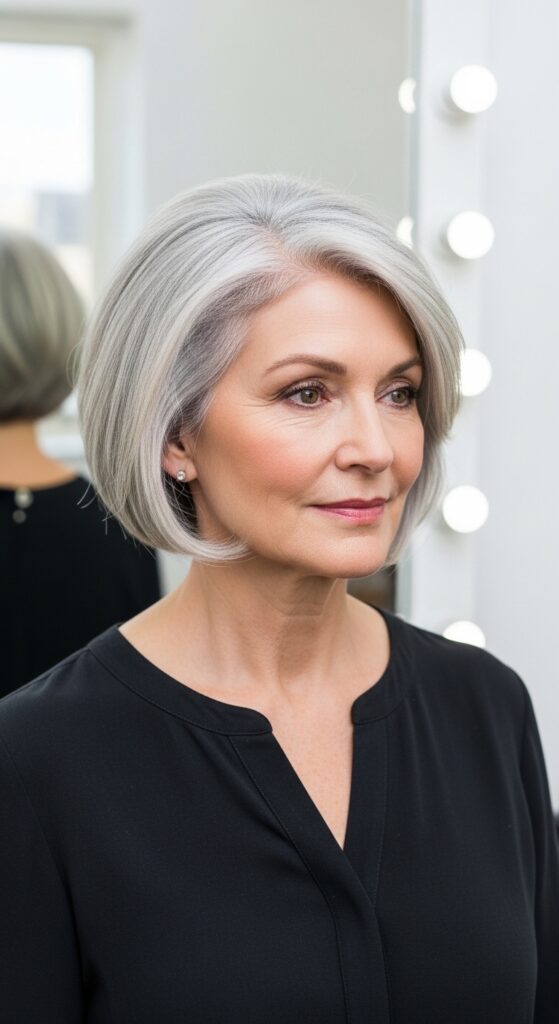
There is a quiet kind of confidence that comes from finding a haircut that simply works. You wake up, run your fingers through your hair, and the shape falls into place without an hour of styling or a shelf full of products.
For many women, hair becomes finer or less dense with age. A cut that once felt effortless may start to fall flat around the crown, separate at the part, or look thinner at the ends. The right short hairstyle can make a noticeable visual difference.
These short hairstyles for older women with thin hair focus on smart shaping rather than complicated maintenance. From soft pixies to polished bobs, each idea creates fullness through clean lines, gentle texture, and thoughtful placement.
Why the Right Short Haircut Matters for Thin Hair
Thin hair does not need heavy styling to look polished. It needs balance.
A well-shaped haircut removes weak, wispy ends and places volume where it matters most: around the crown, jawline, cheekbones, or fringe. Shorter lengths can also feel lighter and easier to manage, especially when long hair begins to lose its natural bounce.
The goal is not to hide your hair. It is to work with its texture.
Before choosing a cut, notice whether your hair feels fine all over, looks flatter near the crown, or appears thinner around the front hairline. That detail helps your stylist recommend a shape that feels natural on an ordinary weekday, not only after a salon blowout.
For more easy-care inspiration, browse these low-maintenance hairstyles for women over 60.
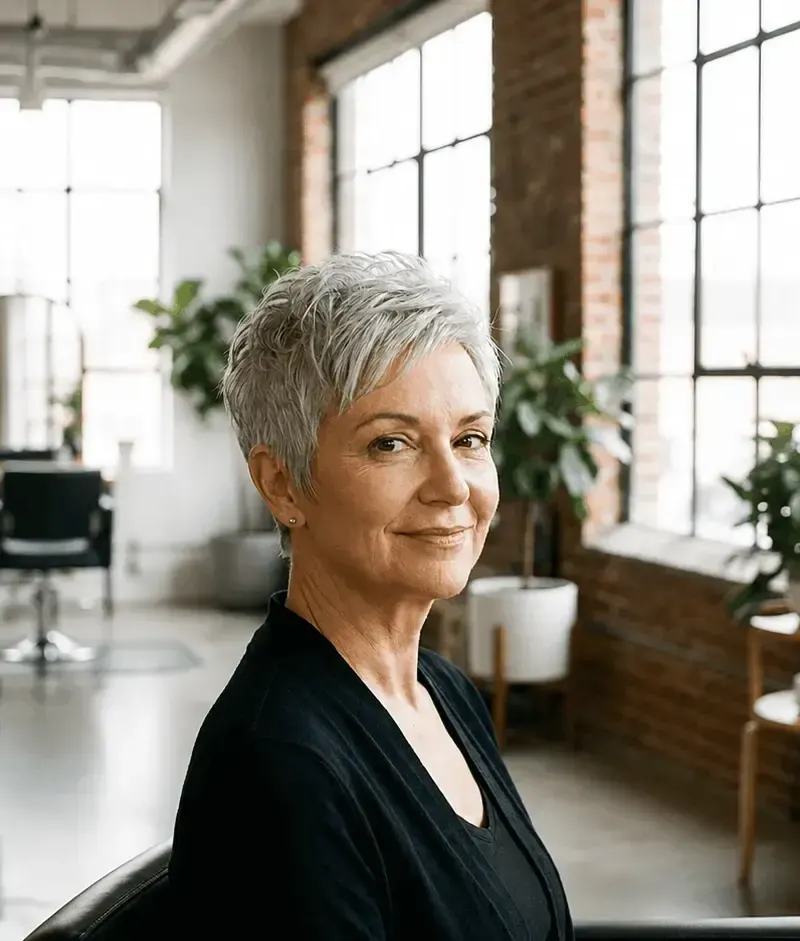
1. Choose a Soft Textured Pixie Cut for Natural Lift
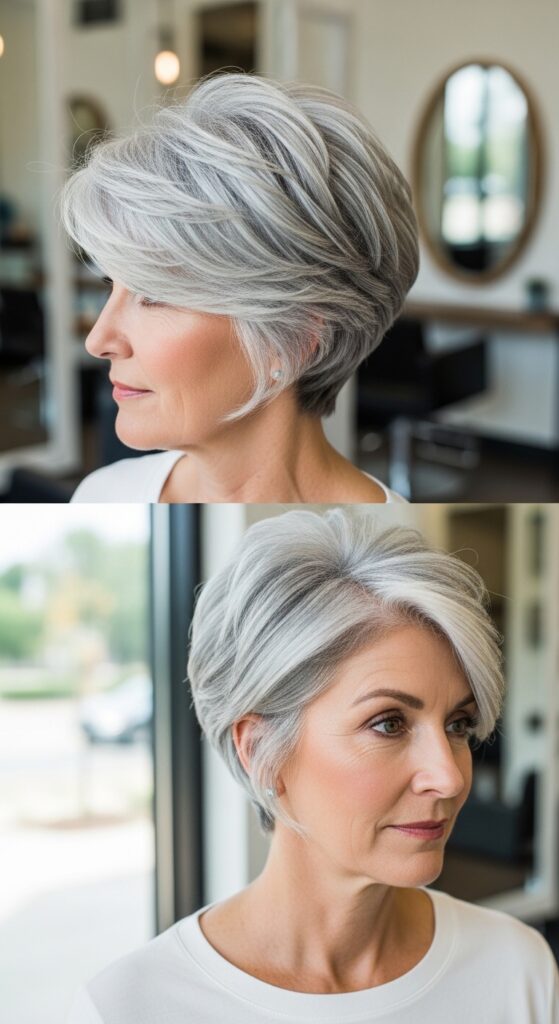
A soft pixie is one of the most practical short hairstyles for fine or thinning hair because it creates movement close to the roots. Ask your stylist to leave slightly longer layers around the crown and front while keeping the sides neat but not overly tight.
This cut works especially well when your hair looks flat after air-drying. A small amount of lightweight styling mousse can add definition without making the strands feel stiff or sticky.
Avoid cutting every section to the same short length. A very rigid pixie may expose sparse areas instead of softening them. Gentle variation gives the hair a more relaxed, fuller appearance.
2. Try a Chin-Length Blunt Bob for Thicker-Looking Ends
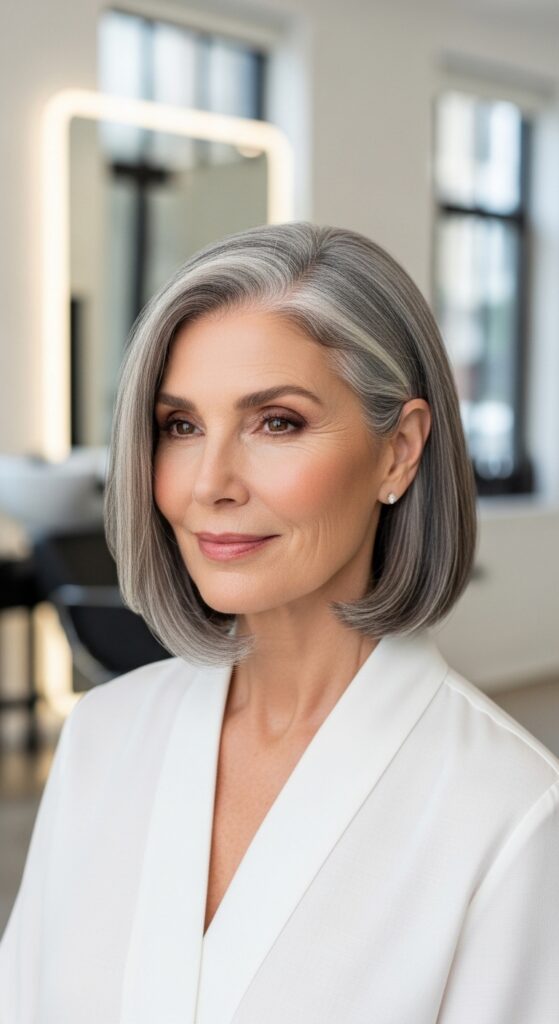
A blunt bob gives thin hair a clean, solid outline. Instead of tapering the ends into delicate wisps, the stylist cuts the hair at a similar length around the perimeter. This creates the appearance of more density near the jawline.
The style works best on straight, softly wavy, or lightly textured hair. Ask for a length that sits close to the chin or slightly below it. A subtle side part can add extra lift near the crown.
Vogue has highlighted blunt, one-length shapes as a strong option for creating a fuller appearance in thin hair. Avoid excessive layering at the bottom, since it can remove the visual weight that makes this bob so flattering.
3. Add Side-Swept Bangs to a Long Pixie
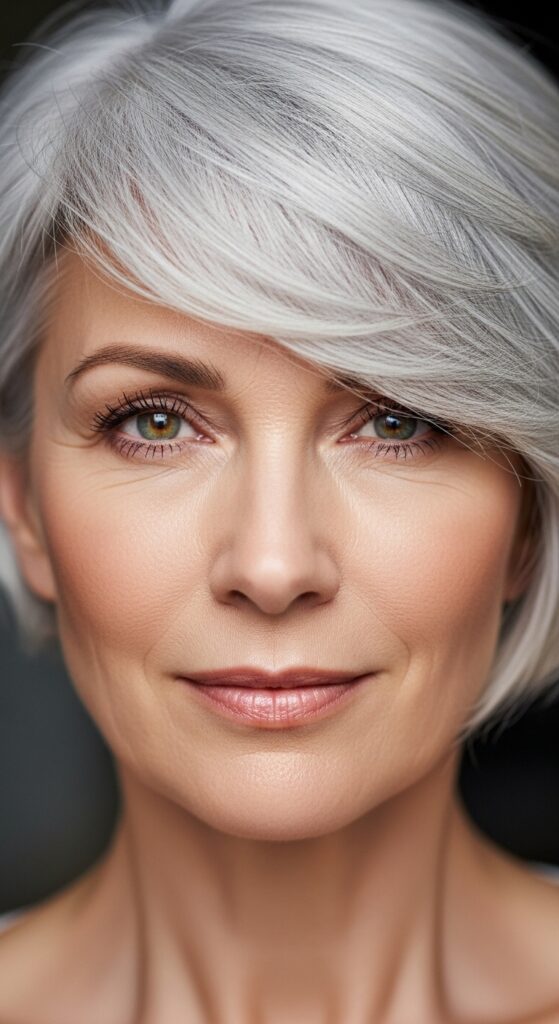
A long pixie with side-swept bangs feels soft, modern, and easy to wear. The longer fringe creates movement across the forehead while drawing attention toward the eyes. It can also make thinning around the temples or front hairline feel less noticeable.
Ask your stylist to leave enough length in the bangs so they sweep naturally rather than sitting in a stiff block. Dry the fringe with your fingertips or a small round brush, directing it gently to one side.
This style works beautifully with silver, white, or salt-and-pepper hair because the layered shape catches light in a subtle way. Avoid applying heavy wax near the roots. A light texturizing spray usually works better.
4. Wear a Rounded Bob With Soft Volume at the Crown
A rounded bob creates a graceful silhouette without looking dated. The shape sits closer to the head at the sides and builds a little more body near the crown and back. That gentle curve makes thin hair look intentional rather than flat.
This cut works best when the hair reaches somewhere between the ears and jawline. Ask for soft internal shaping instead of choppy layers. The final result should move naturally while keeping enough fullness around the edges.
Use a small round brush while blow-drying the crown. Lift the roots lightly, then let the ends fall into place. Avoid teasing the hair too aggressively. Too much backcombing can look stiff and may cause unnecessary breakage.
5. Ask for a Feathered Crop With Airy Layers
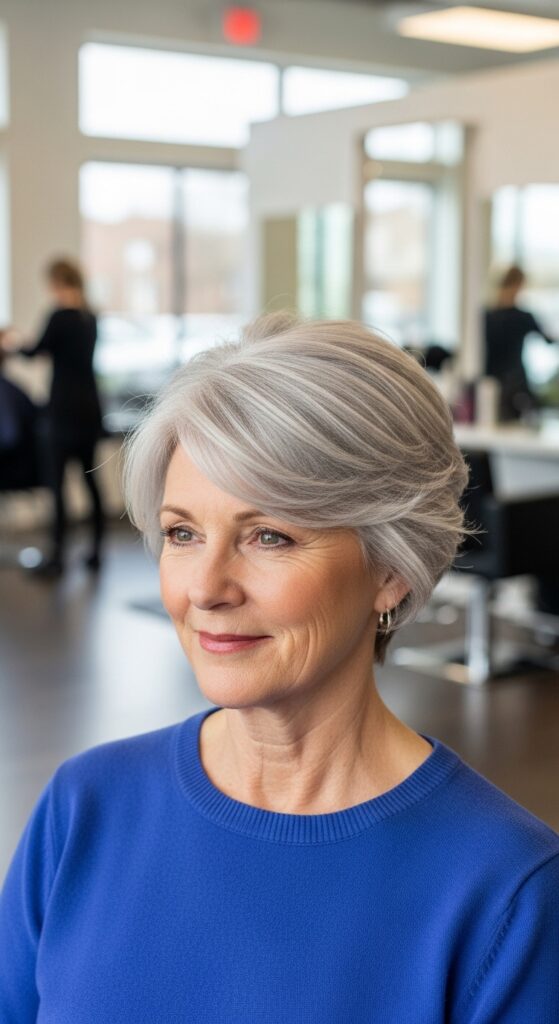
A feathered crop brings softness to short hair without creating a heavy, helmet-like shape. Fine layers around the crown, ears, and forehead give the hairstyle gentle movement. The effect feels light, feminine, and relaxed.
This style works particularly well when straight hair tends to lie flat. Ask your stylist to cut the layers so they blend smoothly rather than forming obvious steps. A little separation between the ends creates dimension.
Style the crop with a lightweight mousse or root-lifting spray. Use your fingers instead of a flat iron whenever possible. The biggest mistake is adding too many short layers around sparse areas. Keep enough length to create coverage and softness.
6. Consider a Tapered Pixie With a Longer Top
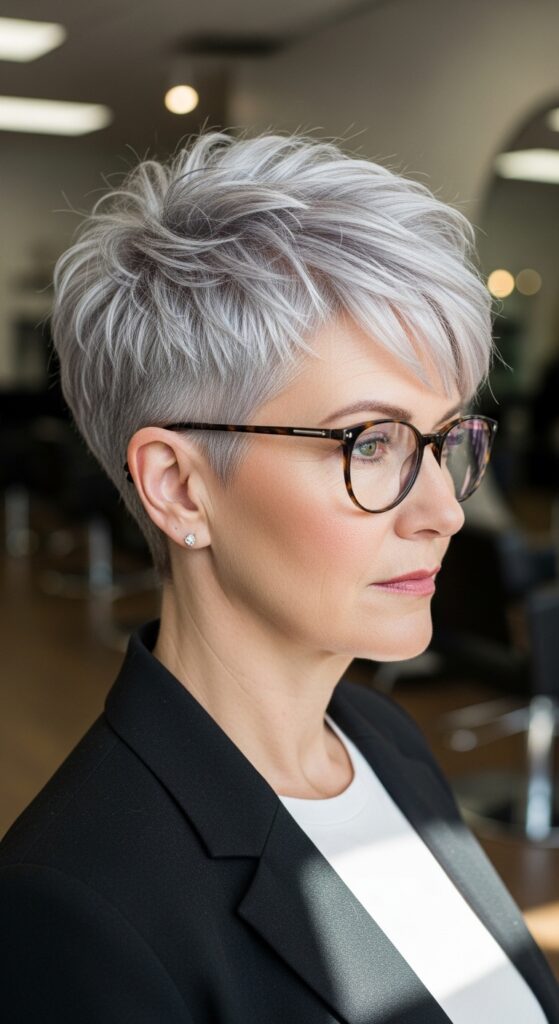
A tapered pixie feels polished but still offers room for styling. The sides and back stay neat, while the longer top creates height and texture. This balance can make the hair appear fuller without requiring a dramatic daily routine.
The cut works well for women who want an elegant, structured hairstyle that still feels modern. Ask your stylist to personalize the taper around your face shape and leave enough length at the top to move the hair slightly forward, upward, or to the side.
Use a pea-sized amount of styling cream and apply it only to the ends. Avoid flattening the top with too much product. The shape should feel airy, not overly sculpted.
7. Choose a Short Stacked Bob for Fullness at the Back
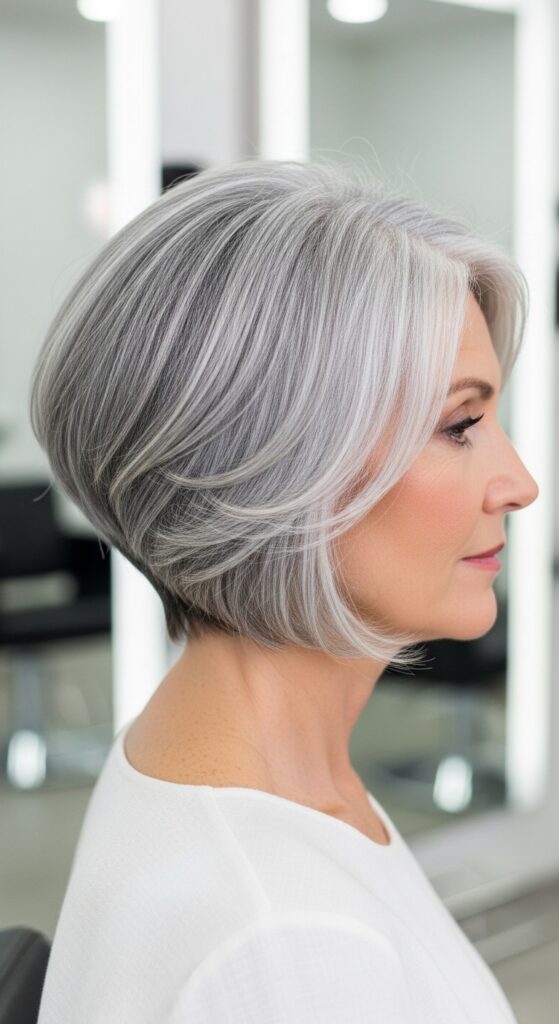
A short stacked bob uses gentle graduation at the back to create a rounded, fuller shape. The hair appears more lifted around the crown while the front pieces frame the face. It is a practical choice when the back of your hair tends to collapse soon after styling.
Ask for a subtle stack rather than a dramatic angle. A softer version usually looks more timeless and grows out more gracefully. The front can sit near the jawline or slightly below it, depending on your preference.
Dry the back with a round brush and direct the airflow downward for smoothness. Avoid overly sharp layers. The cut should create quiet volume, not a bulky shelf at the crown.
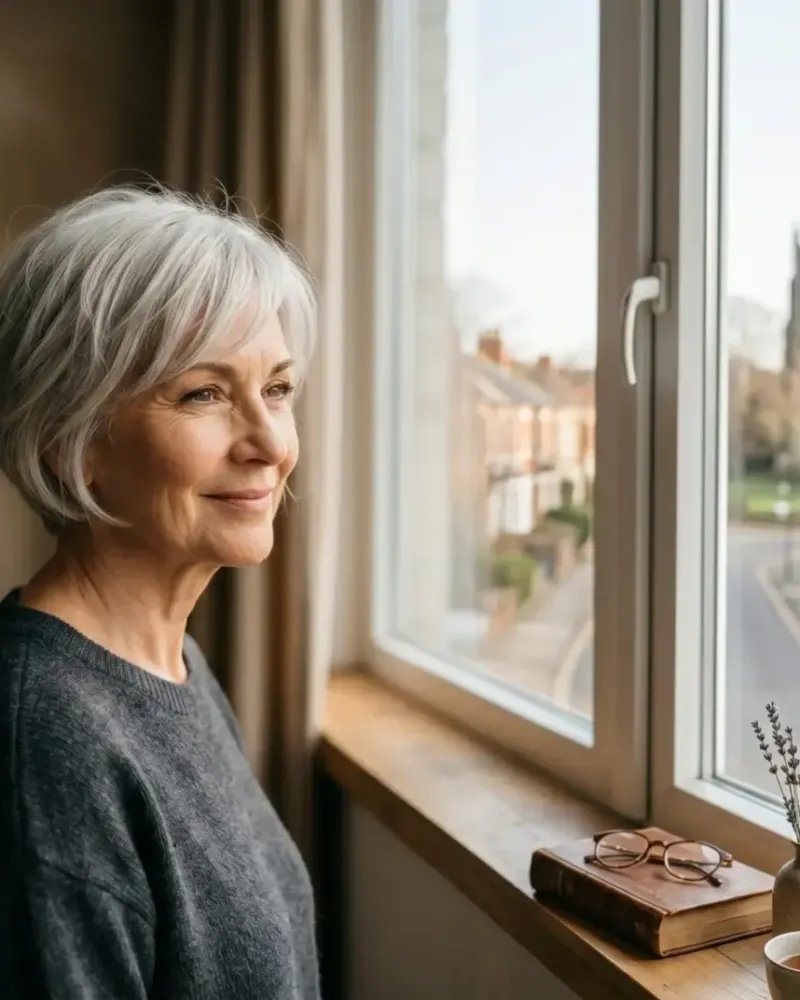
8. Try a Wispy Fringe With a Soft Bob
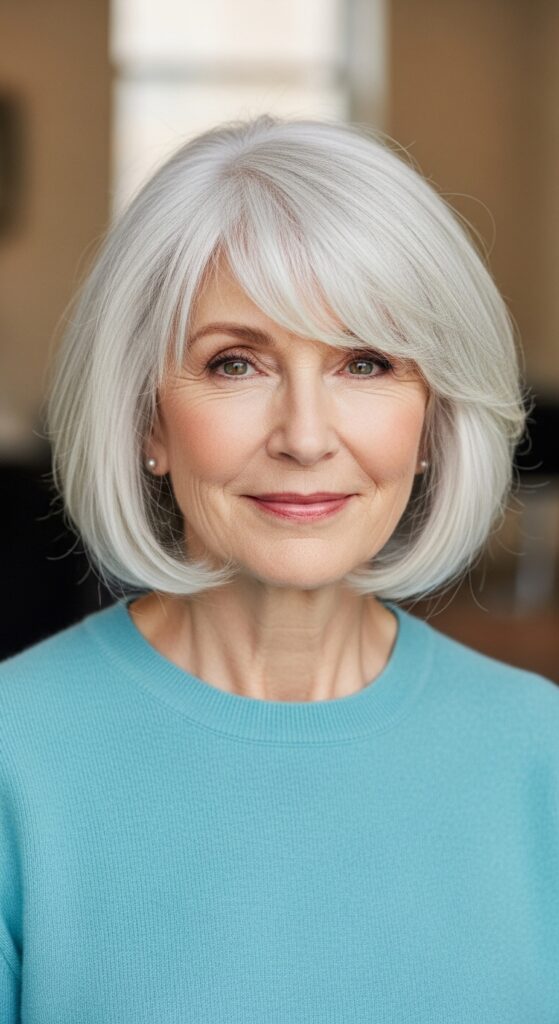
A wispy fringe can refresh a simple bob while keeping the look light and wearable. It gently frames the forehead and adds interest near the eyes without taking too much hair away from the rest of the style.
This option works best when the fringe stays soft and slightly piecey. Ask your stylist for a light, blended shape rather than heavy, straight-across bangs. The rest of the bob can sit near the chin or just above the shoulders.
Style the fringe with minimal product. A quick pass with a small round brush is often enough. Avoid cutting the bangs too thick if your hair already feels sparse near the front. A lighter approach keeps the overall style balanced.
9. Style a Bixie Cut for the Best of Both Worlds
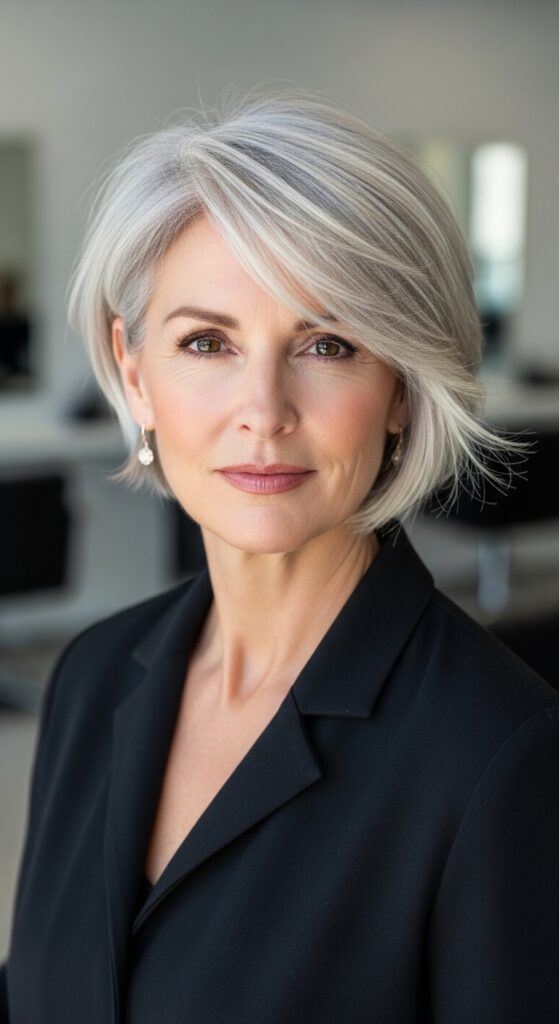
The bixie sits between a bob and a pixie. It offers the ease of short hair with a little extra length around the ears, nape, and face. That flexibility makes it a strong option for women who want movement without committing to a very short crop.
Ask for soft layers through the crown and longer pieces around the cheekbones. The shape should feel gently tousled rather than sharply disconnected. It works particularly well with naturally wavy or slightly textured hair.
Use a light styling foam and scrunch the ends with your fingers. Avoid making every piece perfectly smooth. A little natural movement adds depth and makes thin hair look more dimensional.
10. Wear a Side-Parted Wavy Bob for Soft Movement
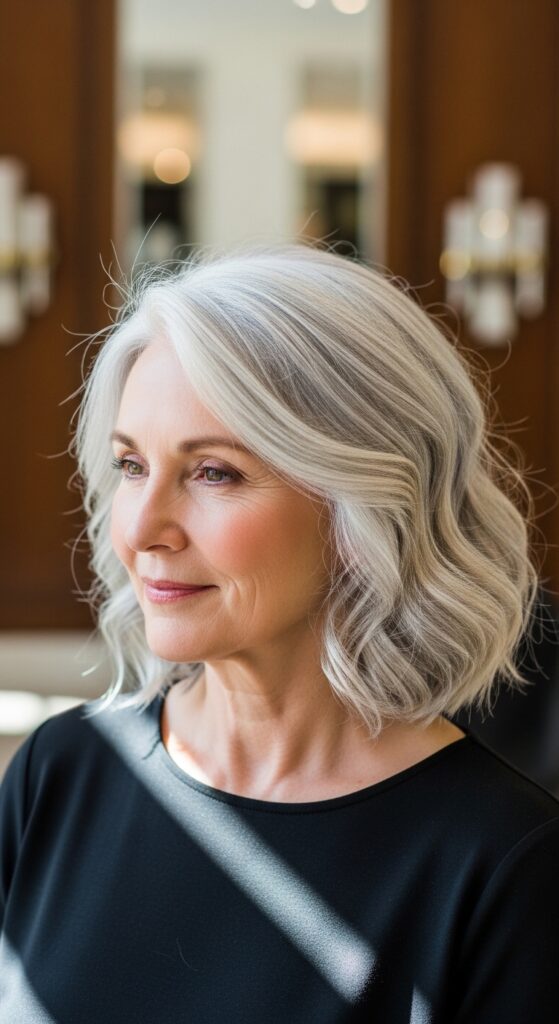
A softly waved bob creates a graceful, lived-in shape. The waves reflect light, break up flat sections, and make the hair appear more textured. A side part adds a little height at the roots and can help soften a visible part line.
This style works best at chin length or slightly below. Use a wide-barrel curling iron on a low or moderate setting, or create gentle bends with a round brush. Brush through the finished waves so they look relaxed rather than tightly curled.
Always use heat protection when styling. Avoid loading the ends with heavy oils, since fine hair can quickly lose its bounce. A flexible-hold spray usually gives enough support.
11. Choose an Ear-Length Bob With Tucked Sides
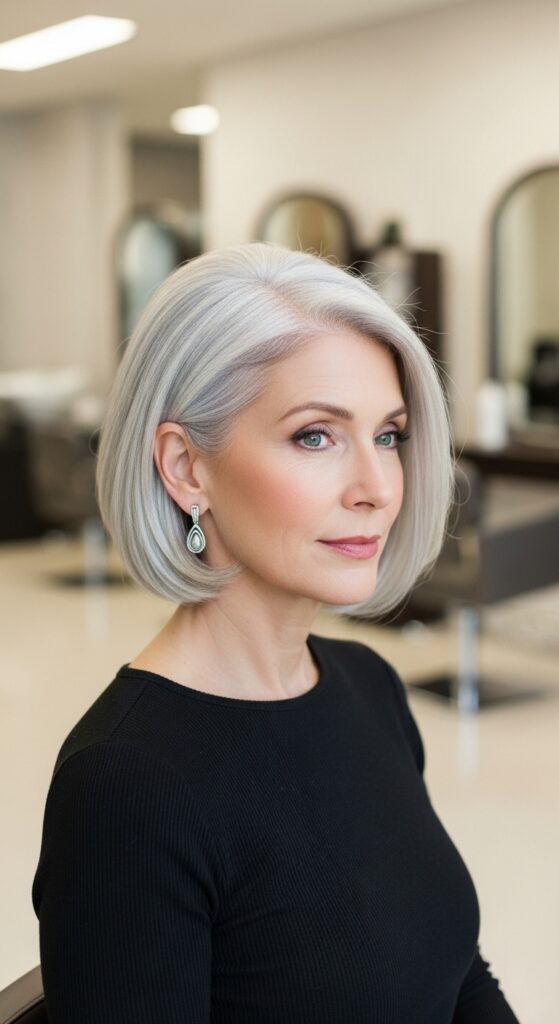
An ear-length bob feels chic, neat, and surprisingly versatile. Tucking one or both sides behind the ears opens the face and creates a clean outline. The shorter perimeter can also make fine hair look more substantial at the ends.
Ask your stylist to keep the line soft rather than severe. A little texture around the crown prevents the style from looking flat. This cut works especially well with glasses, statement earrings, or a naturally confident silver shade.
Use a lightweight smoothing cream on the ends and a small amount of root spray near the part. Avoid over-layering the sides. You need enough density around the edges to keep the bob looking polished.
12. Ask for a Short Shag With Gentle Layers
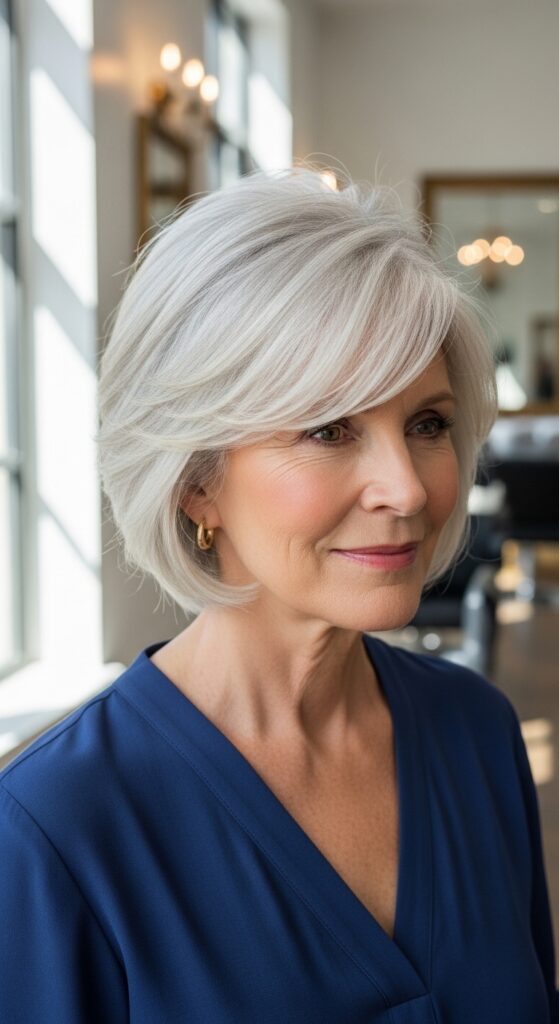
A short shag can work beautifully on thin hair when the layers stay soft and carefully placed. The style creates movement around the crown and face without relying on a perfectly smooth finish. It feels casual, modern, and full of personality.
Ask your stylist for light layers that build body near the top while preserving some thickness near the ends. Curtain-style fringe or a side-swept front section can add extra softness.
The shag works particularly well with natural waves or a slight bend in the hair. Avoid extreme razor-cutting if your ends already look fragile. The best version feels airy and effortless, not overly thinned out.
13. Try an Asymmetrical Bob for a More Defined Shape
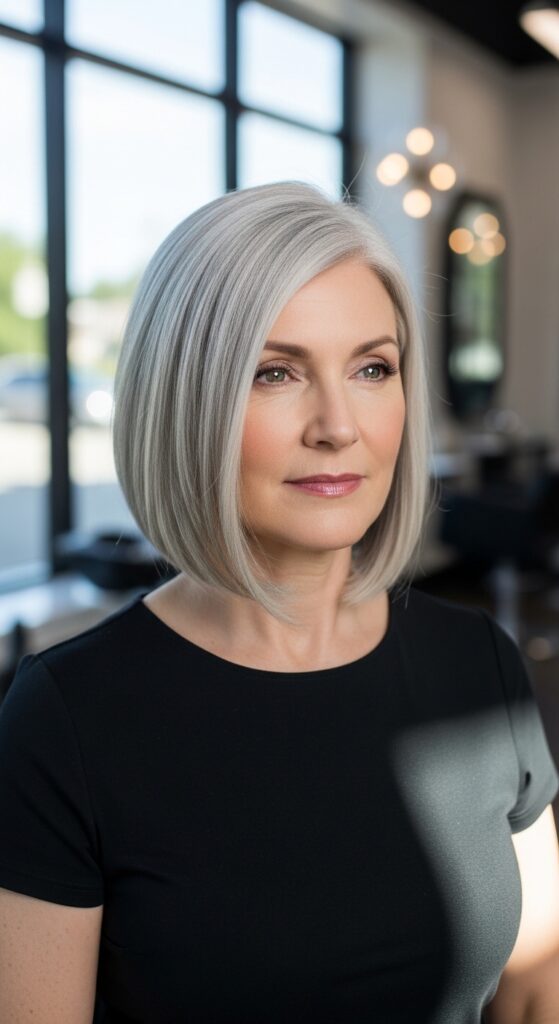
An asymmetrical bob uses a slightly longer section on one side to create a clean, modern angle. That diagonal line gives the hairstyle a stronger visual shape, which can draw attention away from areas that feel less dense.
The difference in length does not need to be dramatic. Even a subtle angle can make a classic bob feel fresh. Ask your stylist to keep the ends fairly solid so the hair still looks full.
This style works well on straight or lightly wavy textures. Wear it with a side part for a smooth, polished finish. Avoid combining a sharp angle with too many short layers. One strong detail creates a more refined result.
14. Add Soft Curls to a Short Layered Bob
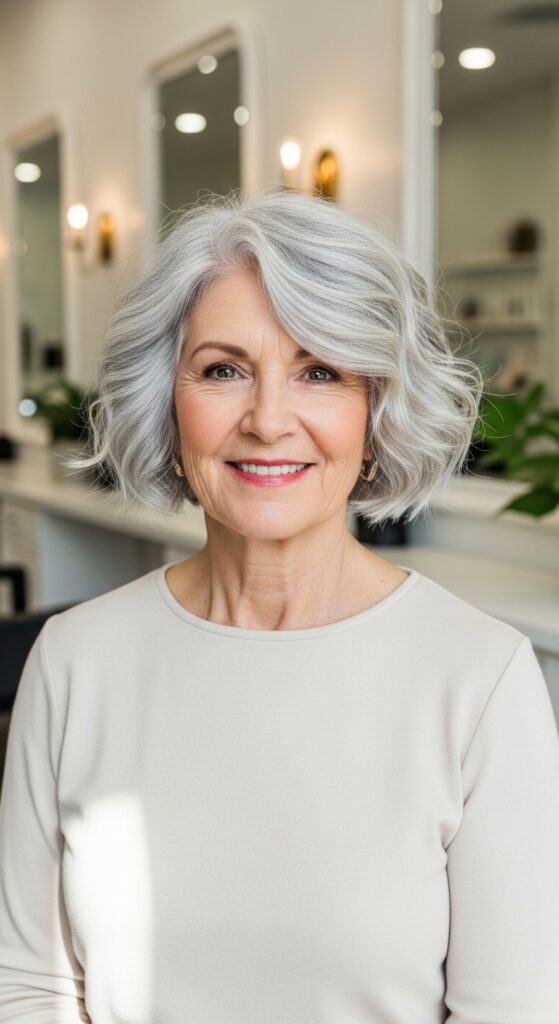
A short layered bob with loose curls can bring life back to hair that feels flat or limp. The curls create space between the strands, which makes the overall style appear fuller and more buoyant.
This hairstyle works especially well for women with naturally curly, wavy, or softly permed hair. Ask your stylist to shape the cut while your texture is visible, since curls can spring upward as they dry.
Use a lightweight curl cream or foam and scrunch gently. Avoid brushing dry curls, since that can create frizz and break up the natural pattern. Keep the layers balanced so the crown gains lift without losing too much density around the sides.
15. Keep It Simple With a Classic Side-Parted Crop
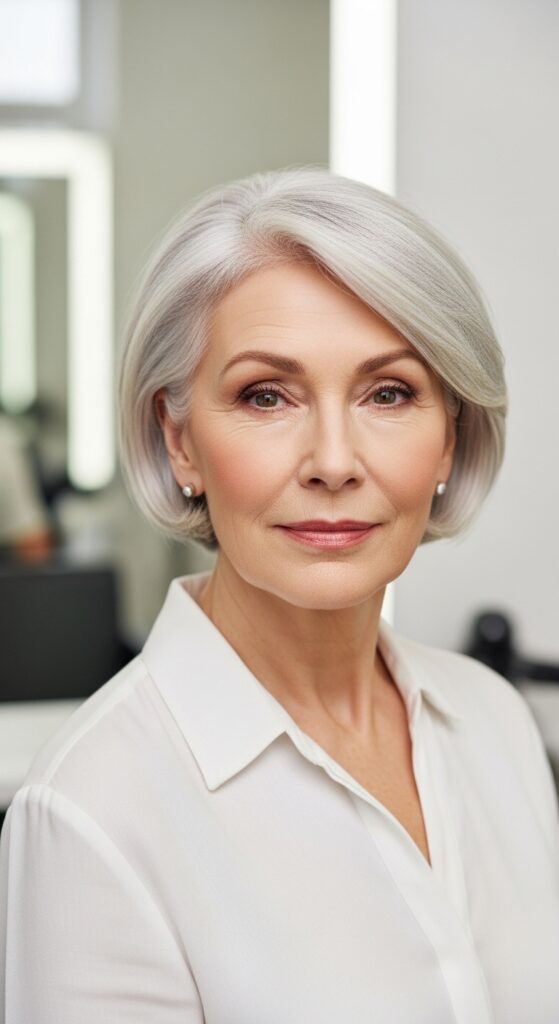
A classic crop never needs to feel boring. With a soft side part, gentle volume at the top, and neatly shaped edges, this haircut creates a graceful frame for the face. It works well for women who prefer a dependable style that looks polished without much effort.
Ask your stylist to keep the front slightly longer than the sides. This gives you room to sweep the hair across the forehead or lift it away from the face. A light root spray can add support after washing.
Avoid overworking the style. The charm lies in its simplicity. A well-cut crop should settle into place with a quick blow-dry and a few fingertip adjustments.
How to Choose the Best Short Hairstyle for Your Hair
Start with your daily routine. A haircut may look beautiful in a saved photo, but it also needs to work on busy mornings, humid days, and weeks when you do not have time for a salon visit.
Bring two or three reference photos to your stylist and ask these questions:
- Will this cut work with my natural texture?
- Where should the volume sit for my face shape?
- How often will I need a trim?
- Which styling product will add lift without weighing my hair down?
- Can we keep enough density around the areas where my hair feels thinner?
Face shape also matters. A deep side part, added crown height, or slightly longer front pieces can change the balance of a short cut. For more ideas, read these haircuts for round faces that create a slimmer look.
A Gentle Note About Hair Thinning
A flattering haircut can make hair appear fuller, but it cannot treat the cause of hair loss.
Fine hair refers to the diameter of each strand. Thin hair refers to lower hair density. Some women naturally have fine or thin hair, while others notice a gradual change over time.
If you see sudden shedding, bald patches, scalp irritation, or a part that continues to widen, consider speaking with a dermatologist. The American Academy of Dermatology also recommends avoiding tight hairstyles that repeatedly pull on the hair.
For general medical information about diagnosis and treatment options, visit the Mayo Clinic hair-loss guide.
FAQs About Short Hairstyles for Thin Hair
What is the best short haircut for an older woman with thin hair?
A blunt bob, soft textured pixie, or tapered crop often works well. The best choice depends on where your hair feels thinnest and how much styling time you want to spend each morning. Clean ends and gentle crown volume usually create the fullest-looking result.
Does short hair make thin hair look thicker?
Short hair can make thin hair appear fuller because it removes wispy ends and reduces weight. A strong perimeter, soft texture, and careful placement of layers can create a more balanced shape. The haircut changes the visual effect, but it does not change the number of hair follicles.
Should thin hair be layered or kept one length?
Both approaches can work. A blunt bob often looks fuller because the ends stay solid. A pixie or crop may benefit from light layers near the crown. Avoid excessive layering through the ends, since it can remove too much density and make thin hair look flatter.
Are bangs a good idea for older women with thin hair?
Yes, but choose a soft fringe. Wispy bangs or side-swept bangs can frame the face without taking too much hair away from the rest of the cut. Avoid an overly thick fringe if your hair feels sparse near the front hairline.
How often should short thin hair be trimmed?
Most short hairstyles look their best with a trim every six to eight weeks. Pixies and tapered crops may need shaping sooner, while a chin-length bob can often grow out more gradually. Ask your stylist for a schedule that suits your cut and budget.
A Short Haircut Should Feel Like a Fresh Start
The most flattering haircut is not always the trendiest one. It is the style that lets you feel comfortable when you catch your reflection in the mirror on an ordinary morning.
Maybe that means a softly layered pixie that takes five minutes to style. Maybe it is a polished bob with clean ends and a gentle side part. Perhaps you want a playful bixie that lets your natural texture show.
Use these short hairstyles for older women with thin hair as a starting point, then make the final choice personal. A thoughtful cut should work with your hair, fit your routine, and help you feel quietly confident every day.
One comment