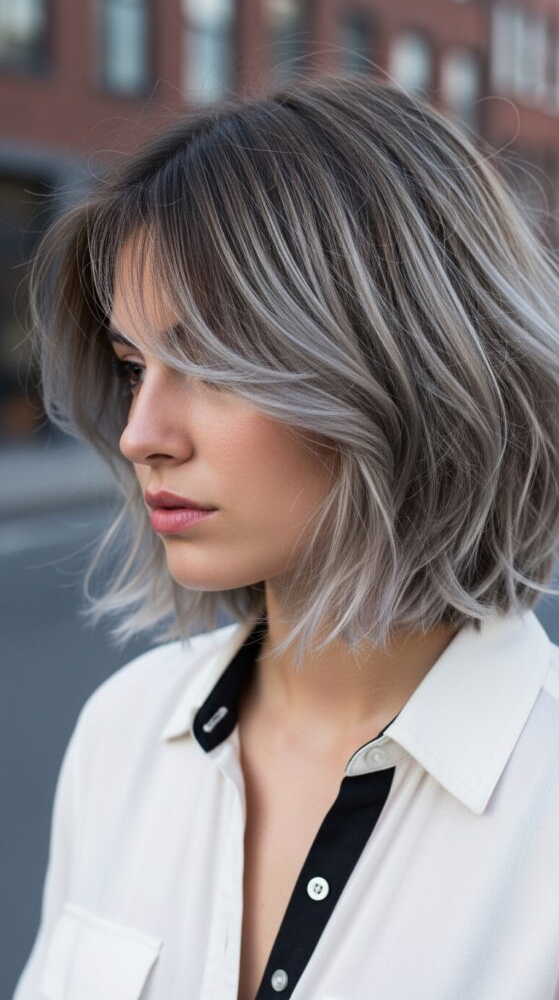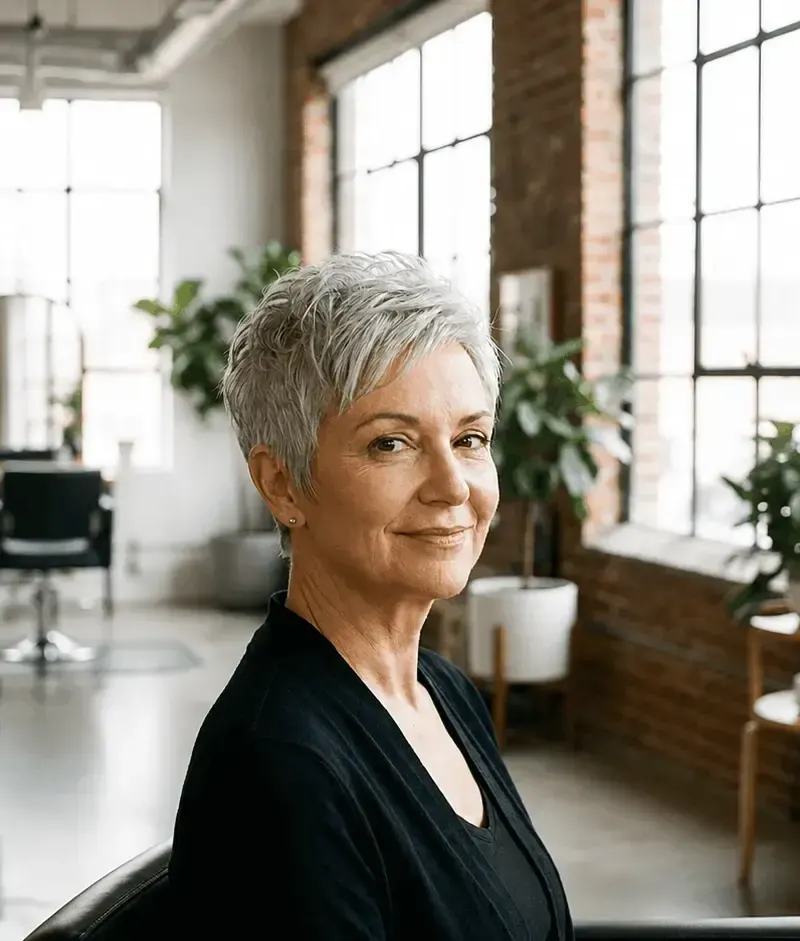
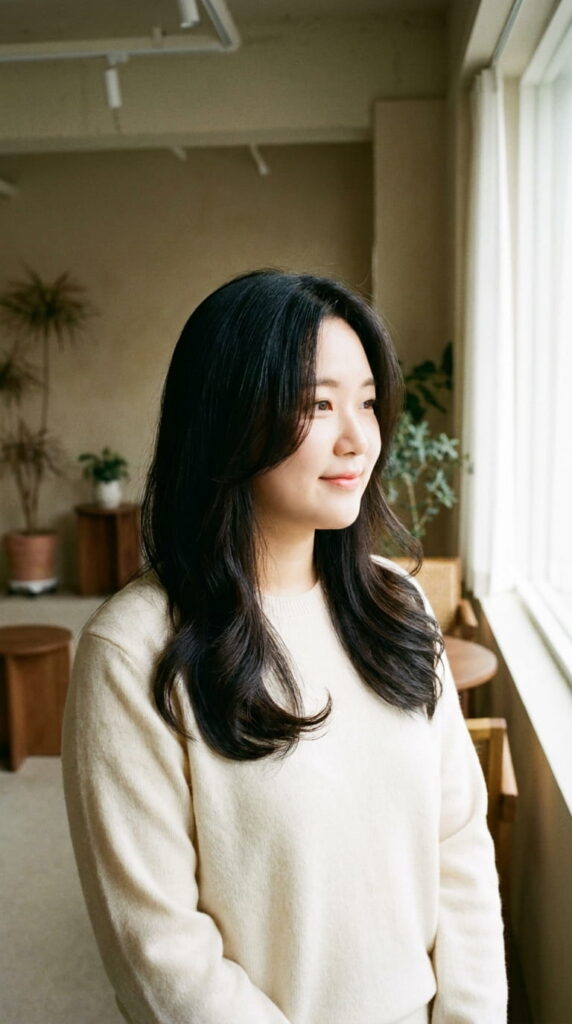
You know the feeling. You sit in the salon chair with several saved photos on your phone, but each one raises the same question: will this hairstyle suit my face?
The best hairstyles for double chin and round face shapes do not hide your features or ask you to follow rigid beauty rules. They create balance through thoughtful lines, movement, texture, and length. A soft layer that begins below the cheek, a fringe that opens around the eyes, or a little height at the crown can change how a haircut frames your face.
The goal is not to chase a smaller-looking face at any cost. It is to find a hairstyle that feels comfortable, fresh, and easy to wear in real life. Whether you love long waves, a polished bob, or a short textured crop, there is a flattering option for your routine and hair type.
Why the Right Hairstyle Can Make Such a Difference
A round face usually has soft curves, fuller cheeks, and similar width and length proportions. A double chin can become more noticeable when a haircut ends at the widest part of the jaw or adds heavy volume beside the cheeks.
The right hairstyle creates a gentle visual flow. Longer pieces guide the eye downward. Side parts add diagonal movement. Crown volume brings height. Soft layers prevent the hair from sitting like a solid block around the face.
Still, face shape is only one part of the decision. Hair texture, density, maintenance time, and personal style matter just as much. As hairstylists quoted by Glamour explain, a good stylist can adapt many popular cuts to suit your features rather than forcing you into a narrow list of rules.
For more general inspiration, read AbodeMom’s guide to haircuts for round faces that create a slimmer look.
1. Choose a Long Bob With a Deep Side Part
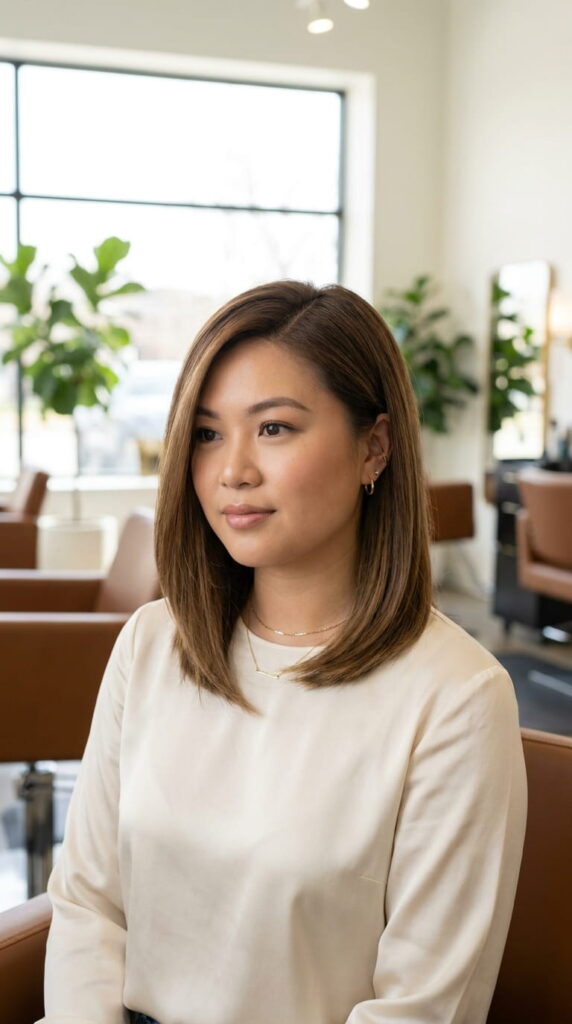
A long bob, often called a lob, works beautifully because it falls below the jawline instead of stopping directly beside it. That extra length creates a cleaner vertical line and helps the face appear more balanced. A deep side part adds a soft diagonal angle, which keeps the style from looking too symmetrical or heavy.
Ask your stylist for a lob that reaches the collarbone or sits an inch or two below the chin. Keep the front slightly longer than the back for a subtle framing effect. This style works best for straight, wavy, or lightly textured hair.
Avoid a thick, chin-level bob with bulky ends. It can draw attention to the widest area of the face.
2. Add Long Layers That Begin Below the Chin
Long layers create movement without building extra width beside the cheeks. The placement matters. Layers that begin below the chin guide the eye downward and allow the hair to fall in soft, lengthening lines.
This option works well for medium to long hair, especially if you want a noticeable update without losing much length. Ask your stylist to keep the shortest face-framing layer below the jaw and blend it gradually into the rest of the haircut.
Style the layers with a round brush, large rollers, or a loose curling iron technique. Keep the waves soft rather than tight.
Avoid short, rounded layers around the cheeks. They can make the sides of the face appear fuller.
3. Try Face-Framing Layers With Loose Waves
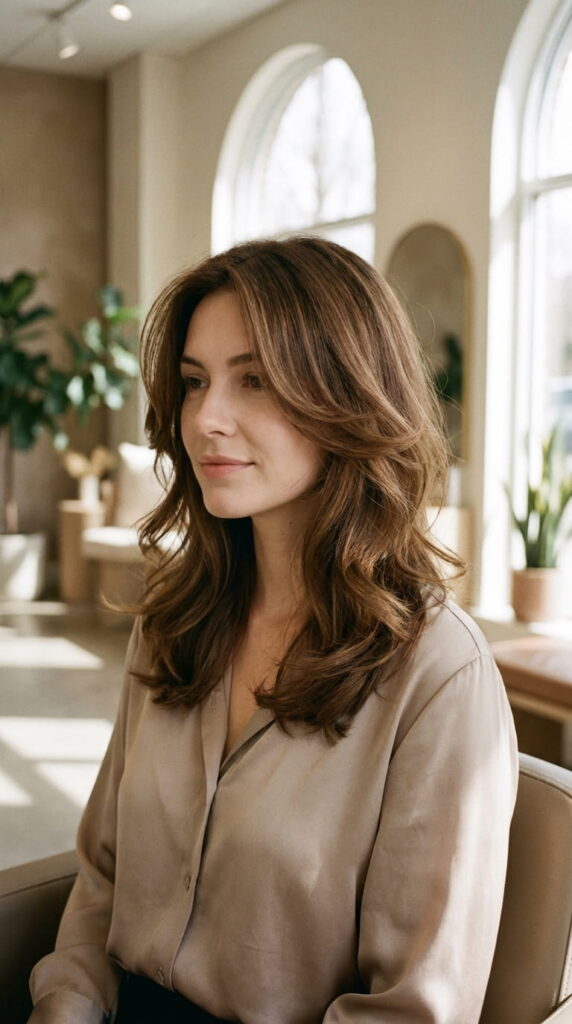
Face-framing layers and loose waves create a relaxed shape that feels polished without looking overly styled. The waves bring movement through the lower half of the hair, while the layers soften the jawline and draw attention toward the eyes.
This hairstyle suits medium and long lengths. It works especially well for naturally wavy hair or straight hair that holds a gentle curl. Ask your stylist for longer pieces that skim the cheekbones and continue below the chin.
When styling, curl sections away from the face and brush them out lightly for a soft finish. Leave the ends slightly relaxed.
Avoid creating large, fluffy curls directly beside the cheeks. Keep the fuller texture below the jawline for better balance.
4. Wear Curtain Bangs With Longer Side Pieces
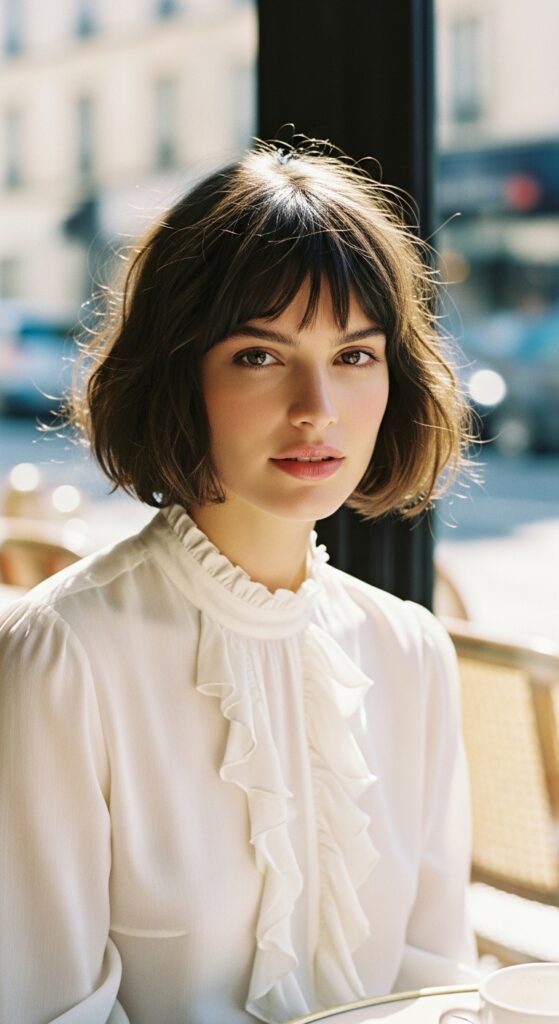
Curtain bangs open at the center and blend into longer side pieces. This creates a soft frame around the eyes and cheekbones without covering the face with a heavy fringe. Vogue notes that curtain bangs can work especially well for round faces because they add definition while keeping the overall look light.
Ask for fringe that feels airy through the middle and gradually becomes longer toward the sides. The outer pieces should blend into your layers near the cheekbone or jawline.
Curtain bangs work with long hair, lobs, and layered shoulder-length styles. They also grow out more gracefully than a blunt fringe.
Avoid cutting them too thick or too short. A wide, solid bang can make the face look shorter.
5. Use a Soft Side-Swept Fringe
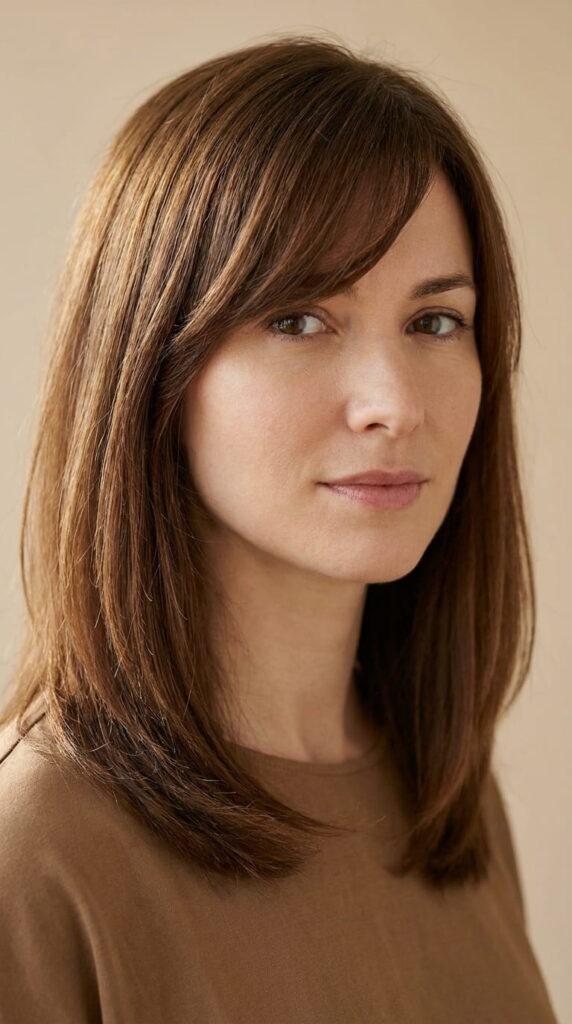
A side-swept fringe creates a diagonal line across the forehead, which adds movement and gently breaks up the roundness of the face. It also draws attention upward toward the eyes.
This style works with short cuts, bobs, lobs, and longer layers. Ask your stylist to keep the fringe soft and long enough to tuck behind the ear when needed. A piecey finish usually looks more natural than a perfectly smooth sweep.
Blow-dry the fringe with a small brush or use your fingers for a relaxed everyday look. Keep the roots light and flexible.
Avoid a thick fringe that sits flat across the forehead. The goal is movement, not a rigid shape.
6. Choose a Collarbone-Length Cut With Textured Ends
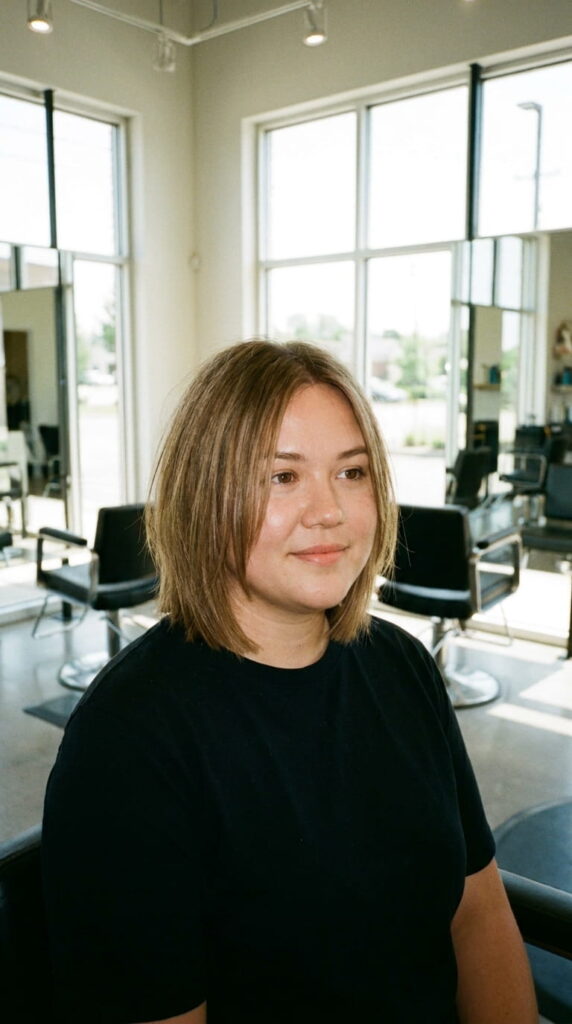
A collarbone-length haircut offers one of the easiest middle-ground options. It feels lighter than long hair but still gives you enough length to create vertical lines around the face. Textured ends prevent the style from forming a heavy block near the shoulders.
Ask your stylist for a soft, slightly layered cut with movement through the final few inches. This length works well for straight, wavy, and moderately curly textures. It also suits anyone who wants a low-effort style that still feels polished.
Use lightweight styling cream or a texturizing spray to keep the ends relaxed.
Avoid excessive thinning near the crown or cheeks. Too many short pieces can create unwanted width and make the style harder to manage.
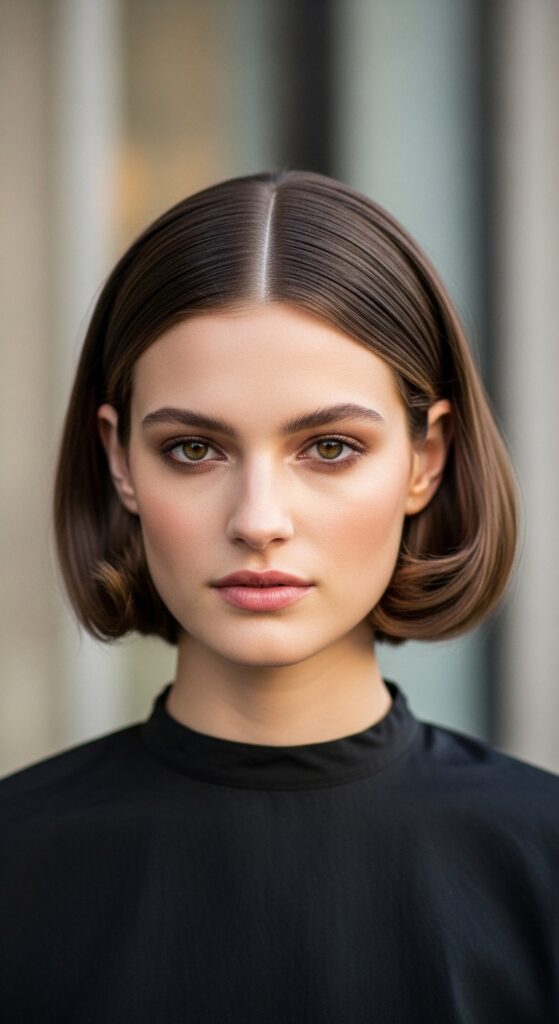
7. Try a Sleek Center-Parted Lob
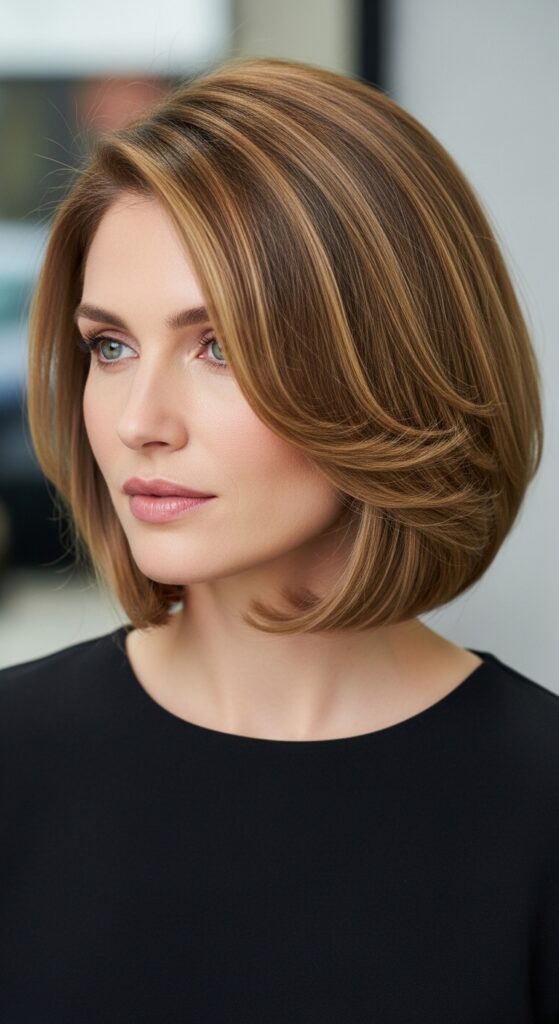
A center part creates symmetry, while the longer length of a lob frames the face with two clean vertical lines. This combination can look modern, calm, and refined. It works especially well when the front pieces sit below the jaw.
This style suits straight hair and lightly wavy hair that responds well to smoothing products. Ask for clean ends with minimal bulk and a length that reaches the collarbone. Use a heat protectant and smooth the hair with a blow-dryer or flat iron when you want a polished finish.
A slight inward bend at the ends can soften the look without adding width.
Avoid cutting the lob at the exact center of the chin. That placement can create a horizontal line across the widest area.
8. Add Crown Volume to a Layered Medium Cut
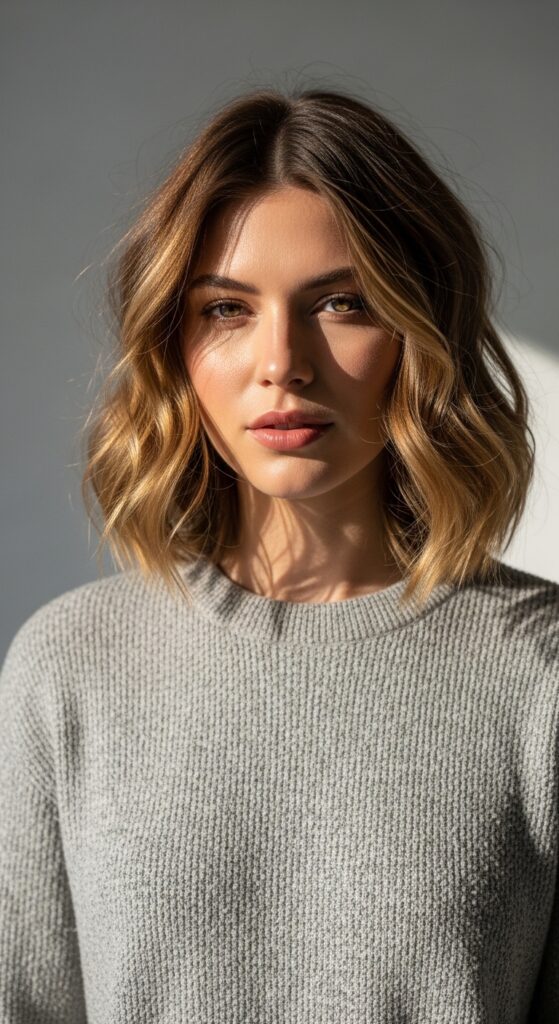
A little lift at the crown can create a longer-looking silhouette. You do not need dramatic teasing or a stiff finish. A soft amount of height can make a noticeable difference while keeping the hairstyle natural.
Choose a medium-length cut with light layering through the top and longer pieces around the jaw. Blow-dry the roots upward with a round brush or use a lightweight root-lifting spray. Velcro rollers can also add gentle volume without making the hair feel crunchy.
This approach works well for fine hair, flat roots, and styles that tend to lose shape during the day.
Avoid adding equal volume on both sides beside the cheeks. Keep the lift focused toward the upper part of the head.
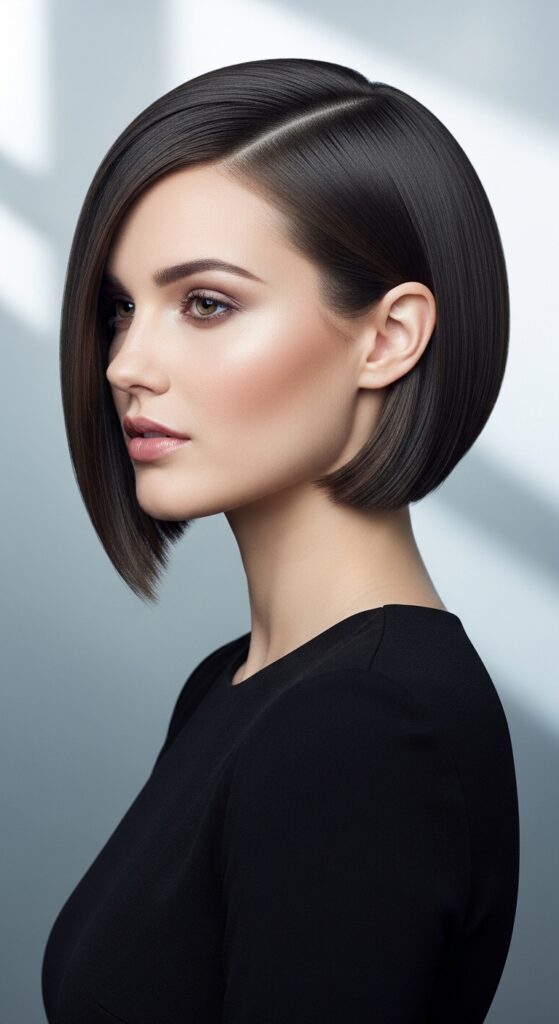
9. Consider an Angled Bob With a Longer Front
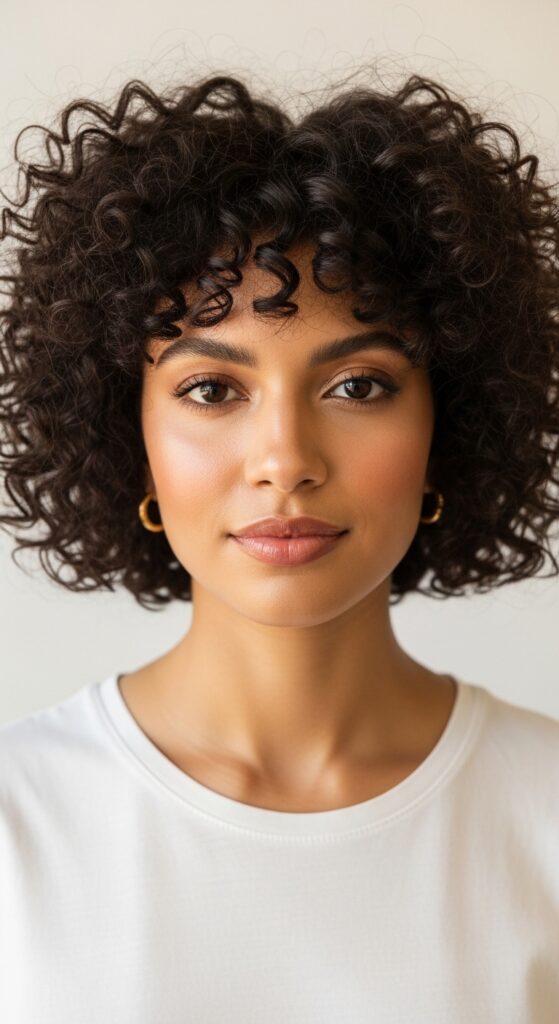
An angled bob creates structure by keeping the front pieces longer than the back. Those extended sections frame the face and create a downward visual line, while the shorter back keeps the haircut fresh and easy to style.
Ask your stylist for a gentle angle rather than an extreme stacked shape. The front should fall below the jawline. This style works particularly well for straight hair, smooth waves, and hair with moderate density.
Use a smoothing cream or light serum to define the outline. A soft side part can add even more movement.
Avoid a heavily rounded back with too much volume at the sides. The strongest version of this cut looks clean, soft, and intentional.
10. Try a Soft Shag With Wispy Layers
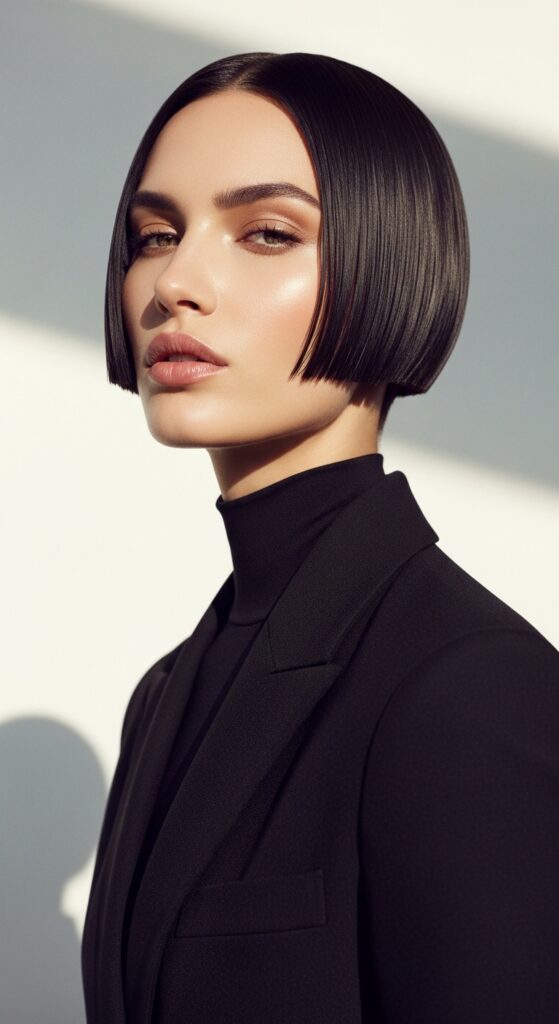
A soft shag brings movement, texture, and personality without creating a severe outline. Wispy layers break up heaviness and give the hair a more relaxed shape. The style can also add subtle lift near the crown, which helps create balance.
Ask your stylist for blended, airy layers and longer pieces around the jawline. Pair the cut with curtain bangs or a soft side fringe if you want extra framing. This hairstyle works especially well for naturally wavy hair and hair that benefits from texture.
Use a small amount of mousse or curl cream and let the hair air-dry when possible.
Avoid overly short layers beside the cheeks. Keep the volume loose and slightly lower for a more flattering finish.
11. Wear Long Hair With a U-Shaped Back
A U-shaped haircut keeps the center length while softening the sides. From the front, the hair falls in longer vertical lines instead of sitting in one thick, flat curtain. This shape works well for anyone who wants to keep long hair but needs more movement.
Ask your stylist for a gentle U-shape at the back with long face-framing layers starting below the chin. Add soft waves through the lower half if you want extra texture.
This cut works for thick, fine, straight, and wavy hair because the stylist can adjust the layering depth.
Avoid a very blunt, one-length finish if your hair feels heavy. A small amount of shaping can make long hair look more intentional and easier to style.
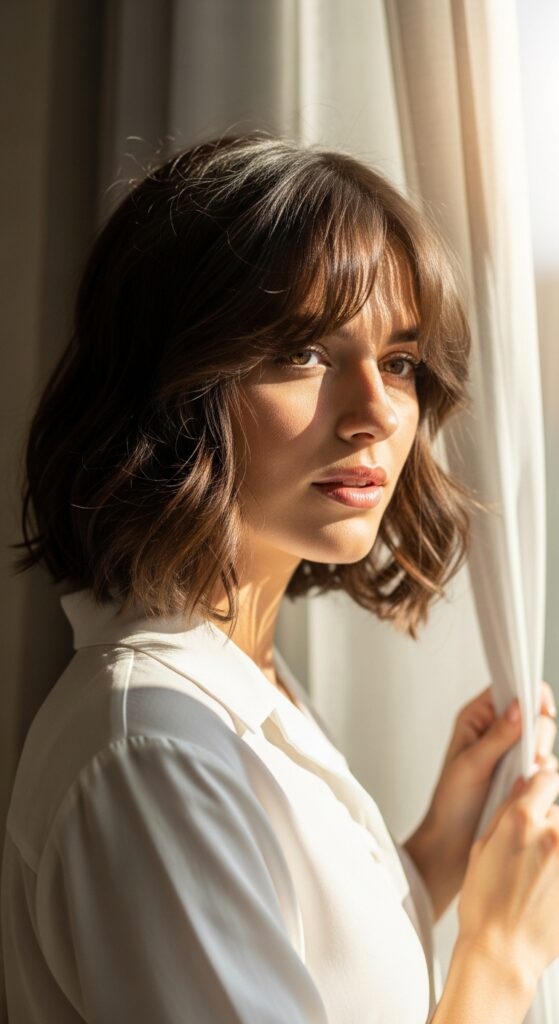
12. Style Loose Beach Waves Below the Jawline
Loose beach waves create a casual, effortless finish, but placement makes all the difference. Waves that begin below the jawline add movement without making the cheeks look wider. They also soften the lower face in a natural way.
Use a curling wand or flat iron to shape a few loose bends through the middle and ends. Alternate the direction of the curls, then gently loosen them with your fingers. Keep the roots smooth or slightly lifted.
This style works beautifully with collarbone-length hair, lobs, and longer cuts.
Avoid starting every curl close to the cheekbone. When the fullest wave sits too high, it can add width. Focus the texture lower for a more balanced result.
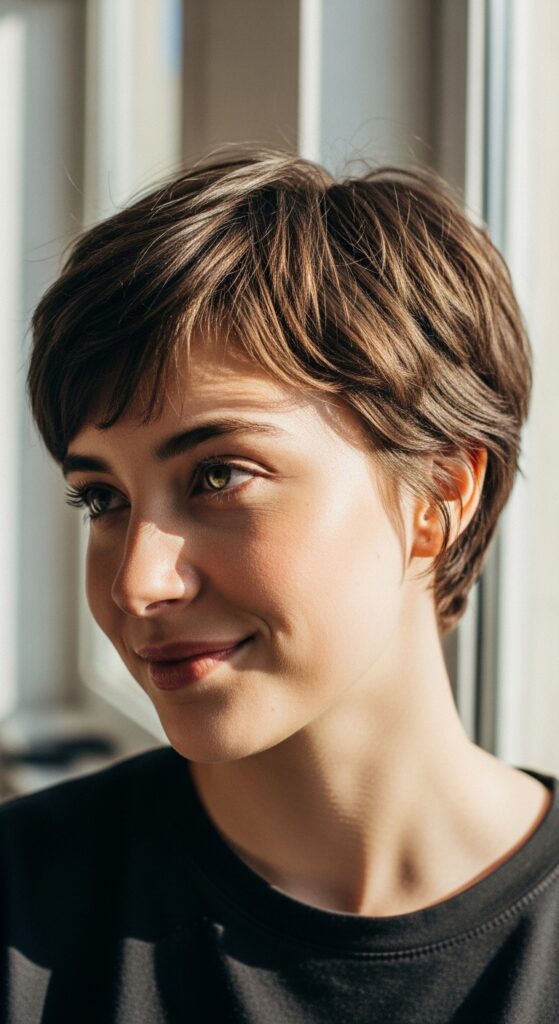
13. Choose a Long Pixie With Side-Swept Bangs
Short hair can look striking on a round face when the cut includes height, texture, and a longer fringe. A long pixie keeps the sides tidy while leaving enough length on top to create movement.
Ask your stylist for a tapered neckline, softly shaped sides, and side-swept bangs that frame the forehead without sitting too flat. Use a small amount of styling cream or paste to define the texture. A little height at the crown can create a flattering vertical line.
This option suits anyone who wants an expressive, low-maintenance haircut with a clean finish.
Avoid a very round, uniform pixie with equal fullness around the entire head. A more varied shape creates better balance.
14. Try a Textured Bixie Cut
The bixie sits between a bob and a pixie. It gives you the lightness of a short haircut with enough length to create soft layers around the face. Its slightly undone finish makes it feel modern and wearable.
Ask for longer top layers, a piecey fringe, and gentle tapering near the neckline. Keep a few strands around the jawline to soften the outline. A bixie works well for straight, wavy, and fine hair because the layered shape can create natural body.
Style it with a small amount of texture cream, then separate a few pieces with your fingertips.
Avoid an overly rounded shape with heavy volume near the ears. Keep the movement airy and slightly asymmetrical.
15. Let Natural Curls Fall in a Layered Shape
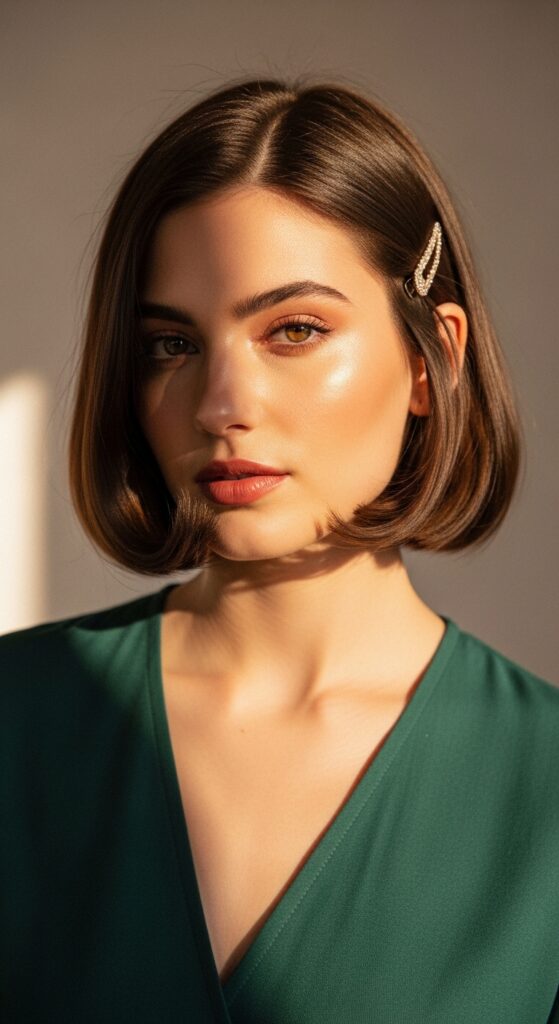
Natural curls can frame a round face beautifully when the haircut distributes volume with care. The goal is not to flatten your curls. It is to create a shape that feels balanced, expressive, and easy to maintain.
Ask a curl-experienced stylist for layers that add lift toward the crown while allowing longer curls to fall around and below the jawline. A shoulder-length or longer shape often works well. Use curl cream or gel according to your texture, then let the curls dry with minimal touching.
Avoid a single rounded silhouette with all the volume concentrated at cheek level. A layered outline lets the curls move more freely and prevents the haircut from feeling too wide.
16. Use a Half-Up Style With Gentle Crown Lift
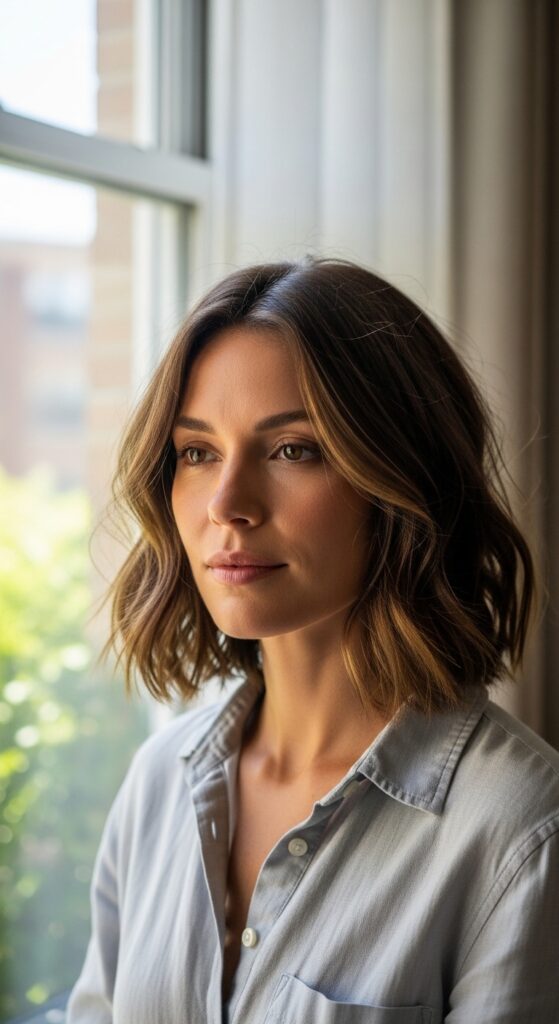
A half-up hairstyle can create instant balance without a haircut. Pulling back the upper section opens the face, while the remaining length creates soft vertical lines. A small amount of crown lift keeps the style from looking flat.
This option works well for casual days, work, dinners, and events. Leave a few longer pieces loose around the front, especially below the cheekbones. Use a claw clip, soft elastic, or small barrette depending on the finish you prefer.
Keep the shape relaxed rather than tightly pulled. A gentle bend through the loose hair can add softness.
Avoid placing the clip too low or flattening the roots completely. A little height creates a more flattering proportion.
17. Try a Low Ponytail With Face-Framing Pieces
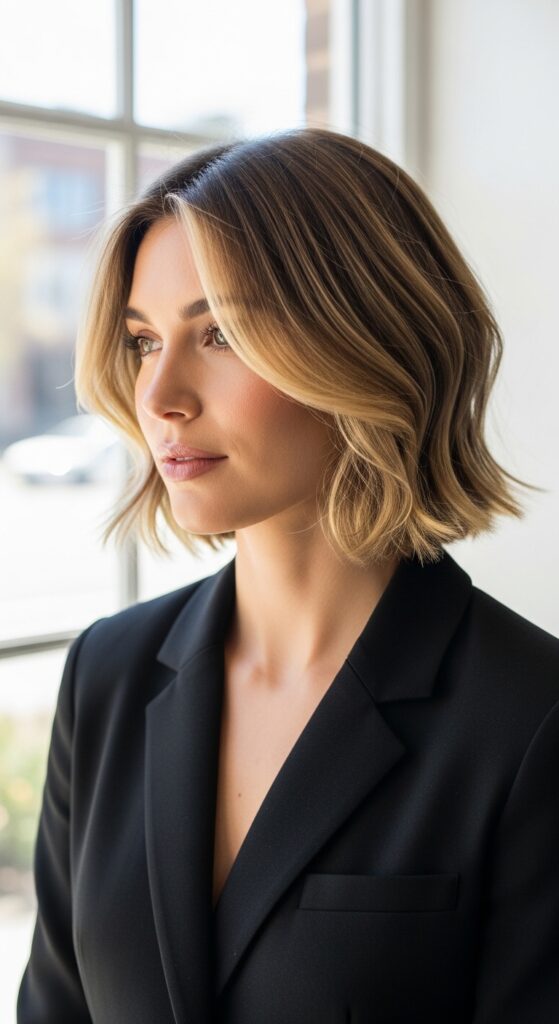
A low ponytail offers an easy everyday hairstyle that can still frame a round face thoughtfully. The low placement creates a longer visual line through the neck, while loose front pieces soften the cheeks and jawline.
Start with a center or slightly off-center part. Gather the hair at the nape and secure it without pulling too tightly. Leave two longer strands loose around the face. They should fall near or below the jaw rather than ending at the fullest point of the cheek.
Add a gentle wave to the ponytail if you want extra movement.
Avoid a slick, very tight finish if it makes you feel uncomfortable. The most wearable version feels soft, secure, and natural.
FAQs: Flattering Cuts for Round Faces & Double Chins
How to Choose the Best Hairstyle for Your Hair Type
The right haircut should work with your real routine. A style that looks beautiful after a professional blowout may feel frustrating if it requires daily heat styling at home.
Bring reference photos to your appointment, but choose images with a hair texture and density similar to yours. Ask your stylist where the shortest layer will fall, how the haircut will air-dry, and how often you will need trims.
Curtain bangs, for example, can suit many textures because a stylist can customize their thickness and length. Allure explains that curtain bangs usually sit shorter in the middle and become longer toward the sides, creating a soft frame around the face.
The best hairstyle should feel like part of your life, not another chore.
A Flattering Hairstyle Should Still Feel Like You
The most successful haircut does more than create a visual effect. It makes your morning routine easier. It moves naturally. It helps you feel comfortable when you catch your reflection in a mirror or step outside without spending an hour styling your hair.
Use these hairstyles for double chin and round face shapes as inspiration, not strict instructions. Keep your curls if they make you happy. Try the lob if you want a fresh start. Add curtain bangs if you love softness around the eyes. Go short if a pixie feels more like you.
Your face does not need fixing. The right hairstyle simply frames your features in a way that feels thoughtful, confident, and entirely your own.