
Imagine walking through your front door after a long, frantic day. In one scenario, you are met with a visual “hum” of clutter—shoes piled near the entryway, a sofa that feels too large for the walls, and lighting that casts harsh, unflattering shadows. Your shoulders tighten. This is the “off” room, a space where the ergonomic flow is disrupted, and the square footage feels like a cage rather than a cocoon. Now, imagine the alternative. You step into the same footprint, but your eyes glide effortlessly across the room. There is a sense of textural juxtaposition; the air feels lighter, the colors are cohesive, and every object seems to have been placed with soulful intention. This is the power of high-end interior design applied to small-space living.
The psychological impact of our surroundings cannot be overstated. A cramped, disorganized apartment creates a constant, low-level cognitive load, whereas a curated space acts as a visual “reset” for the nervous system. For the modern apartment dweller—and especially for the busy mom—design isn’t just about “pretty” things; it’s about reclaiming your peace of mind. By utilizing biophilic elements, maximizing visual weight distribution, and mastering the art of the “hidden upgrade,” you can transform a standard apartment into a bespoke sanctuary. This guide is your masterclass in small-space elevation, proving that luxury isn’t about the size of the room, but the depth of the detail.
The Curated Deep-Dives: 15 Transformative Design Hacks
1. The “Invisible” Horizon: Acrylic & Glass Sculpturalism
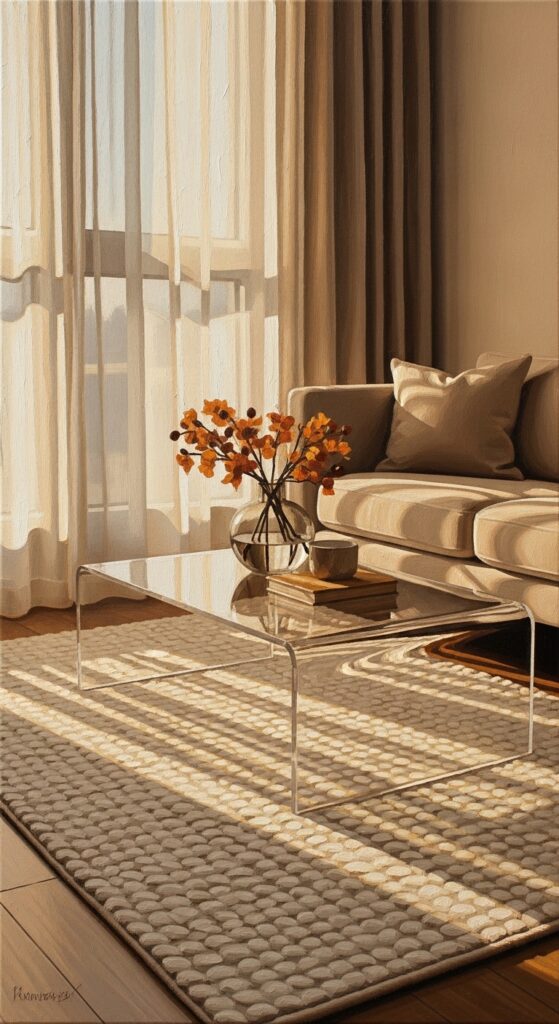
The primary challenge in a small apartment is “visual noise.” Heavy wooden coffee tables or dark metal desks act like anchors, pulling the eye down and making the floor plan feel truncated. By introducing acrylic, Lucite, or tempered glass furniture, you effectively create an “invisible horizon.” These pieces provide the functionality of a surface without consuming any visual real estate, allowing the rug patterns and floor lines to continue uninterrupted.
This hack is a game-changer for those who want a workspace in their living room. A clear acrylic “ghost” desk against a white wall virtually disappears, maintaining the room’s airy aesthetic. From a psychological perspective, this reduces the feeling of being “boxed in” by furniture, promoting a sense of mental clarity and openness. To execute this, look for high-quality, thick-milled acrylic to avoid a “cheap” plastic look. Pair a glass coffee table with a plush, high-texture rug underneath; the transparency of the table acts as a lens, highlighting the rug’s weave.
- Palette: Crystal Clear, Frosted Ice, Polished Chrome, Ghost Gray
- Materials: Tempered Glass, Cast Acrylic, Polished Nickel
- Signature Piece: The Acrylic “Ghost” Dining Chair
- PRO-DESIGNER TIP: Use clear furniture in the path of natural light to allow shadows to dance across the floor rather than blocking them.
2. Verticality & The Sky-High Drapery Illusion
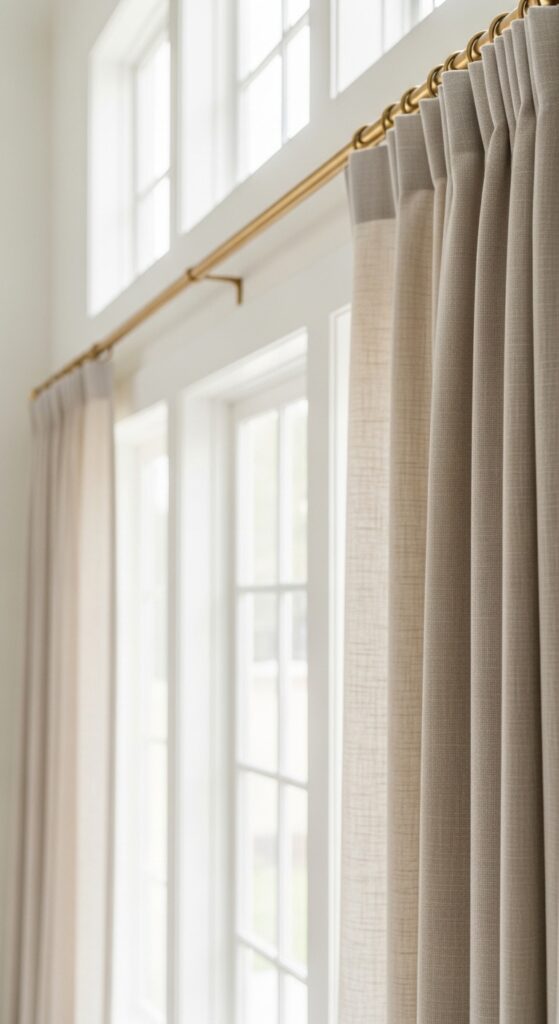
Most apartment dwellers hang their curtains right at the top of the window frame. This is a missed opportunity for architectural elevation. To make your ceilings feel 10 feet tall, you must hang your drapery rods as close to the ceiling as possible—often referred to as “high and wide.” This draws the eye upward, celebrating the vertical volume of the room.
This technique doesn’t just add height; it adds a sense of “grandeur” usually reserved for luxury estates. By extending the rod several inches beyond the window frame on either side, you also make the window itself appear much larger. When the curtains are open, they rest against the wall rather than the glass, allowing maximum natural light to flood the space. Choose a heavy, high-end linen or a velvet with a slight sheen. The textural depth of the fabric creates a soft, vertical column that balances the hard angles of the room’s architecture.
- Palette: Soft Sailcloth, Warm Oat, Dusty Parchment, Antique Brass
- Materials: Raw Linen, Heavy Velvet, Brushed Brass
- Signature Piece: Extra-long 108-inch Linen Panels
- PRO-DESIGNER TIP: Always “puddle” your curtains by half an inch on the floor for a bespoke, high-end tailor-made look.
3. The Mirror as Architecture: The Window-Pane Trick
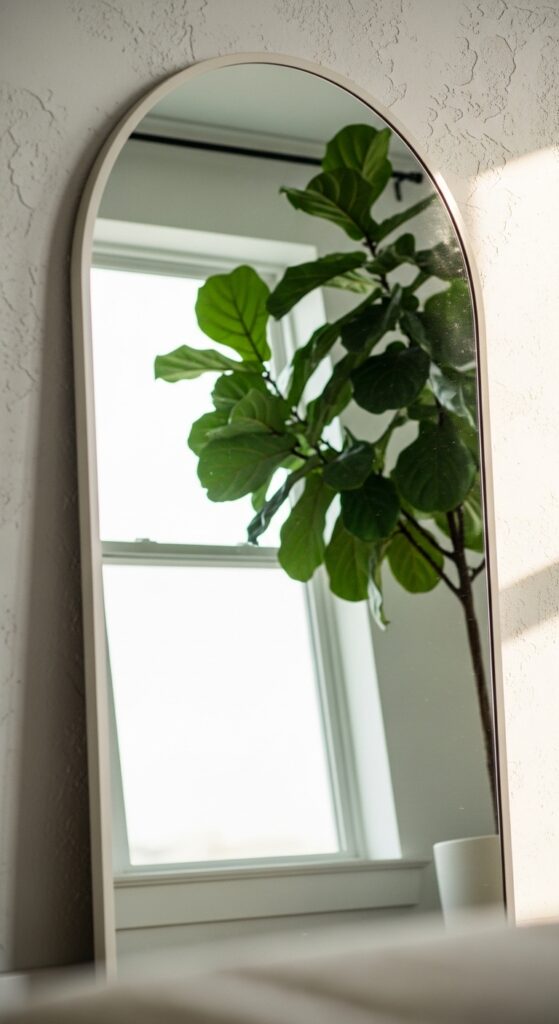
Mirrors are the oldest trick in the book, but the “Ultra-Premium” way to use them is as faux architecture. Instead of a small hanging mirror, opt for a large, arched “Window-Pane” mirror leaned against a focal wall. This creates the psychological illusion of an extra room or a doorway, doubling the perceived depth of the apartment instantly.
Beyond depth, mirrors act as passive light amplifiers. By placing a large mirror opposite a window, you bounce the biophilic energy of the outdoors back into the dark corners of the home. This solves the “cave” feeling common in interior-facing apartments. For technical execution, ensure the mirror is at least 65 inches tall. A frame in a contrasting material—like matte black iron or distressed gold leaf—provides the visual weight necessary to make the mirror feel like a permanent structural element rather than a temporary accessory.
- Palette: Matte Black, Champagne Gold, Reflected Blue, Iron Ore
- Materials: Wrought Iron, Beveled Glass, Distressed Wood
- Signature Piece: Oversized Arched Floor Mirror
- PRO-DESIGNER TIP: Place a tall floor plant in front of the mirror to double the greenery and create a “secret garden” reflection.
4. Multipurpose Sculpturalism: The Storage Ottoman
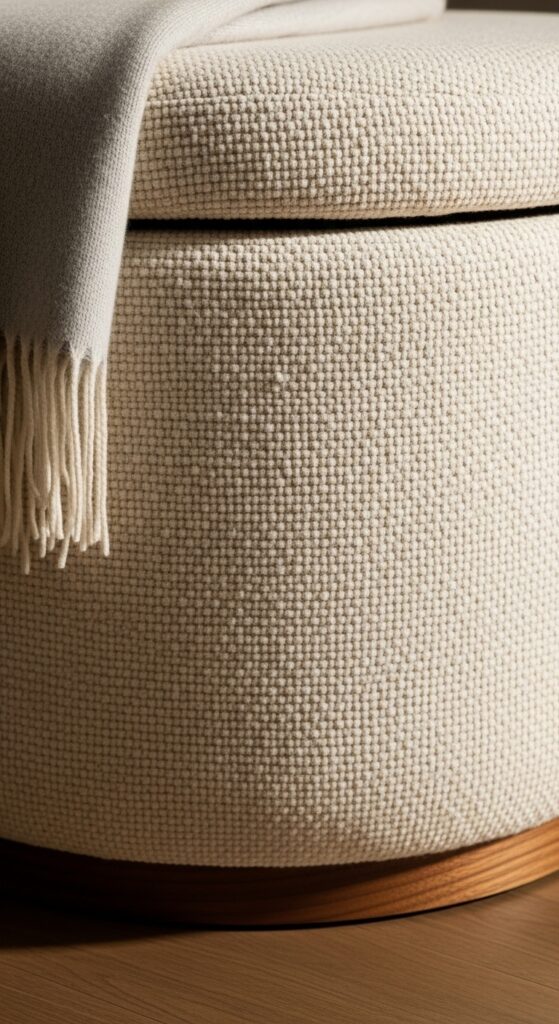
In a small space, every piece of furniture must “earn its keep.” However, “utility” often looks industrial or clunky. The high-end hack is to use sculptural storage ottomans. These are pieces that look like art—perhaps a drum-shaped bouclé stool or a pleated velvet pouf—but feature a hidden lid for storing blankets, toys, or seasonal decor.
This solves the problem of “visual clutter” by providing a designated home for the items that usually drift across the sofa. From a lifestyle perspective, it allows for a 5-minute “reset” before guests arrive. You aren’t just cleaning; you’re curating. Look for ottomans with organic, rounded shapes. In a room full of rectangular furniture (sofas, TVs, rugs), a round ottoman provides a necessary juxtaposition of form, making the room feel more custom and less “showroom” flat.
- Palette: Cream Bouclé, Moss Green, Burnt Terracotta, Toffee
- Materials: Bouclé Fabric, Walnut Wood, Brass Plinth
- Signature Piece: The Round Bouclé Storage Stool
- PRO-DESIGNER TIP: Use a pair of identical ottomans as a coffee table replacement to keep the center of the room flexible and modular.
5. The “Zoning” Strategy: Rugs as Invisible Walls
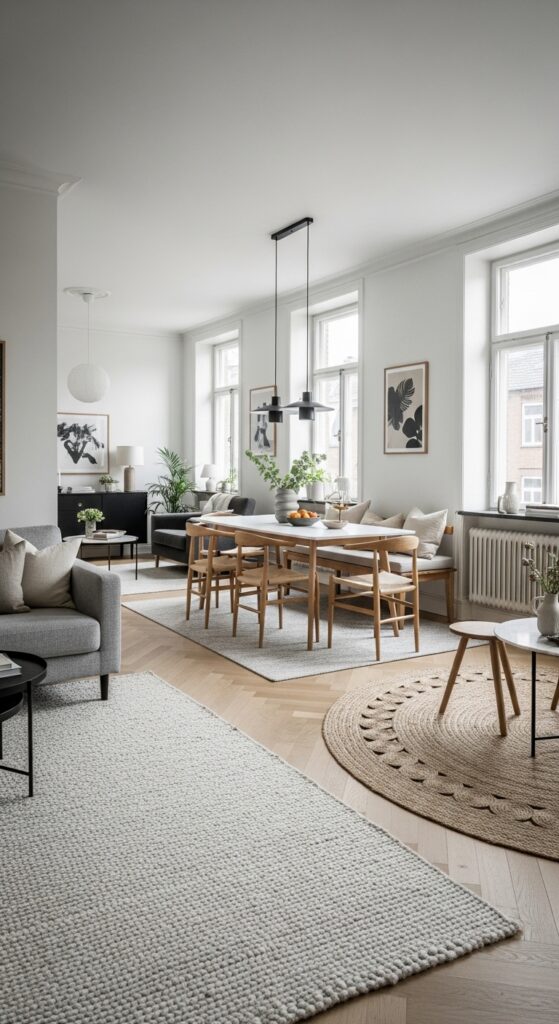
Small apartments often suffer from “The Floating Furniture Syndrome,” where everything feels pushed against the walls with no clear purpose. To fix this, use oversized area rugs to “zone” the space. A rug defines the boundaries of a “room” without the need for physical dividers that block light.
A dining area rug should be distinct from the living area rug. This creates a psychological shift as you move through the apartment. By choosing rugs with textural depth—like a high-low pile or a hand-knotted wool—you add a layer of sound dampening, which is essential for apartment living. Ensure the rug is large enough that all furniture legs (or at least the front legs) sit comfortably on it. A rug that is too small will actually make the room look smaller.
- Palette: Earthy Sage, Sandstone, Slate, Bleached Jute
- Materials: New Zealand Wool, Hand-Spun Silk, Natural Jute
- Signature Piece: A 9×12 Hand-Tufted Neutral Rug
- PRO-DESIGNER TIP: Layer a smaller, patterned rug over a larger jute rug for a high-end, “collected over time” look.
6. Biophilic Verticality: The Wall-Mounted Jungle
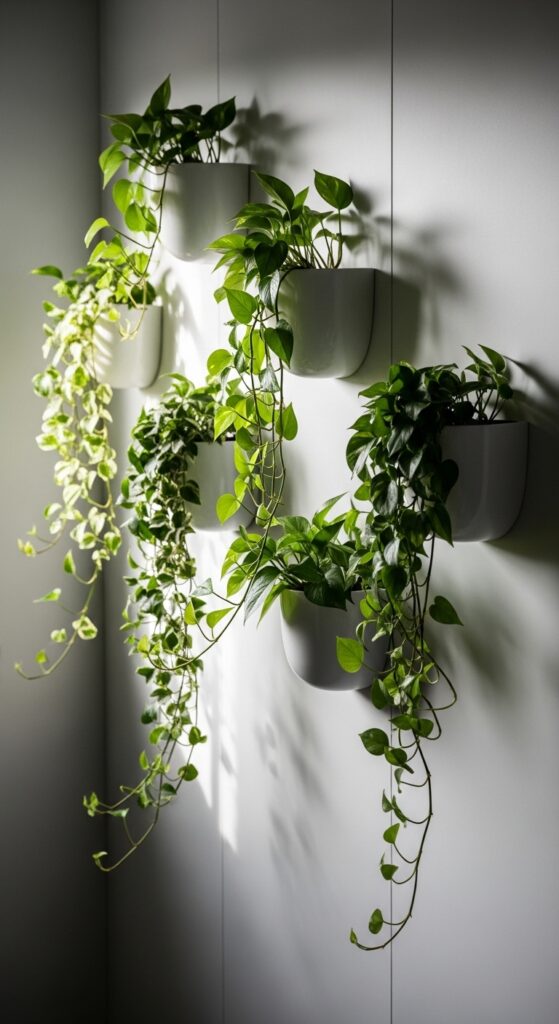
When floor space is at a premium, you cannot afford to have 10 different plant pots taking up walking paths. However, biophilic design (connecting with nature) is proven to reduce stress. The hack? Take your greenery vertical. Use wall-mounted ceramic planters or a sleek, minimalist “living wall” shelf.
This moves the “green energy” to eye level, where it has the most impact. It transforms a blank, boring wall into a living piece of art. Plants like Pothos or Heartleaf Philodendron are perfect because their vines will eventually drape down, creating a “waterfall” of green that softens the room’s hard edges. Technically, use a staggered, asymmetrical layout for the planters. This feels more organic and less like a “grid,” which is key to a relaxed, high-end vibe.
- Palette: Deep Emerald, Terracotta, Matte White, Soft Fern
- Materials: Matte Ceramic, Hand-Blown Glass, Leather Straps
- Signature Piece: Minimalist White Ceramic Wall Planters
- PRO-DESIGNER TIP: Group plants in odd numbers (3, 5, or 7) for a more visually pleasing, professional composition.
7. The Cohesive Color Drench: Seamless Expansion
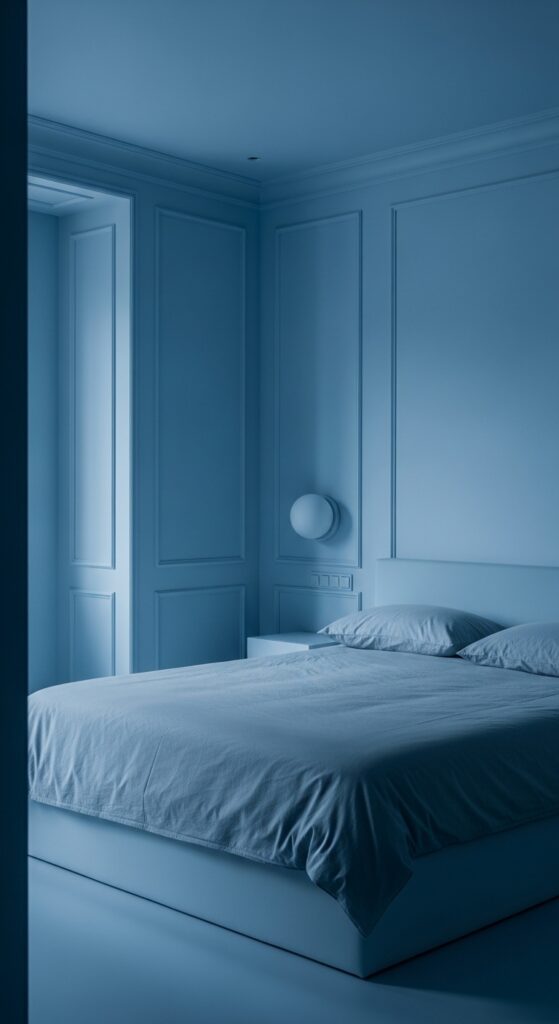
The old rule was “paint everything white.” The new premium rule is Color Drenching. This involves painting the walls, baseboards, and even the ceiling in the same mid-tone shade (like a soft mushroom or a misty blue). This erases the “seams” of the room, making the corners disappear and the space feel infinitely more expansive.
Color drenching creates a sophisticated, boutique-hotel vibe. It eliminates the visual “stutter” that happens when your eye hits a white baseboard against a colored wall. In a small apartment, this continuity is incredibly soothing. Choose a “receding” color—shades with blue, green, or gray undertones—as these colors appear to move away from the eye, making the walls feel further apart than they actually are.
- Palette: Greige #A9A297, Dusty Blue #92A1AC, Sage #8A9A8C, Mushroom #9F9386
- Materials: Eggshell Wall Paint, Satin Trim Paint, Velvet Upholstery
- Signature Piece: Matching Painted Bookshelves
- PRO-DESIGNER TIP: Use a flat finish on the ceiling and a satin finish on the trim in the same color to create a subtle play of light.
8. Lighting Layers: The “No-Overhead” Rule
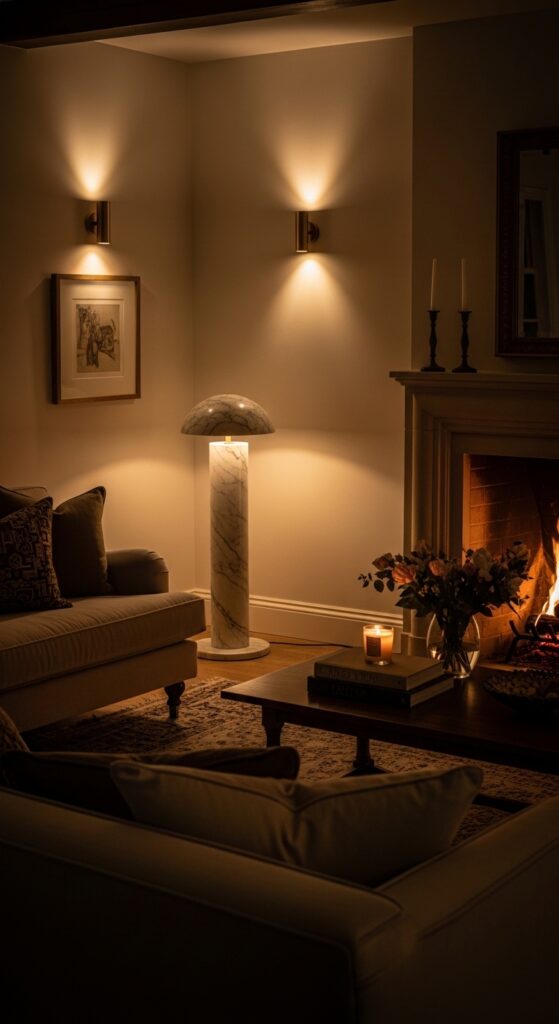
Nothing kills a premium vibe faster than a single, harsh “boob light” in the center of the ceiling. To make an apartment feel expensive and large, you must layer your lighting. This involves using at least three sources of light in every room: task, accent, and ambient.
Focus on wall sconces (plug-in versions are great for renters) and floor lamps that direct light upwards. Up-lighting the corners of a room makes the boundaries feel like they are expanding. Use “warm” bulbs (2700K) to create an inviting, high-end glow rather than a clinical, blue-light feel. For a graphic designer’s touch, choose lamps with sculptural silhouettes. A black metal arched lamp acting as a “task light” over a sofa adds a sophisticated line to the room’s composition.
- Palette: Warm Amber, Matte Black, Frosted White, Polished Brass
- Materials: Linen Shades, Marble Bases, Fluted Glass
- Signature Piece: An Oversized Arched Floor Lamp
- PRO-DESIGNER TIP: Use smart bulbs that you can dim via your phone to shift the mood from “work mode” to “spa mode” instantly.
9. Hidden Utility: The Luxury Over-the-Door System
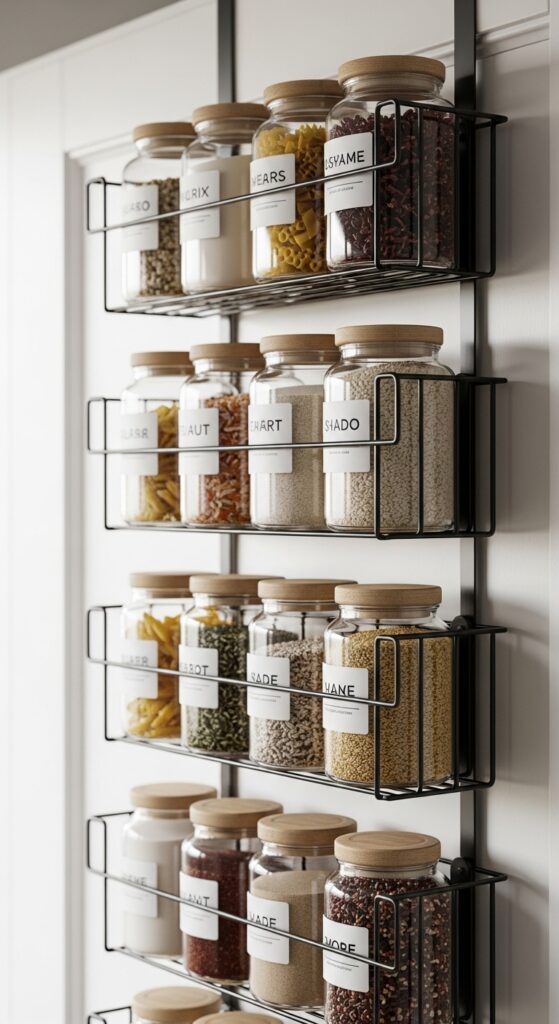
Storage is the ultimate luxury in a small apartment. Most “over-the-door” organizers look like cheap plastic mesh. The “AbodeMom” upgrade is to use a bespoke metal-and-wood rail system. These are sleek, sturdy, and can hold everything from kitchen spices to heavy winter coats.
By utilizing the back of doors (bathroom, pantry, bedroom), you clear up precious drawer and counter space. The trick to making this look “designer” is to keep the items on it uniform. For example, in a pantry, use matching glass jars with minimalist labels. This hack is about ergonomic flow—having exactly what you need at arm’s reach without the visual clutter of items sitting on a countertop.
- Palette: Matte Black, Natural Birch, Slate, Chrome
- Materials: Powder-Coated Steel, Solid Oak, Glass Jars
- Signature Piece: Matte Black Steel Door Rail
- PRO-DESIGNER TIP: Paint the organizer the same color as the door to make it “disappear” when it’s not in use.
10. Tailored Textiles: The Linen Slipcover Reset
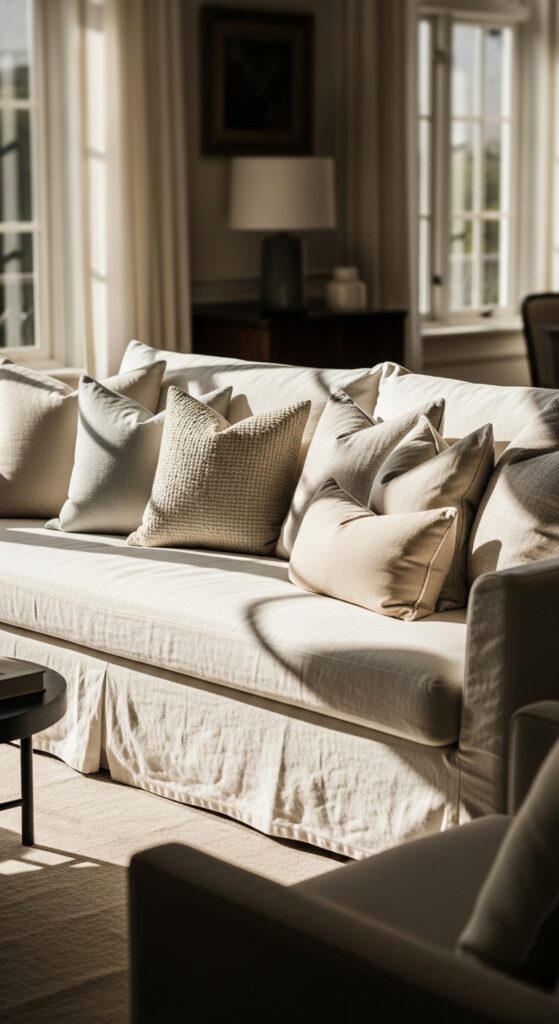
If you have an older sofa that feels a bit “tired” or doesn’t fit your new color palette, don’t replace it. A custom-look linen slipcover can breathe new life into the room. Linen has a natural, relaxed textural juxtaposition that makes a space feel expensive but unpretentious.
For moms, this is the ultimate hack because high-quality slipcovers are machine washable. You can have the “white sofa dream” even with toddlers and pets. The fabric’s natural wrinkles add a layer of “wabi-sabi” (beauty in imperfection) that is very trendy in high-end design. Choose a heavy-weight Belgian linen. The way the fabric drapes over the arms of the chair creates a soft, inviting silhouette that balances out the hard lines of apartment architecture.
- Palette: Bleached Sand, Charcoal, Olive, Oatmeal
- Materials: Belgian Linen, Heavy Cotton Duck, Hemp
- Signature Piece: A Loose-fit White Linen Sofa Cover
- PRO-DESIGNER TIP: Use a fabric steamer on the main panels of the slipcover but leave the seams slightly rumpled for a “Parisian Flat” look.
11. The Statement Corner: The “Power Chair” Layout
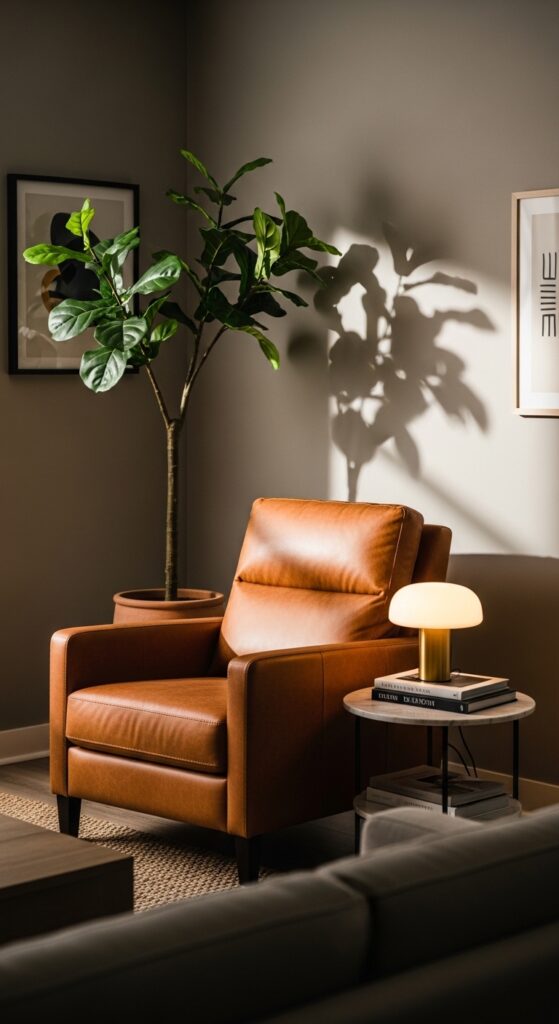
In a small apartment, you might not have room for a full reading nook, but you do have room for a Statement Corner. This involves placing one high-design armchair at a 45-degree angle in a corner, paired with a small side table and a piece of vertical art.
This layout creates a “destination” within a room. It breaks up the “boxy” feel of a square apartment by introducing a diagonal line. Psychologically, having a dedicated spot for one specific activity (like drinking coffee or reading) makes the apartment feel much larger and more multi-functional. Choose a chair with a bold silhouette—perhaps a mid-century modern “Womb” chair or a classic leather “Eames” style. This piece acts as the room’s visual anchor.
- Palette: Cognac Leather, Navy Velvet, Walnut, Brass
- Materials: Top-Grain Leather, Solid Walnut, Wool Plaid
- Signature Piece: A Mid-Century Modern Accent Chair
- PRO-DESIGNER TIP: Place a small rug specifically under this chair to “tether” the corner and make it feel like its own mini-room.
12. Elevated Hardware: The “Rental-Safe” Jewelry
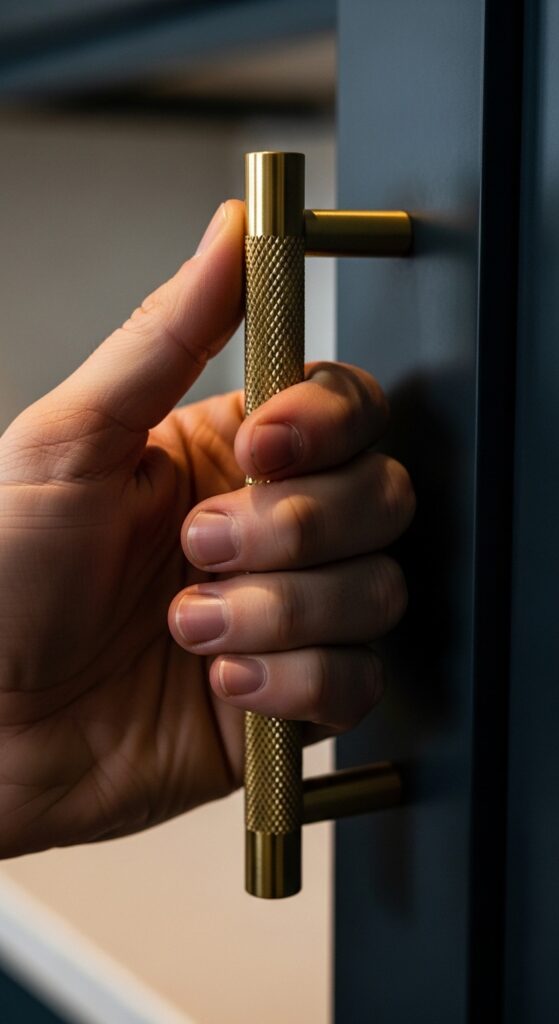
Most apartments come with standard, boring chrome or plastic knobs on the kitchen cabinets and bathroom vanities. Swapping these for bespoke hardware—like knurled brass handles or hand-carved stone knobs—is like adding jewelry to an outfit.
This is a low-effort, high-impact transformation. Because you can take the hardware with you when you move, it’s a smart investment. The tactile experience of touching a heavy, high-quality handle every day adds a subconscious layer of luxury to your routine. For a graphic designer’s eye, look for hardware with “interesting geometry.” Hexagonal pulls or long, slim T-bars provide a modern, architectural edge to standard cabinetry.
- Palette: Brushed Brass, Matte Black, Honey Bronze, Antique Silver
- Materials: Solid Brass, Carrara Marble, Cognac Leather (for pulls)
- Signature Piece: Knurled Brass T-Bar Handles
- PRO-DESIGNER TIP: Keep your old hardware in a labeled bag so you can easily swap them back before your lease ends.
13. Entryway Articulation: The Slim-Profile Console
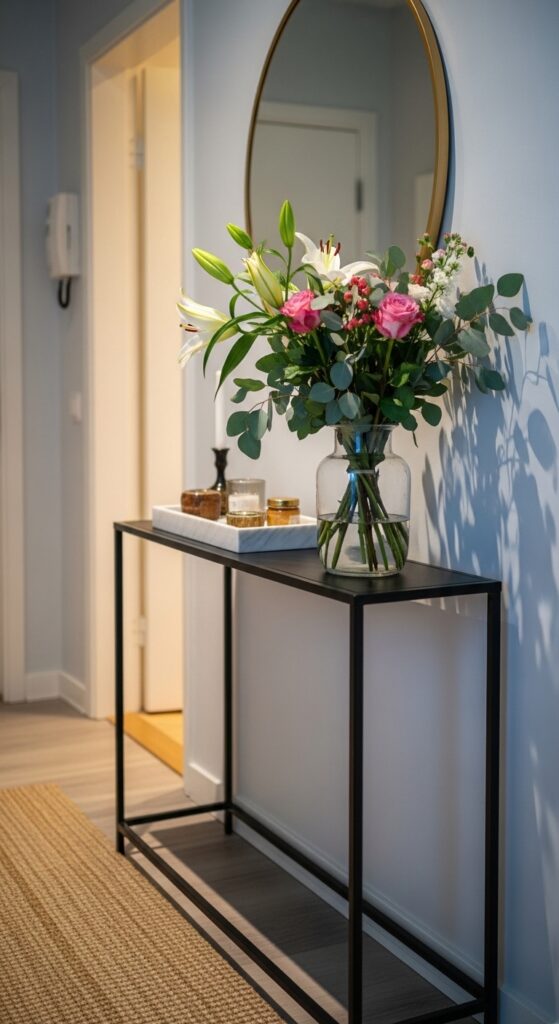
Even if your “entryway” is just a small slice of wall next to the door, you must treat it as a transition zone. A slim-profile console table (often only 8-10 inches deep) provides a place for a “drop zone” for keys and mail, preventing “clutter creep” into the rest of the house.
To elevate this, hang a large piece of art or a mirror above the console and place a small tray for organization. This creates a “vignette” that greets you with order and beauty the moment you walk in. Choose a console with “airy” legs—thin metal or tapered wood—to keep the floor space looking open.
- Palette: Black Iron, Light Oak, White Marble, Gold
- Materials: Forged Steel, Travertine, White Oak
- Signature Piece: A Minimalist Black Iron Console Table
- PRO-DESIGNER TIP: Place a small basket underneath the console to hide unsightly items like dog leashes or umbrellas.
14. Seasonal Textural Shifts: Lightweight Summer Throws
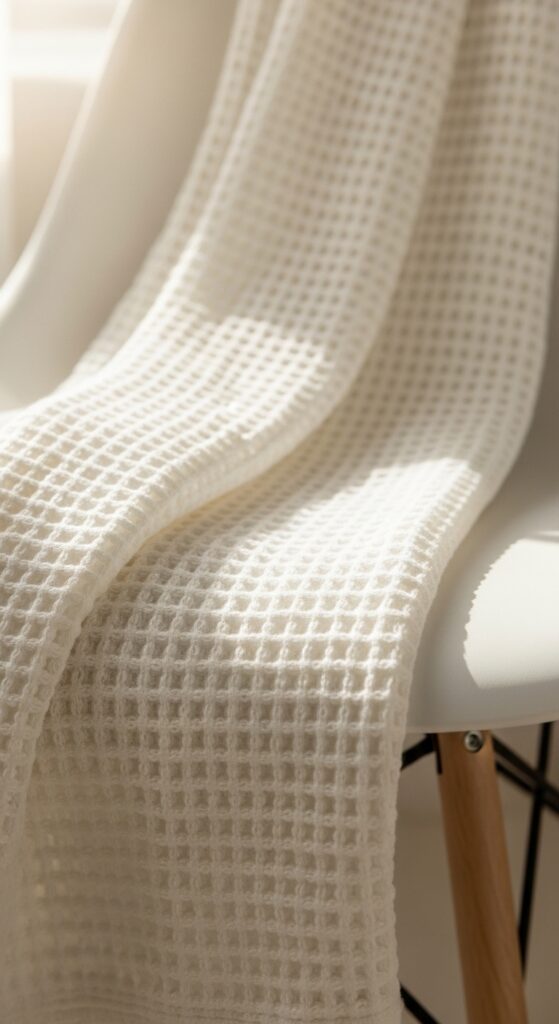
Design isn’t static; it should breathe with the seasons. In a small apartment, you can’t change furniture, but you can change textural layers. For summer, swap heavy wool blankets for breathable cotton or bamboo throws.
This visual shift refreshes the mood of the room. Lighter fabrics in “cool” tones (whites, pale blues, soft greens) make the space feel breezier and less “stuffed.” It’s an easy way to achieve a “Seasonal Refresh” without spending much money. Look for throws with interesting weaves—like a waffle knit or a herringbone—to add visual interest without adding heavy patterns that might overwhelm a small room.
- Palette: Crisp White, Sky Blue, Soft Mint, Cream
- Materials: Organic Cotton, Bamboo Silk, Lightweight Linen
- Signature Piece: A Waffle-Knit Cotton Throw
- PRO-DESIGNER TIP: Drape the throw over the back of a chair in a “casual-cool” way rather than folding it perfectly; this adds a lived-in luxury feel.
15. The Scented Signature: Olfactory Design
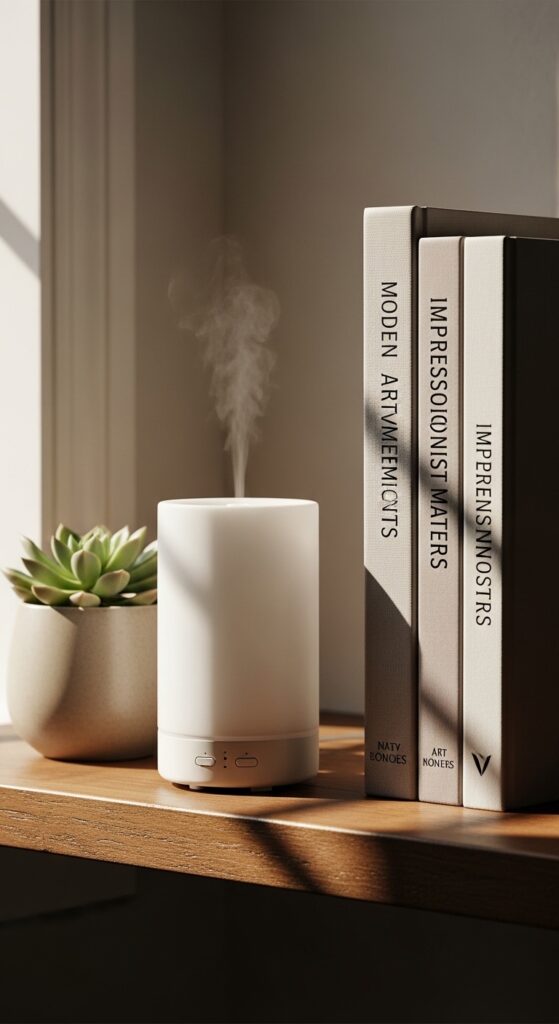
The final design hack isn’t visual; it’s olfactory. A small apartment can quickly become overwhelmed by cooking or “lived-in” smells. A signature luxury scent—via a high-end candle or a stone diffuser—completes the sensory experience of a curated home.
Scent has a direct line to the limbic system (the brain’s emotional center). A scent of “Sea Salt & Eucalyptus” can make a cramped bathroom feel like a sprawling spa. This is the “invisible layer” of interior design that makes your home feel like a destination. Choose a vessel that matches your decor. A marble or matte ceramic diffuser acts as a small piece of sculpture on a shelf.
- Palette: White Stone, Frosted Glass, Amber, Matte Ceramic
- Scent Profiles: Santal, Eucalyptus, Sea Salt, White Tea
- Signature Piece: A White Stone Essential Oil Diffuser
- PRO-DESIGNER TIP: Scent your “zones” differently: energizing citrus for the kitchen and calming lavender or sandalwood for the bedroom.
The “Mom-Approved” Practicality Section: Small Spaces, Big Life
For the “AbodeMom,” a beautiful home is useless if it can’t withstand a spilled juice box or a muddy paw print. The key to maintaining a high-end aesthetic in a small apartment with a family is Strategic Durability.
- Performance Fabrics: Always look for “Performance” versions of linen or velvet. These are treated at the fiber level to repel liquids and resist stains. You can have the light-colored sofa of your dreams; just ensure it’s upholstered in a fabric like Crypton or Sunbrella.
- Rounded Edges: In small spaces, you are more likely to bump into furniture. Choose round coffee tables and ottomans. Not only is this a “Sophisticated” design choice that breaks up boxy rooms, but it is also “toddler-safe” without the need for ugly plastic corner protectors.
- Wipeable Surfaces: Swap porous stones for high-quality Quartz or sealed Marble. Use “Washable Rugs”—there are now high-end, designer versions that look like antique Persians but can be thrown in the machine.
- Vertical Storage is Safety: By using the “Wall-Mounted Greenery” and “Over-the-Door” hacks, you keep fragile or dangerous items out of the reach of small hands, keeping the floor clear for play.
Comprehensive FAQ: Mastering the Small Space
1. How much should I realistically budget for a small apartment “Refresh”? +
2. Will “Color Drenching” make my room feel dark and cave-like? +
3. I’m a renter. Can I really change my lighting and hardware? +
4. What is the biggest mistake people make in small apartments? +
5. How do I choose a signature scent that doesn’t smell “cheap”? +
The Final Flourish: Your Invitation to Create
Design is not a destination; it is a living, breathing practice. Your apartment, no matter how small, is the canvas of your daily life. It is the backdrop of your morning coffee, the sanctuary where you tuck your children in at night, and the studio where your creative ideas take flight. By applying these 15 hacks, you are doing more than just moving furniture—you are practicing self-care through your environment.
You don’t need a mansion to live a life of effortless luxury. You simply need the intention to curate your surroundings. Start with one thing: hang your curtains a little higher tomorrow, or swap out that harsh overhead bulb for a warm floor lamp. Notice how your breathing changes. Notice how your home begins to greet you. The transformation of your space is, ultimately, the transformation of your spirit. Stop scrolling, and start creating. Your sanctuary is waiting.
5 thoughts on “15 Smart Home Decor Hacks for Your Small Apartment”