A few years ago, I visited a kitchen that looked beautiful in photos but felt strangely flat in person. Every cabinet wore the same bright white finish. The countertops matched. Even the walls disappeared into the same pale backdrop. Nothing felt wrong, but nothing invited you to linger either.
That memory is why I love thoughtful two-tone kitchen cabinet ideas. A second color can give the room depth without making it feel busy. It can anchor an island, soften a wall of tall cupboards, or bring natural wood into a clean modern layout.
The best combinations feel intentional rather than trendy. They balance light and dark, warm and cool, painted and natural finishes. Whether you plan a full kitchen renovation or a weekend cabinet refresh, these ideas will help you create a space with more character and visual harmony.
Why Two-Tone Kitchen Cabinets Work So Well
Cabinetry covers a large part of the kitchen, so a single finish can sometimes make the room feel heavy, cold, or overly uniform. Two-tone cabinets break up that visual weight. They also help you define different zones, such as the island, pantry wall, coffee station, or lower storage run.
The technique works in large kitchens, but it offers real value in smaller layouts too. Light upper cabinets can make the ceiling feel higher, while darker lower cabinets add grounding and hide everyday marks more easily.
The key lies in restraint. Choose one dominant finish and one supporting color. Keep the countertops, backsplash, flooring, and hardware connected through a clear palette. For broader inspiration, browse these modern kitchen color schemes before selecting your final pairing.
1. Pair Warm White Upper Cabinets With Sage Green Lowers
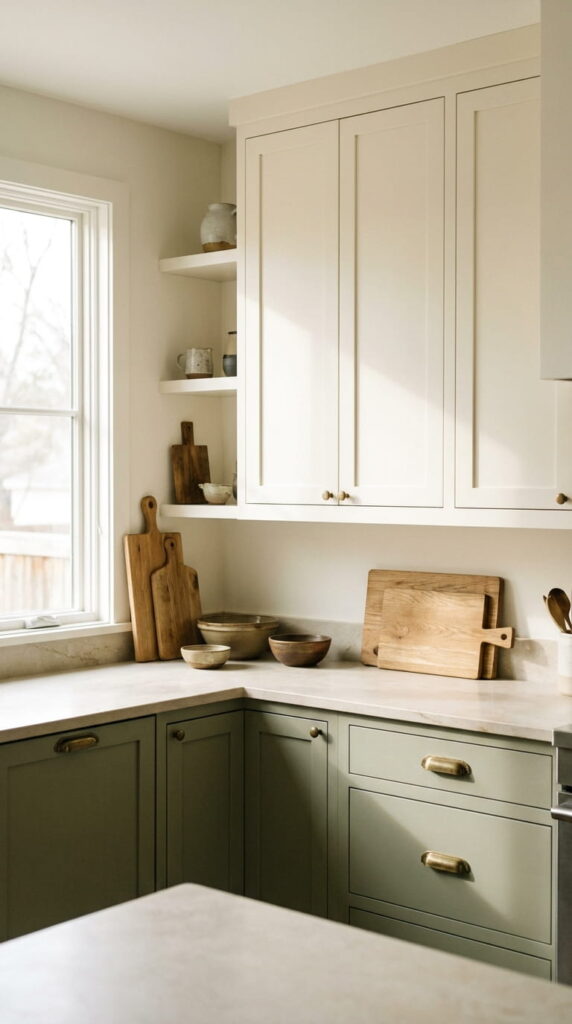
Warm white and sage green create one of the easiest two-tone kitchen combinations to live with. The pale upper cabinets reflect daylight and keep the eye moving upward, while muted green base cabinets bring a soft connection to nature. This pairing works beautifully in small kitchens, cottage-style rooms, and organic modern homes.
Choose an earthy sage with gray undertones rather than a bright mint shade. Add a cream backsplash, oak cutting boards, and aged brass hardware for warmth. If the room receives limited daylight, test the green beside your flooring before painting.
Avoid using a sharp blue-white above the sage cabinets. A warmer off-white creates a gentler, more cohesive finish.
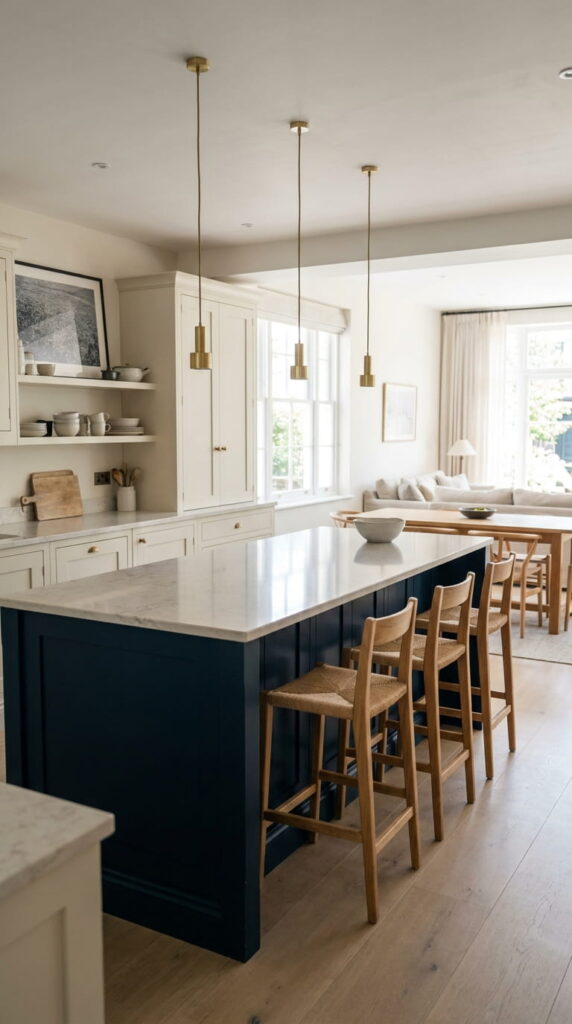
2. Use Navy Blue on the Island With Cream Perimeter Cabinets
A navy island can act like a tailored jacket in an otherwise soft kitchen. It gives the room a clear focal point while cream perimeter cabinets keep the overall space airy and relaxed. This idea works best in open-plan kitchens where the island sits within view of the dining or living area.
Pair deep navy with pale quartz, marble-look stone, or warm-veined quartzite. Repeat the color through one or two small details, such as a framed print or striped seat cushion. Brushed brass and polished nickel both complement navy well.
Avoid painting every large cabinet surface dark blue in a compact room. Let the island carry the drama while the surrounding cabinetry supports it quietly.
3. Mix Natural Oak Cabinets With Soft Greige Paint
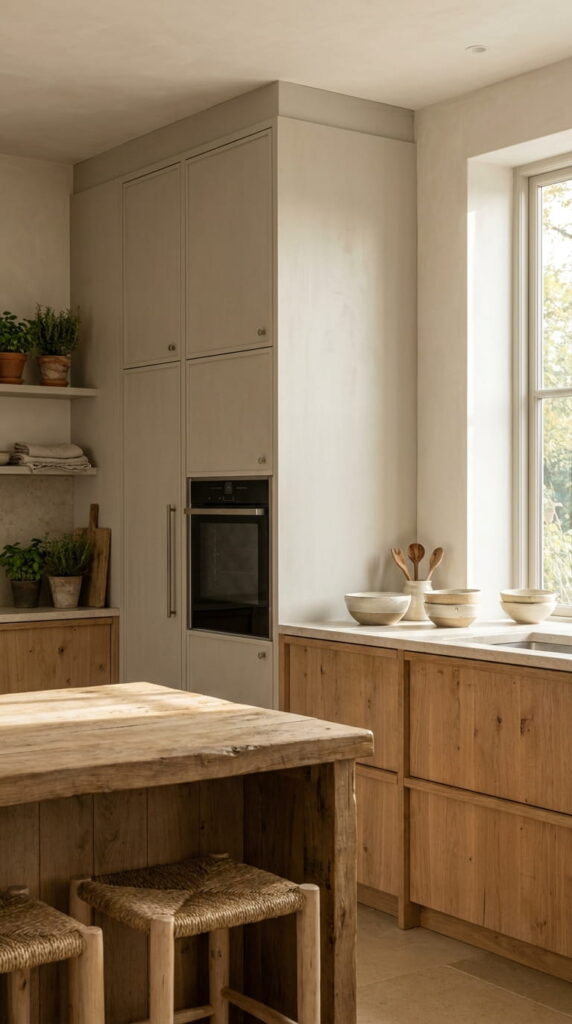
Natural oak and warm greige create a calm, modern kitchen with plenty of texture. The wood grain adds movement, while greige cabinets keep the look polished and easy to coordinate with stone, tile, and metal finishes.
Use oak on the island or lower cabinets, then apply greige to tall cupboards and upper units. This arrangement works especially well in organic modern kitchens with flat-panel doors and clean lines. Choose a matte wood finish so the grain remains visible rather than glossy.
The main mistake is combining a yellow-toned oak with a cool gray paint. Look for a greige shade with warm beige undertones. For more ideas on natural materials and rich grains, read these dream kitchen design ideas.
4. Create a Classic Black-and-White Tuxedo Kitchen
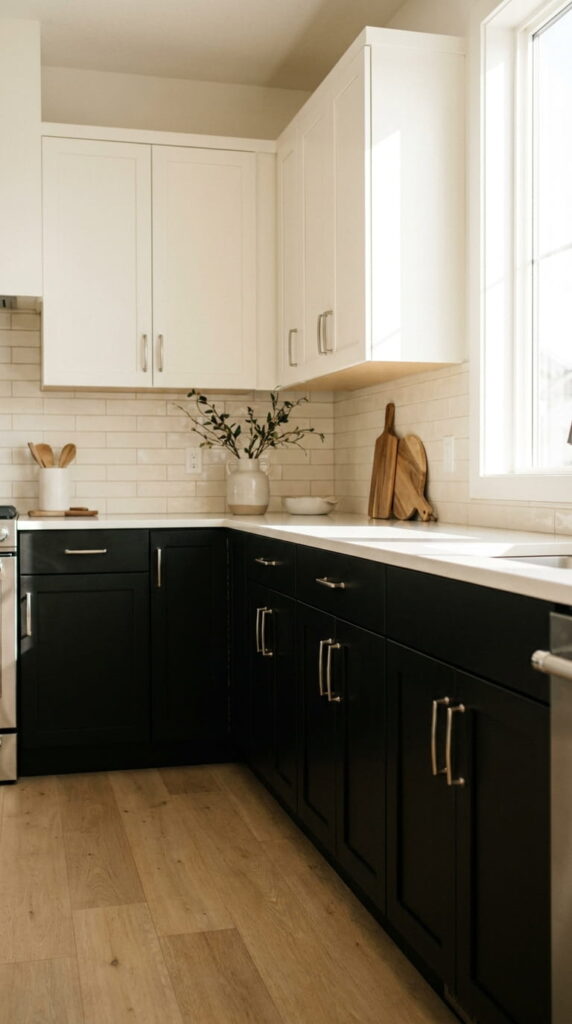
Black lower cabinets and white upper cabinets form a crisp, timeless pairing often called a tuxedo kitchen. The darker base visually anchors the room, while white upper cupboards prevent the walls from feeling closed in.
This combination suits modern apartments, narrow kitchens, and homes with black-framed windows or industrial details. Use a soft black or charcoal paint rather than the harshest possible shade. A warm white backsplash and wooden accessories will stop the room from feeling stark.
Avoid adding too many competing finishes. If the cabinets create strong contrast, keep the countertop simple and choose one primary metal for hardware. Matte black handles can disappear into the base cabinets, while brushed nickel adds a quieter finish.
5. Pair Forest Green Cabinets With a Light Wood Island
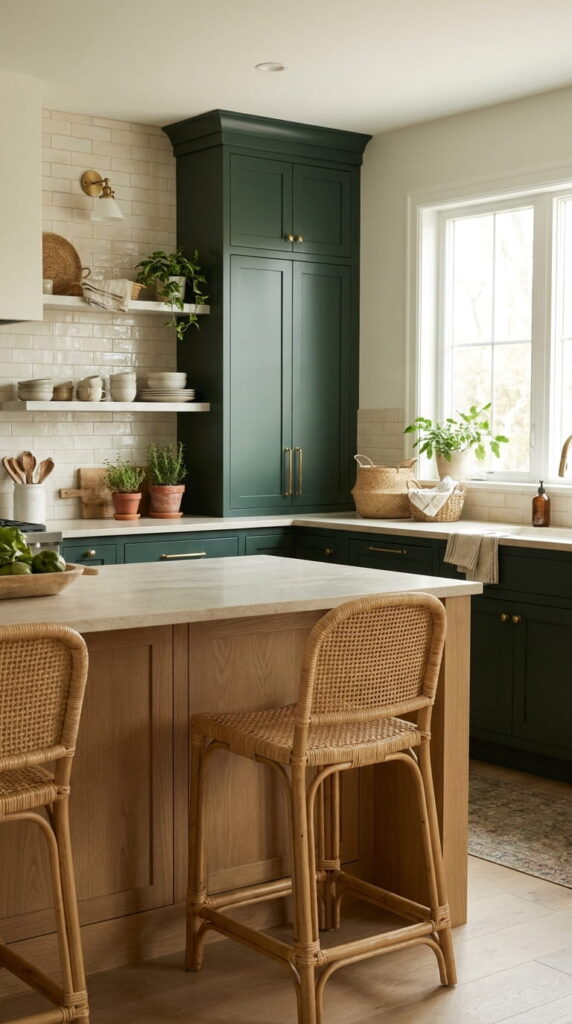
Forest green cabinetry brings depth and a sense of calm, especially when paired with a light oak or ash island. The contrast feels grounded but not formal. It also works well with biophilic design because the palette echoes garden greens and natural timber.
Use the deeper green on perimeter cabinets or a pantry wall. Keep the island light to create breathing room in the center of the kitchen. Pale stone counters, handmade cream tiles, and a few woven elements will soften the contrast.
Avoid using forest green in a poorly lit room without sampling it first. Deep shades can look almost black at night. Warm under-cabinet lighting and layered ceiling lights help the color remain rich rather than heavy.
6. Combine Mushroom Cabinets With a Walnut Island
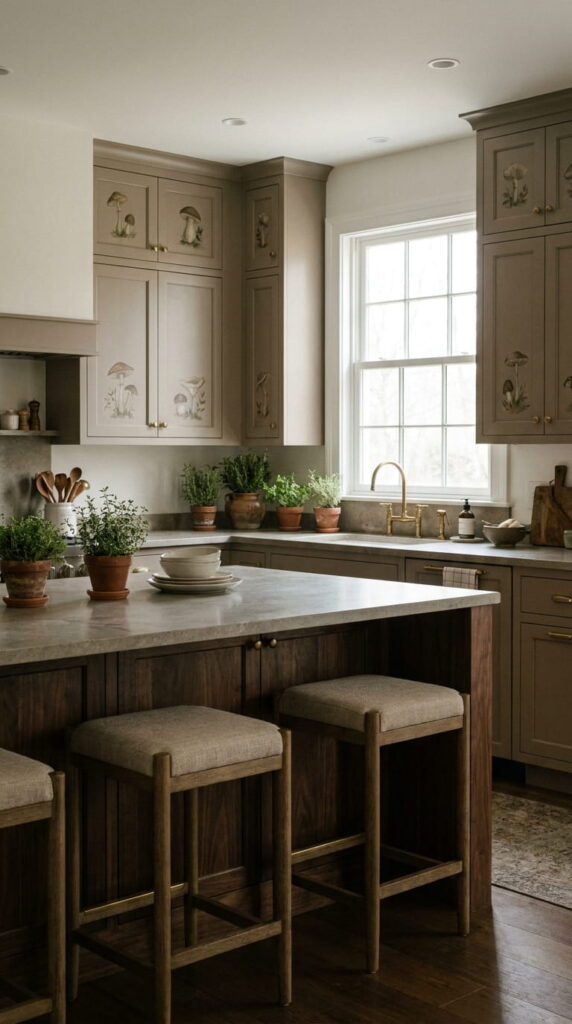
Mushroom paint and walnut wood create a refined, earthy palette that feels quietly luxurious. Mushroom tones sit between beige, taupe, and soft gray, making them more forgiving than stark white. Walnut adds rich grains and a deeper visual note without relying on a bold paint color.
This pairing works beautifully in medium-to-large kitchens, especially where an island needs definition. Add honed stone counters, linen bar stools, and unlacquered brass details for a layered finish.
Avoid matching the wood too closely with the floor. A little contrast makes each material easier to appreciate. If your flooring already has a strong walnut tone, use the wood on a smaller section, such as a coffee station or open shelving.
7. Try Charcoal Lower Cabinets With Pale Oak Uppers
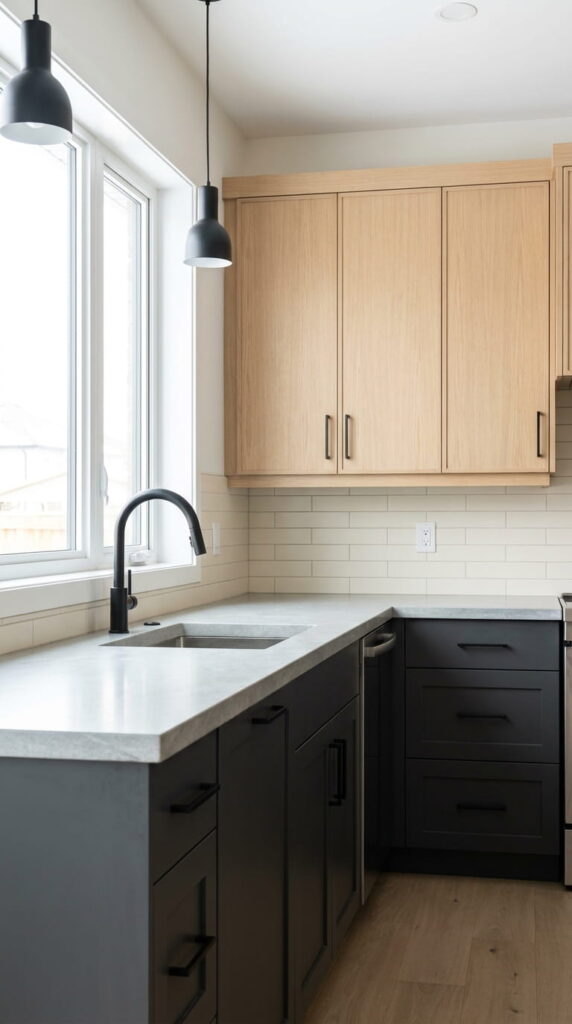
Charcoal and pale oak create a modern look with enough warmth for everyday living. The charcoal base adds structure, while the lighter upper cabinets introduce natural texture and keep the kitchen from feeling overly dark.
This arrangement works best in kitchens with strong daylight, pale walls, and simple countertops. Use oak uppers with minimal handles or integrated pulls to keep the grain visually clean. Add a soft cream backsplash to bridge the difference between wood and paint.
Avoid choosing a cool charcoal if the oak has warm honey notes. A slightly softened charcoal with brown or green undertones will feel more connected. Keep decor limited so the cabinetry remains the main feature.
8. Add a Dusty Blue Island to a Warm Neutral Kitchen
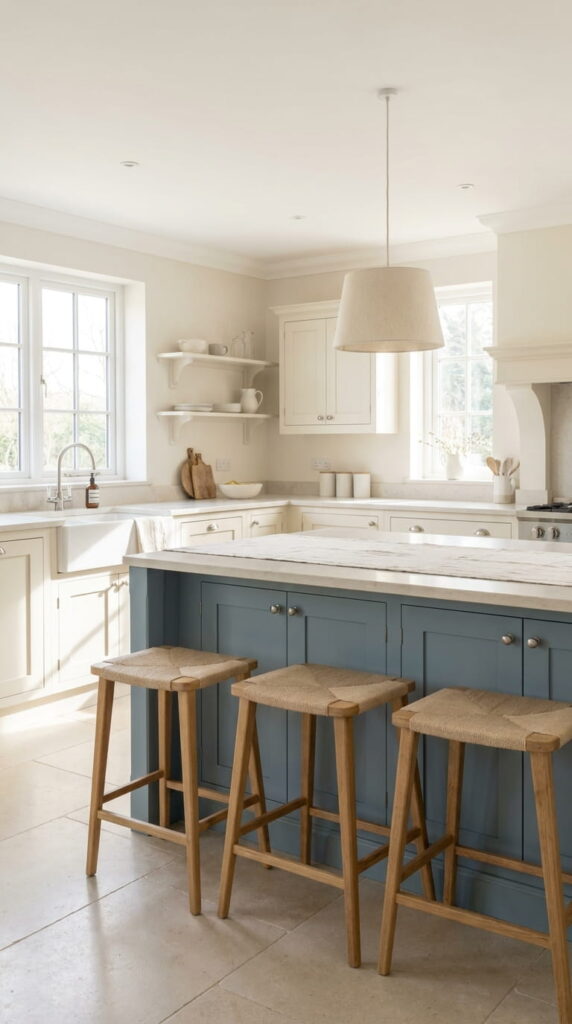
Dusty blue feels softer than navy and more distinctive than gray. It works especially well on an island surrounded by putty, ivory, or light beige cabinets. The result feels fresh but still easy to style over time.
Choose a blue with muted gray undertones. Pair it with pale stone, brushed nickel hardware, and natural wood stools. In a coastal kitchen, add woven pendant lights. In a more classic room, use shaker cabinet fronts and a softly veined countertop.
Avoid pairing dusty blue with bright white unless you want a sharper coastal look. Warm neutrals create a more settled and timeless mood. This color combination also works well in kitchens connected to relaxed living areas.
9. Use Terracotta on Lower Cabinets With Cream Above
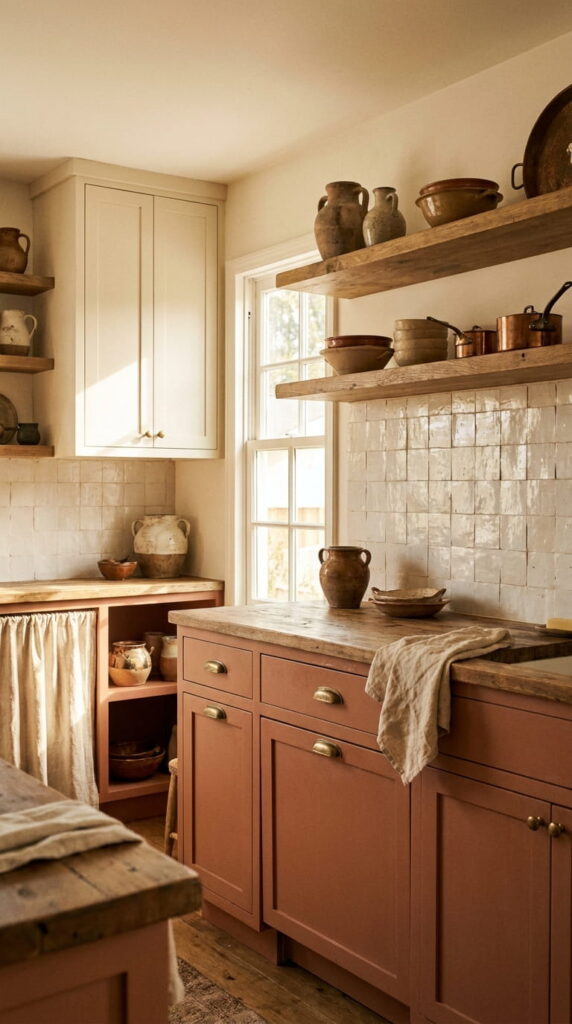
Terracotta lower cabinets bring warmth into the kitchen without relying on bright red or orange. The earthy color feels sun-baked and grounded, while cream upper cabinets soften the overall effect. This pairing suits Mediterranean-inspired kitchens, warm modern interiors, and rooms with natural stone floors.
Choose a muted clay or cinnamon shade with brown undertones. Add off-white tiles, a wooden shelf, and aged brass handles. A few handmade ceramics will reinforce the artisan feel without crowding the countertop.
Avoid using too many rustic details at once. Terracotta already carries personality. Keep the cabinetry lines clean and let a few tactile textures do the work. A simple backsplash can create balance.
10. Pair Deep Blue Cabinets With Natural Wood Open Shelving
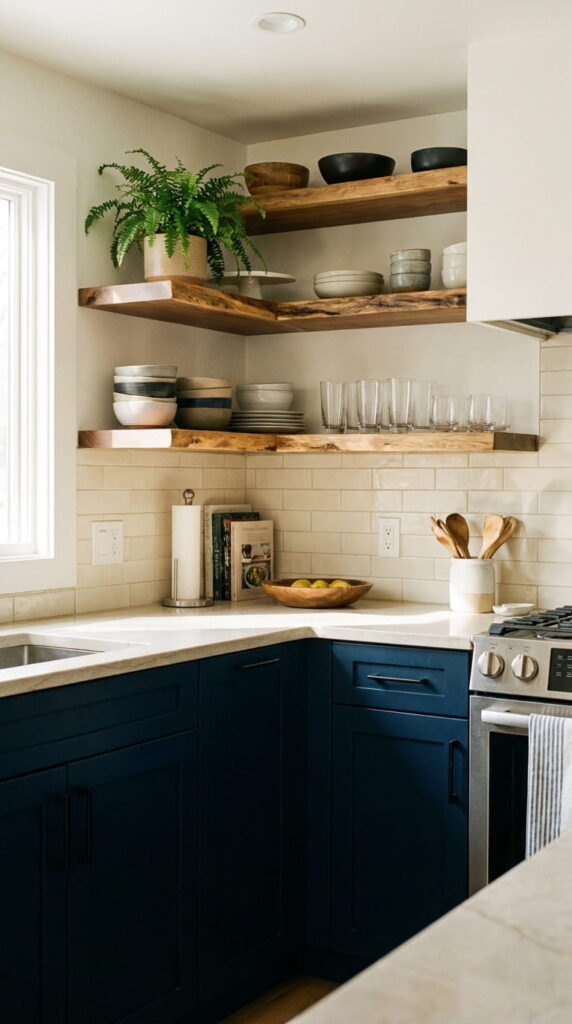
You do not need two full cabinet colors to create a two-tone effect. Deep blue lower cabinets paired with natural wood open shelving can feel lighter and more relaxed than a wall of painted upper units.
This idea works well in compact kitchens, galley kitchens, and casual family spaces. Install thick wooden shelves above the main counter run or beside a kitchen window. Style them with everyday dishes, glassware, and one small plant.
Avoid covering every wall with open shelves. Too many exposed items create visual noise and require frequent cleaning. Keep one or two shelves edited and practical. For additional shelf styling guidance, see these kitchen makeover ideas.
11. Create Contrast With Espresso Cabinets and Soft Gray Uppers
Espresso brown cabinets offer a warmer alternative to black. Paired with soft gray uppers, they create a grounded modern kitchen that feels sophisticated without becoming severe. This combination looks particularly strong in kitchens with stainless steel appliances and stone counters with subtle brown veining.
Use espresso on lower cabinets, the island, or a tall pantry zone. Keep the gray warm enough to connect with the brown finish. Add under-cabinet lighting to prevent dark corners and highlight the backsplash.
Avoid choosing a gray with strong blue undertones. It may clash with the warmth of espresso. Sample both shades beside the countertop before committing. The right pairing should feel quiet, balanced, and easy on the eyes.
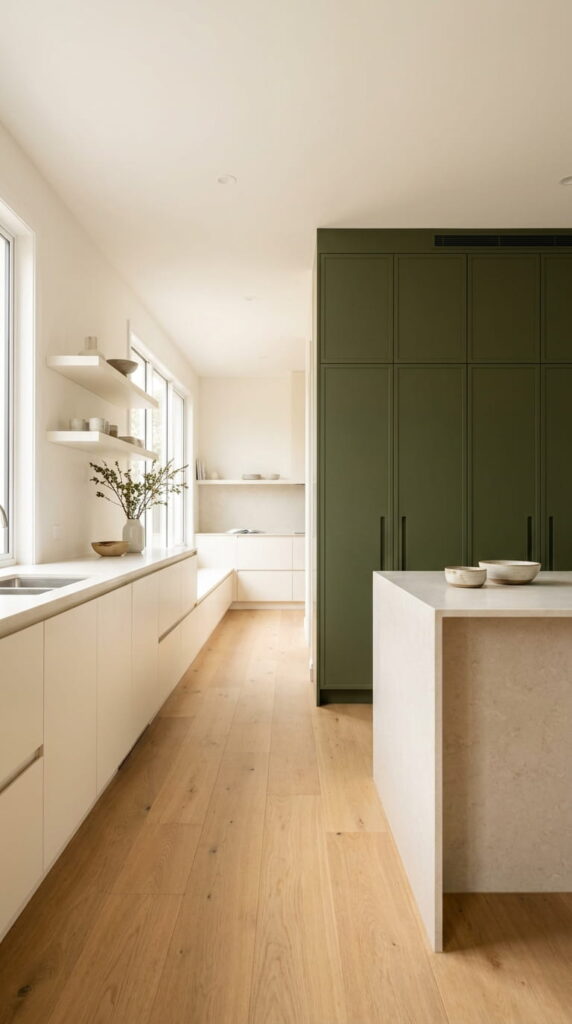
12. Paint the Pantry Wall a Deeper Color
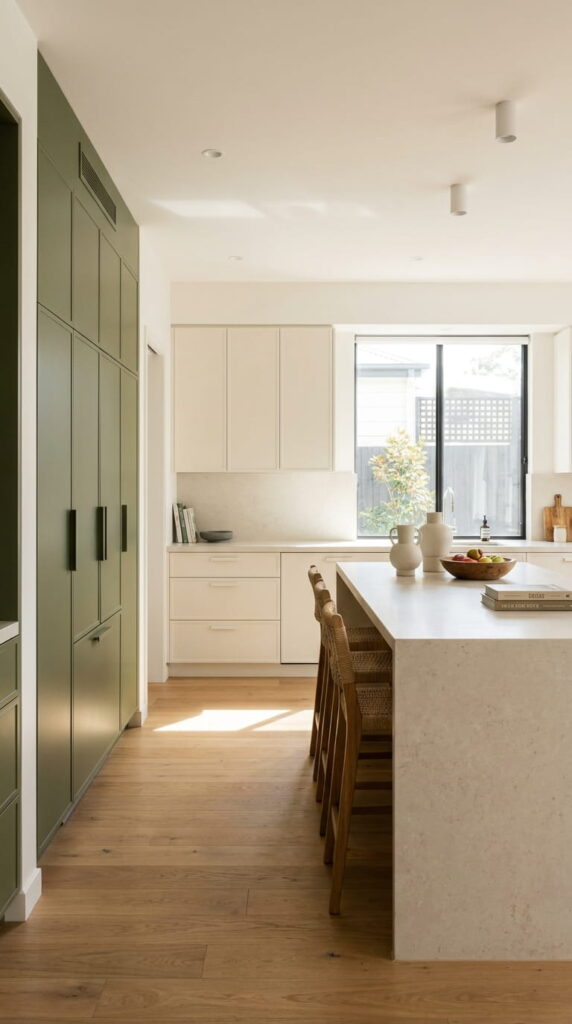
A full pantry wall offers an ideal place for a second cabinet color. Instead of splitting upper and lower cabinets, keep the main kitchen light and paint the tall pantry units in a deeper tone, such as olive, navy, charcoal, or warm brown.
This approach creates a strong architectural moment without adding visual clutter. It works well in open kitchens where tall cabinets need to feel intentional. Use the darker color on floor-to-ceiling storage, then repeat it subtly through a bar stool, vase, or framed artwork.
Avoid scattering the accent color across unrelated cabinet sections. A concentrated block of color looks more refined. In small rooms, review these small kitchen design ideas before adding large dark surfaces.
13. Pair Soft Pink Cabinets With Warm White
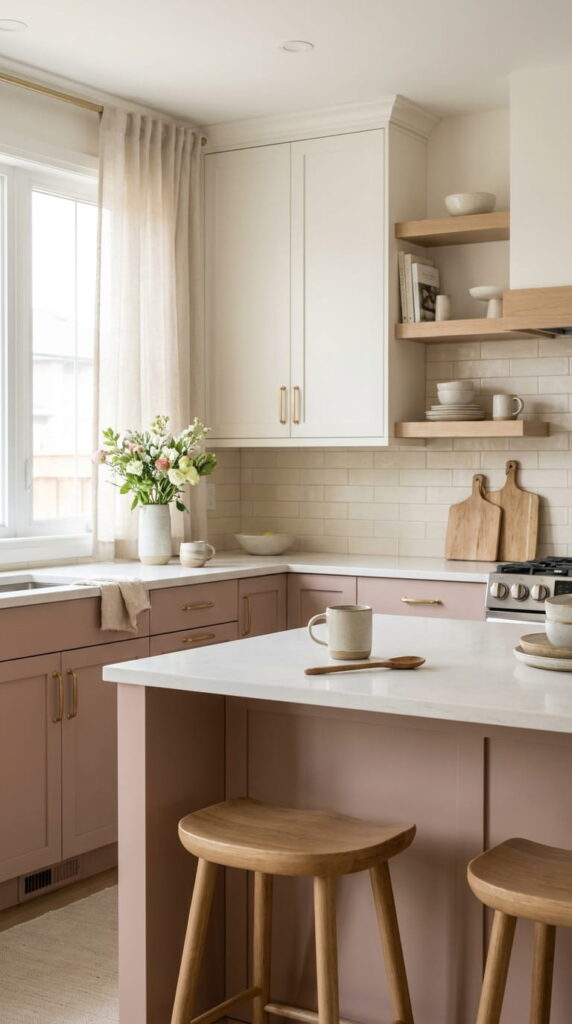
Soft blush, muted rose, and dusty pink can work like warm neutrals when you keep the saturation low. Paired with warm white cabinets, pink creates a kitchen that feels gentle, personal, and surprisingly timeless.
Use the pink shade on lower cabinets, an island, or a freestanding pantry. Add pale oak, cream tiles, and brushed brass details to maintain an earthy palette. This pairing works best in kitchens with natural light and a slightly playful character.
Avoid candy-colored pink or glossy finishes unless you want a bold retro result. A matte, clay-based pink feels calmer and more grown-up. Keep the decor simple so the cabinet color has space to breathe.
14. Combine Olive Green With Creamy Beige Cabinets
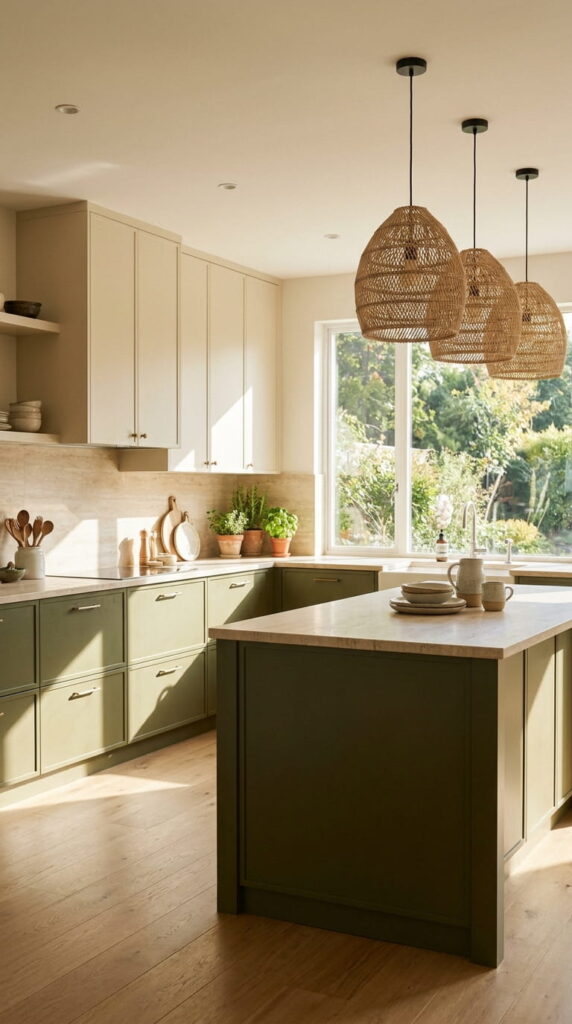
Olive green and creamy beige feel warm, grounded, and easy to connect with surrounding rooms. Olive carries more depth than sage but remains softer than forest green. Beige prevents the combination from feeling too heavy.
Use olive on base cabinets or the island and reserve creamy beige for upper cupboards. Add oak flooring, honed stone, and woven pendant lights for an organic modern finish. This look works well in kitchens with garden views because the colors connect naturally with the outdoors.
Avoid using a yellow-heavy beige beside a muddy olive. Test both colors under daylight and evening lighting. The best pairing should feel layered, not dull. Subtle contrast creates the strongest result.
15. Mix Painted Cabinets With a Wood-Clad Island
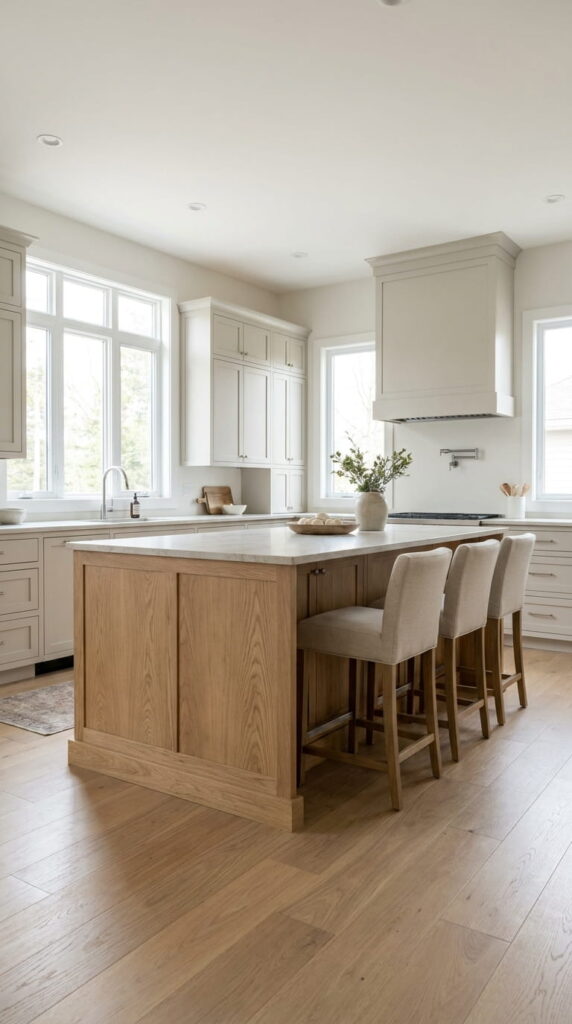
A wood-clad island offers one of the safest and most timeless ways to introduce a second finish. Keep perimeter cabinetry in warm white, greige, sage, or muted blue, then use oak, walnut, or ash on the island.
This strategy works in nearly any kitchen style because natural wood adds texture without competing with other features. Repeat the timber through open shelving, stool legs, or a serving board to connect the room. Choose a wood tone that complements your flooring rather than matching it exactly.
Avoid using several unrelated grains. One dominant wood finish creates a more intentional layout. If the island includes seating, balance its scale carefully so the room remains comfortable to move through.
What Design Experts Say About Modern Kitchen Cabinets
Modern kitchens no longer rely on a single sterile finish. Architectural Digest’s designer-approved cabinet color guide highlights versatile whites, creams, greens, blues, and deeper shades that can remain appealing over time.
House Beautiful’s kitchen cabinet inspiration guide also emphasizes that cabinet color, material, finish, hardware, and storage all shape the room’s character. That matters when you plan a two-tone kitchen. The strongest pairings do not rely on color alone. They also consider light, scale, practical storage, and how each finish connects with the rest of the home.
For visual research, browse the two-tone kitchen cabinet gallery on Houzz and save examples that match your room size before buying paint or cabinetry.
FAQs: Styling Two-Tone Kitchen Cabinets
A Modern Kitchen Should Still Feel Like Home
Two-tone cabinets can make a kitchen feel more thoughtful without making it complicated. Start with the atmosphere you want. Perhaps you want the quiet warmth of oak and greige, the tailored contrast of navy and cream, or the earthy comfort of olive and beige.
Then look at the room in real life. Notice the daylight. Consider the flooring, countertops, and sightlines into nearby spaces. Test samples before making a final choice.
The best kitchen does not chase every new style. It supports the way you cook, gather, and move through your day. Choose colors that feel natural to you, leave room for texture, and build a kitchen that tells your own story.