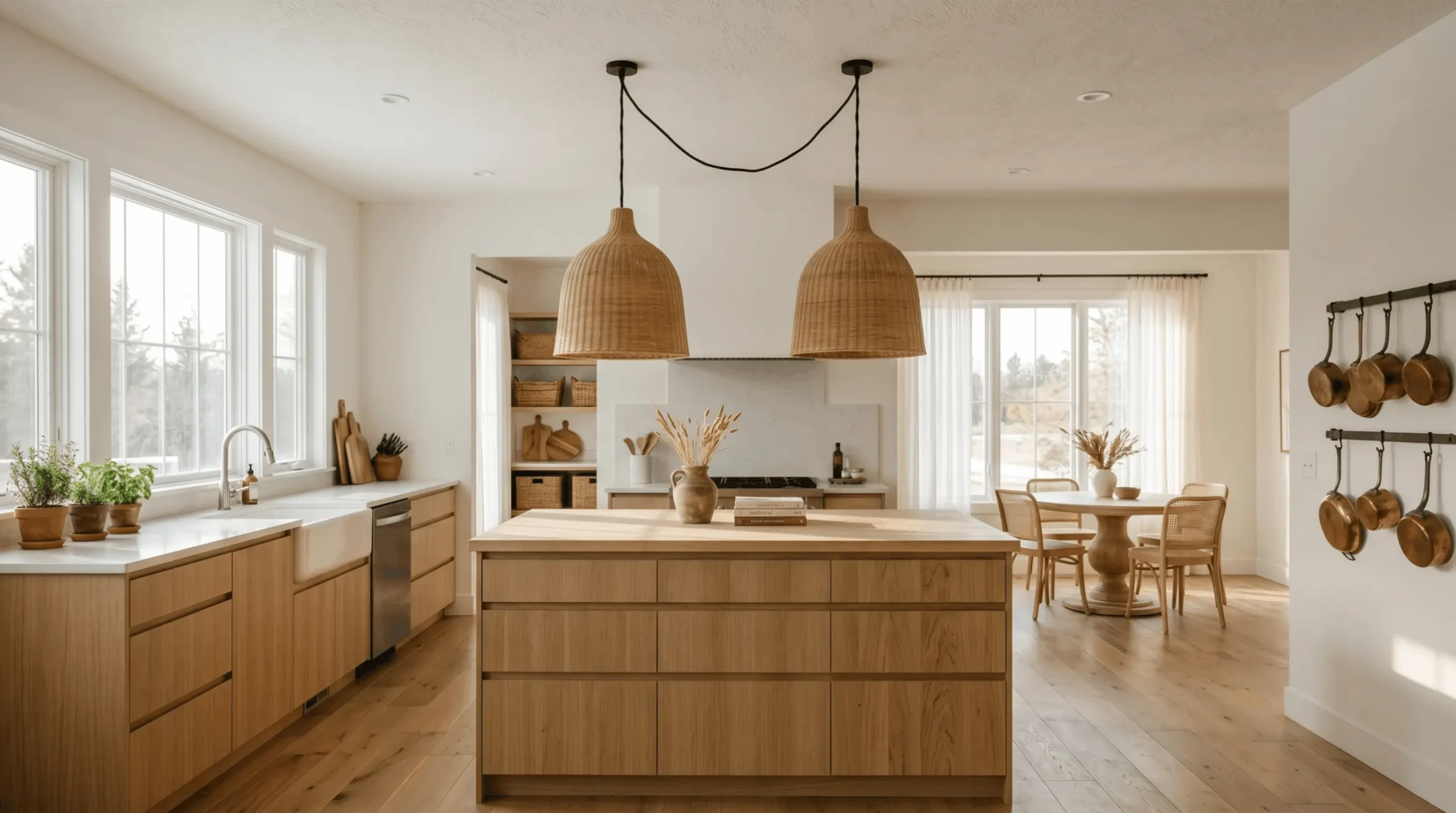
There is a distinct moment in the morning when the first ray of sunlight hits the kitchen counter, and you realize whether your space feels like a cold culinary laboratory or the true, beating heart of your home. For years, design focused heavily on stark, sterile white surfaces that looked beautiful in a showroom but felt completely soulless while frying an egg or brewing coffee. Your kitchen shouldn’t feel like a high-maintenance gallery; it should be a functional sanctuary that embraces the daily mess of life. Introducing a few thoughtful changes isn’t about gutting your budget to build a clinical showroom. Instead, it is about shifting the energy of the room toward visual harmony, intentional layouts, and raw finishes that age gracefully over time. These 15 jaw dropping kitchen transformation ideas will help you achieve exactly that.
Why This Style Matters
Modern living demands a lot from our homes, and the kitchen bears the heaviest burden. A successful redesign solves the deep-seated frustration of a cold, uninspiring workspace that lacks storage and emotional warmth. Today, homeowners are moving away from factory-made uniformity and embracing biophilic design and artisan craftsmanship. We want our spaces to tell a story through tactile textures, rich grains, and thoughtful curation. By balancing scale and maximizing natural light, you can turn a cramped, chaotic cooking area into a cozy living space where family members naturally gather, talk, and linger long after the meal is over.
15 Curated Ideas for Your Kitchen Transformation
1. Introduce Raw Edged Wooden Floating Shelves
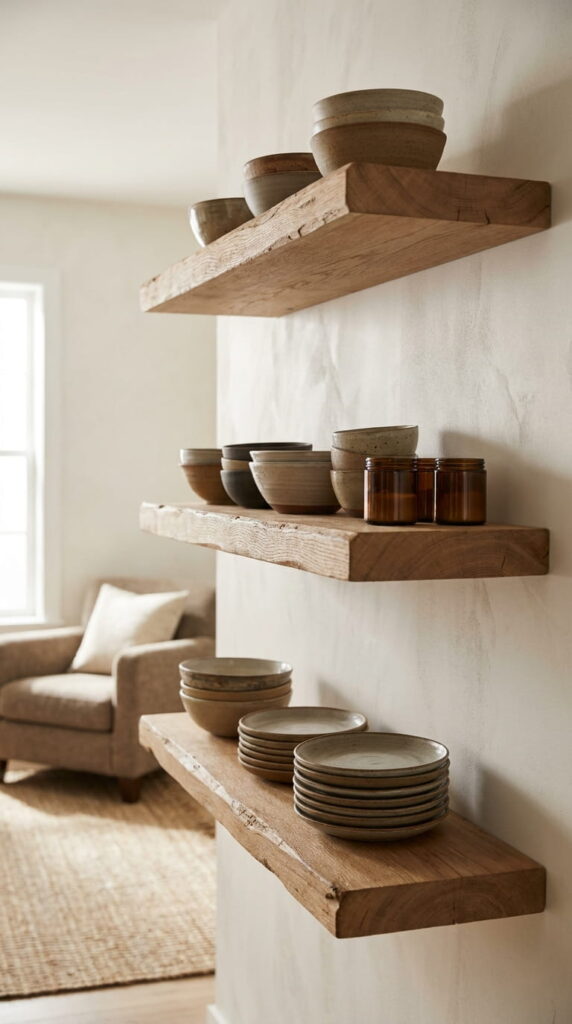
Swapping out bulky upper cabinets for thick, open shelving made from reclaimed wood immediately opens up sightlines. The raw finishes and rich grains of natural timber inject architectural interest into a flat wall, creating an ideal spot for your daily stoneware.
- Where it works best: Above the main countertop run or flanking a kitchen window to let light pour in.
- Practical Styling Guidance & Tips: Anchor heavy brackets directly into wall studs. Style the shelves with items you use every single day—like your morning coffee mugs and cereal bowls—so dust never has a chance to settle.
- Common Mistakes: Crowding the shelves with tiny, mismatched knick-knacks that create visual clutter instead of clean, curated spaces.
2. Swap Chrome for Aged Living Finishes
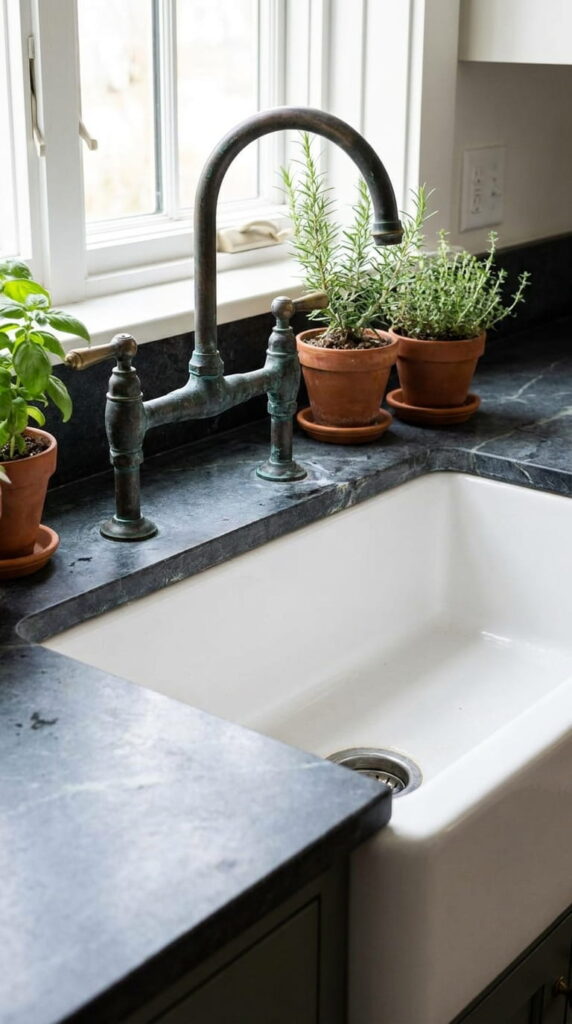
Replacing generic, shiny faucets and cabinet pulls with unlacquered brass or oil-rubbed bronze completely alters the room’s tone. These living finishes develop a beautiful, unique patina over time, responding to the touch of your hands and bringing a sense of timeless styling to everyday hardware.
- Where it works best: Central sink basins and high-traffic cabinet doors where hands touch the hardware most often.
- Practical Styling Guidance & Tips: Mix your metals thoughtfully. Match your cabinet latches with your main faucet, but feel free to use a darkened iron for light fixtures to maintain a collected look.
- Common Mistakes: Buying cheap lacquered lookalikes that simply flake off rather than aging naturally into a rich patina.
3. Lay a Textured Vintage Runner
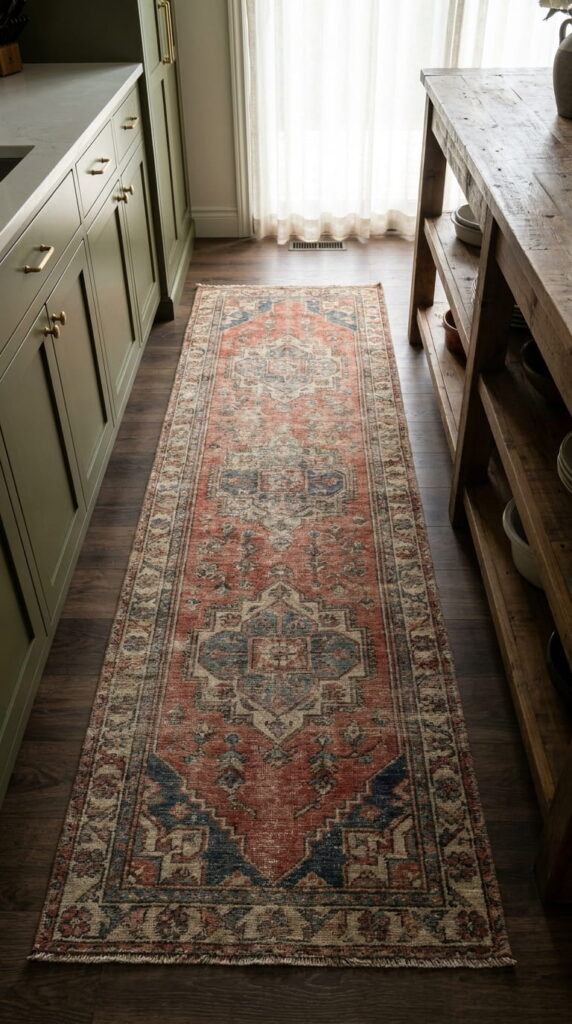
Placing a durable, vintage Turkish or Persian runner along the kitchen floor instantly softens the hard, cold surfaces of cabinetry and tile. The woven elements provide immediate underfoot comfort during long prep sessions while anchoring the room’s color palette.
- Where it works best: The narrow floor space between a central kitchen island and the main range wall.
- Practical Styling Guidance & Tips: Always use a premium, non-slip rubber rug pad underneath to prevent sliding. Choose low-pile wool rugs, as their natural lanolin coating repels spills and makes cleanup remarkably simple.
- Common Mistakes: Using a delicate, synthetic rug that cannot handle high foot traffic or unavoidable sauce splatters.
4. Create a Dedicated Morning Beverage Station
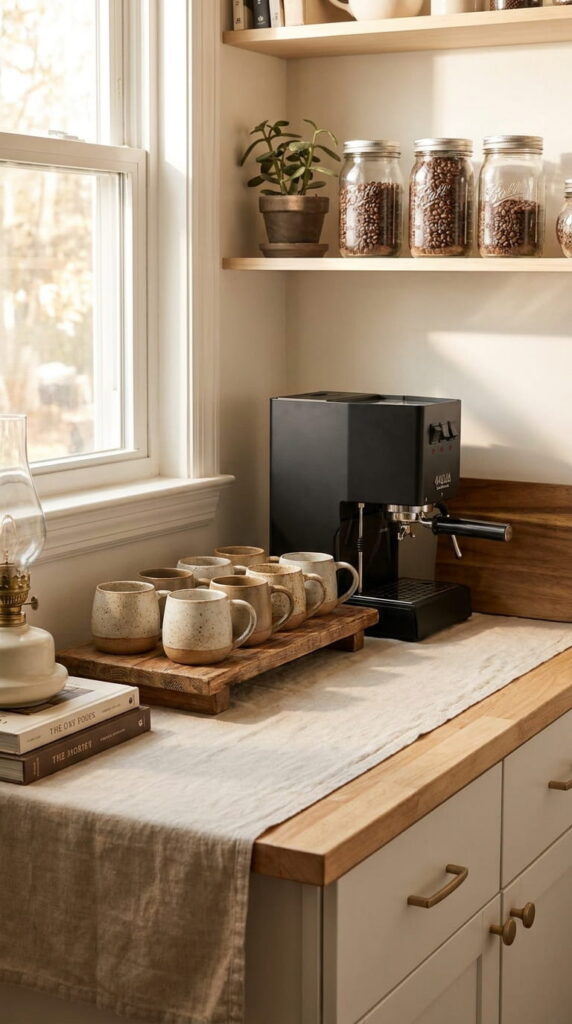
An intentional beverage hub organizes your coffee maker, espresso machine, custom mugs, and organic syrups into one beautifully organized nook. This layout keeps early-morning traffic away from the main cooking zone, creating an effortless routine.
- Where it works best: A quiet corner of the countertop, a repurposed pantry closet, or a transitional wall near the dining area.
- Practical Styling Guidance & Tips: Keep your coffee beans and tea leaves in airtight, tinted glass jars. Use a small stoneware tray to group sugar bowls and spoons together neatly.
- Common Mistakes: Leaving appliance cords tangled and fully exposed across the counter, which instantly breaks the visual harmony.
5. Install a Soft, Handmade Zellige Tile Backsplash
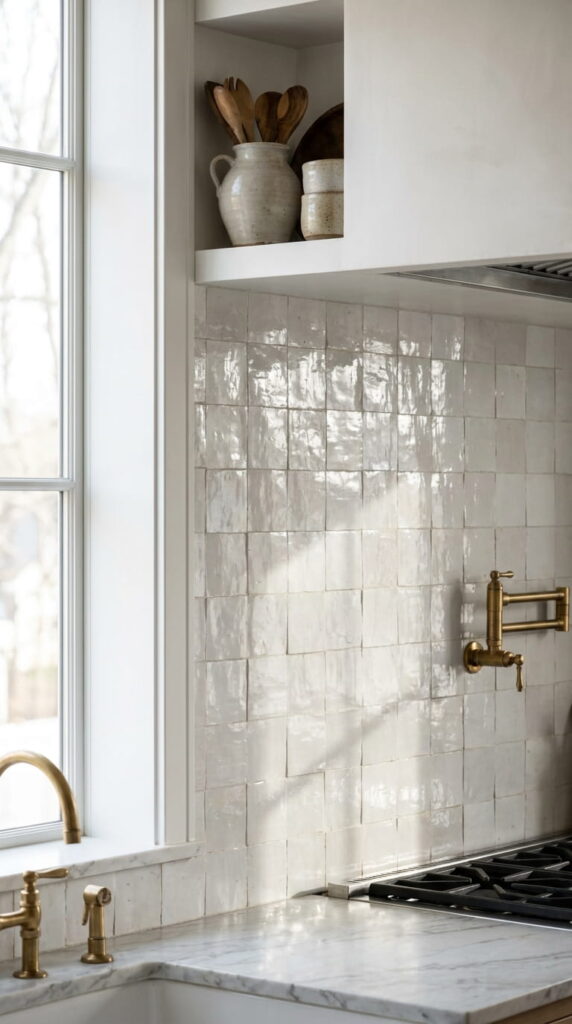
Unlike perfectly flat, machine-cut tiles, handmade Moroccan Zellige tiles feature beautiful imperfections, uneven edges, and subtle shade variations. When light hits the glossy, hand-fired surface, it bounces beautifully across the room, bouncing natural light into darker corners.
- Where it works best: As a full-height backsplash running from the countertop all the way up to the ceiling line.
- Practical Styling Guidance & Tips: Hire an installer experienced with raw, uneven tiles. Use a minimal grout joint without spacers to let the natural, organic edges sit tightly against each other.
- Common Mistakes: Using a harsh, high-contrast grout color that emphasizes the rough edges too aggressively, making the wall look messy.
6. Opt for Organic Modern Cabinet Colors
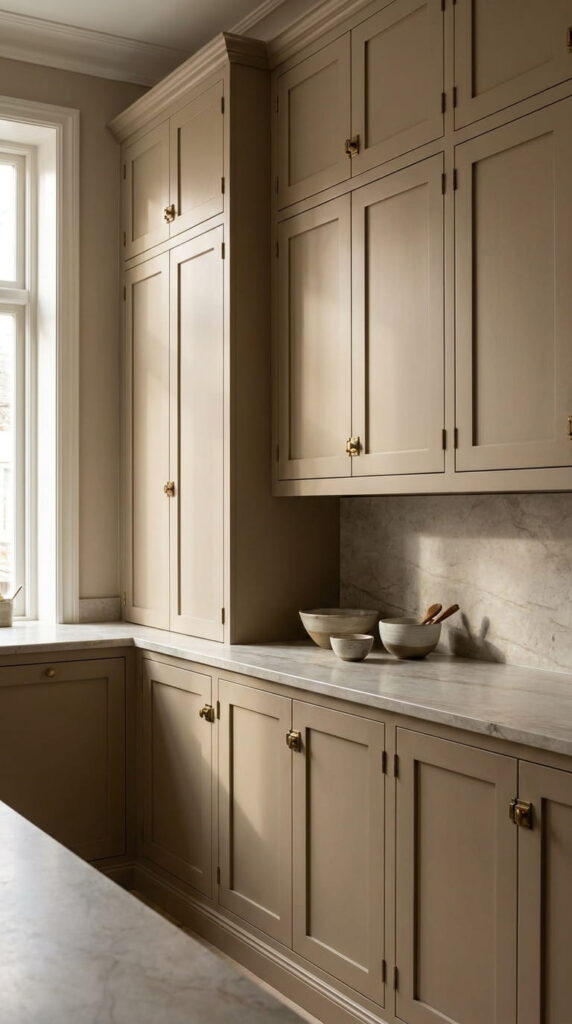
Move past stark clinical white and paint your cabinet doors in earthy palettes. Muted tones like soft sage green, warm mushroom, or deep terracotta bring a grounding, biophilic energy into the room, making the entire kitchen feel instantly cozier.
- Where it works best: On both upper and lower cabinets, or exclusively on the island base to create a grounding focal point.
- Practical Styling Guidance & Tips: Test large paint swatches on different walls. Observe how the shade changes under natural morning light versus your warm evening overhead bulbs.
- Common Mistakes: Choosing a cold, blue-based gray that makes the room feel uninviting during overcast winter days.
7. Hang Woven Rattan or Cane Pendant Lights
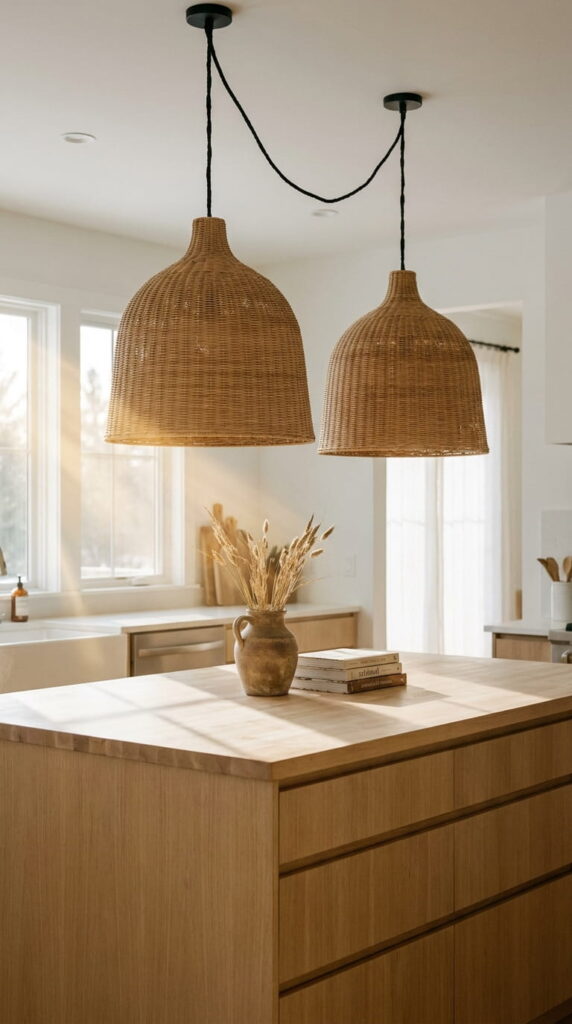
Bringing oversized, woven light fixtures over your kitchen island or dining table introduces immediate tactile textures. The open weave filters harsh light bulb glare, casting soft, intricate shadow patterns across the ceiling and walls for a relaxed evening mood.
- Where it works best: Suspended directly over a large kitchen island or centered above a rustic breakfast table.
- Practical Styling Guidance & Tips: Hang the bottom of the pendant roughly 30 to 36 inches above the countertop surface to maintain clear sightlines while balancing scale.
- Common Mistakes: Picking fixtures that are way too small, making them look like an afterthought in a spacious room.
8. Layer Sconces for Ambient Wall Lighting
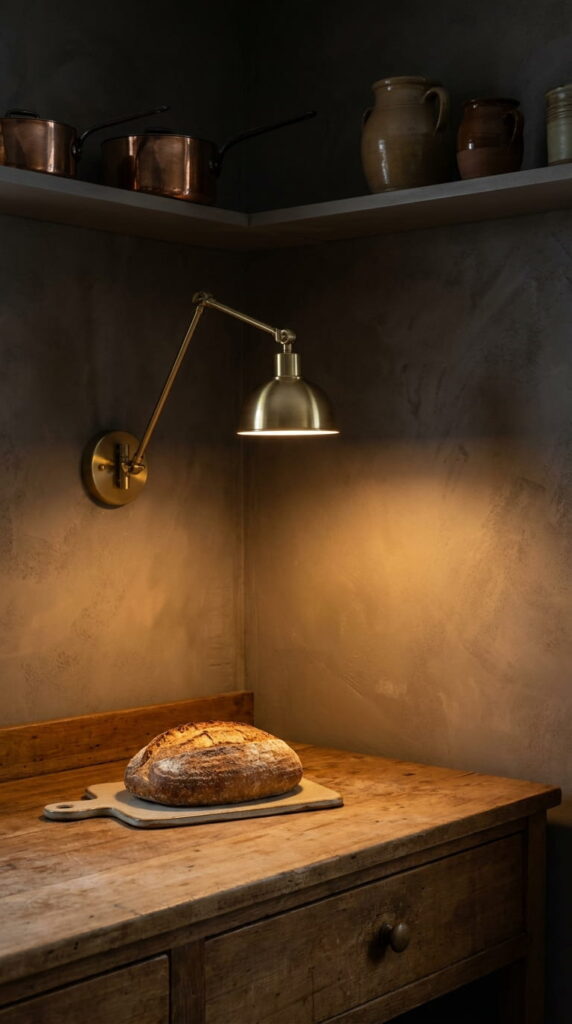
Relying solely on harsh overhead recessed can lights can make a kitchen feel like a sterile commercial workspace. Installing dimmable brass wall sconces above open shelves or windows creates warm, localized pools of light that make the space feel incredibly cozy after dark.
- Where it works best: Mounted directly on the wall above the kitchen sink or between open floating shelves.
- Practical Styling Guidance & Tips: Use warm-tinted LED bulbs (around 2700K) and place the sconces on an independent dimmer switch to easily control the evening mood.
- Common Mistakes: Placing sconces too high on the wall, which casts awkward shadows downward and misses the human eye level.
9. Introduce an Antique Accent Piece
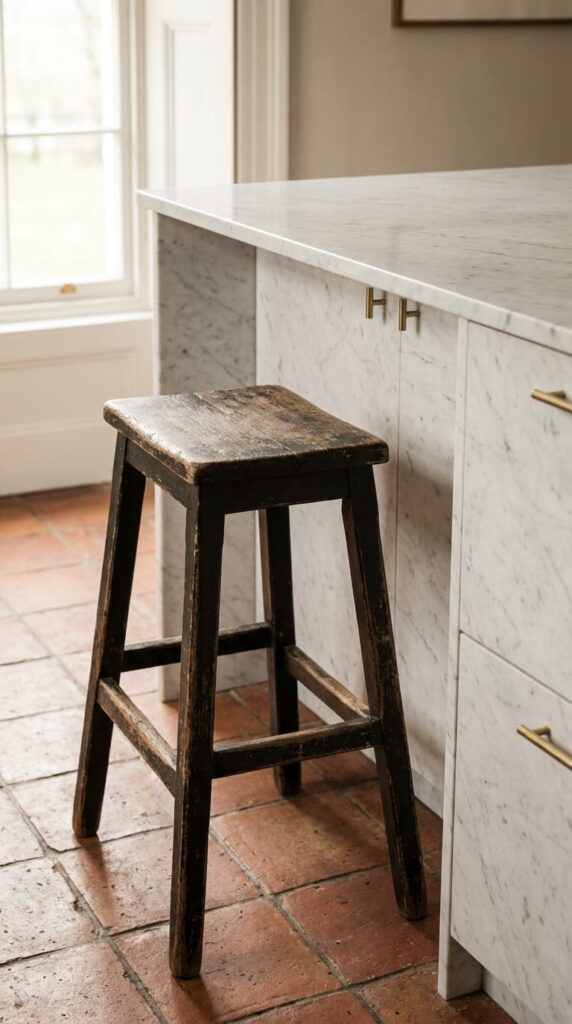
Integrating a piece of non-kitchen furniture—like an old wooden stool, a weathered apothecary cabinet, or a rustic cutting table—breaks up the monotony of built-in cabinetry. It adds immediate soul and a sense of history to a brand-new space.
- Where it works best: At the end of a cabinet run, tucked into a corner, or used as a unique focal point island.
- Practical Styling Guidance & Tips: Ensure the piece is structurally sound. Clean old wood thoroughly and seal it with a food-safe matte wax to preserve its character while protecting it from moisture.
- Common Mistakes: Choosing an uninspired reproduction piece that lacks the genuine depth and authenticity of actual antique craftsmanship.
10. Frame the Windows with Soft Woven Linen
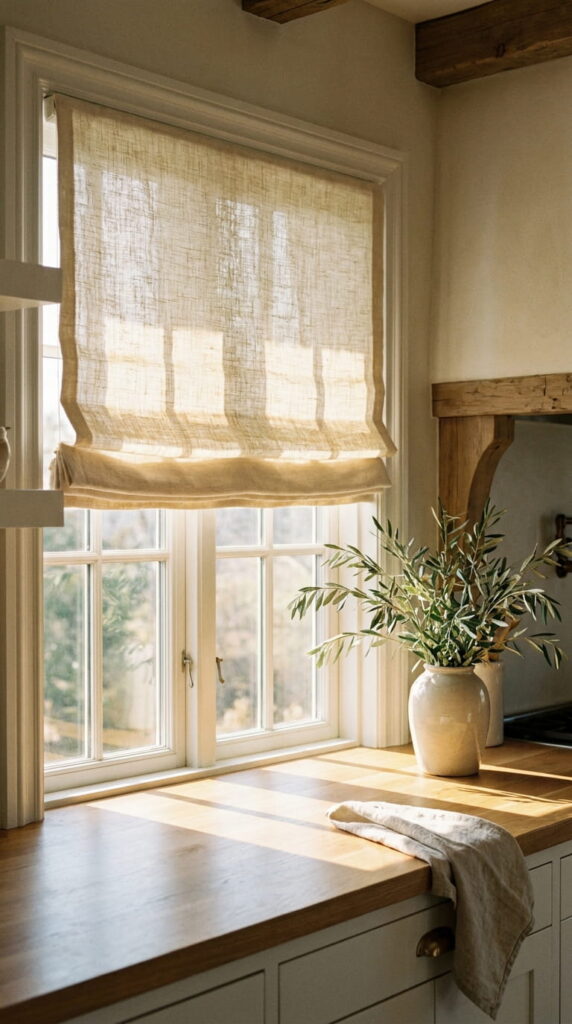
Leaving kitchen windows completely bare can make the room feel cold and loud. Hanging a simple, unlined Roman shade made from lightweight woven linen softens the hard edges of the window frame and filters incoming natural light beautifully.
- Where it works best: On windows located directly above the kitchen sink or inside an adjacent breakfast nook.
- Practical Styling Guidance & Tips: Mount the shade slightly above the window frame to make the ceiling appear higher and maximize the glass area when fully raised.
- Common Mistakes: Selecting heavy, dark fabrics that absorb too much grease and block out precious daylight.
11. Incorporate an Integrated Herb Garden
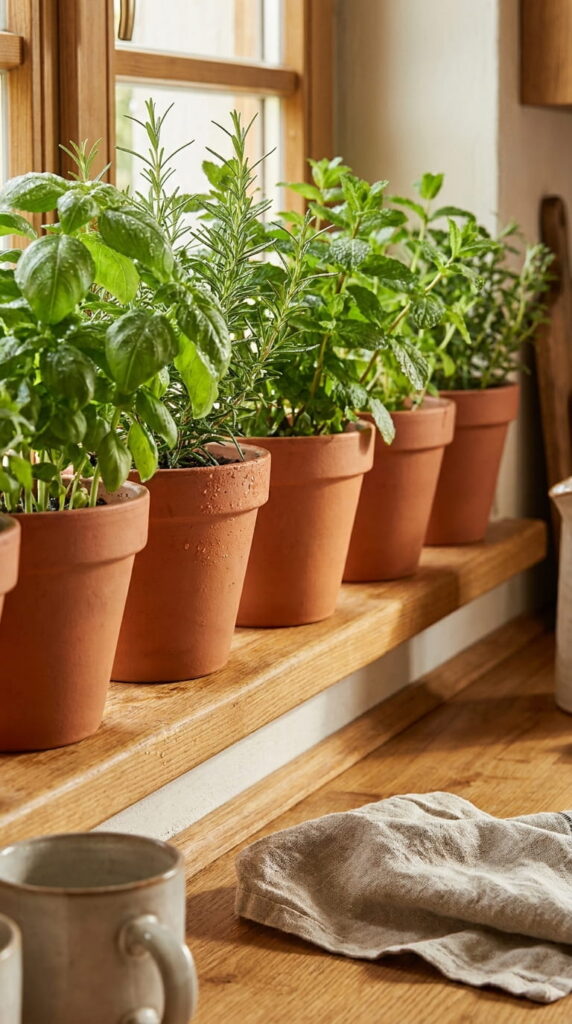
Bringing live greenery directly onto the countertop or windowsill connects your cooking process to biophilic design. Growing fresh basil, rosemary, and thyme in clay pots provides a steady supply of fresh ingredients while filling the room with subtle, natural fragrances.
- Where it works best: Deep windowsills that receive consistent, bright indirect sunlight throughout the day.
- Practical Styling Guidance & Tips: Plant your herbs in raw terracotta pots that naturally breathe. Place a small stone tray underneath to collect excess watering drainage neatly.
- Common Mistakes: Overwatering the plants in pots without drainage holes, which quickly leads to root rot and yellowing leaves.
12. Display Heavy Stoneware Crocks for Utensils
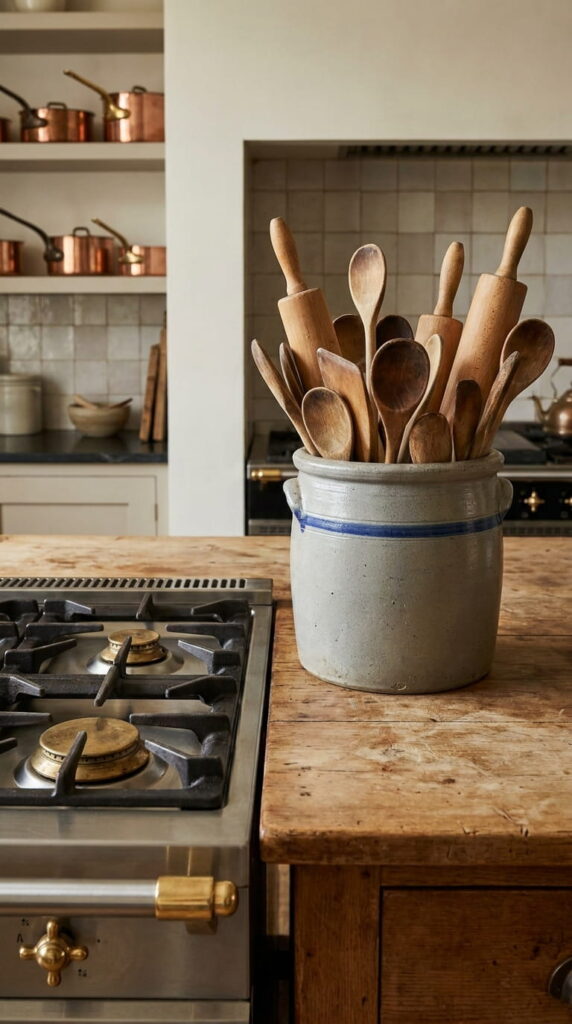
Ditch the plastic drawer organizers and corral your wooden spoons, rolling pins, and stainless steel whisks into large, heavy antique stoneware crocks placed right next to your cooking range. This approach keeps your most-used tools within arm’s reach while adding a layer of tactile texture.
- Where it works best: Right on the countertop surface directly next to your main cooking range or cooktop.
- Practical Styling Guidance & Tips: Group your utensils by material. Put your warm wooden spoons together in one crock, and keep metal tongs and whisks in another to maintain visual harmony.
- Common Mistakes: Overstuffing a single small crock so tightly that it becomes frustrating to pull out a single spoon during a frantic cooking moment.
13. Create a Warm Plaster Focus Wall
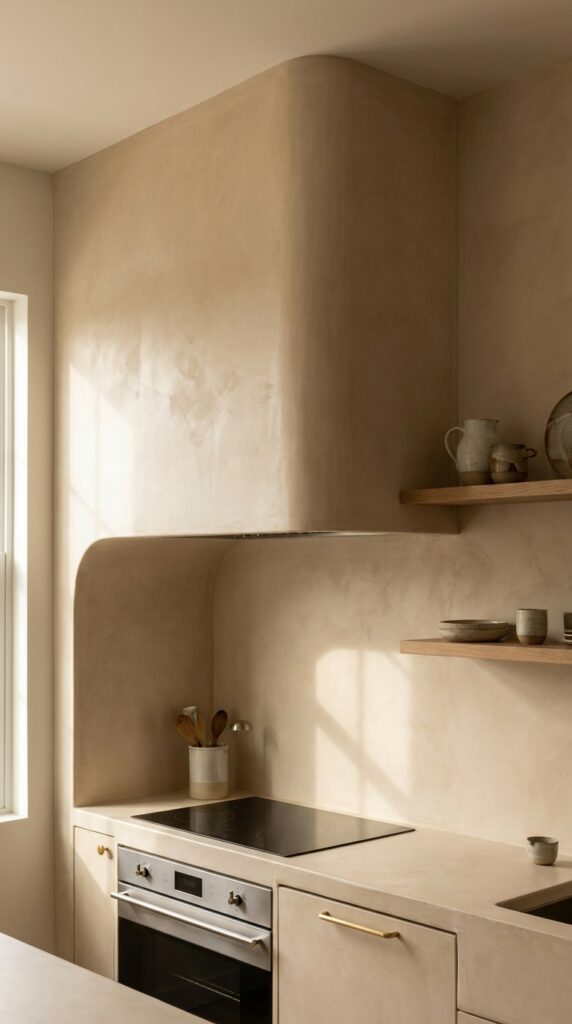
Moving away from standard drywall paint, applying a subtle, hand-troweled lime wash or Roman clay plaster finish to a feature wall adds beautiful depth. The velvety, matte finish catches natural light softly, offering an organic alternative to traditional tile backsplashes.
- Where it works best: The wall behind an oven hood or an open dining wall within a larger kitchen layout.
- Practical Styling Guidance & Tips: Apply a specialized, breathable matte sealer over the plaster finish to ensure you can easily wipe away occasional oil splashes and cooking steam.
- Common Mistakes: Applying an overly aggressive, high-texture plaster that traps dust and proves incredibly difficult to wipe down clean.
14. Style a Statement Butcher Block Prep Zone
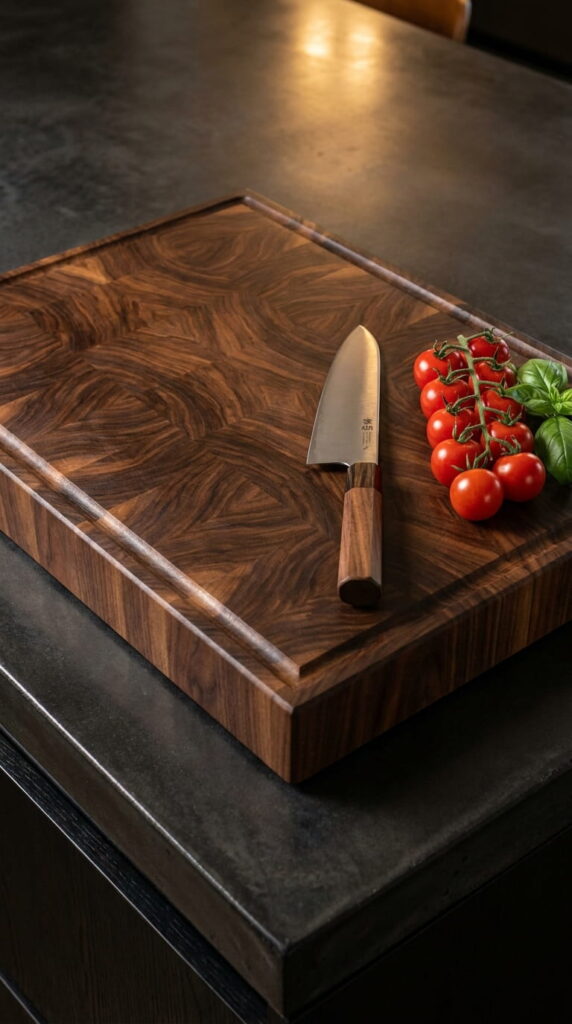
Whether you install a full wood island countertop or use a massive, three-inch-thick end-grain chopping board, a dedicated wood prep zone breaks up cold stone surfaces. The rich, organic wood grain offers a beautiful contrast to quartz or marble countertops.
- Where it works best: Positioned right in the middle of a central island or as a dedicated baking station.
- Practical Styling Guidance & Tips: Treat the wood monthly with food-grade mineral oil and organic beeswax to prevent drying out and splitting over time.
- Common Mistakes: Letting standing water sit on the wood surface for long periods, which permanently stains and damages the natural fibers.
15. Hide Small Appliances Behind Pocket Doors
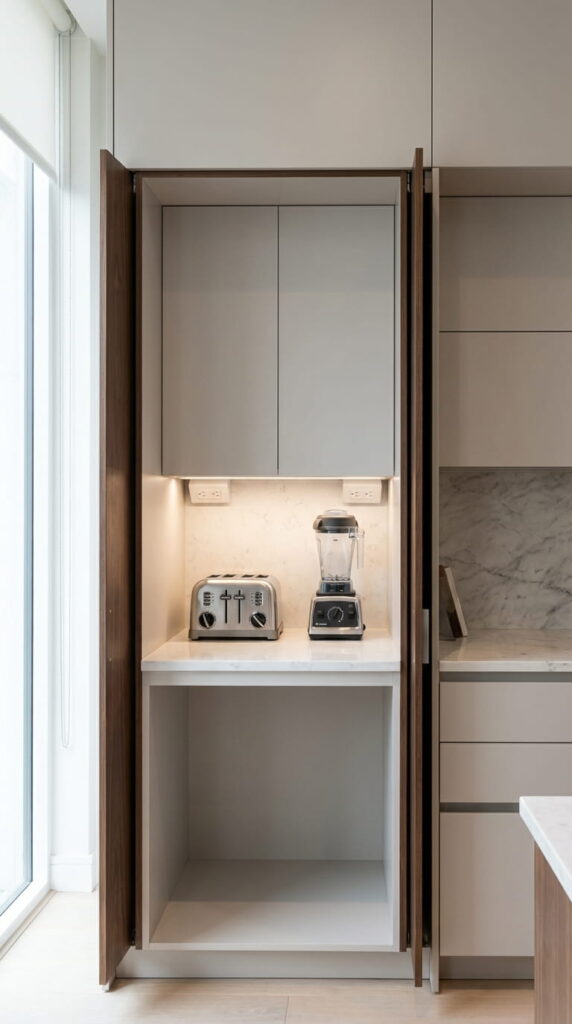
Keep your counters completely clear of daily clutter by designing a dedicated appliance garage with smart pocket doors. Hiding away the toaster, blender, and microwave keeps the focus entirely on your curated spaces and timeless styling choices.
- Where it works best: Built directly into a tall pantry cabinet tower or sitting right at countertop level in a corner.
- Practical Styling Guidance & Tips: Install internal electrical outlets directly inside the cabinet so you never have to move heavy appliances around to plug them in.
- Common Mistakes: Installing standard swinging doors that block your narrow walkway paths while left open during busy meal preparation hours.
EEAT Authority Citations
When considering the flow and spatial dynamics of your kitchen, leading design publications like Architectural Digest consistently emphasize that open layout structures must prioritize functional zoning over mere aesthetics. Furthermore, House Beautiful notes that the integration of living finishes and handmade materials is no longer considered a temporary trend; rather, it represents a permanent shift toward creating homes with lasting historical character and deep emotional resonance.
FAQs: Expert Kitchen Styling & Maintenance
Conclusion
Your kitchen is far more than a checklist of stainless steel appliances and square footage; it is the emotional center where your day begins and ends. Embracing these 15-jaw-dropping-kitchen-transformation-ideas allows you to move past cold, rigid trends and design a space that feels deeply personal, grounded, and functional. By focusing on rich grains, tactile textures, and intentional layouts, you create an environment that welcomes family gatherings and quiet morning routines alike. Trust your personal design instincts, look for materials that age beautifully, and build a kitchen that tells your family’s unique story for years to come.