A classroom can feel completely different after one quiet afternoon with colored paper, scissors, and a little imagination. I still remember walking into a school hallway where a teacher had covered one wall with handmade paper flowers and tiny leaf cutouts. Nothing looked expensive. Still, the space felt warm, welcoming, and full of care.
The best school wall decoration ideas with paper work in the same way. They add color without creating chaos. They give children something cheerful to look at while keeping the room calm enough for learning. Paper is also easy to update as the seasons, subjects, and student projects change. Whether you are refreshing a classroom, hallway, library corner, or activity room, these ideas will help you create a wall that feels joyful, organized, and personal.
Why Thoughtful Paper Wall Decor Matters in a Classroom
A well-decorated classroom should feel lively, not crowded. Paper crafts can soften blank walls, highlight important learning zones, and make children feel that the room belongs to them. The key lies in editing. Carnegie Mellon University reported that heavily decorated classrooms can distract young children and reduce learning gains. Edutopia also recommends keeping some wall space clear and using displays with purpose. Architectural Digest often treats a blank wall as a creative canvas; in a classroom, the smartest version of that idea uses tighter editing so the display stays inspiring and easy to scan.
That balance makes paper decor especially useful. You can create strong focal points without filling every inch. Start with one feature wall, repeat a simple palette, and leave visual breathing room around each display. The result feels cheerful and intentional rather than busy.
1. Create a Layered Paper Flower Garden Wall
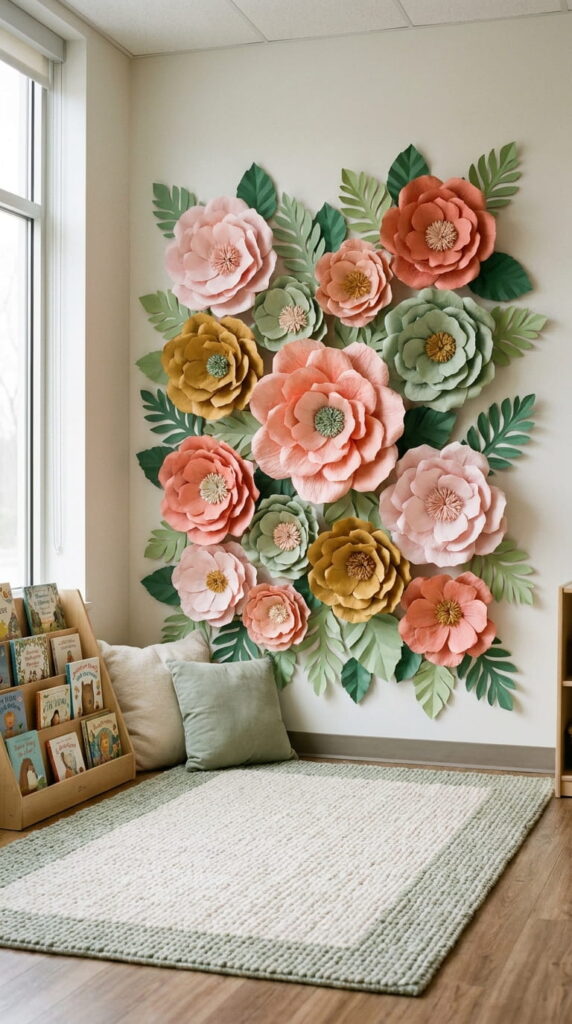
Large paper flowers bring instant warmth to a dull classroom wall. Use three or four flower sizes, then mix soft pink, coral, yellow, and leafy green for a balanced garden effect. This idea works beautifully behind a reading corner, near the classroom entrance, or around a bulletin board.
Cut petals from cardstock, gently curl the edges with a pencil, and layer them around a circular center. Add a few oversized leaves to break up the repeated shapes. Keep the arrangement concentrated in one area instead of spreading flowers across the entire room. The biggest mistake is using too many colors without a plan. A limited palette helps the display look polished and calm.
2. Build a Colorful Paper Rainbow With Soft Clouds
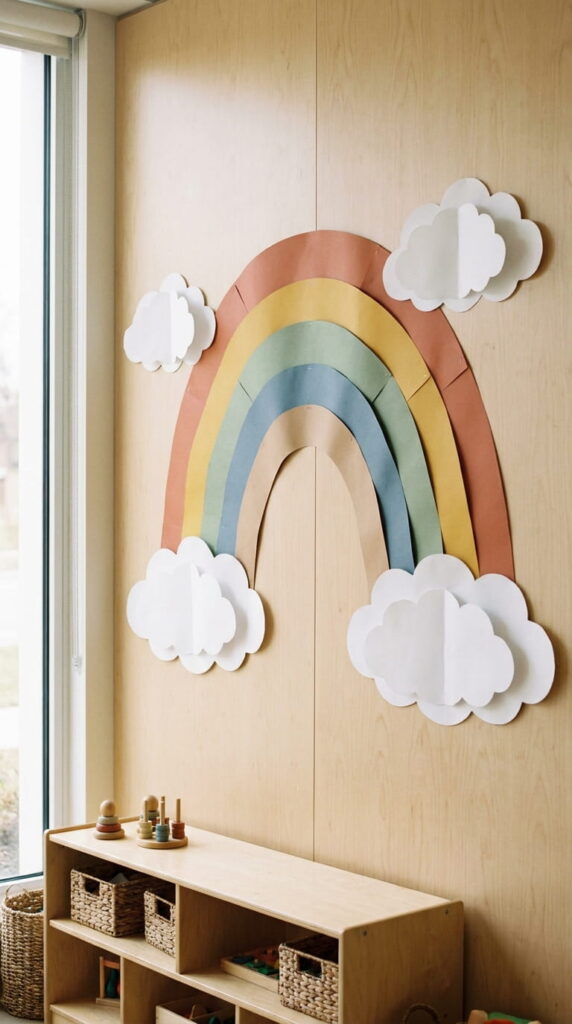
A paper rainbow adds hope, energy, and a friendly mood without requiring complicated craft skills. It works best in preschool rooms, elementary classrooms, counseling spaces, and hallway welcome areas.
Cut wide arches from muted or cheerful construction paper, then place them in a clean sequence. Add fluffy white clouds made from layered paper circles or tissue paper. For a modern look, choose warm neutrals, dusty blue, terracotta, mustard, and sage instead of only primary colors. Leave open space around the rainbow so it stays the main focal point. Avoid adding too many stars, quotes, and extra shapes around it. A simple rainbow often has more visual impact.
3. Make an Interactive Paper Tree for Student Work
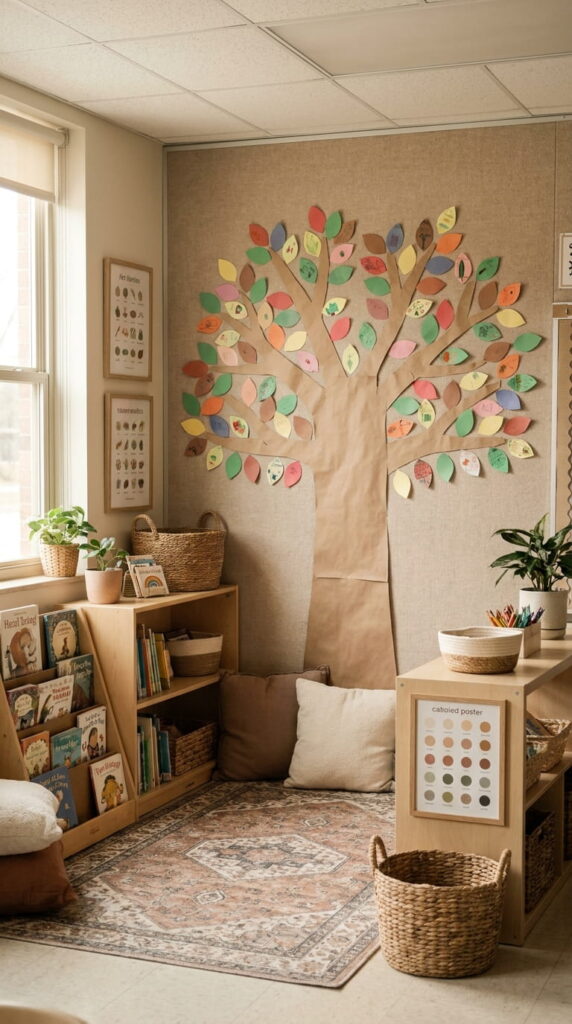
A paper tree creates a strong classroom anchor while giving students a place to participate. Use brown kraft paper for the trunk and branches, then add leaves, apples, blossoms, or stars that change throughout the year.
This display works well near the entrance, on a back wall, or beside a reading nook. Write student names, reading goals, kind actions, or short reflections on the paper leaves. You can also invite children to add a leaf after completing a project. Keep the trunk large and the smaller elements neatly spaced. Avoid covering every branch at once. A little negative space helps each student contribution feel visible and valued.
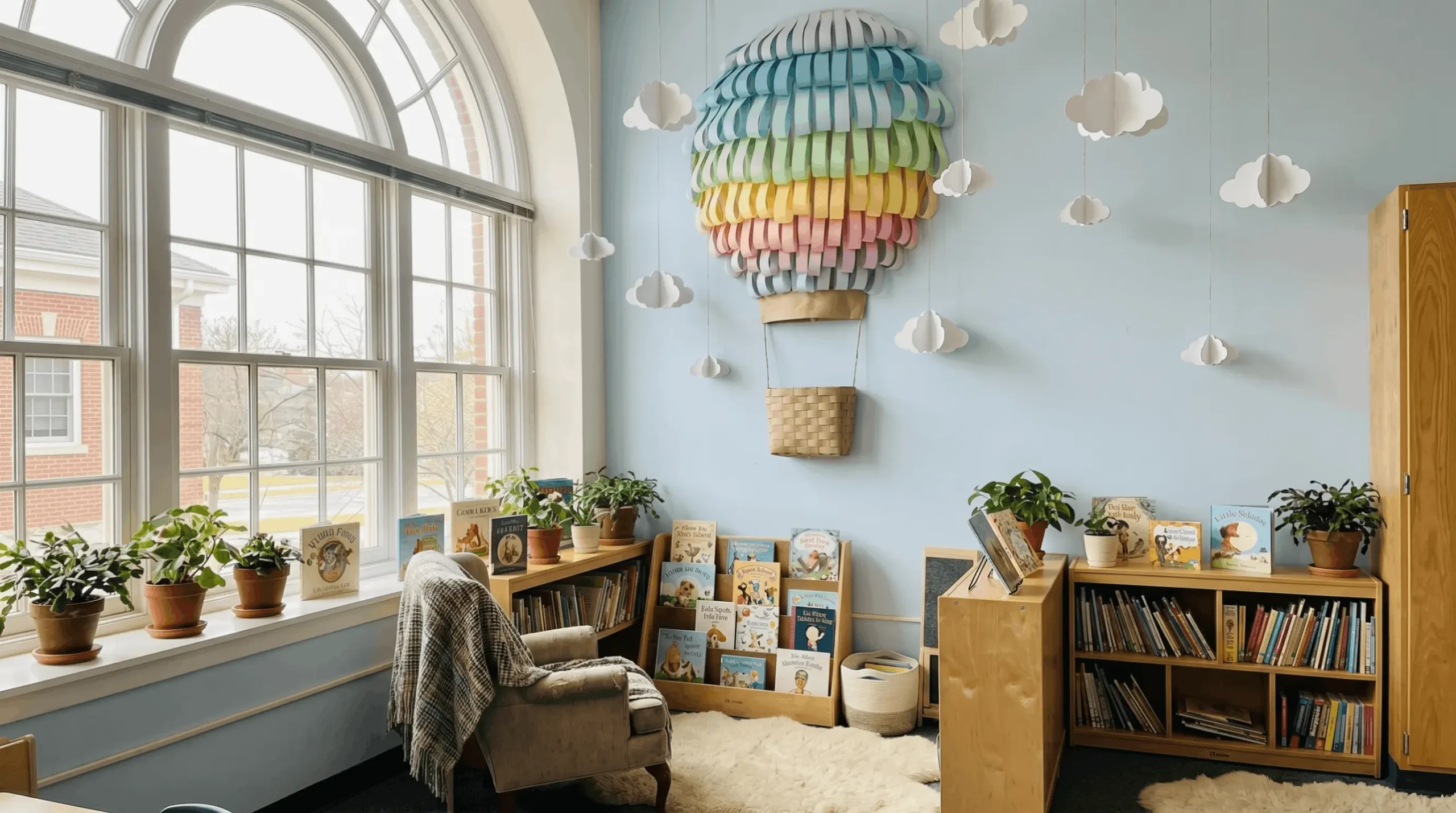
4. Design a Paper Hot-Air Balloon Reading Corner
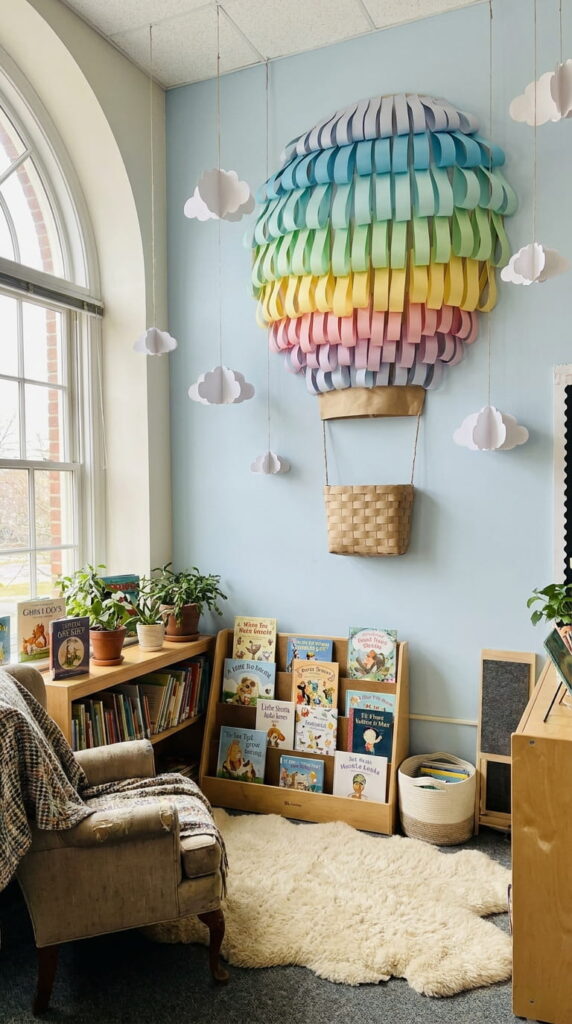
A reading corner should feel like a gentle invitation. A large paper hot-air balloon gives that area a playful sense of movement and imagination. It also makes a strong Pinterest-friendly visual without costing much.
Cut the balloon from several vertical strips of colored cardstock, layering each strip slightly for dimension. Add a small basket made from kraft paper and use paper clouds to frame the scene. Place the balloon above a low bookshelf or cozy rug. You can pair it with your classroom reading list or book-of-the-week display. Keep the lower wall simple so the corner does not feel crowded. For more shelf styling inspiration, see these bookshelf styling ideas.
5. Use Paper Butterflies for a Gentle 3D Feature Wall
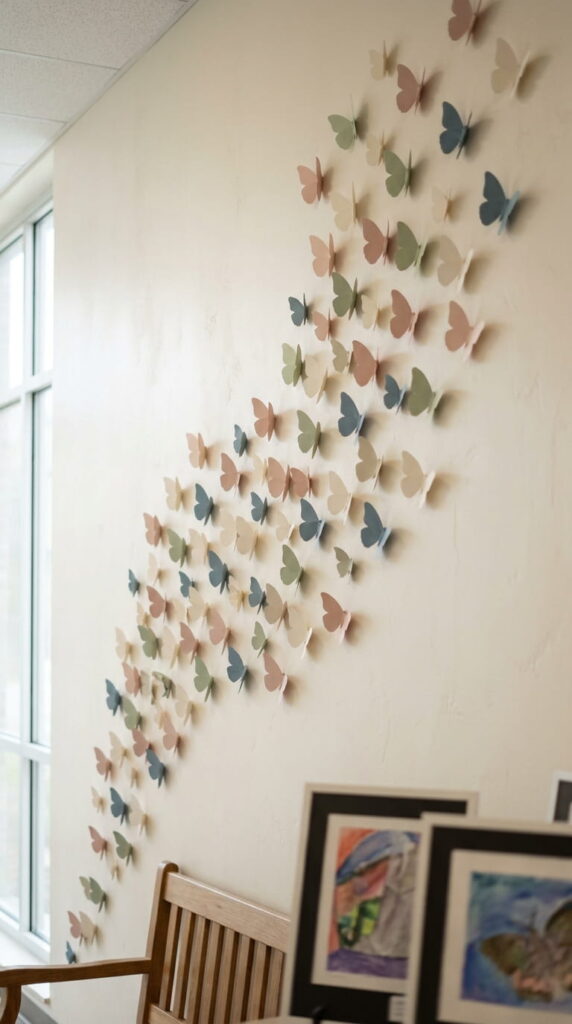
Paper butterflies add movement without making a wall feel heavy. Their folded wings catch soft natural light and create subtle shadows throughout the day. This works especially well in school hallways, art rooms, girls’ activity areas, and calm corners.
Choose two or three butterfly sizes and cut them from cardstock in one color family. Fold each butterfly down the center and attach only the body so the wings lift away from the wall. Arrange them in a flowing path from one corner toward the center. Avoid random placement across the entire wall. A controlled cluster looks more refined. For a nature-inspired companion guide, browse these plant wall art ideas.
6. Craft a Paper Book Nook Mural
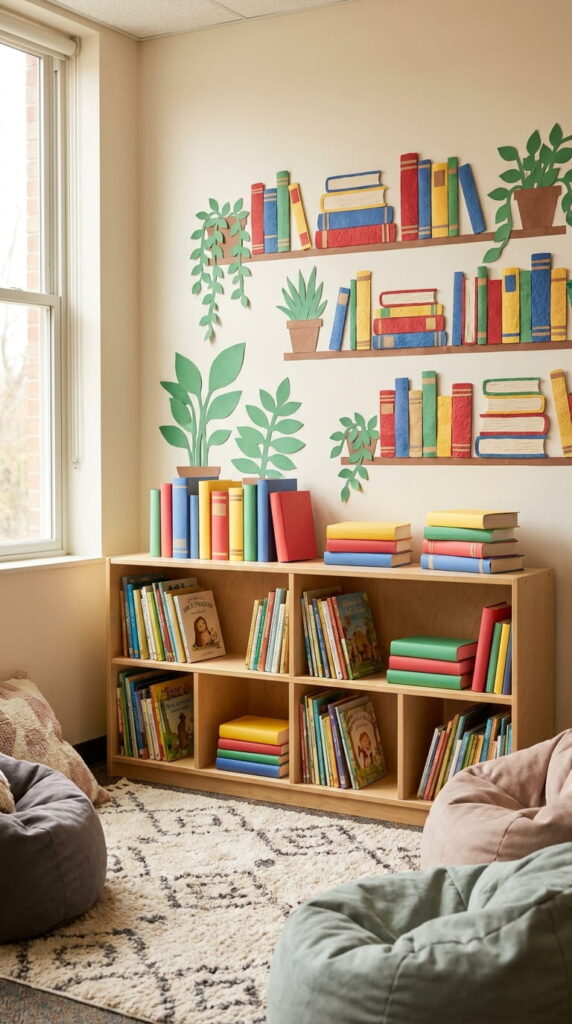
A paper book nook mural makes a library wall feel imaginative and useful at the same time. Cut stacked books from colored paper, then add simple titles, reading themes, or student recommendations on the spines.
Place the mural behind a classroom library, near a literacy station, or along a hallway leading to the school library. Mix vertical stacks with a few horizontal books to create rhythm. Add one or two paper plants or a small lamp shape for warmth. Keep the typography clear and easy to scan. Do not write on every book spine, since too much small text can make the wall feel noisy. Use the display to guide attention, not compete for it.
7. Create a Rotating Paper Gallery for Student Artwork
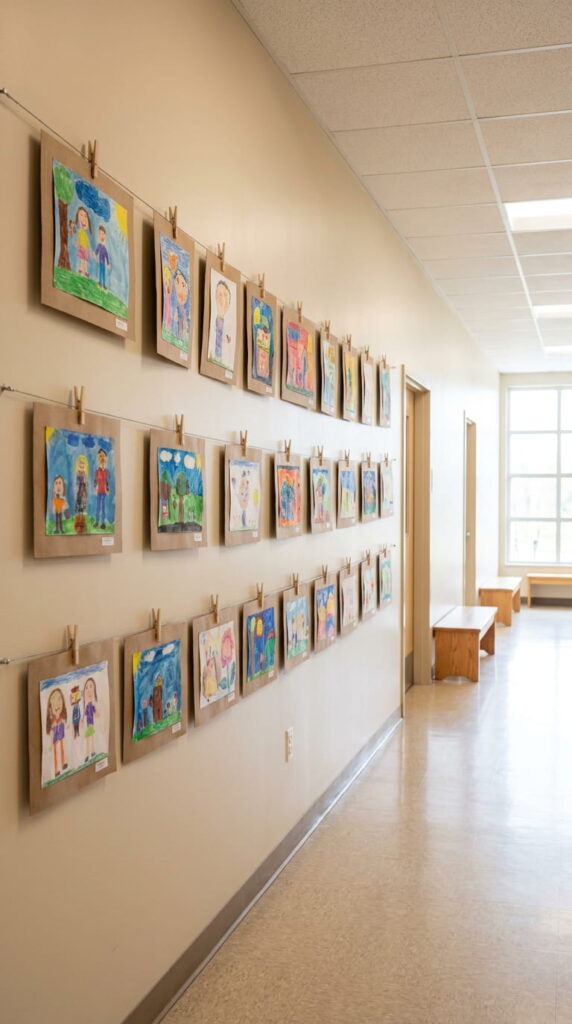
Children feel proud when teachers treat their work with care. A rotating paper gallery gives drawings, writing samples, and craft projects a consistent home while keeping the display flexible.
Use a clean paper header, simple borders, and evenly spaced paper frames or clips. A limited frame palette helps varied student work look organized. This idea works in hallways, classrooms, and parent waiting areas. Change the display every few weeks so the wall stays fresh and more students get a turn. House Beautiful has also highlighted the value of displaying children’s art in a curated way with consistent framing. Avoid overlapping projects or packing the wall edge to edge. Let each piece breathe.
8. Add a Paper Alphabet Wall With a Calm Color Palette
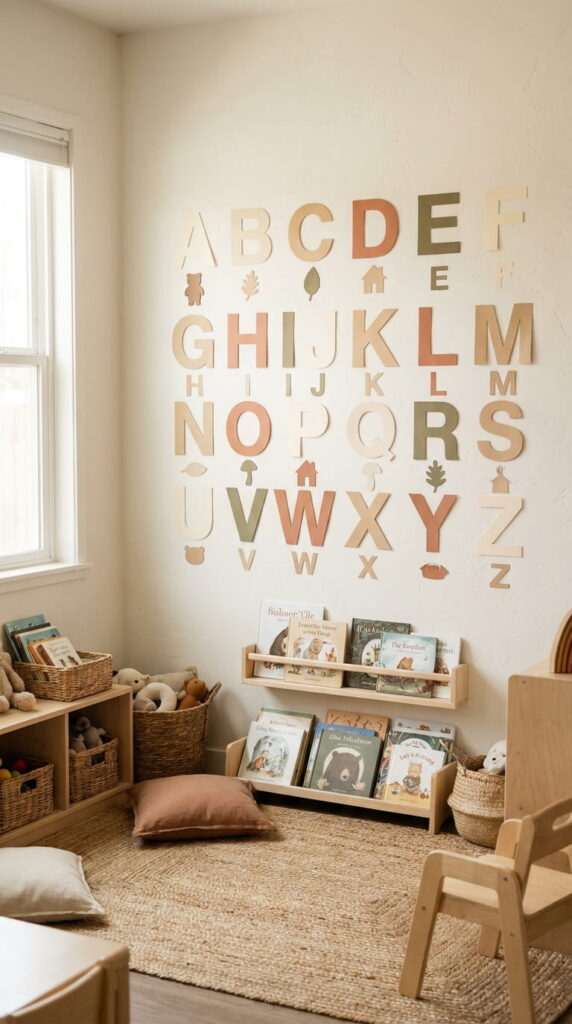
An alphabet wall can support learning and still look beautiful. Choose clear letters, balanced spacing, and a palette that matches the room. This idea works best above a whiteboard, along a literacy wall, or near a preschool activity zone.
Cut each letter from cardstock and pair it with a small paper icon, such as an apple, butterfly, cloud, or leaf. Use the same illustration style across the alphabet to create visual harmony. Warm neutrals with a few muted tones feel calm and modern. Avoid novelty fonts that children cannot read easily. The display should help students recognize letters quickly, not ask them to decode decorative lettering.
9. Make a Paper Solar System for a Science Wall
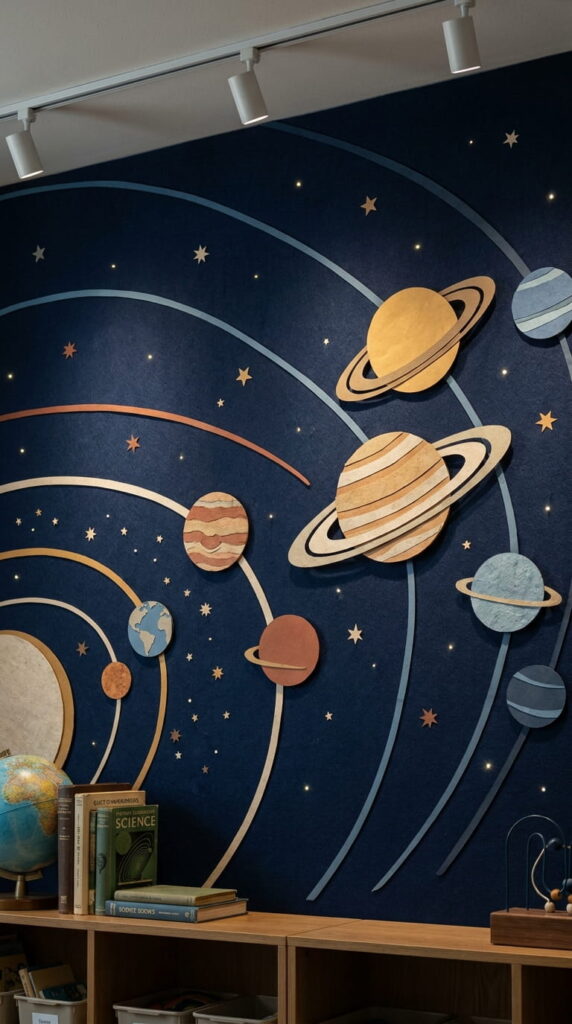
A paper solar system brings energy to a science area while turning a lesson into a memorable visual. Use layered circles, rings, and small star cutouts to create depth. This display works well in science classrooms, STEM corners, and project hallways.
Start with a dark blue or black background section, then space planets in a simple orbit pattern. Add labels only where they support the lesson. A few folded paper stars create tactile texture, but keep the star field light. Too many tiny shapes can make the wall look cluttered. Use the solar system as a focused educational feature rather than a full-room theme. That keeps it useful after the first glance.
10. Create a Seasonal Paper Leaf Garland
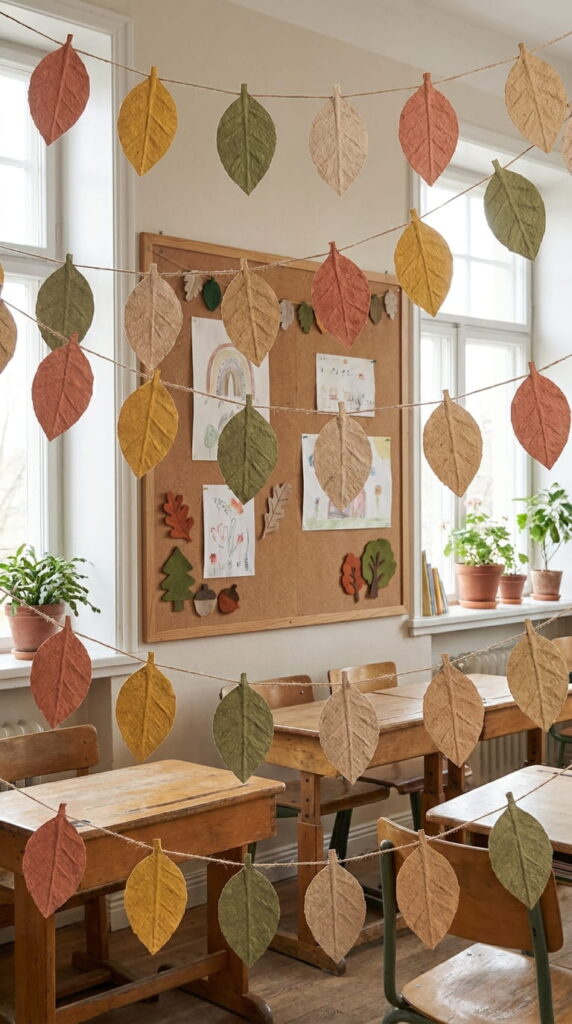
Paper garlands offer a quick way to refresh a classroom without rebuilding a whole display. A leaf garland works for autumn, spring, nature units, and reading corners. You can also switch the shapes to snowflakes, stars, fruit, or small flowers.
Cut leaves from paper in a controlled earthy palette, then attach them to twine or thin ribbon with even spacing. Hang the garland across a bulletin board, above cubbies, or around a doorway. Use two or three garlands at most in one room. Avoid hanging decorations too low, especially near busy walkways. Lightweight decor should add gentle movement while keeping sightlines and circulation clear.
11. Build a Paper Geometry Wall for Math Learning
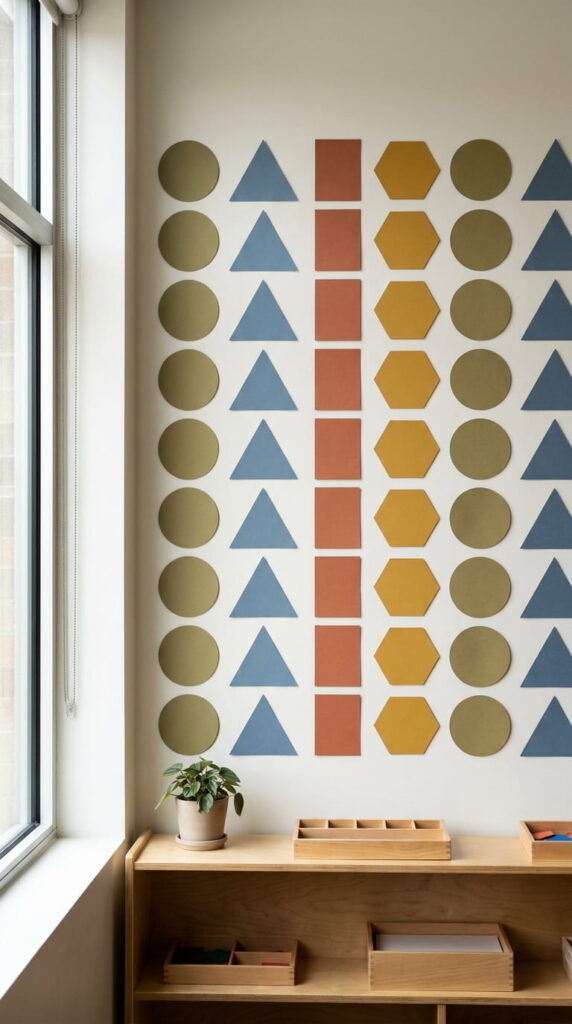
A geometry wall can look graphic, clean, and highly useful. Cut circles, triangles, rectangles, hexagons, and 3D-inspired shapes from cardstock. Then arrange them as a neat learning display.
This idea works best near a math station, whiteboard, or homework corner. Use one color family for flat shapes and another for solid shapes. Add short labels in clear text. You can also ask students to identify examples of each shape around the room. Keep the arrangement aligned to an invisible grid so it looks structured. Avoid adding too many patterns inside each shape. Strong silhouettes make the lesson easier to understand and give the wall a modern, intentional feel.
12. Make a Paper World Map With Student Connections
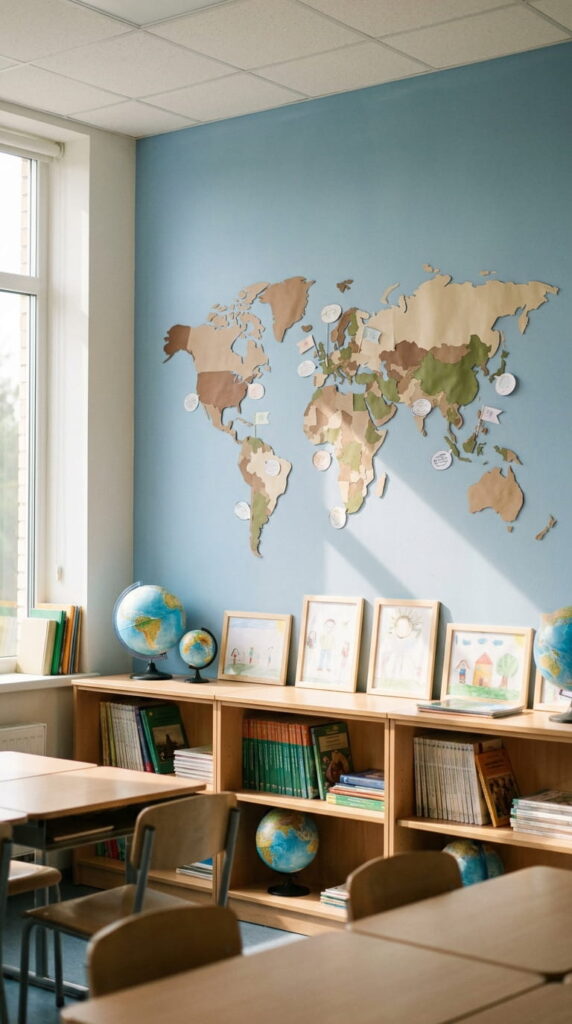
A paper world map can support geography lessons while celebrating the places students study, visit, or feel connected to. It works well in language classrooms, social studies rooms, school hallways, and multicultural activity spaces.
Use a projector or printable template to trace a simplified map onto colored paper. Add small paper pins, flags, or labels only as the class discusses each location. This keeps the display active instead of static. Choose a soft background and one accent color for markers. Avoid overcrowding the map with too many facts at once. A rotating focus, such as “country of the week,” keeps the display readable and gives students a reason to return to it.
13. Create an Encouragement Wall With Paper Speech Bubbles
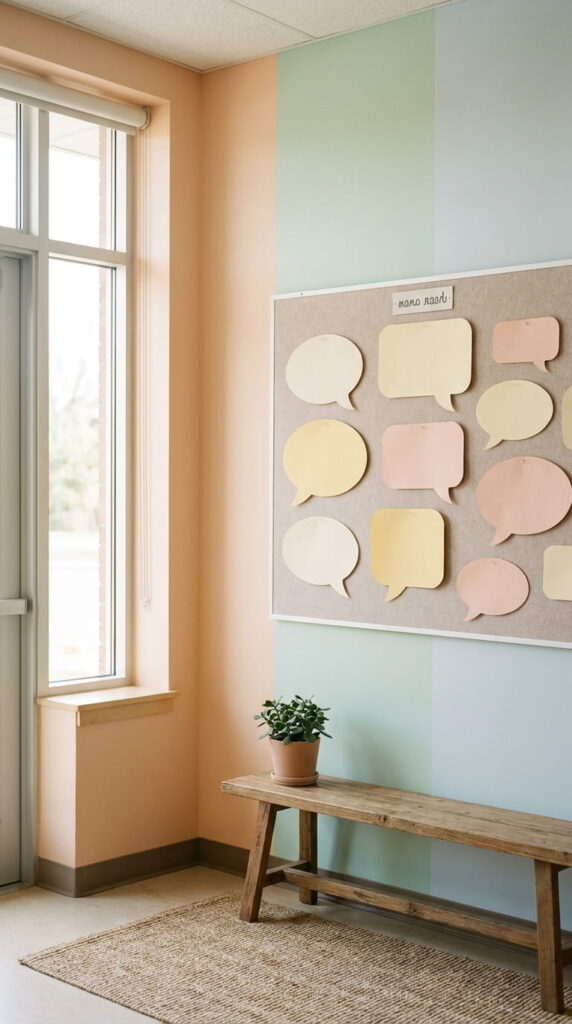
A few kind words can change the feeling of a classroom. Paper speech bubbles give students a place to share encouragement, gratitude, and thoughtful messages without relying on generic motivational posters.
Cut speech bubbles from cardstock and arrange them around a simple heading such as “Kind Words Live Here.” Invite students to add short notes on smaller paper pieces. This works well near the door, beside a calm corner, or in a hallway. Keep the color palette soft and the writing area easy to update. Avoid filling the wall with permanent slogans. Student-written messages feel more personal, more honest, and more connected to classroom life.
14. Use Paper Fans and Rosettes for a Celebration Wall
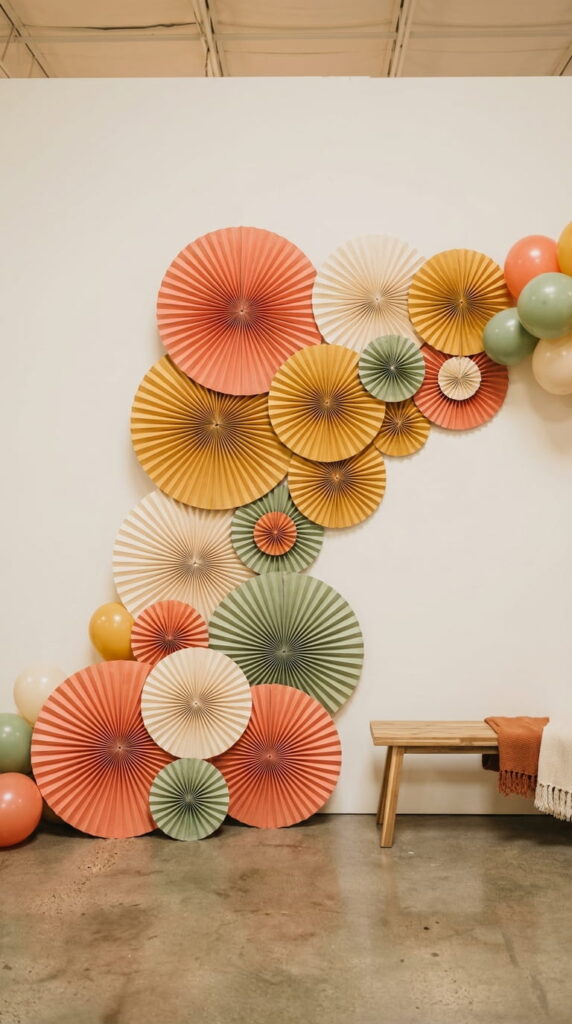
Paper fans and rosettes create a festive focal point for school events, birthdays, open houses, and annual functions. Their layered folds add rich texture while staying lightweight and affordable.
Choose three sizes and two or three coordinated colors. Fold paper accordion-style, join the ends, and open each piece into a circle. Arrange the rosettes in an off-center cluster around a bulletin board or photo area. For more handmade paper inspiration, see these easy handmade birthday card ideas. Avoid covering the entire wall with rosettes. A concentrated arrangement feels celebratory without becoming visually exhausting.
Practical Styling Rules for Better Classroom Walls
The best school wall decoration ideas with paper share a few simple rules. Choose one feature wall before decorating the rest of the room. Repeat colors so the classroom feels connected. Leave clear areas around busy displays. Put educational visuals close to the learning zone where students will use them. Rotate outdated work instead of layering new pieces over old ones.
Edutopia recommends leaving room for student-created decor and allowing the classroom to grow over time. You can also browse AbodeMom’s Hacks & DIY category for more low-cost craft inspiration. That advice matters. A classroom should not look completely finished before children arrive. Their work, ideas, and personalities should become part of the design.
FAQs About School Wall Decoration Ideas With Paper
What paper is best for classroom wall decorations?
Cardstock works best for flowers, letters, butterflies, and shapes because it holds its form. Construction paper suits quick seasonal crafts. Kraft paper works well for tree trunks, borders, and large backgrounds. Use tissue paper for lightweight clouds, petals, and soft layered details.
How can I decorate a classroom wall without making it distracting?
Decorate one focal area at a time, repeat a limited color palette, and leave open wall space around each display. Keep lesson-related visuals near the correct learning station. Rotate old work regularly. A classroom can feel cheerful without covering every surface.
What are easy paper wall decorations for a school event?
Paper fans, rosettes, garlands, flowers, stars, and simple photo backdrops work well for school events. Choose two or three coordinated colors and vary the size of each element. A clustered arrangement looks more intentional than scattered decorations.
How do I attach paper decorations without damaging the wall?
Use removable adhesive strips, poster putty, painter’s tape, or reusable mounting squares. Test a small hidden area first. For heavier cardstock flowers or rosettes, use removable hooks and attach the decor with a loop of thread or ribbon.
Can students help make paper wall decorations?
Yes. Student participation adds meaning and reduces the teacher’s workload. Children can create leaves, butterflies, paper shapes, kind notes, and art pieces for a rotating display. Give students a consistent size or color guide so the finished wall stays organized.
A Classroom Wall Should Feel Like It Belongs to the Children
Paper decor does not need to look expensive or complicated to feel special. A thoughtful flower garden, a rotating art wall, or a tree filled with student ideas can make an ordinary classroom feel cared for. The most memorable spaces often use simple materials with a clear purpose.
Choose one idea that fits your room, your students, and your available time. Then leave a little room for the wall to grow throughout the school year. Children notice when their work becomes part of the classroom story. That sense of belonging matters more than a perfectly styled display.