
Bedroom renter-friendly decorating usually focuses on indoor spaces, but in reality, a peaceful home often starts outside—especially in places like your backyard shed. I still remember the first spring in my current home. When I opened the shed, everything came crashing down. There were rusty tools, tangled lights, and a lawnmower hidden under years of clutter. It actually took me almost three days just to find a single tool I needed. That moment made me realize something important: a shed shouldn’t be treated like a dumping space. Instead, it should work as a useful and organized extension of your home. Once I started applying simple organization ideas—similar to what I use in my kitchen—the entire space changed. What used to feel dark and messy slowly turned into a clean, practical area where everything had its place.
Why Shed Organization & Outdoor Expertise Matter
A shed is one of the most overlooked areas of any home, even though it often stores valuable items like tools, equipment, and seasonal supplies. When things are disorganized, you waste time searching and often end up feeling frustrated. However, when your shed is properly arranged, even simple tasks like gardening feel easier and more enjoyable. Good organization is not just about looks—it also helps protect your belongings from damage caused by moisture, pests, or extreme weather. Using smart storage methods, vertical space, and durable materials can make a big difference. Ultimately, a well-organized shed doesn’t just store your items—it fosters a more relaxed and efficient lifestyle.
| Image | Product Title | Price | Action |
|---|---|---|---|
 |
Heavy-Duty Magnetic Tool Holder – Space Saving Wall Mount | $39.95 | Check Price |
 |
Garden Tool Organizer – Holds Up to 48 Long Handle Tools | $39.99 | Check Price |
 |
EVERHANGER Ceiling Storage Rack – Garage Bin System | $55.99 | Check Price |
 |
IRIS USA 12 Qt. Craft Storage Bins (4-Pack) – Seafoam Blue | $29.99 | Check Price |
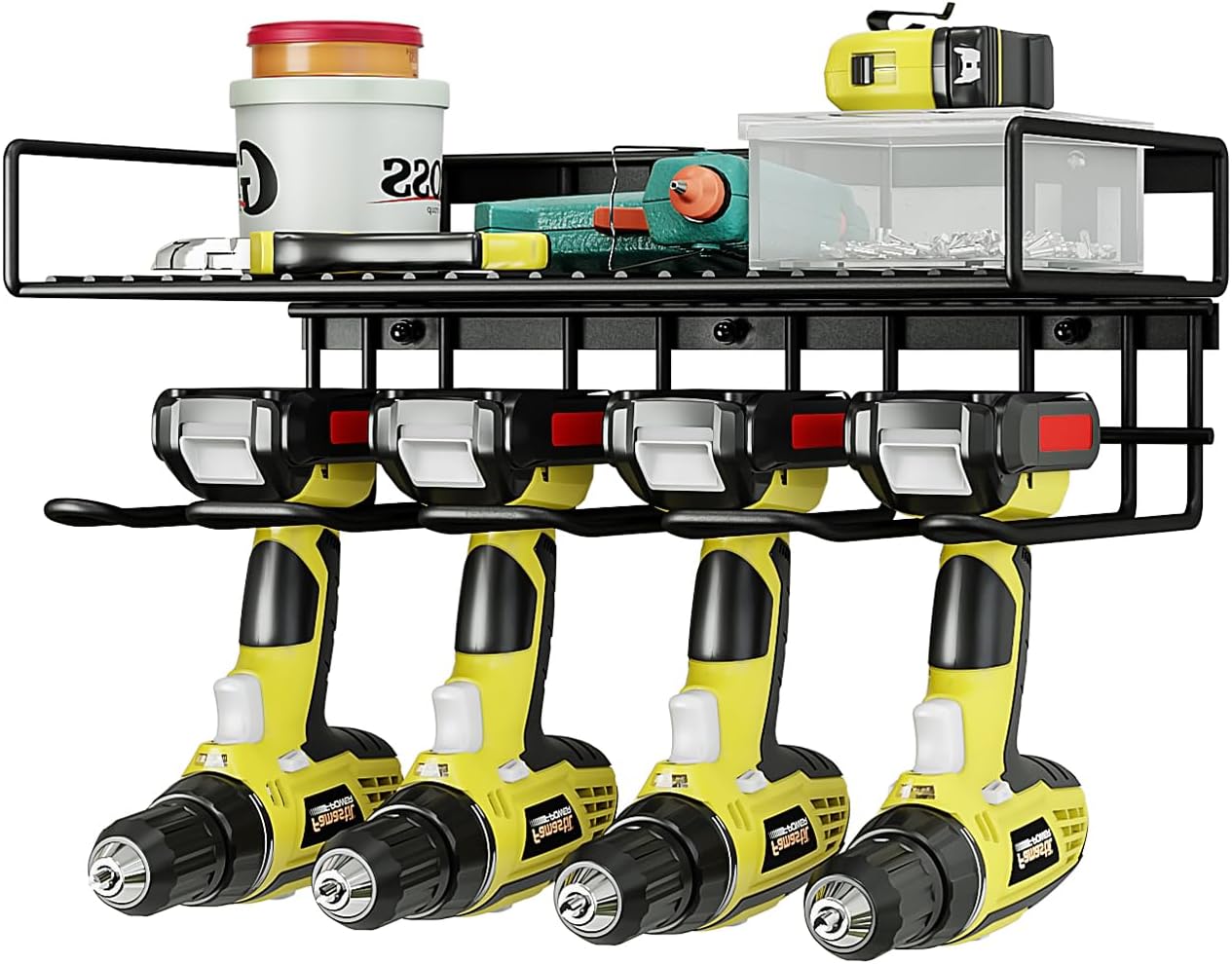 |
AZERPIAN Wall Mount Power Tool Organizer Rack | $21.99 | Check Price |
 |
Sakugi 5-Tier Steel Shelving Units (2 Pack) – Black | $89.99 | Check Price |
 |
Ball Regular Mouth Mason Jars 16 oz. (12 Pack) | $34.99 | Check Price |
20 Genius Shed Storage Ideas
1. Magnetic Tool Strips for Small Metals
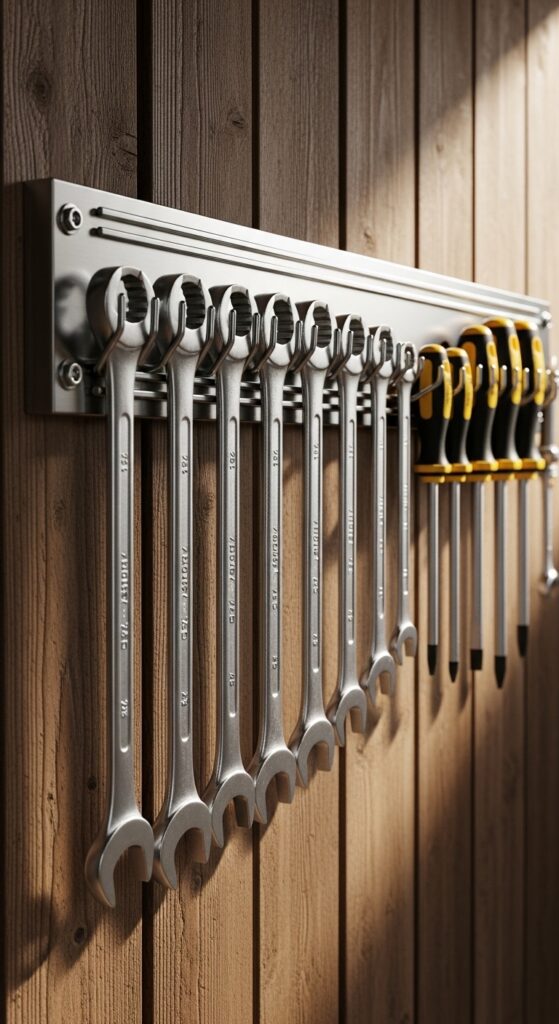
Magnetic tool strips are a simple but powerful way to organize small metal tools like screwdrivers, pliers, and wrenches. Mount them above your workbench so everything stays visible and within reach. Instead of digging through messy drawers, you can grab tools instantly. It keeps your workspace clean, saves time, and gives your shed a more professional, organized feel.
2. The Vertical Garden Tool Rack
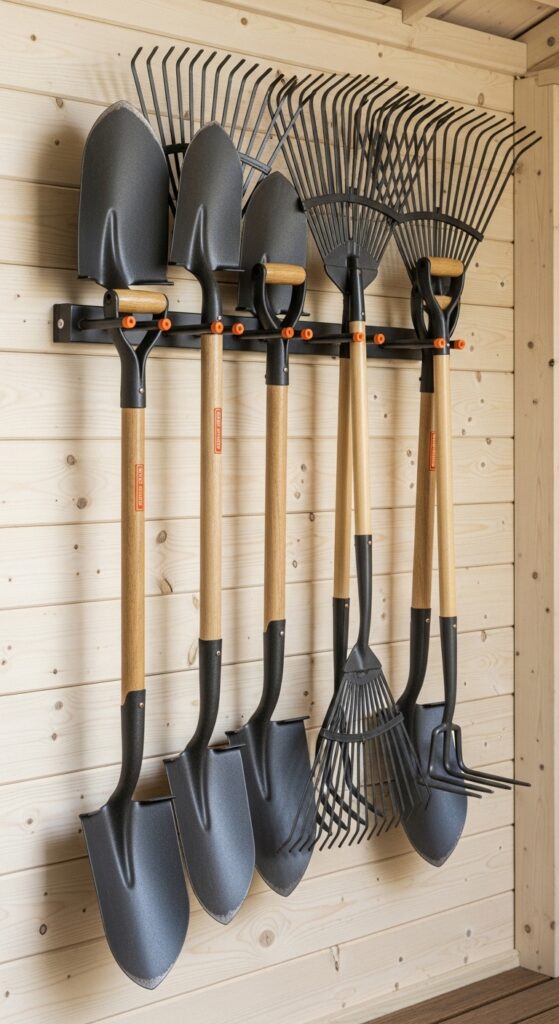
Long tools like shovels and rakes take up too much space when left on the floor. A vertical rack helps you store them neatly against the wall. You can use a ready-made rack or even make one yourself using simple materials. This frees up floor space and makes it easier to move around inside your shed.
3. Overhead Ceiling Joist Storage
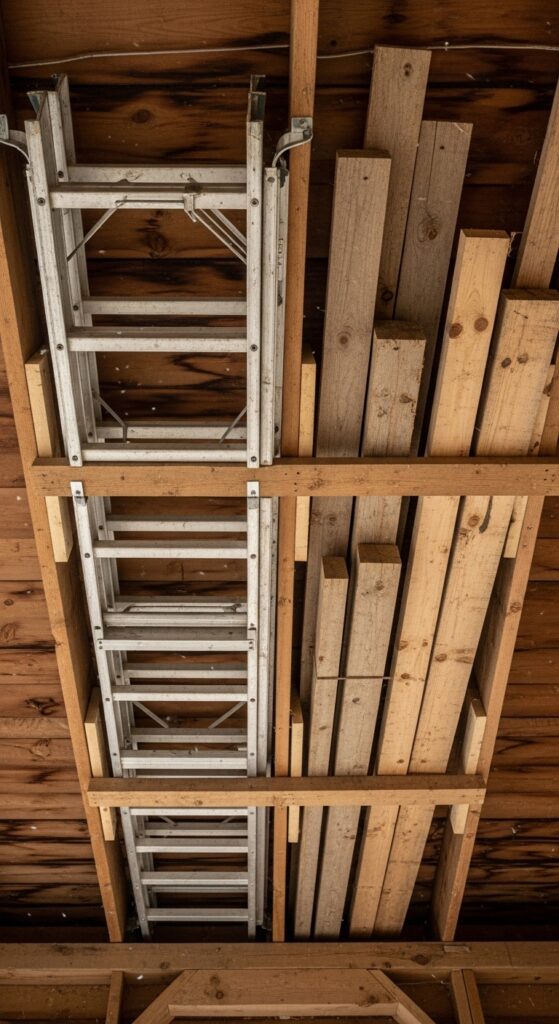
Most people ignore the ceiling area in their shed, but it’s actually very useful. You can install simple brackets or supports to store long or seasonal items like ladders or wooden planks. This keeps heavy items off the ground and uses space that would otherwise go to waste, making your shed more efficient.
4. Clear Weather-Proof Totes with Labels
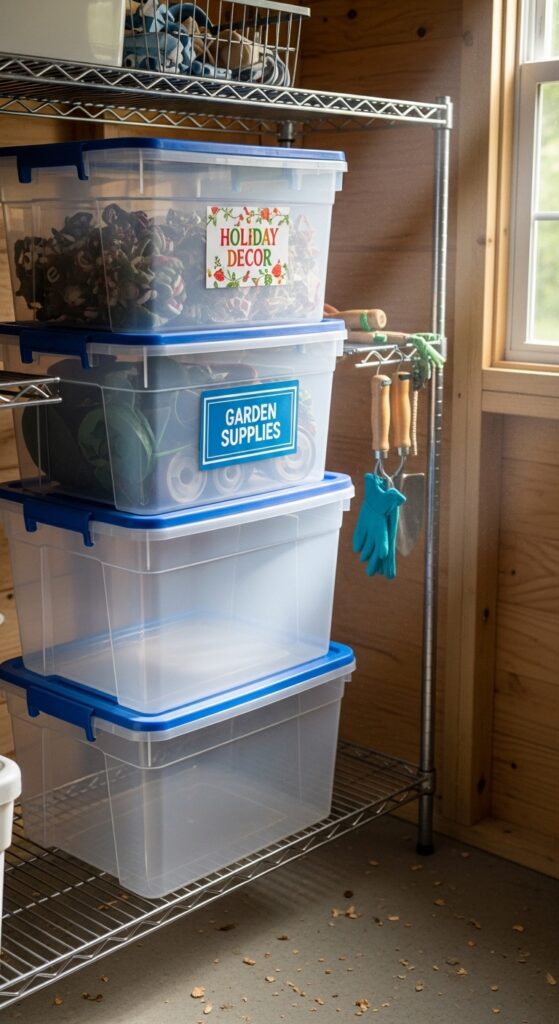
Clear plastic boxes are perfect for organizing small items while protecting them from dust and moisture. You can store things like seeds, tools, or decorations inside them. Since they are transparent, you can easily see what’s inside without opening each one. Adding labels makes everything even more organized and easy to find.
5. Pegboard Wall Systems
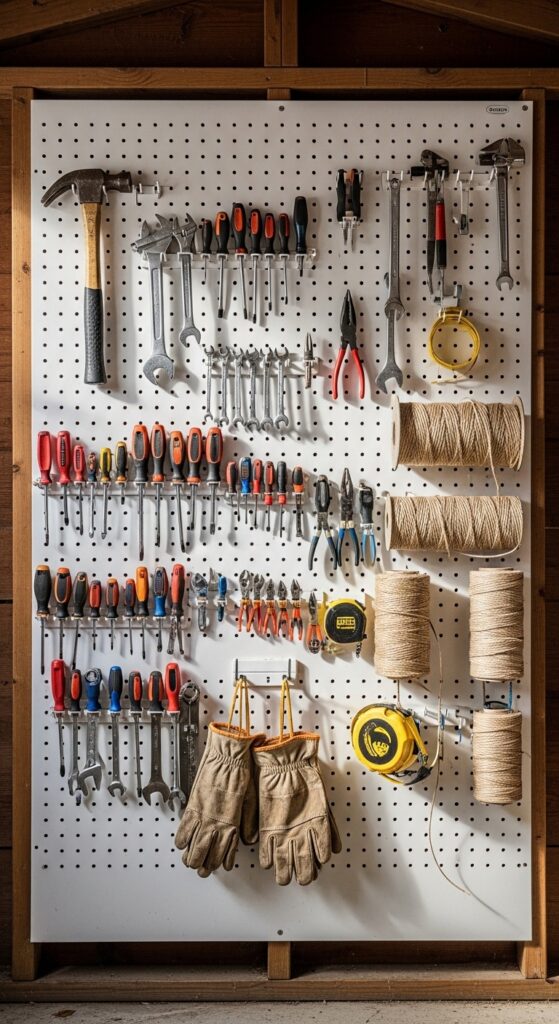
A pegboard is one of the most flexible storage options for any shed. You can hang different tools using hooks and rearrange them whenever needed. It keeps your tools visible and organized, so you don’t waste time searching. It’s a great solution if you have limited space but still want everything easily accessible.
6. Gravity-Fed Seed and Fertilizer Bins
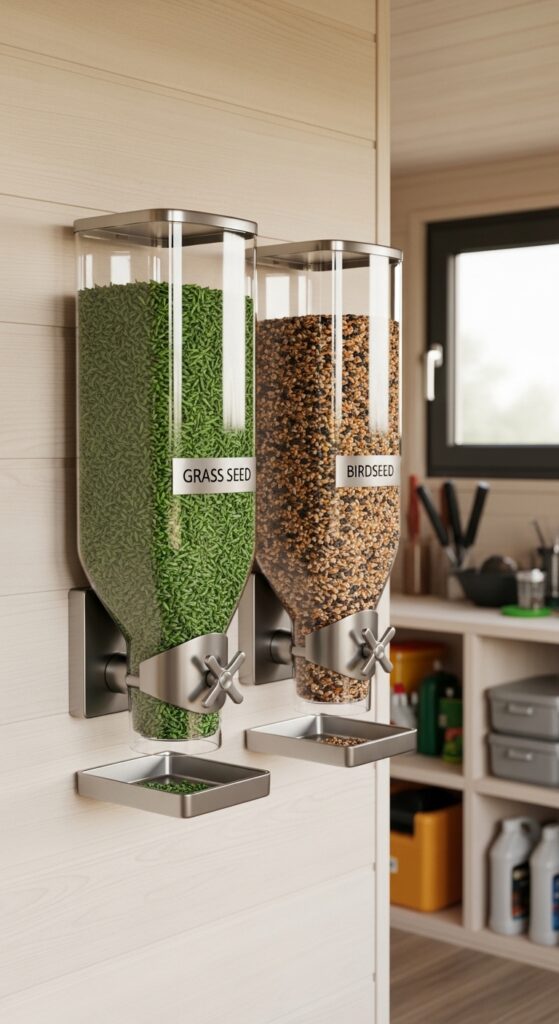
Open bags of seeds or fertilizer can make a mess and attract pests. Using sealed storage bins keeps everything clean and protected. These bins also make it easier to pour or measure materials when needed. It’s a simple upgrade that improves both cleanliness and convenience in your shed.
7. DIY PVC Power Tool Holsters
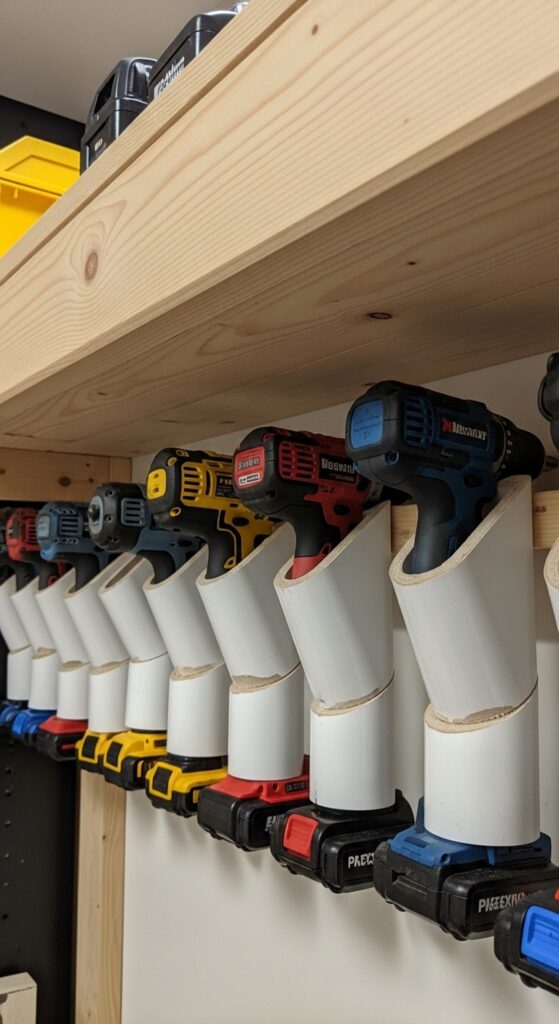
PVC pipes can be used to create custom holders for power tools like drills. Cut a small section and mount it to the wall or under a shelf. This keeps your tools secure and off your work surface. It’s an affordable DIY solution that helps keep your shed neat and clutter-free.
8. Tiered Wire Shelving Units
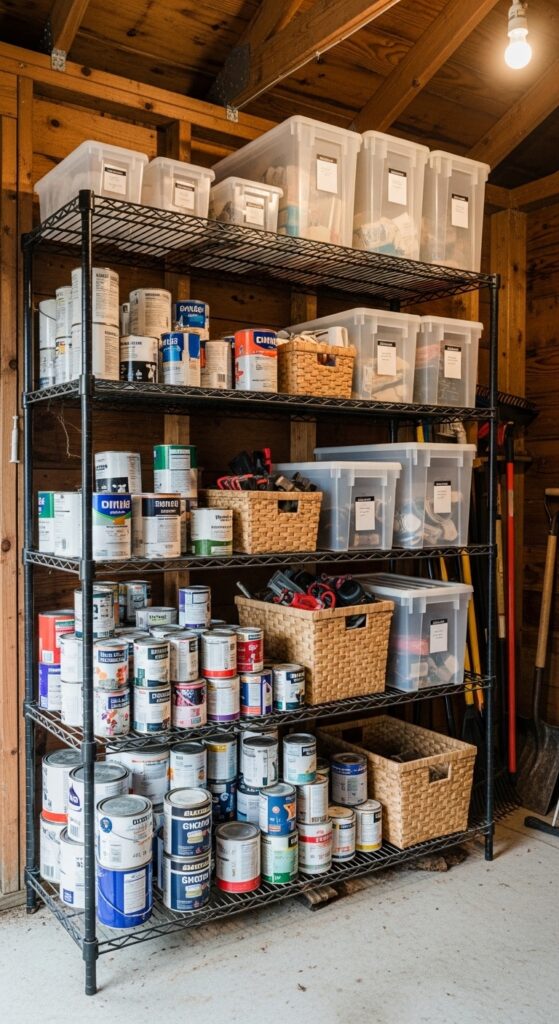
Wire shelves are better than wooden ones in a shed because they allow air to pass through. This helps prevent moisture buildup and keeps items dry. You can organize tools and supplies by placing heavier items on lower shelves and lighter ones above. It’s a durable and long-lasting storage option.
9. Exterior Hooks for Frequently Used Items
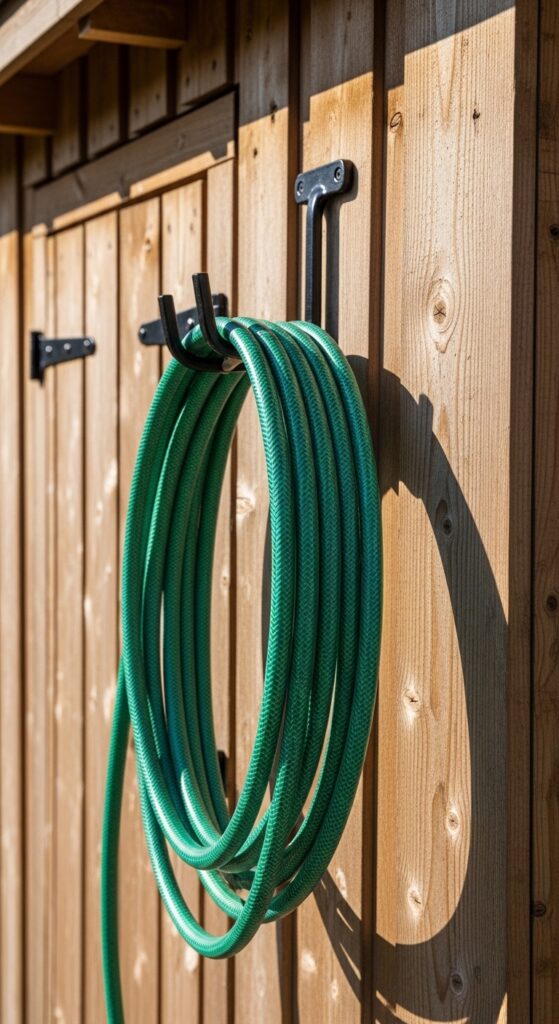
You can also use the outside of your shed for storage. Installing strong hooks on the exterior wall allows you to hang frequently used items like hoses or watering cans. This saves time because you don’t have to go inside every time. It also reduces clutter inside the shed.
10. Floating Corner Shelves
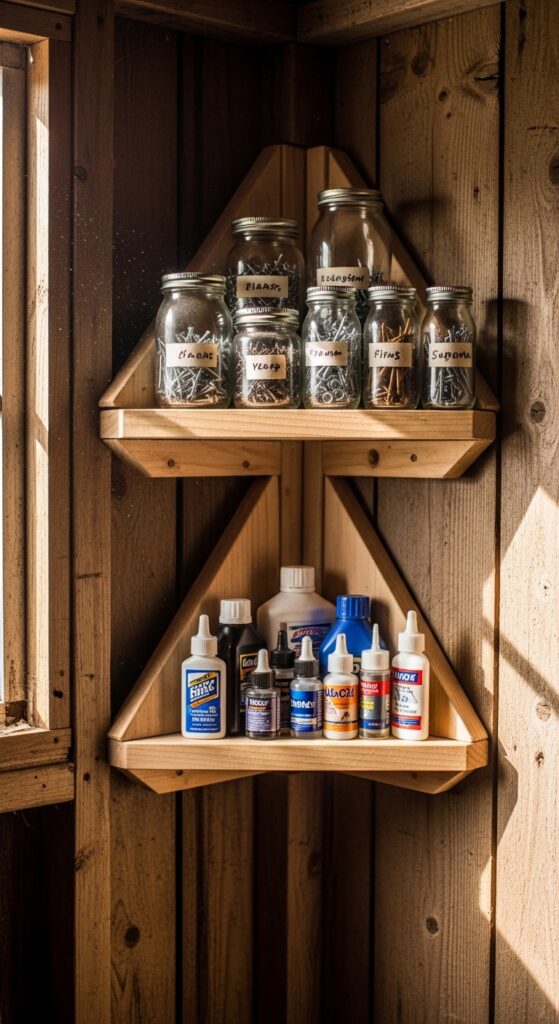
Corners are often unused in small sheds, but they can be very useful. Installing small shelves in the corners gives you extra space for storing small items like sprays or tools. This helps keep everything organized and ensures no space is wasted, even in tight areas.
11. Folding Workbench Station
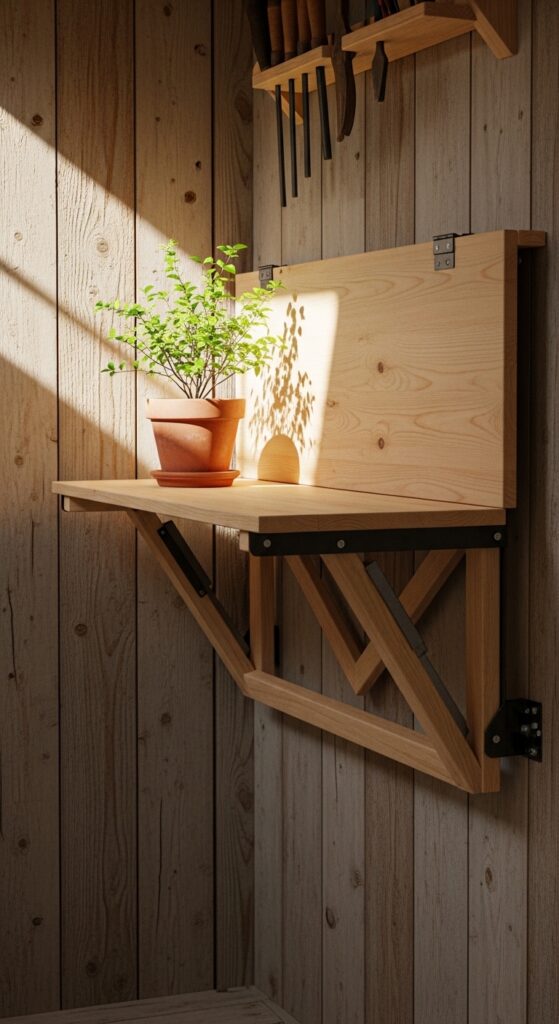
A folding workbench is perfect if your shed is small. You can use it when needed and fold it back against the wall afterward. This gives you a proper workspace without taking up permanent space. It’s especially useful for gardening or quick repair tasks.
12. Repurposed Kitchen Cabinets
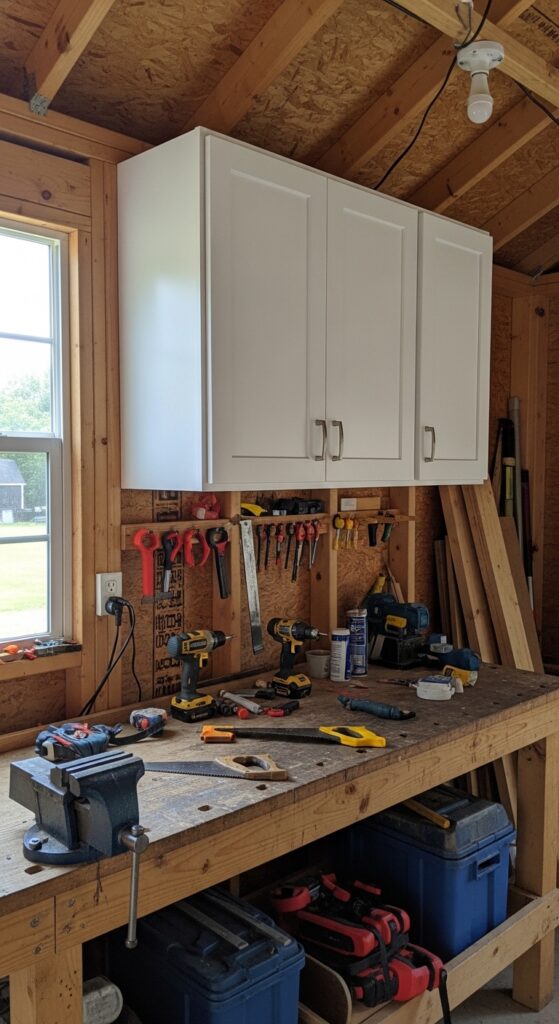
If you have extra kitchen cabinets, you can reuse them in your shed. They provide closed storage for tools, chemicals, or equipment. This keeps items protected from dust and weather. It also makes your shed look more organized and structured, almost like a proper workspace.
13. S-Hook Bungee Cord Organizer
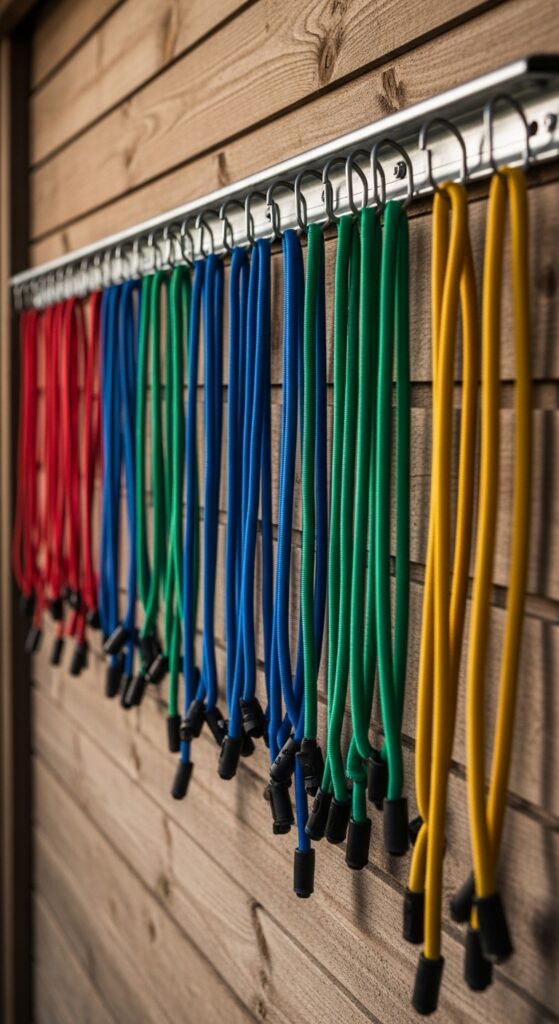
Bungee cords often get tangled and hard to manage. Using hooks or a simple rail, you can hang each cord separately. This keeps them stretched and easy to grab when needed. It saves time and prevents frustration when you’re trying to quickly secure something.
14. Rolling Lawn Mower Garage
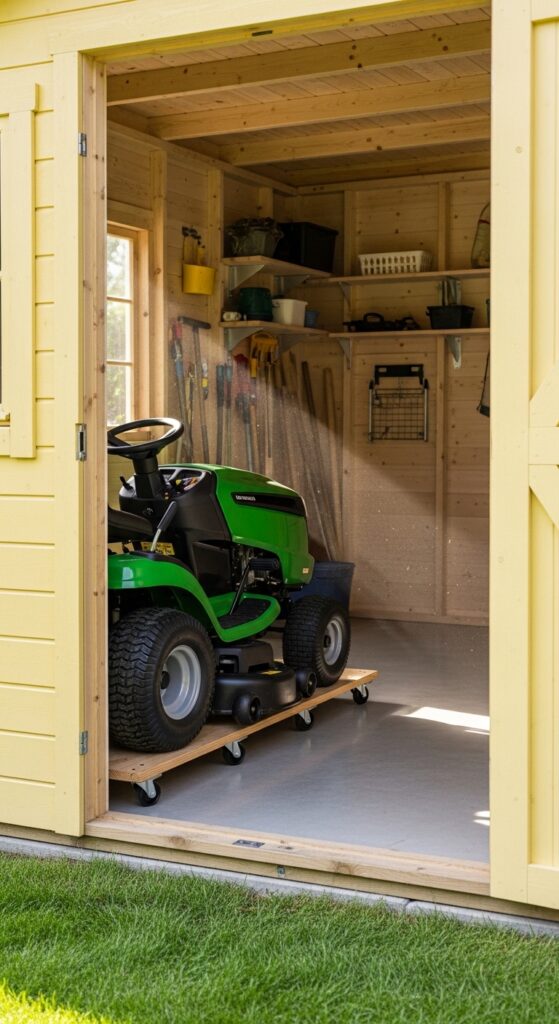
Lawnmowers are heavy and hard to move. Placing them on a wheeled platform makes it easier to shift them around. You can move the mower aside to clean or access other items. It’s a smart solution for managing large equipment in a limited space.
15. Garden Glove Clothespin Line
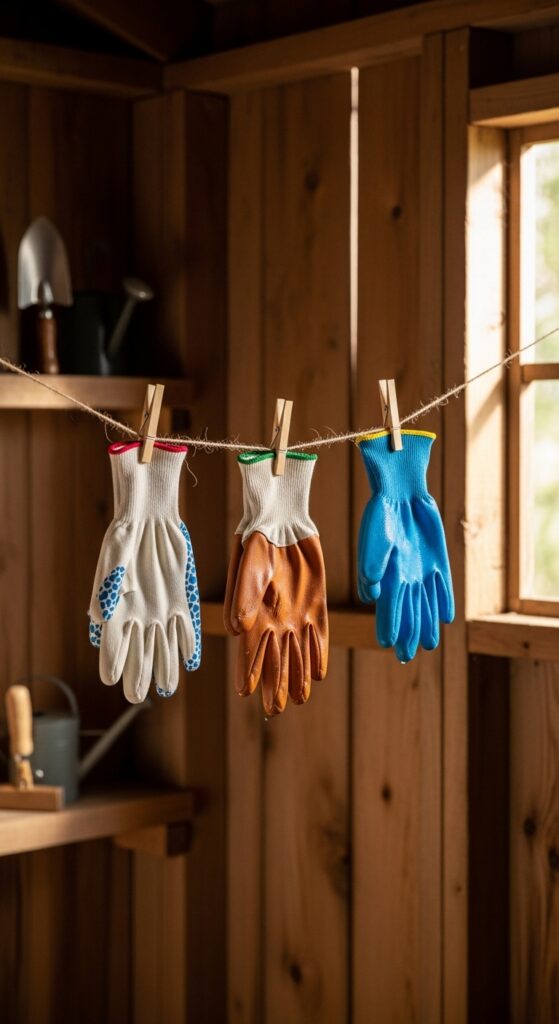
Garden gloves can get wet and dirty easily. Instead of throwing them in a corner, hang them on a line using clips. This allows them to dry properly and keeps them easy to find. It’s a small change that keeps your shed cleaner and more organized.
16. Pallet Tool Organizer
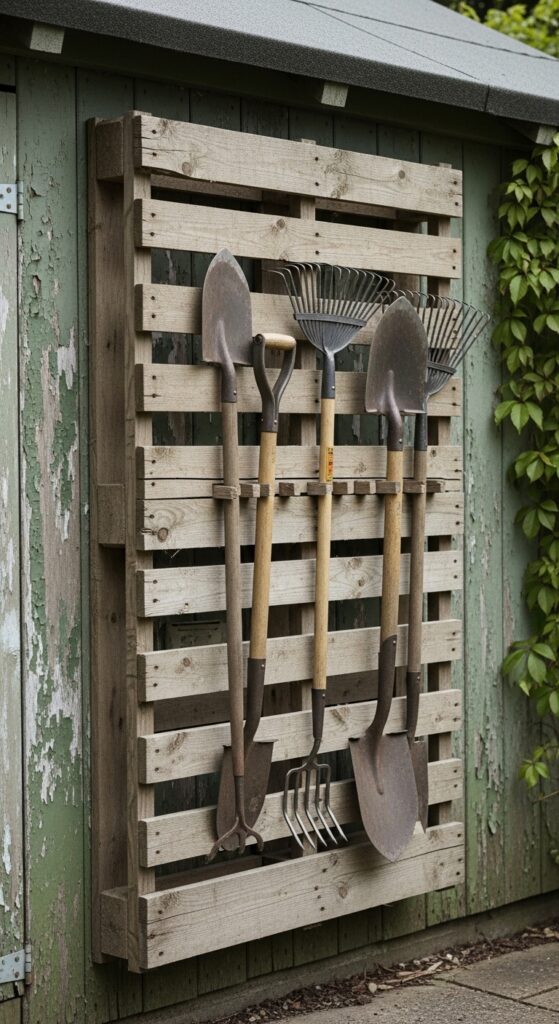
A wooden pallet can be turned into a simple tool holder. Stand it upright and place tools in the gaps. It’s an easy and low-cost way to store long tools like shovels. Plus, it gives your shed a rustic and practical look.
17. Magnetic Parts Bowls
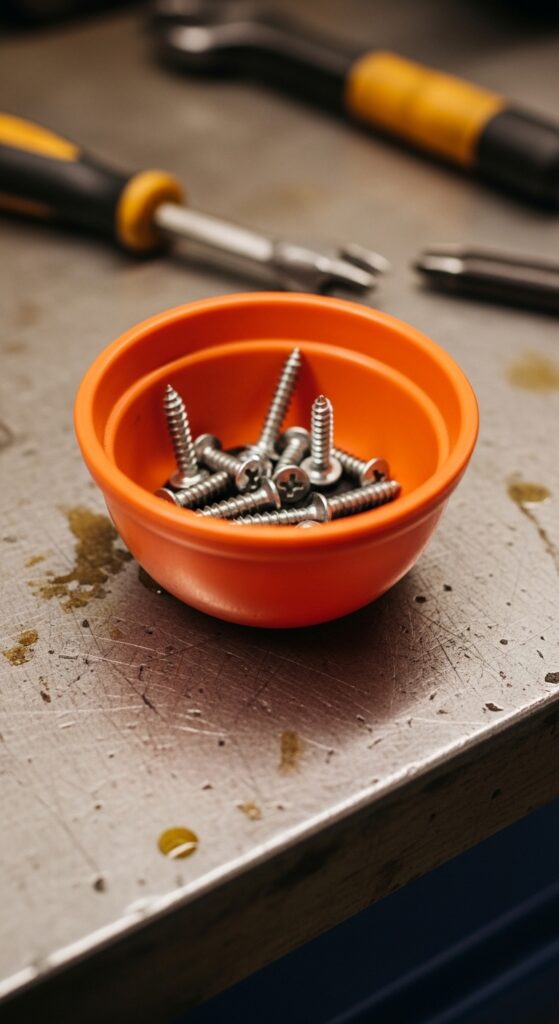
When working with small screws or parts, it’s easy to lose them. Magnetic bowls keep everything in one place. You can stick them near your workspace and store small items safely. This is especially useful when repairing tools or machines.
18. Hanging Bike Racks
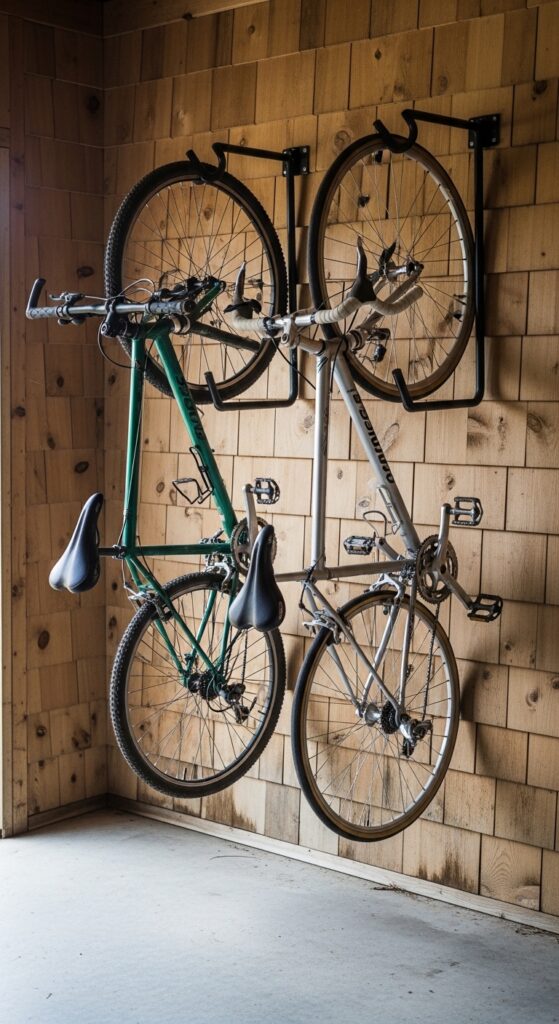
Bikes take up a lot of floor space in a shed. Hanging them on the wall or ceiling keeps them out of the way. It also protects them from damage caused by other tools. This is a great way to free up space while keeping your shed organized.
19. Clear Mason Jars for Hardware
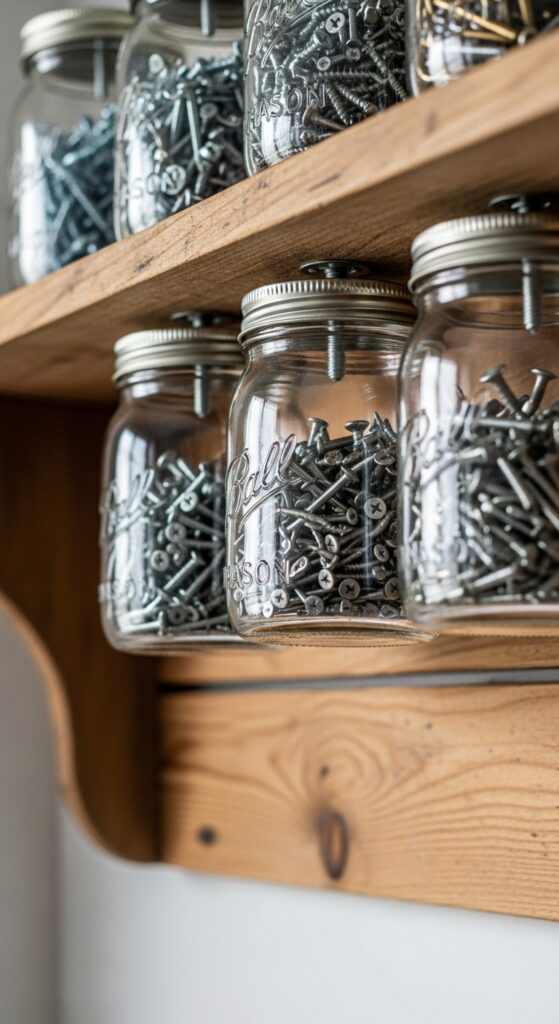
Small items like nails and screws can easily get lost. Using clear jars helps you store and see them at the same time. You can even mount the jars under shelves to save space. It keeps your hardware organized and easy to access.
20. Dedicated Potting Station
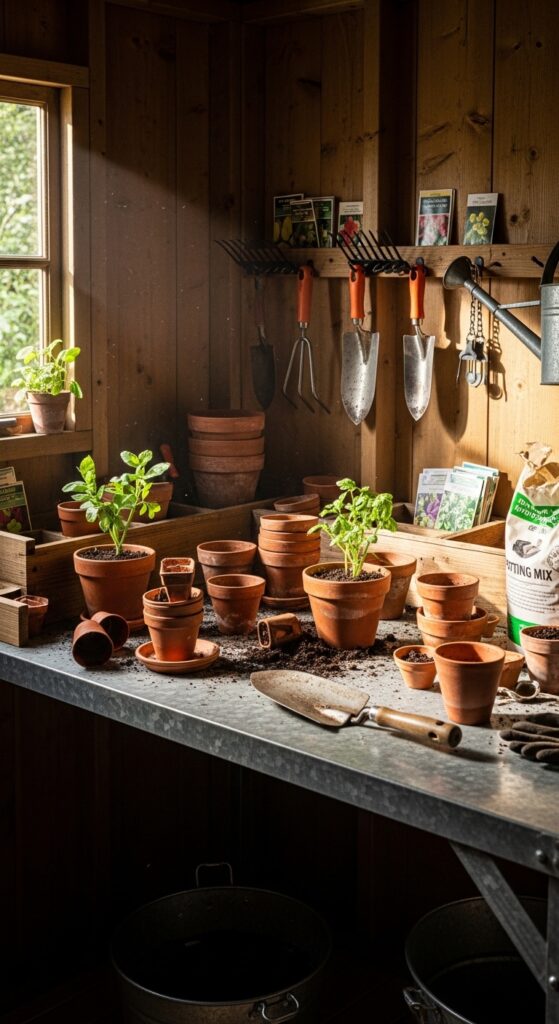
Creating a small work area inside your shed can improve productivity. Keep your tools and materials close together so you don’t waste time searching. A simple table and organized setup can make gardening or repairs much easier and more enjoyable.
Latest Hacks & DIY Guides
| Article Title | Action |
|---|---|
| 15 Best Floating Shoe Storage Ideas | Read More |
| 14 Easter Table Decor Ideas | Read More |
| 16 Adorable Easter Bunny Decorations | Read More |
| Cozy Cubicle Inspiration Ideas | Read More |
| 15 Genius Bedtime Survival Kits | Read More |
| Deco Mesh Wreath Step-by-Step Guide | Read More |
| 20 Stunning Easter Centerpiece Ideas | Read More |
| 22 Ways to Hack IKEA IVAR Unit | Read More |
| 20 Genius Shed Storage Ideas | Read More |
| 22 IKEA Hacks to Keep Your Home Organized | Read More |
| Renter-Friendly Bedroom Decorating Ideas | Read More |
FAQs: Expert Shed Maintenance & Tool Safety
Conclusion
A well-organized shed is more than just a storage space; it plays an important role in keeping your home efficient and stress-free. When everything is easy to find and properly stored, your work becomes faster and more enjoyable. By applying these simple ideas, you can turn a cluttered shed into a clean, practical, and highly functional space.
1 thought on “20 Genius Shed Storage Ideas”