There is something refreshing about watching a few inches of hair fall away in a salon chair. The face looks brighter. Earrings suddenly stand out. A soft fringe can draw attention to the eyes, while airy layers bring movement back to hair that has started to feel flat or difficult to style.
That is why pixie cuts for women over 50 remain such a timeless choice. A well-shaped pixie does more than shorten your morning routine. It works with your natural texture, adds the appearance of fullness, and gives your features a clean, confident frame.
The best version is rarely a rigid, one-style-fits-all haircut. It may feel polished, softly tousled, feathered, curly, or slightly edgy. The real secret lies in choosing a silhouette that suits your hair density, face shape, and lifestyle.
Why Pixie Cuts Work So Well for Women Over 50
Hair often changes over time. It may feel finer around the crown, drier at the ends, or less predictable than it once did. A carefully shaped pixie removes weight and helps shorter strands hold their form. This can make the hair look fuller without requiring a complicated styling routine.
The goal is not to follow outdated ideas about what women “should” wear at a certain age. It is to choose a haircut that feels comfortable and personal. As celebrity hairstylist Suzette Boozer explained in Good Housekeeping, face shape, texture, density, lifestyle, and maintenance level matter more than age alone.
A good pixie feels light, intentional, and easy to make your own.
1. Soft Layered Pixie Cut for Natural Volume
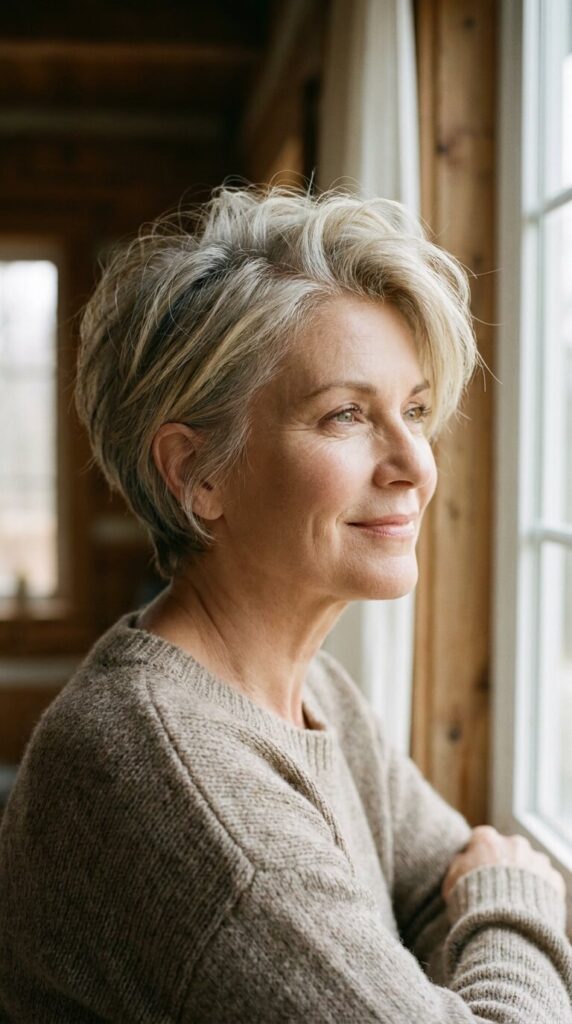
A softly layered pixie creates gentle lift without looking over-styled. The crown carries slightly longer layers, while the sides stay neat and close enough to frame the cheekbones. This shape works especially well for fine or medium-density hair that tends to sit flat after washing.
Ask your stylist for light crown layers and subtle texture through the top. Use a small amount of lightweight mousse before blow-drying. Lift the roots with your fingertips instead of using a heavy round brush.
Avoid removing too much hair at the ends. Excessive thinning can leave fine strands looking sparse rather than airy.
2. Feathered Pixie Cut With Side-Swept Bangs
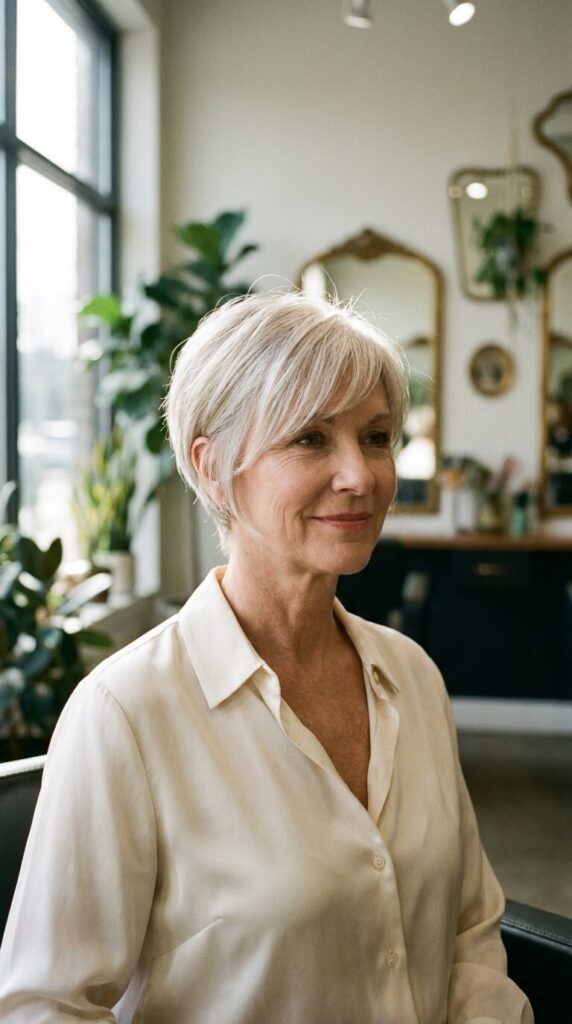
A feathered pixie brings softness around the face and creates movement through the top. Side-swept bangs make the style especially flattering for women who prefer a gentle, feminine finish rather than a sharply cropped look.
This cut works beautifully on straight or slightly wavy hair. Ask for wispy layers that move away from the face and a fringe long enough to sweep across the forehead. A light styling cream can separate the layers without making them stiff.
The main mistake to avoid is a thick, blunt fringe. Heavy bangs may overwhelm delicate features and remove the airy quality that makes this haircut so graceful.
3. Textured Pixie Cut for Fine Hair
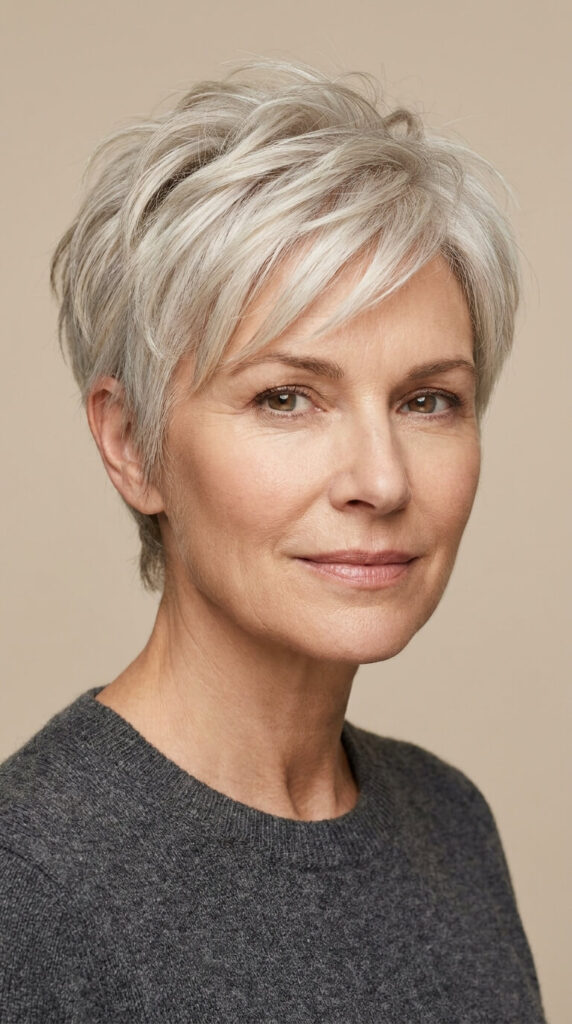
Fine hair often benefits from shorter shapes because the strands carry less weight. As hairstylists have noted in Byrdie, shorter cuts and strategic layering can create the appearance of thicker hair, while excessive layers may make fine strands look flatter.
For this pixie, keep the back softly tapered and add choppy texture across the top. Apply root-lifting spray, then dry the hair forward and slightly upward. Finish by pinching a few pieces into place.
Avoid heavy oils and thick conditioning creams near the roots. They can quickly collapse the volume you want to create.
4. Long Pixie Cut With Face-Framing Layers
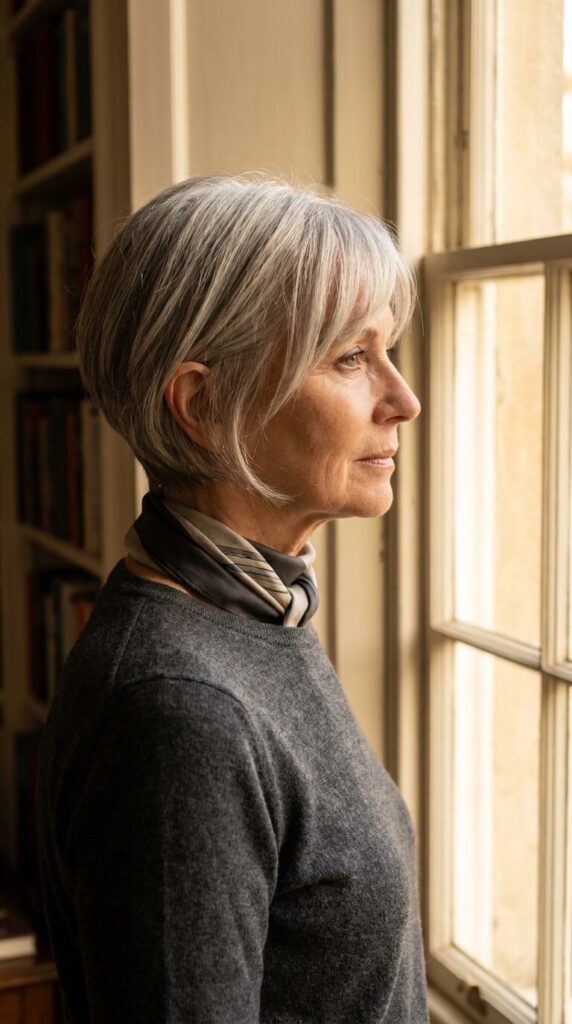
A long pixie offers the ease of short hair without feeling too dramatic. The added length around the temples and forehead creates a gentle frame, making this an excellent first step for anyone moving from a bob to a shorter cut.
Ask your stylist to leave enough length on top to sweep the hair sideways, tuck it behind the ear, or create loose texture with a small styling brush. Longer top layers also offer flexibility between salon visits. Allure has highlighted this versatility as one of the key advantages of keeping a pixie longer on top.
Avoid letting the back grow too bulky. A neat neckline keeps the shape polished.
5. Tousled Pixie Cut With Piecey Texture
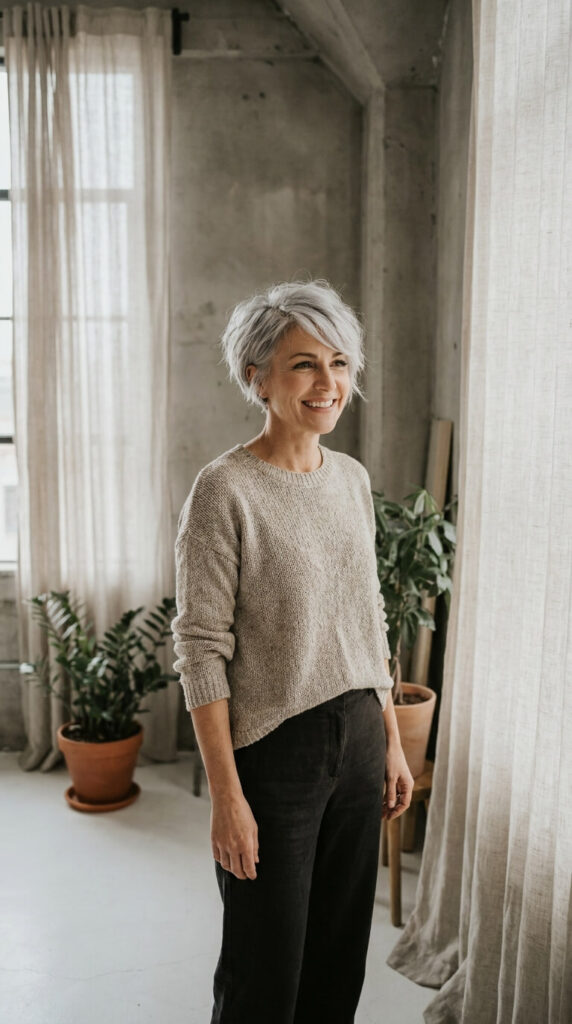
A tousled pixie feels relaxed, modern, and full of personality. The cut uses short, uneven layers to create definition rather than perfect symmetry. It works best when you want a casual style that still looks intentional.
Use a pea-sized amount of matte paste or styling wax. Rub it between your fingers and lightly twist a few sections at the crown. Leave some strands smooth and others slightly separated. That contrast gives the haircut its natural, lived-in texture.
Do not coat every strand with product. Too much paste can make the hair look heavy and greasy. A few carefully placed pieces create a fresher finish.
6. Pixie Cut With Lifted Crown Volume
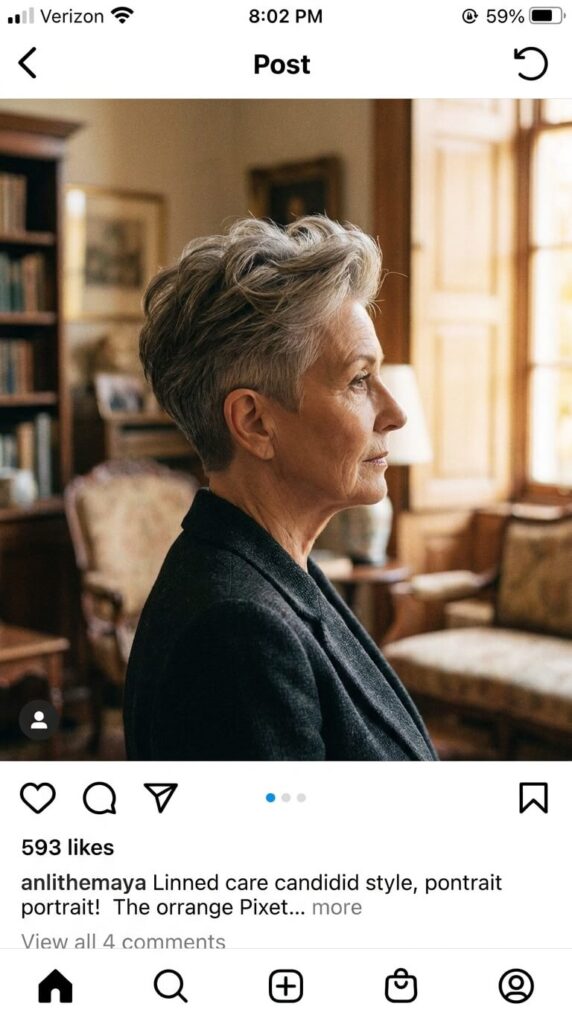
A softly lifted crown can create a balanced silhouette and make fine hair look fuller from every angle. This style keeps the sides tidy while building height at the top-back section of the head.
Ask for graduated layers around the crown, with enough length to hold volume after blow-drying. Use a root spray, then direct the airflow upward while lifting the hair with your fingers. A small vent brush can add shape without making the result too rounded.
Avoid teasing the hair aggressively. Gentle lift looks softer and protects fragile strands from unnecessary breakage.
Internal link opportunity: Add a related article about hairstyles that make thin hair look fuller.
7. Curly Pixie Cut With Natural Definition
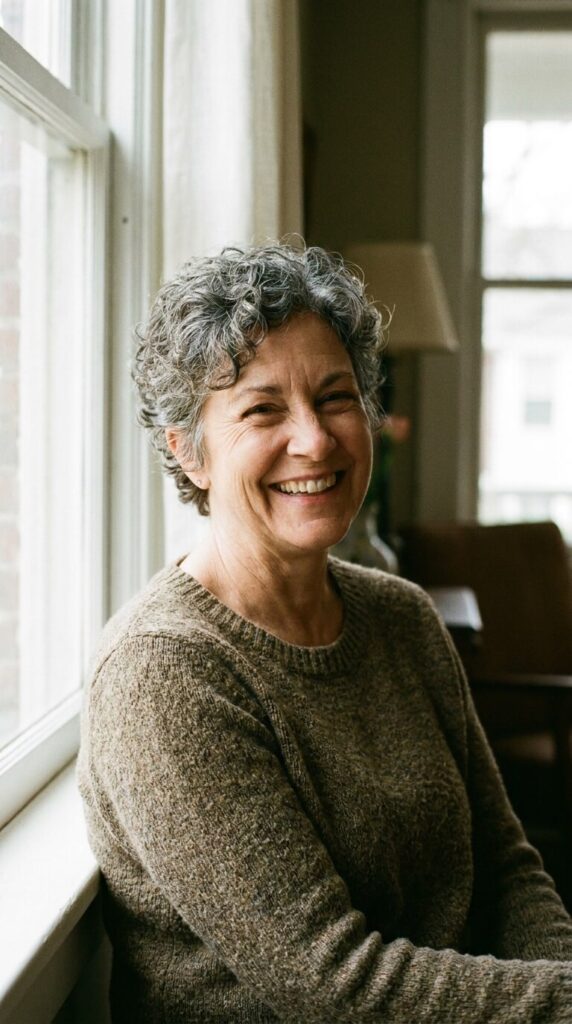
Natural curls bring instant character to a pixie cut. Shorter sides keep the silhouette clean, while slightly longer curls on top add height, softness, and movement. This shape can work with loose curls, springy coils, or a mixed curl pattern.
Ask your stylist to cut with your natural shrinkage in mind. Apply a lightweight curl cream or leave-in conditioner to damp hair, then shape the curls gently with your fingers. Let the hair air-dry or use a diffuser on low heat.
Avoid brushing the curls after drying. This can separate the curl pattern and create unwanted frizz instead of definition.
8. Classic Tapered Pixie Cut
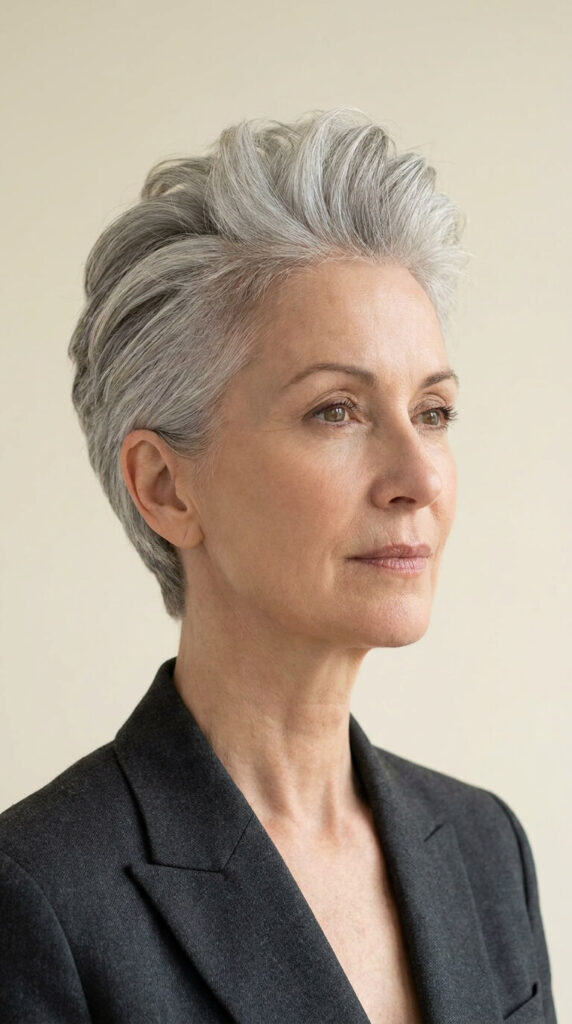
The classic tapered pixie remains popular because it looks clean and refined without feeling severe. The neckline sits close to the head, the sides stay smooth, and the top carries enough length for subtle volume.
This haircut works well for women who enjoy a polished appearance and a straightforward routine. Use a lightweight smoothing cream, then direct the top slightly to one side. Regular trims help preserve the shape.
While pixies often feel simple day to day, they still require upkeep. Allure notes that short cuts need regular salon visits to maintain their structure.
Avoid waiting until the neckline loses its shape completely.
9. Asymmetrical Pixie Cut With a Long Fringe
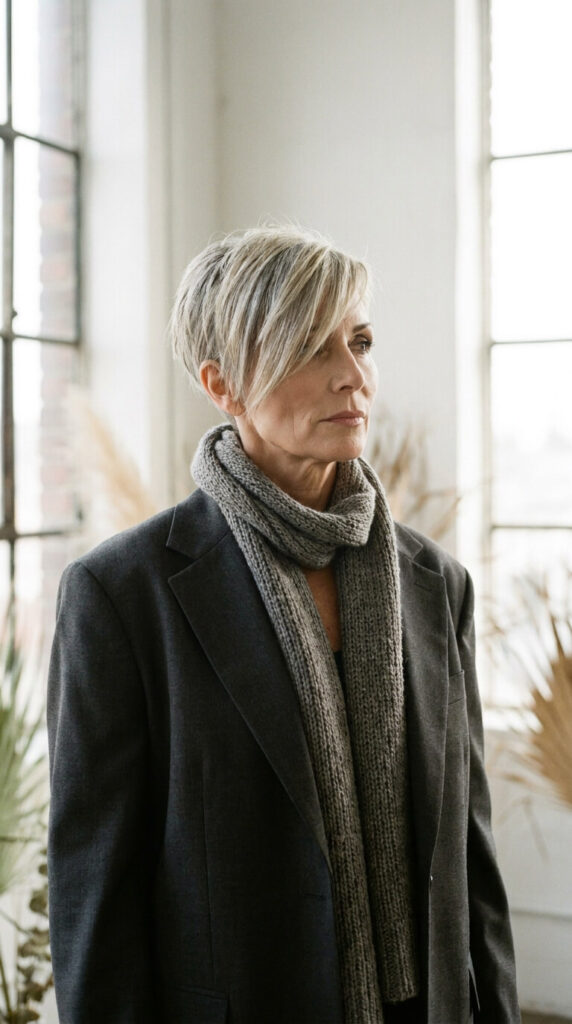
An asymmetrical pixie adds visual interest without requiring bold color or dramatic styling. One side stays slightly shorter, while a longer fringe falls softly across the forehead. This creates a graceful diagonal line that can draw attention toward the eyes and cheekbones.
Ask your stylist to keep the difference subtle if you prefer a wearable everyday look. Smooth the fringe with a small brush or add gentle bends with your fingers while blow-drying.
Avoid making the long side too heavy. The fringe should move naturally rather than sit like a dense curtain across the face.
10. Silver Pixie Cut With Soft Texture
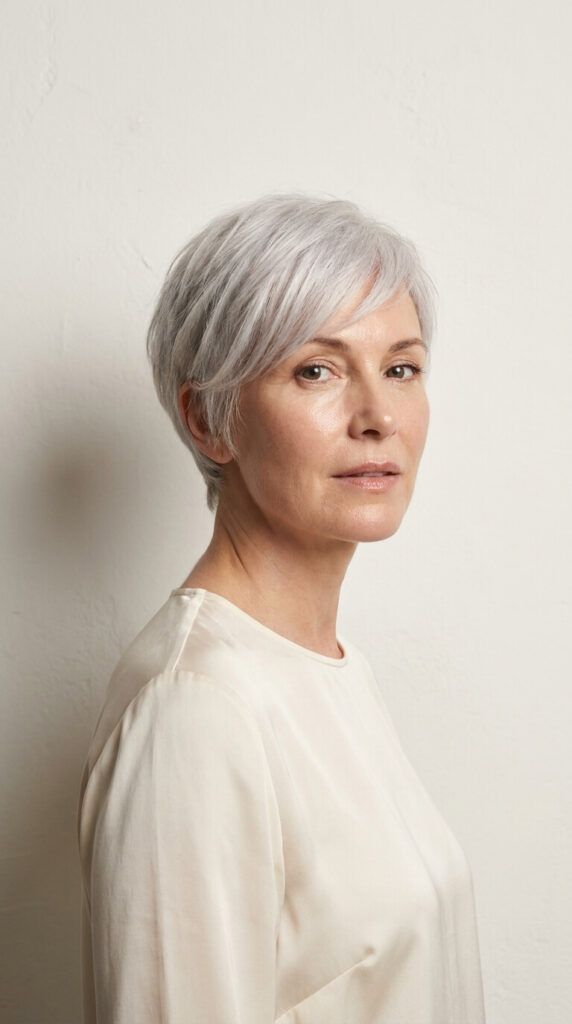
Natural silver, white, and salt-and-pepper tones look striking in a short textured cut. The layered surface catches the light and shows off the dimension within the hair color. A soft pixie also removes dry ends, allowing the natural shade to look fresh and intentional.
Ask for a gently feathered top and a neat outline around the ears. Use a hydrating leave-in product and occasional purple-toned care if your stylist recommends it for your specific shade.
Avoid overusing matte products. Silver hair often looks most beautiful when it retains a soft, healthy sheen.
11. Pixie Bob for a Softer Transition
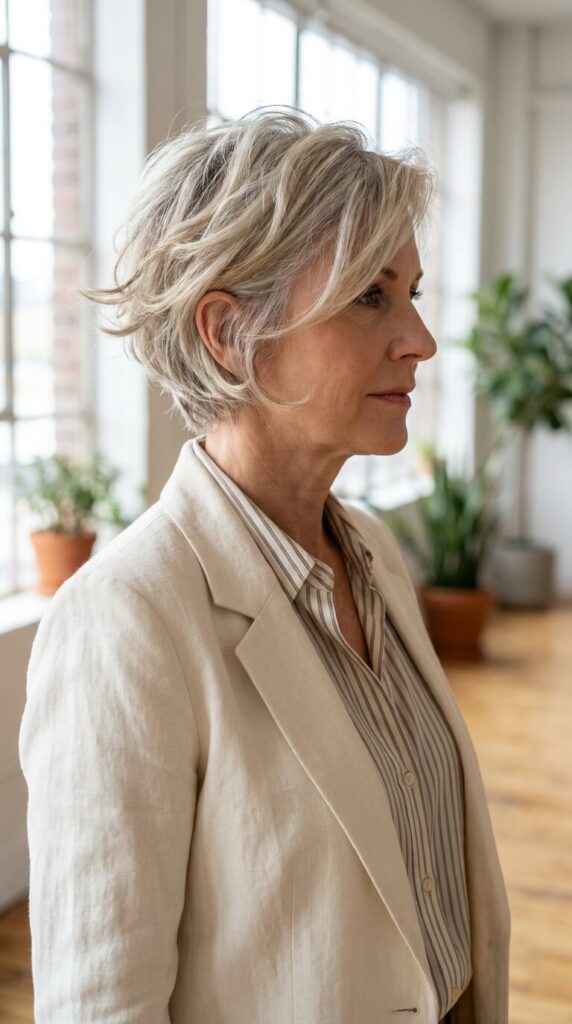
A pixie bob, sometimes called a bixie, blends the cropped ease of a pixie with the softness of a short bob. Allure describes the style as a mix of bob and pixie elements with layered dimension and texture.
This cut suits women who want movement around the face and a little extra coverage near the ears and neckline. Ask for airy layers, a softly graduated back, and enough length to tuck behind the ear.
Avoid a bulky shape at the sides. The haircut should feel light, not triangular.
12. Choppy Pixie Cut With Modern Texture
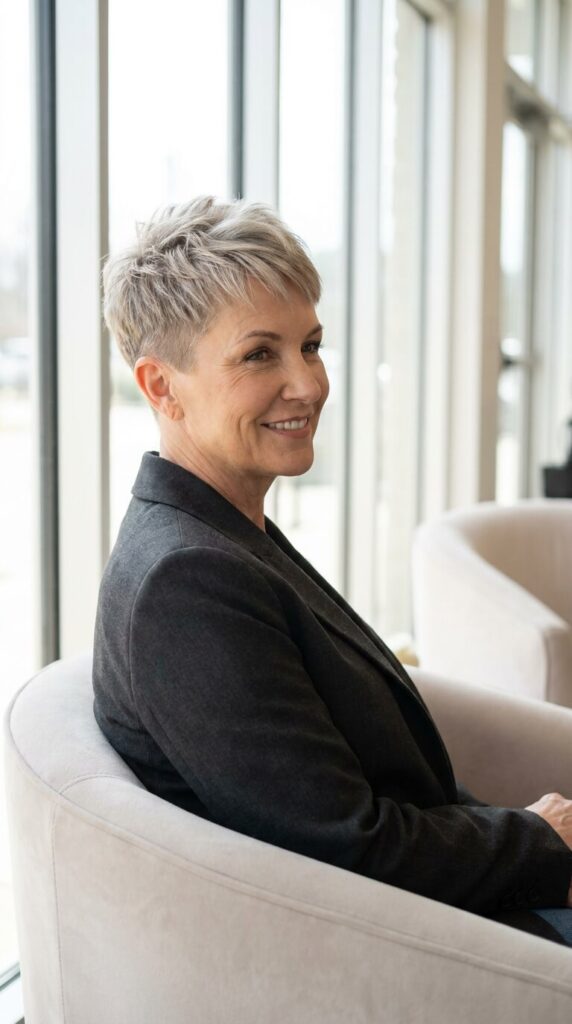
A choppy pixie creates definition with irregular layers and a slightly undone finish. It works especially well for straight hair that needs shape or thick hair that feels too dense when cut into one solid block.
Ask your stylist for point-cut layers through the crown and top. This cutting method creates separation and allows the natural texture to show through. Hairstylist Nick Arrojo explained in Allure that the cutting technique helps fine hair gain structure and thick hair gain movement.
Avoid sharp, random spikes. The finished texture should look relaxed rather than rigid.
13. Pixie Cut With Wispy Bangs
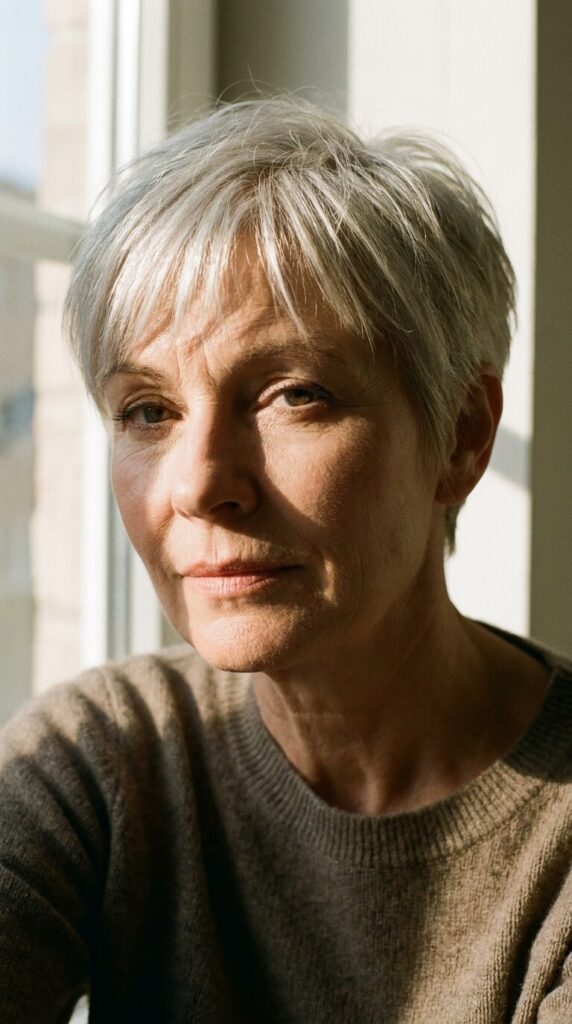
Wispy bangs bring softness to a short haircut and can gently frame the forehead without demanding much daily styling. They work beautifully when you want to soften a strong jawline or add a delicate detail around the eyes.
Ask for a light fringe with varied lengths rather than a heavy straight line. Blow-dry the bangs forward, then move them slightly to the side with your fingers. A tiny amount of styling cream can keep the pieces defined.
Avoid trimming the fringe too bluntly at home. A soft pixie fringe depends on careful spacing and a natural-looking edge.
14. Wavy Pixie Cut With Relaxed Movement
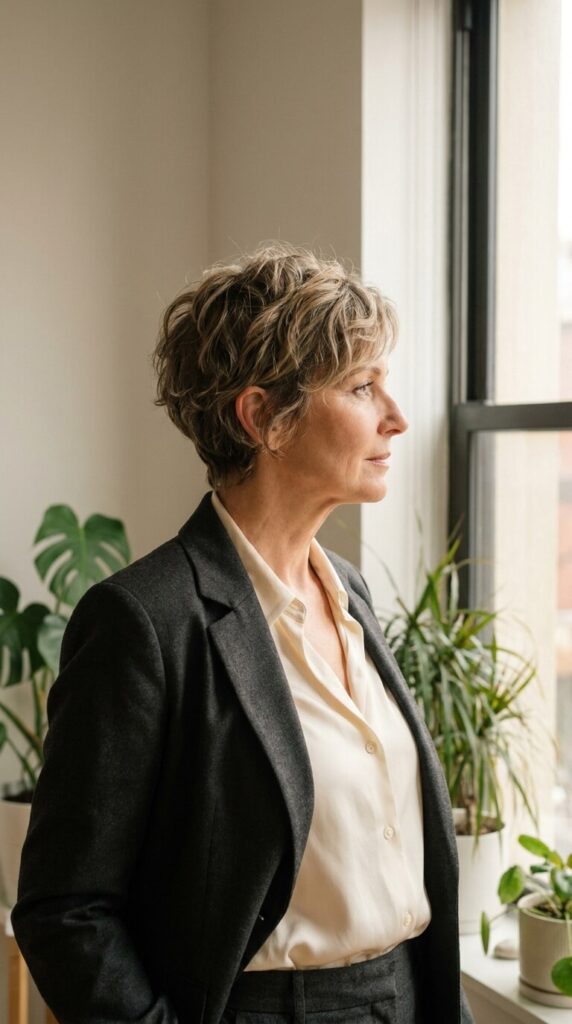
A wavy pixie celebrates natural bends and soft texture. The cut looks especially appealing when the top stays slightly longer, allowing loose waves to form without becoming puffy. It creates a breezy, effortless look that still feels put together.
Ask your stylist to preserve movement at the crown and front. Work a light mousse or curl-enhancing cream into damp hair, then scrunch gently. Let the hair dry naturally when possible.
Avoid forcing the waves into a perfectly uniform pattern. A few irregular bends make the style look more natural and flattering.
15. Side-Parted Pixie Cut for an Elegant Finish
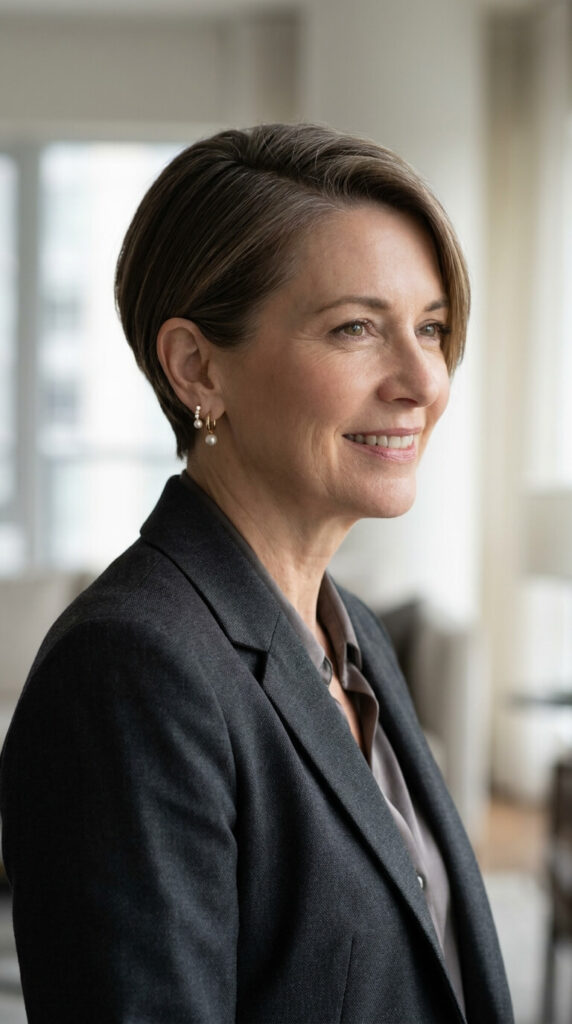
A deep side part instantly gives a pixie cut a graceful, structured appearance. It adds direction to the style and creates a soft sweep across the forehead. This can work especially well for special occasions, professional settings, or anyone who prefers a classic look.
Keep one side smooth and let the fuller side carry the movement. Use a small amount of lightweight styling cream or flexible-hold spray. Tuck the shorter side behind the ear to draw attention to your earrings.
Avoid using a hard, wet-look gel unless you specifically want a slick finish. Softness keeps the style wearable.
16. Spiky Pixie Cut With Subtle Height
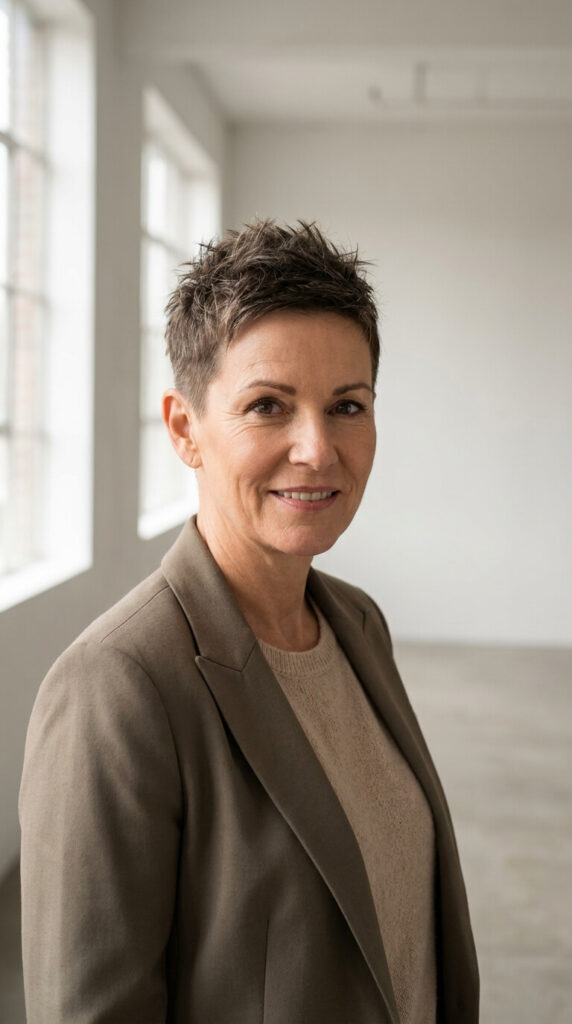
A spiky pixie can look chic and energetic when the texture stays controlled. The key is to create subtle height and separation rather than sharp, stiff spikes. This style works well for women who enjoy a slightly edgier look and do not mind using a small amount of product each morning.
Ask for short, textured layers through the crown. Use matte paste on dry hair and lift only selected pieces. Keep the sides neat to balance the added height.
Avoid using too much hairspray. Flexible texture feels modern, while rigid strands can make the haircut look dated.
17. Rounded Pixie Cut With Soft Fullness
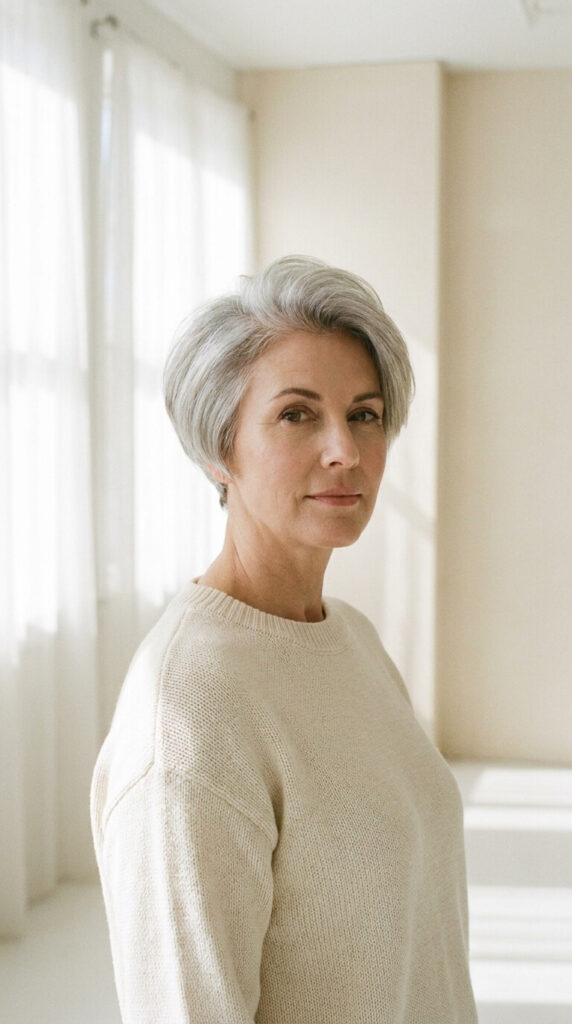
A rounded pixie creates a smooth, softly curved silhouette around the head. It works well for straight hair and for anyone who prefers a neat style with gentle volume rather than visible choppiness.
Ask for blended layers that follow the natural shape of the head. Blow-dry with a small round brush, focusing on lift near the crown and a soft bend at the ends. A light finishing spray can preserve the shape.
Avoid creating too much roundness at the sides. Balanced scale matters. The volume should sit mainly at the crown rather than widening the entire haircut.
18. Undercut Pixie With Longer Top Layers
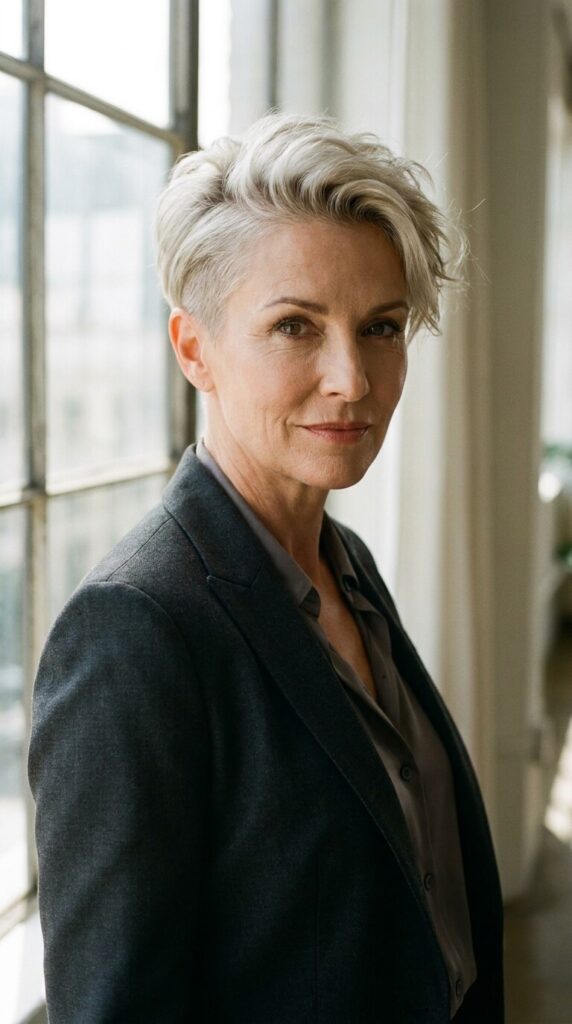
An undercut pixie creates contrast by keeping the sides and back shorter while leaving more length through the top. It feels bold but remains practical, especially for thick hair that tends to feel bulky in traditional short cuts.
Ask for a soft undercut rather than an extreme shaved section if you want an easy, wearable result. Style the top sideways, upward, or slightly tousled depending on your mood.
Avoid making the contrast too severe without discussing the grow-out plan with your stylist. A subtle undercut gives you flexibility and keeps the haircut easy to maintain.
19. Brushed-Back Pixie Cut With Polished Texture
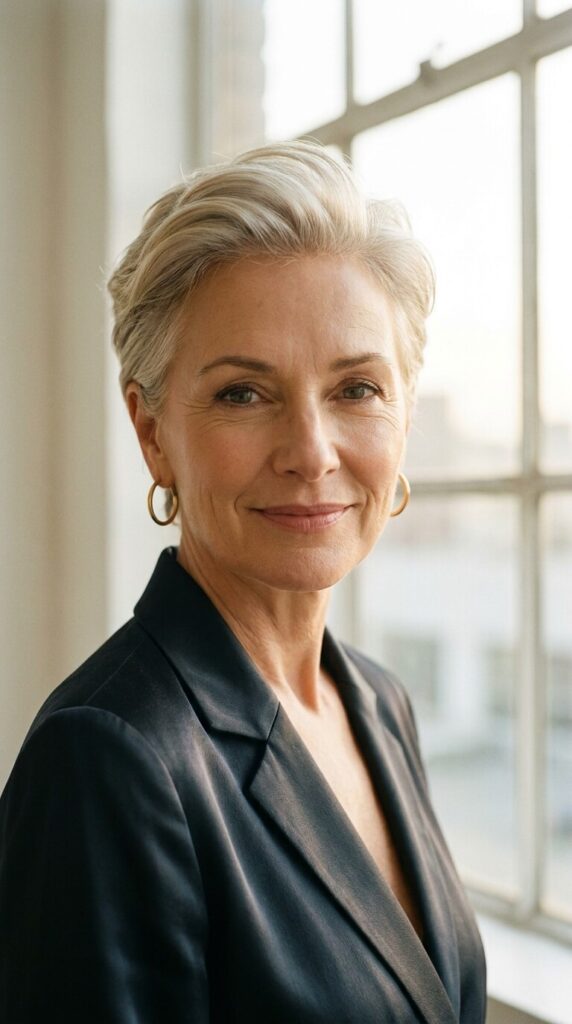
A brushed-back pixie creates a clean, confident shape while keeping the face fully visible. It works beautifully for evening events, professional days, or any moment when you want your short haircut to look especially polished.
Leave the top slightly longer and apply a small amount of flexible styling cream. Use your fingers or a fine-tooth comb to direct the hair backward while preserving a little lift at the roots. Finish with a light mist of hairspray.
Avoid flattening the hair tightly against the scalp. The style looks softer and more flattering when it keeps a touch of airy volume.
20. Low-Maintenance Pixie Cut With Natural Texture
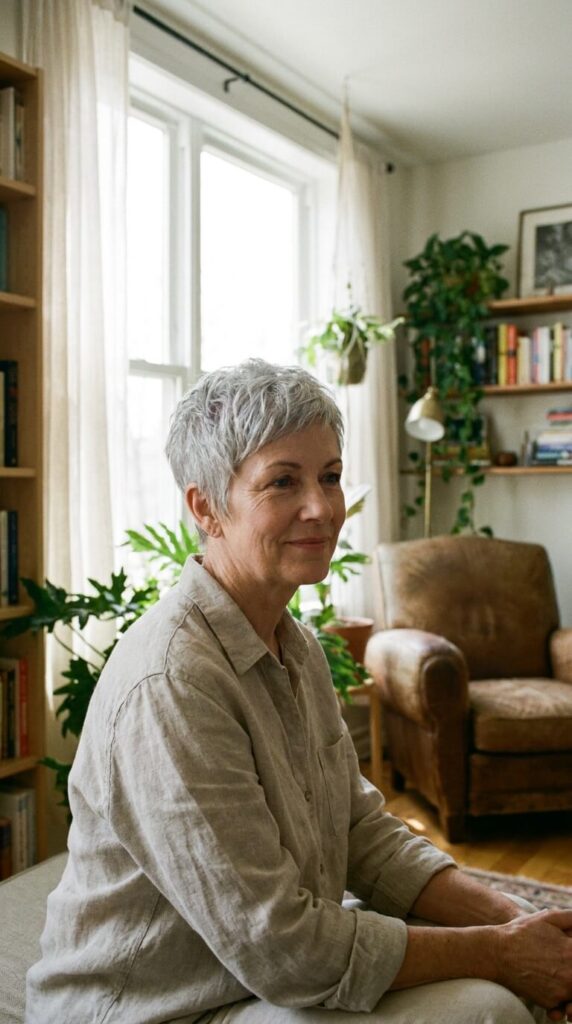
The easiest pixie cut is the one that works with your hair rather than fighting it. That may mean embracing a cowlick, allowing curls to form naturally, or keeping enough length in the fringe to suit your usual routine.
Bring inspiration photos to your stylist, but discuss how much time you actually want to spend styling each morning. Allure recommends personalizing the cut around your texture and length preferences rather than copying a single reference image exactly.
Avoid choosing a haircut based only on the front view. Ask to see how the neckline, crown, and sides will work together.
How to Choose the Right Pixie Cut for Your Hair
Start with your natural texture. Fine hair often looks fuller with subtle crown layers and a clean shape. Thick hair may need internal texture or a softly tapered back to remove bulk. Curly hair benefits from a stylist who understands shrinkage and can shape the cut while preserving definition.
Next, consider your routine. A tousled pixie may need a small amount of paste each morning. A rounded or side-parted style may call for a quick blow-dry. A curly pixie often looks best with a leave-in cream and gentle air-drying.
Finally, think about maintenance. Short hair feels easy at home, but the shape stays sharp only with regular trims. Choose a style that fits both your personality and your schedule.
Internal link opportunity: Add a related article about easy hairstyles for women over 50.
Internal link opportunity: Add a related article about low-maintenance haircuts for fine hair.
FAQs: Flattering Pixie Cuts After 50
A Short Haircut Can Still Feel Soft, Personal, and Beautiful
A pixie cut does not have to feel severe or limiting. It can feel airy, graceful, playful, or quietly polished. The right layers can bring back movement. A soft fringe can draw attention to your eyes. A neat neckline can make even a simple outfit feel more intentional.
The best approach is to choose the version that feels like you. Talk openly with your stylist about your texture, your routine, and the amount of upkeep you prefer. Then allow the haircut to work with your natural features instead of chasing a rigid rule.
A great pixie cut is not about looking younger. It is about feeling comfortable, confident, and fully yourself.