Introduction
I stared at the top of my china cabinet Styling for two full years before I did anything about it. It was this awkward, wide, dusty ledge sitting between the cabinet crown and the ceiling — too high to ignore, too visible to leave bare, and somehow too intimidating to actually style. Every time I tried to put something up there, it looked wrong. Too cluttered. Too empty. Too random. Sound familiar? If you have a china cabinet and that space on top is driving you quietly crazy, you are absolutely not alone. The good news is that with a few simple design principles and some inspiration, that awkward space becomes one of the most charming focal points in the entire room. Let me show you exactly how.
Why the Top of Your China Cabinet Feels So Hard to Style
That space on top of a china cabinet is genuinely one of the trickiest spots in any dining room or living room — and it’s not your fault it looks off. The challenges are real. The surface is typically high up and hard to see straight-on, which means anything too small simply disappears. The depth is usually shallow compared to the height, which makes scale difficult. And unlike a shelf or mantel, there’s no built-in visual structure to lean on. Most people either leave it completely bare, pile it with random clutter, or over-stuff it with too many small objects. This guide gives you a clear, practical framework to avoid all three mistakes and style this space like a professional.
The Golden Rules Before You Start Styling
Before placing a single item on top of your china cabinet, clean the surface thoroughly — vacuum the dust, wipe it down, and start fresh. Then, keep these three rules in mind throughout every styling decision you make. First: go big. Items that are too small will look lost and messy from a distance. Use fewer, larger pieces rather than many small ones. Second: create height variation. A flat line of same-height objects is visually dull — vary the heights by using risers, stacked books, or objects of genuinely different sizes. Third: limit your color palette to no more than three colors that run consistently through the entire display. These three rules alone will transform your results before you even choose a single object.
12 Creative Styling Ideas for the Top of Your China Cabinet
1. Use Large Baskets as Your Anchor Pieces
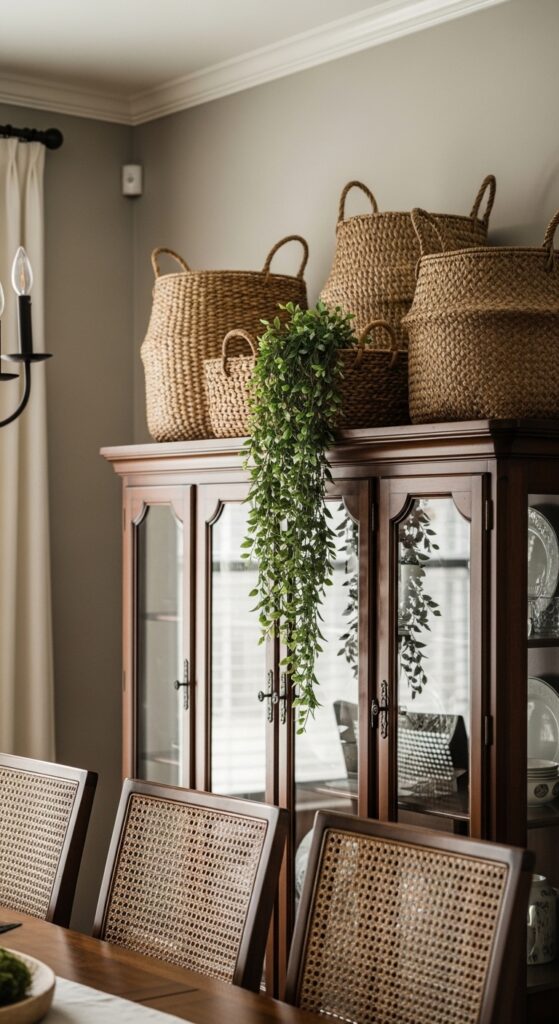
Large woven baskets are one of the most universally recommended styling solutions for the top of a china cabinet — and the reason is simple: they have exactly the right qualities for that challenging space. They’re large enough to register visually from a distance, light enough to move around easily, available in a range of textures and natural tones that work with almost any style, and they add organic warmth that softens the strong lines of the cabinet below. Use two or three baskets of varying sizes — place the tallest at the back, stagger the others forward and to the side. Fill one with a trailing faux greenery vine for extra visual interest and natural texture.
2. Lean a Large Framed Art Piece or Mirror Against the Wall
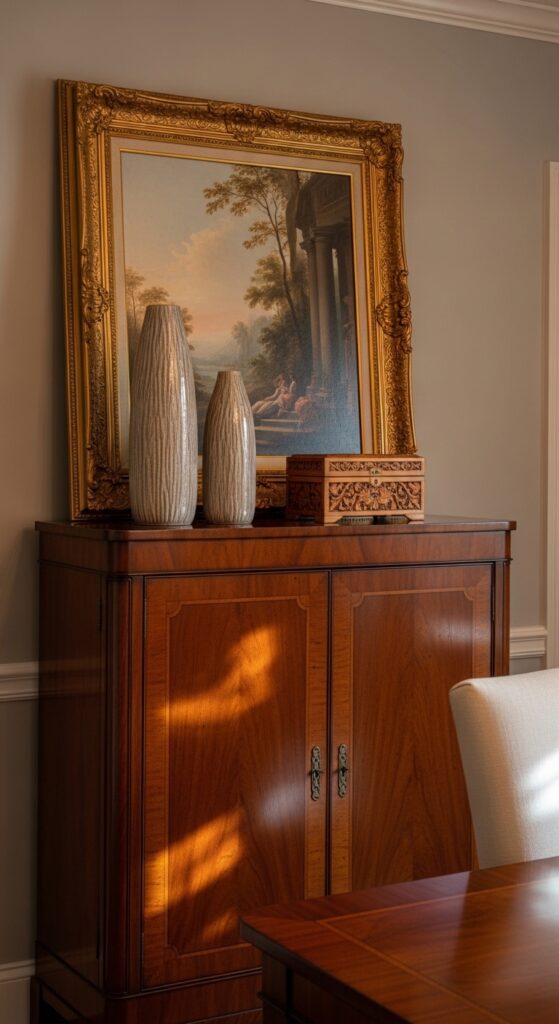
One of the most elegant and designer-approved ways to style the top of a china cabinet is to lean a large framed artwork, antique mirror, or decorative print against the wall directly behind the cabinet. This technique works because it fills the vertical space dramatically without requiring anything to hang on the wall — it’s completely removable and commitment-free. Choose a frame that complements your cabinet’s finish: gilded gold frames warm up dark wood cabinets beautifully, while simple black frames work with almost any style. Layer one or two smaller objects in front of the leaning art to create depth and a finished, professional-looking vignette.
3. Create Height With Tall Vases or Urns in a Cohesive Group
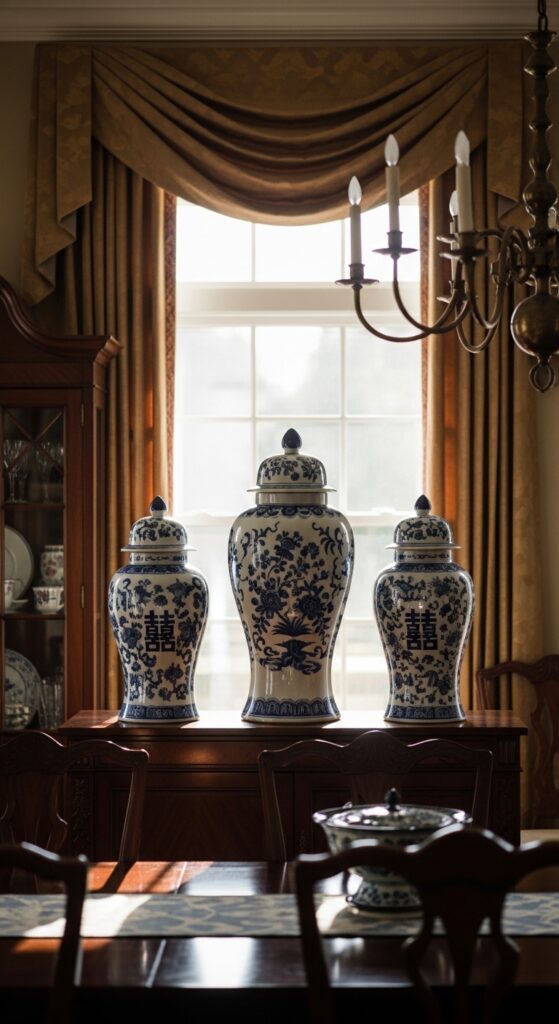
Tall vases, ceramic urns, and bulbous pottery groupings are a classic designer go-to for styling the top of china cabinets — and they work because they do exactly what this space needs most: they add significant visual height. Group three urns or vases of similar style but slightly different heights together, keeping them within the same color family. Blue and white ginger jars are a timeless, endlessly elegant option. Rustic pottery grouped together adds casual, farmhouse warmth. A set of matching white ceramic vases creates a clean, modern statement. The key is keeping the grouping cohesive in color and material so the display reads as intentional rather than random.
4. Add Faux Trailing Plants or Greenery for Life and Softness
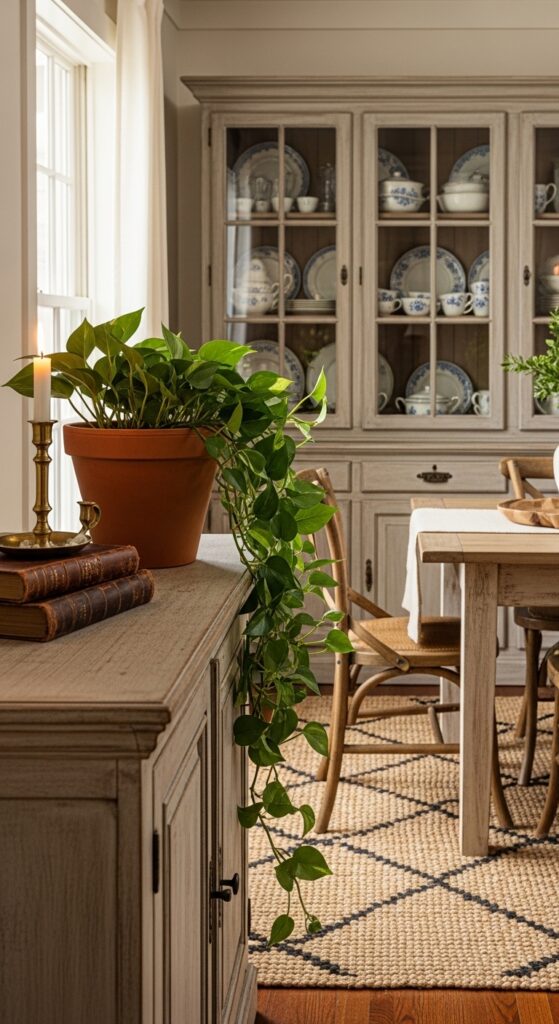
Nothing softens the hard angles of that top ledge like greenery — and at this height, faux plants are genuinely the smarter choice. Real plants are nearly impossible to water regularly up that high, and they tend to struggle without consistent care. High-quality faux pothos, eucalyptus, or ivy in a decorative pot looks just as beautiful and requires nothing but an occasional dusting. Place a trailing plant at one end of the cabinet and let the vines drape naturally downward along the side. The cascading effect is beautiful, draws the eye up, and makes the whole cabinet look like it belongs in a design magazine rather than a furniture showroom.
5. Display a Collection of Vintage Pottery or Ironstone
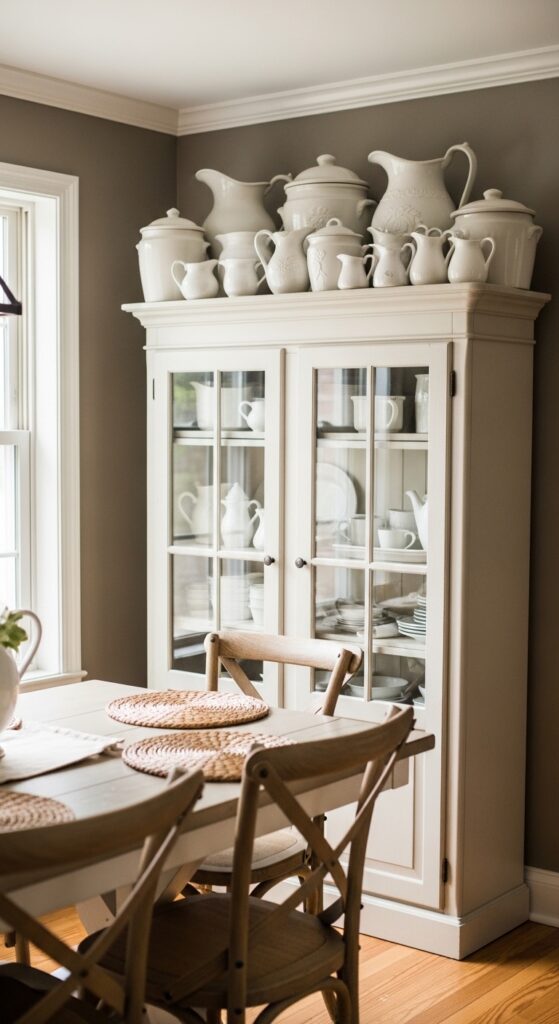
If you love the look of curated collections, the top of your china cabinet is prime gallery real estate. A grouping of vintage ironstone pitchers, rustic pottery crocks, or antique transferware pieces arranged across the top creates a cohesive, collected display that looks like it has been lovingly built over years. The trick is to keep the collection unified — all ironstone white, all brown stoneware, all blue and white transferware — so the grouping reads as a deliberate display rather than a random jumble. Mix in one or two objects of slightly different texture or shape to create interest within the theme. Thrift stores and estate sales are the best sources for these pieces
6. Stack Vintage Books as Risers and Style Objects on Top
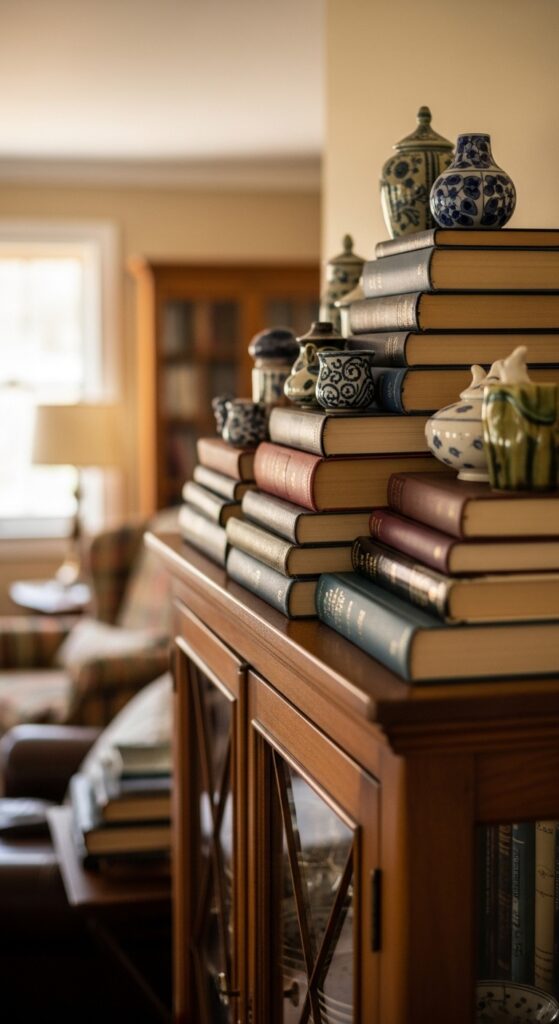
Stacked vintage hardcover books are one of those styling tricks that look effortlessly collected and genuinely charming — especially on top of a china cabinet. Stack two or three books with interesting spines or cloth covers at varying heights across the top of the cabinet, then place a small object — a ceramic bird, a bud vase, a small figurine, a candle — on top of each stack. The books create built-in risers that add the height variation the space needs, and they bring a warmth and literary personality that purely decorative objects can’t replicate. Vintage cookbooks, design volumes, and old hardcovers with beautiful cloth spines work especially well for this.
7. Try a Seasonal Swap System to Keep It Fresh All Year
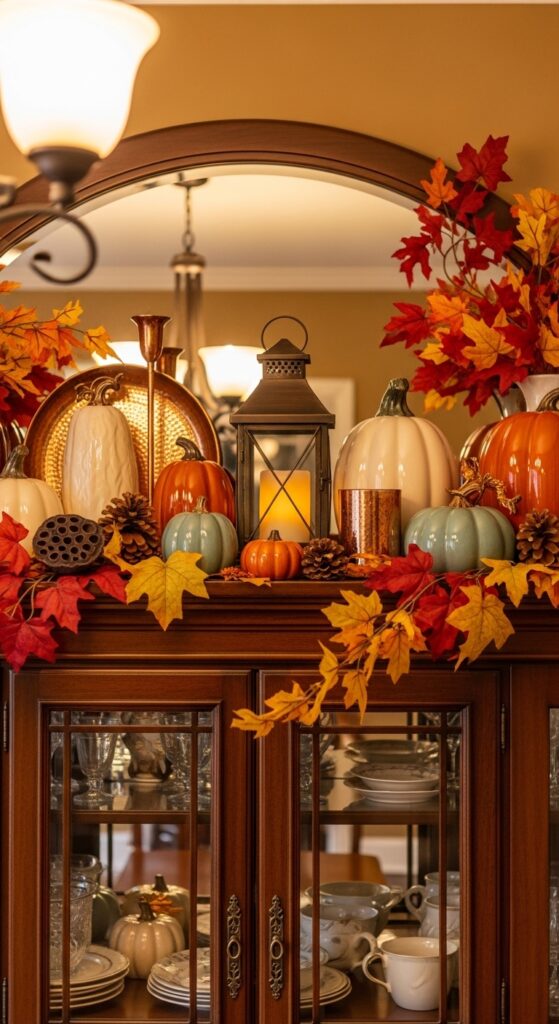
One of the smartest approaches to styling the top of a china cabinet is treating it as a seasonal display that rotates four times a year — and committing to a simple swap system that takes less than an hour each season. In spring, use a framed botanical print, a white pitcher filled with faux stems, and a small bird figurine. In summer, switch to a coastal arrangement with a woven tray, glass bottles, and trailing greenery. In fall, bring in ceramic pumpkins, a lantern, and warm copper-toned accents. In winter, arrange pine sprigs in a tall vase, pinecones in a bowl, and a string of soft fairy lights. This rotating approach means the space always feels intentional and seasonally alive.
8. Place One Large Statement Piece as a Focal Point
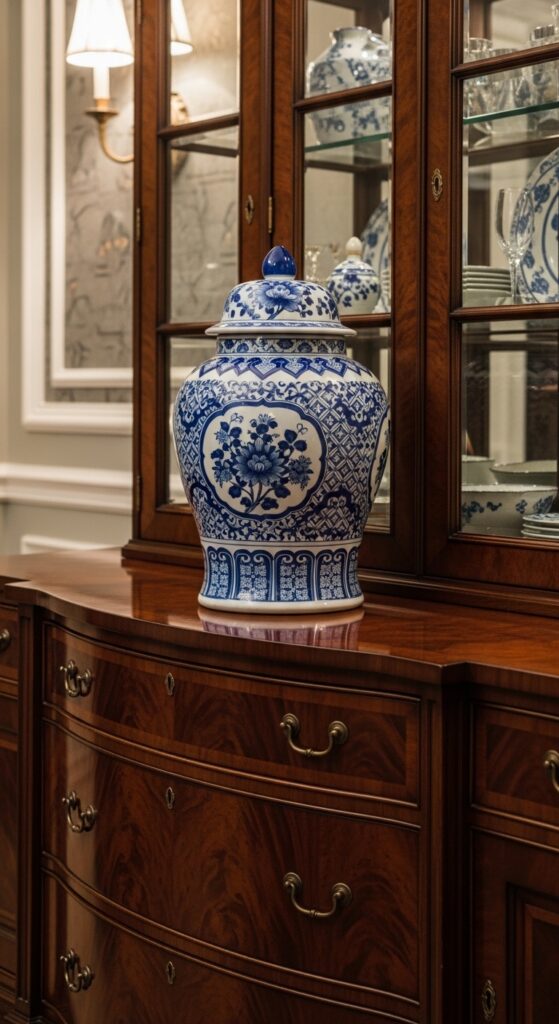
Sometimes less is truly more — and the top of a china cabinet is one of those situations where a single, perfectly chosen statement piece is more powerful than a complex arrangement of many objects. A large ginger jar, an oversized architectural urn, a dramatic sculptural piece, or even a beautiful antique clock placed confidently at the center of the cabinet top creates a clean, architectural statement that feels intentional and elevated. This approach works especially well if your china cabinet itself is ornate or detailed — one statement piece complements without competing, while a cluttered arrangement would fight with the cabinet’s own character.
9. Layer a Decorative Tray With Curated Objects Inside
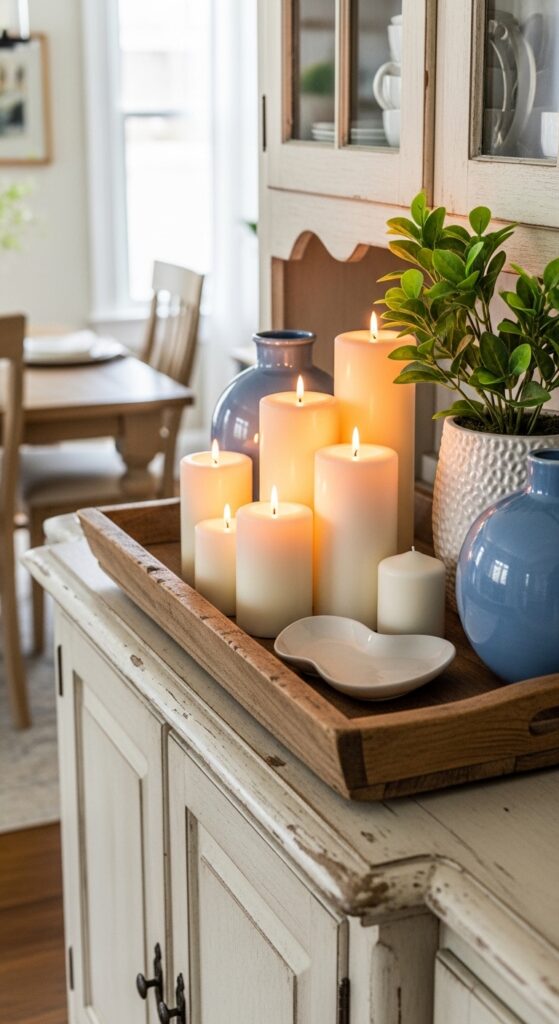
A decorative tray placed on top of the china cabinet serves as an instant organizer and visual frame for the items within it. It groups everything together so the display reads as one cohesive vignette rather than a scattering of unrelated objects — and it makes the whole arrangement look deliberate. Choose a large wooden tray for a rustic or farmhouse feel, or a metallic brass or silver tray for something more glamorous and traditional. Fill the tray with a candle, a small plant, two or three decorative objects that share a color palette, and perhaps a small stack of books. Everything contained within the tray immediately looks more polished and considered.
10. Add Lanterns or Candleholders for Warm Ambiance
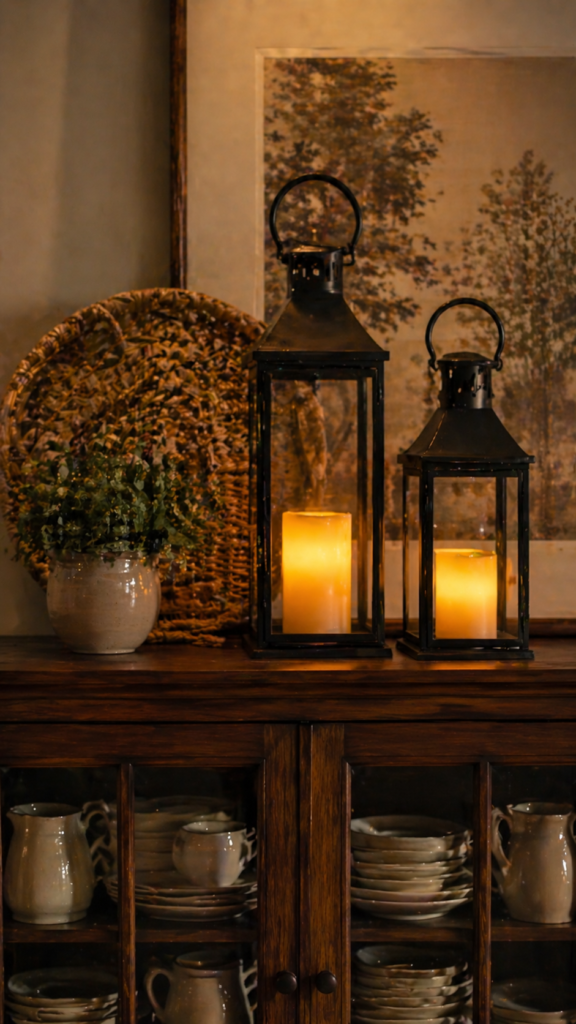
Lanterns — whether metal, glass, or wooden — are natural fits for the top of a china cabinet. They have the visual weight and scale to hold their own at height, they add warmth and atmosphere that purely decorative objects often can’t, and they’re available in styles that complement everything from modern farmhouse to traditional to coastal. Group two lanterns of different heights on one side of the cabinet and balance them with a plant or basket on the other. Use battery-operated candles inside for safety — the flickering LED light gives the same romantic glow without any fire risk. This is one of those additions that makes the entire dining room feel instantly more inviting during evening meals.
11. Display Heirloom Pieces or Personal Collections With Meaning
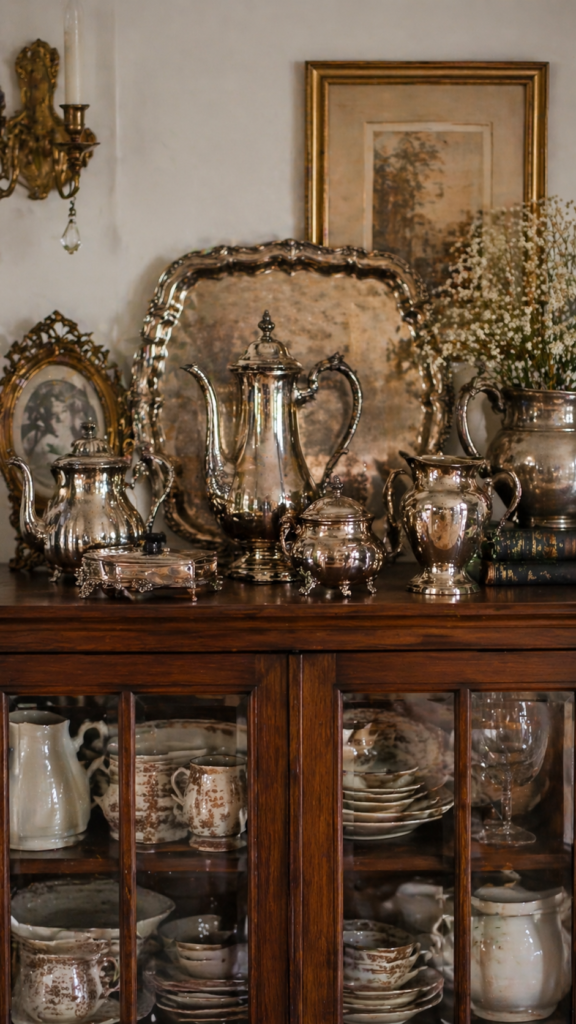
The top of a china cabinet is the perfect elevated platform for displaying pieces that matter — things that carry a story, a memory, or a personal connection. Vintage silver teapots passed down from a grandmother. A collection of antique clocks found at flea markets over the years. A set of hand-painted ceramic pieces collected from travels. Personal heirloom pieces give a display depth and meaning that purely decorative objects can never replicate. They make the space feel genuinely inhabited and curated rather than catalog-styled. Keep the surrounding objects minimal so the heirloom pieces get the visual spotlight they deserve — they’re the stars of the arrangement, not the supporting cast.
12. Use the “Back to Front” Layering Method for a Polished Result
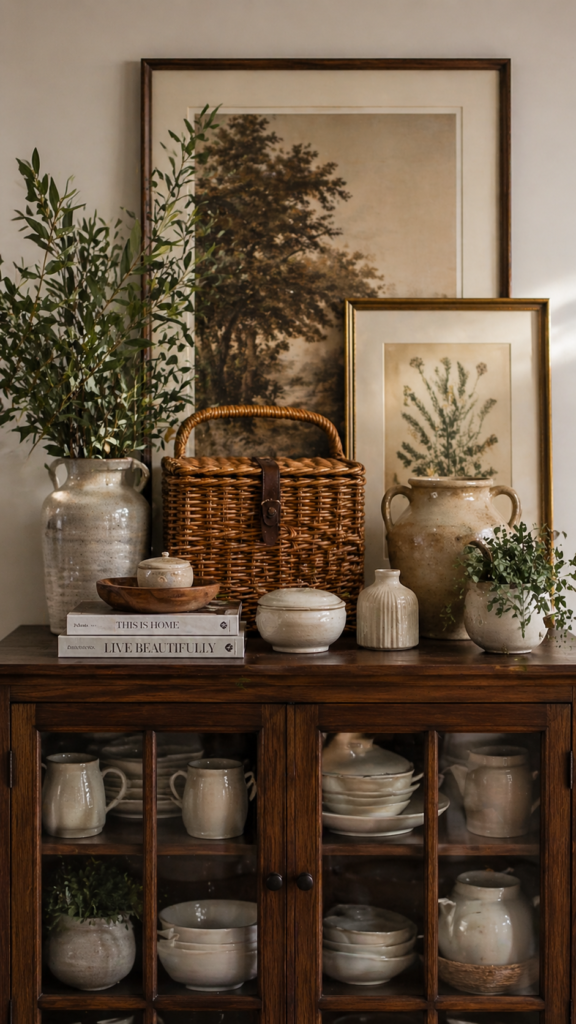
The single most transformative styling technique for the top of a china cabinet is one used by professional interior designers on every display surface: the back-to-front layering method. Start at the back of the surface and place your largest, tallest item first — a leaning frame, a tall vase, or a large basket. Then work toward the front, placing progressively smaller and lower items as you move forward. The last items at the very front edge should be the smallest. This creates a sense of depth and dimension that makes the display look intentionally layered and genuinely three-dimensional rather than flat. Add one or two items at varying heights in the middle section to break any rigid sense of symmetry and keep the arrangement feeling organic.
FAQs: Expert China Cabinet Styling Advice
Conclusion
That awkward space on top of your china cabinet doesn’t have to be a source of frustration anymore. With the right scale, a consistent color palette, the back-to-front layering technique, and pieces that are large enough to hold their own at height, it becomes one of the most eye-catching spots in your entire dining room. Start with one or two large anchor pieces — a basket, a tall vase, a leaning frame — and build from there. Don’t overthink it, and don’t try to fill every inch. The most beautiful china cabinet tops have breathing room, visual rhythm, and a clear sense of personality. Give yours that same intentional attention, and you’ll walk past it every single day feeling genuinely proud of how it looks.