
The living room and dining room combo ideas you choose can determine whether your home feels like a spacious sanctuary or a cluttered warehouse. I remember the first time I moved into an open-concept apartment; I was so excited about the “freedom” of no walls, but two weeks later, I was miserable. My sofa felt like it was drifting in the middle of a sea, and my dining table looked like it had been abandoned in a corner. It felt like I was living in one giant, messy hallway.
It wasn’t until I started treating the floor plan as a series of “zones” rather than one big room that the magic happened. By using color, furniture placement, and lighting, I turned that awkward open space into a functional masterpiece. In 2026, as homes become more integrated and multifunctional, mastering the “combo” look is essential for anyone wanting an expensive-looking, Pinterest-worthy interior. Whether you are working with a tiny apartment or a large open-concept house, these ideas will help you create harmony between your lounging and eating areas.
Why Living and Dining Combos Matter
In modern interior design, the walls are coming down, but our need for structure remains. A well-executed living and dining combo matters because it maximizes every square inch of your home while maintaining a “flow” that is perfect for entertaining. It allows you to host a dinner party while still feeling connected to the guests relaxing on the sofa. From a psychological perspective, a unified space creates a sense of “openness” and airiness that reduces stress, provided the zones are clearly defined. It’s the ultimate way to show off a cohesive design aesthetic across the most-used parts of your home.
1. Defining Zones with Large Area Rugs
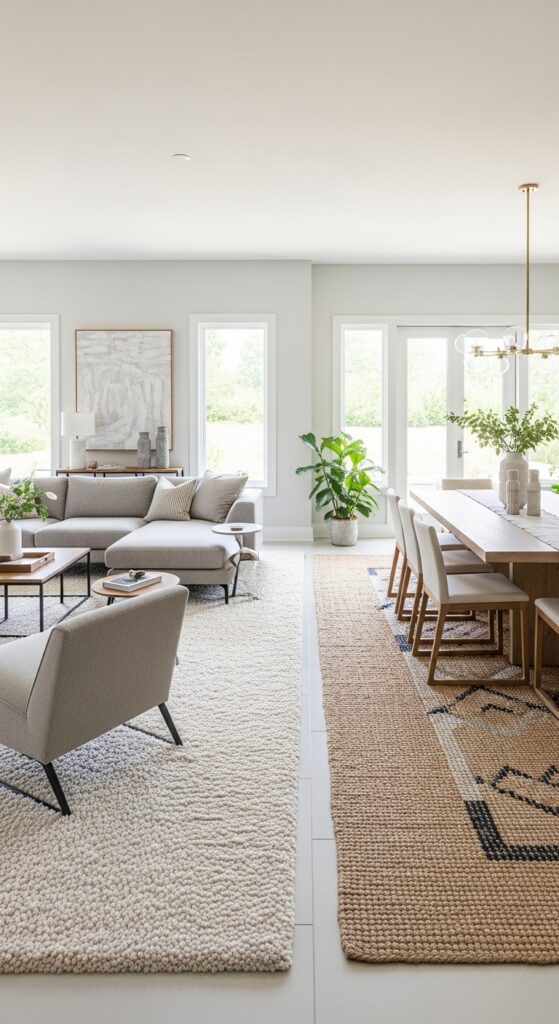
The most effective way to separate your living and dining areas without building a wall is by using two distinct, large area rugs. For the living area, choose a plush, high-pile rug that invites relaxation. In the dining zone, opt for a low-pile or flat-weave rug that makes moving chairs easy. By placing your furniture entirely on these “islands,” you create a visual boundary that tells the eye where one room ends and the other begins. This hack is essential for open floor plans because it anchors the furniture and prevents the “drifting” look that makes rooms feel unfinished and cheap.
2. The “Back-to-Back” Sofa Placement
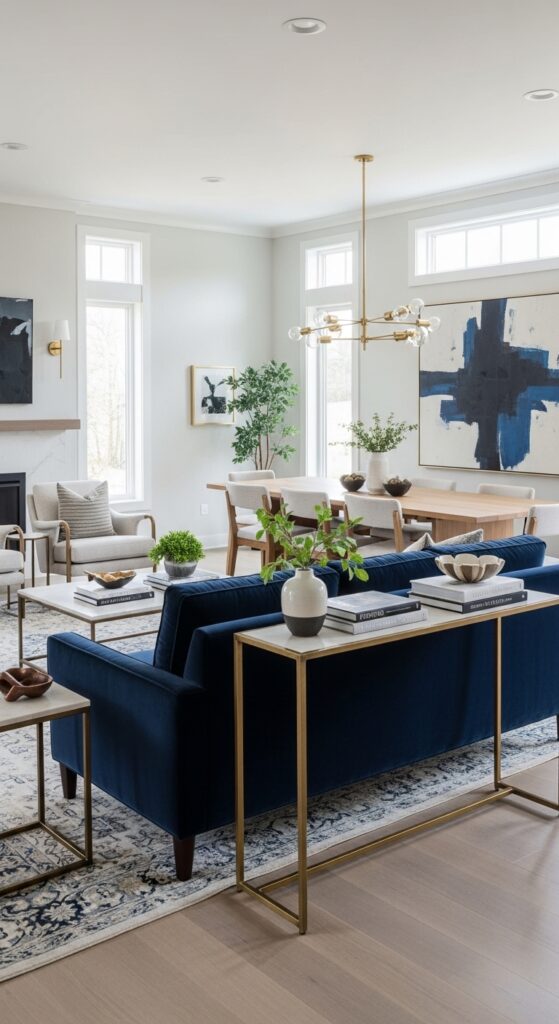
If you want a clear physical divide, place your sofa with its back toward the dining table. This “back-to-back” arrangement acts as a low-level wall, creating a cozy, enclosed feeling in the living room while keeping the dining area feeling like its own “room.” To make this look expensive, place a slim console table behind the sofa. This provides a surface for Neo Deco lamps or Jade-colored vases, acting as a decorative bridge between the two zones. It’s a classic layout for narrow rooms that keeps the traffic flow open on either side of the furniture.
3. Cohesive Color Drenching with Jade Accents
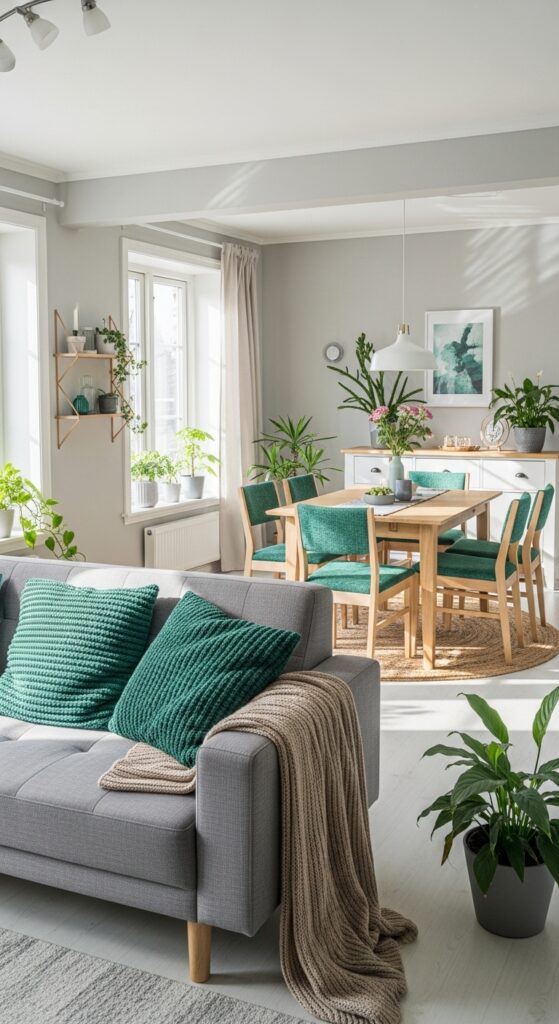
While the zones should be separate, the color palette must be unified to avoid a “choppy” look. In 2026, using a monochromatic base like “warm sand” and accenting both areas with Jade Green is a top trend. Use Jade velvet pillows on the living room sofa and matching Jade seat cushions or a table runner in the dining area. This “color thread” pulls the two spaces together, making them feel like part of a single, intentional design. It creates a high-end, “designer” feel that looks incredible in Pinterest photos because the visual harmony is instantly recognizable.
4. Vertical Separation with Open Shelving
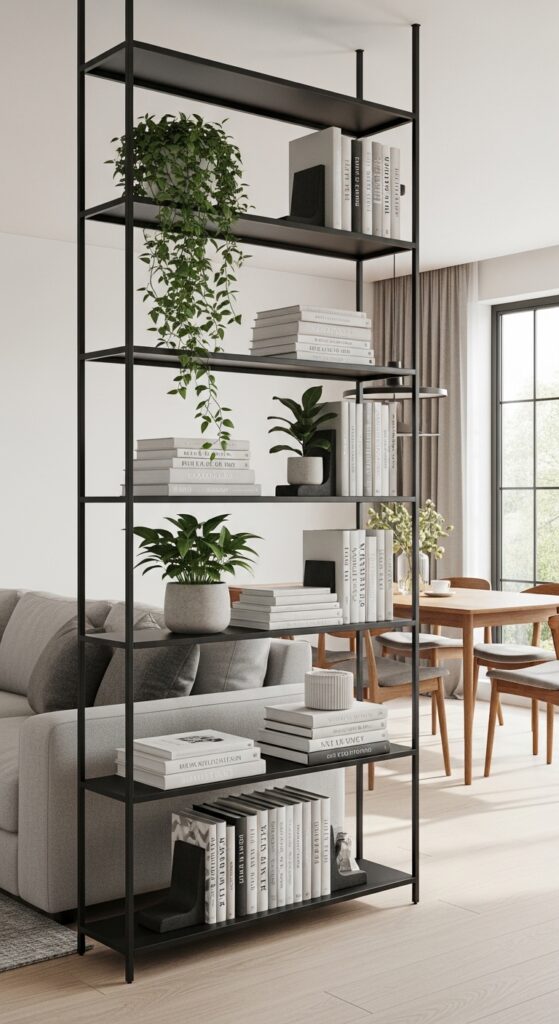
Open, double-sided shelving units are the ultimate “secret weapon” for combo rooms. By placing a tall, minimalist shelf between the living and dining zones, you create a “see-through” wall. This provides privacy and separation without blocking the natural light. You can style these shelves with Neo Deco metallic objects, trailing plants, and coffee table books. It’s a highly practical solution because it adds storage to both “rooms” simultaneously. On social media, these “shelf dividers” are viral because they offer a way to display personality while performing a major architectural function in a small home.
5. Unified Lighting with Dual Chandeliers
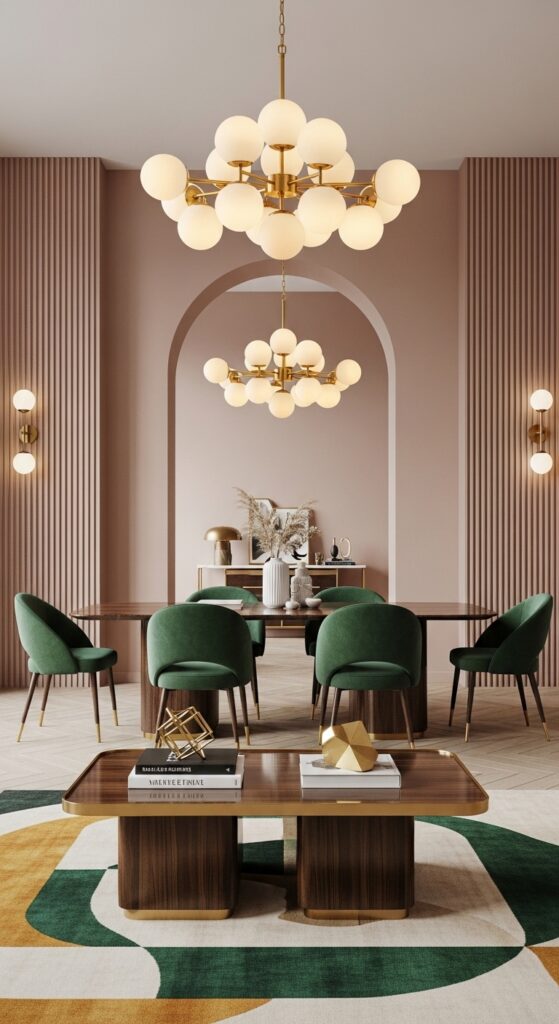
Lighting is the “jewelry” of a combo room, and you need a “pair” to make it work. Instead of one central light, hang two distinct statement fixtures—one over the coffee table and a larger, lower-hanging one over the dining table. For a Neo Deco vibe, use polished brass chandeliers with globe bulbs. By keeping the materials the same (e.g., both brass), you unify the space, but by varying the heights, you define the purpose of each zone. This creates a “vertical anchor” that makes the ceilings feel higher and the overall layout feel much more expensive and custom-built.
6. The “Corner Nook” Dining Solution
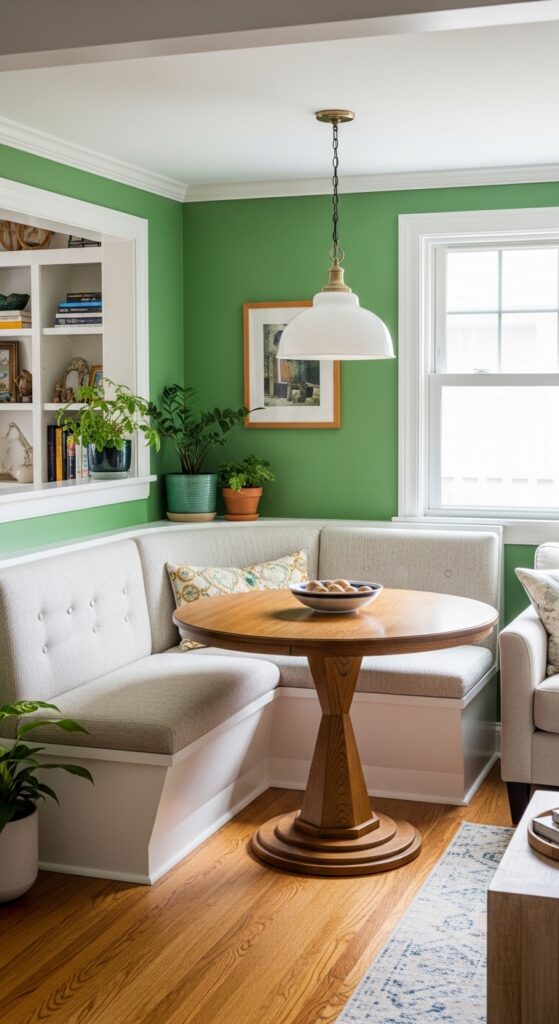
In very small combo rooms, pushing the dining table into a corner using “banquette” or “booth” seating can save massive amounts of floor space. Use a built-in bench along two walls and pair it with a round pedestal table. This creates a “bistro” vibe that is separate from the open living area. You can even paint the corner in a slightly darker shade of Jade or Navy to create a “jewel-box” dining nook. This leaves the rest of the room open for a large, comfortable sofa and media center, providing a high-end, functional layout for urban apartments.
7. Using Large Indoor Plants as “Green Walls”
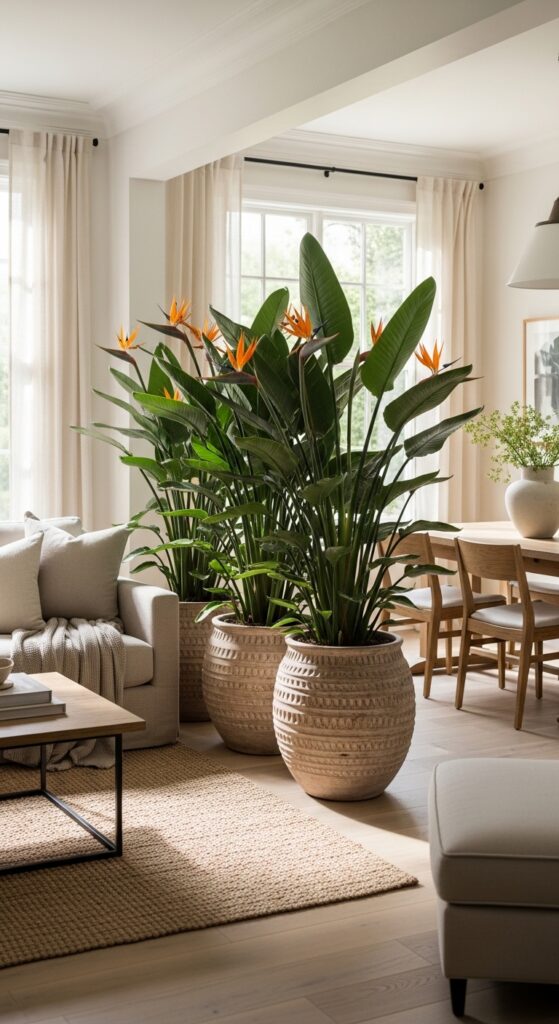
If you prefer an organic look, use tall, leafy plants to create a natural “room divider.” A row of three large planters featuring “Bird of Paradise” or “Fiddle Leaf Fig” plants can act as a soft, living screen between the sofa and the dining chairs. This biophilic design approach is a 2026 staple because it adds life and oxygen to the room while providing a visual “pause.” The vibrant green of the plants complements almost any Neo Deco or Boho color scheme, making the transition between lounging and eating feel peaceful and connected to nature.
8. Symmetric Window Treatments
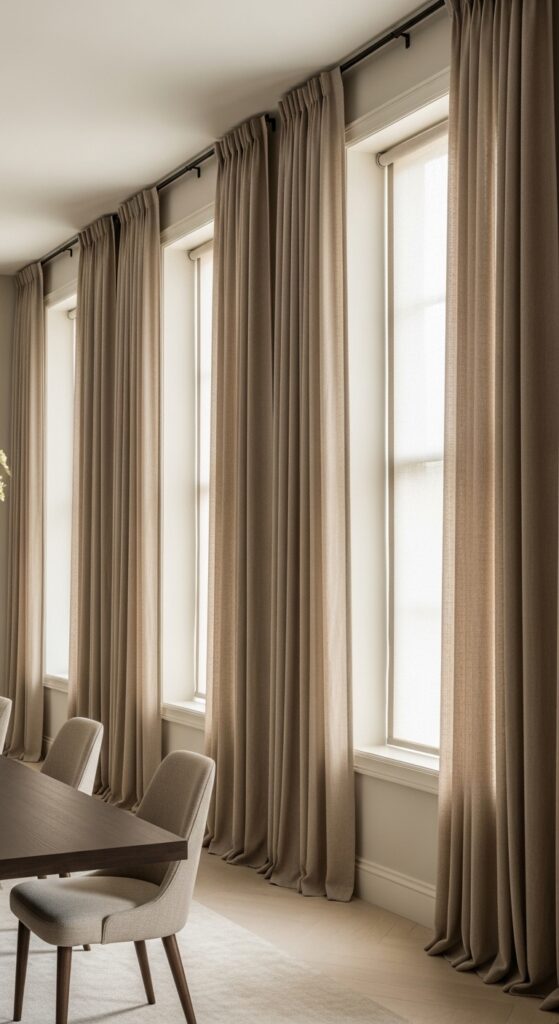
To make a combo room look like a single, grand hall, use identical window treatments across the entire wall. If you have one long wall with multiple windows, hang a single, continuous curtain rod and use floor-to-ceiling drapes in a neutral linen or a soft velvet. This “washes” the wall in texture and removes the visual “breaks” between the living and dining areas. It makes the space feel twice as wide and significantly more luxurious. It’s a classic hotel-lobby trick that translates perfectly to home decor, giving your open-concept living space a polished, “finished” appearance.
9. Metallic Accents as a Design Bridge
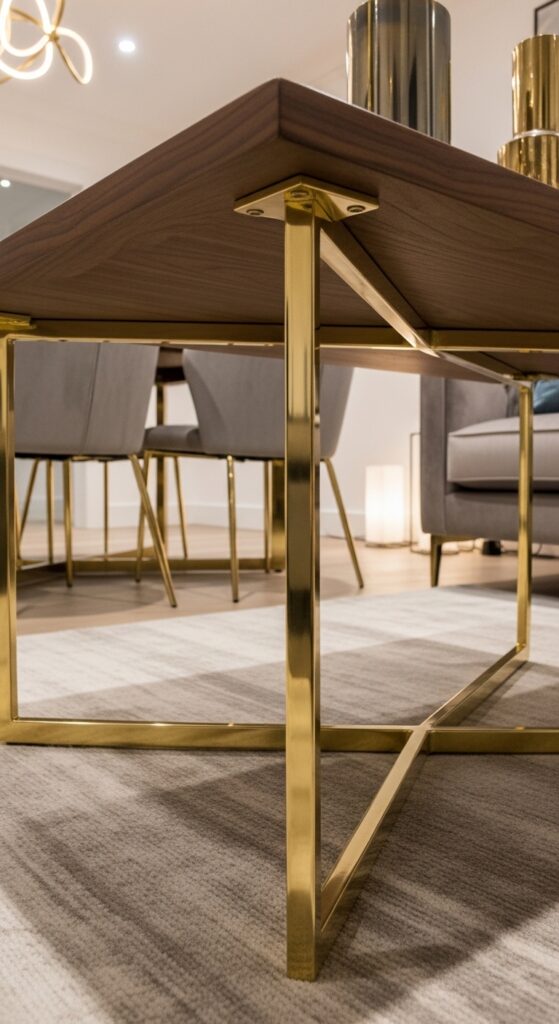
Use metallic finishes like chrome or polished brass as a “bridge” between the two zones. If your living room has a brass-legged coffee table, ensure your dining room chairs or the light fixture also feature brass elements. This repetition of “hardware” creates a sense of high-end continuity. It’s the small, shiny details that the eye catches when scanning a room. In Neo Deco design, these metallic glints act as a common language that speaks to both the comfort of the living room and the formality of the dining room, tying the two together beautifully.
10. The Minimalist “Floating” Layout
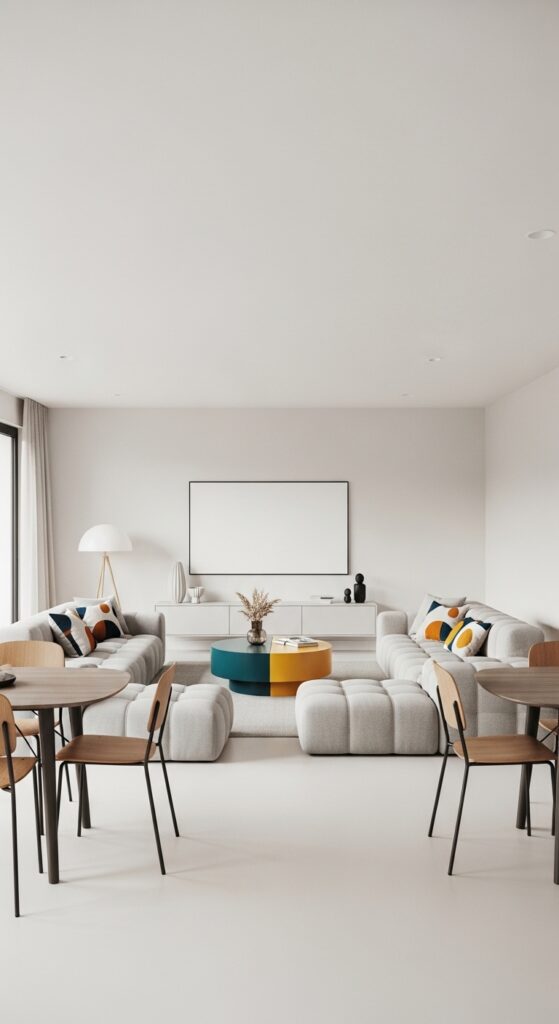
For those who love a clean, “Fun Haus” aesthetic, the floating layout involves keeping all furniture away from the walls. Place the sofa and the dining table in the center of their respective rugs, leaving a wide “walking path” around the perimeter of the entire room. This makes a home look expensive because it suggests you have “space to spare.” It feels airy, modern, and very gallery-like. This layout works best in rooms with large windows or architectural features, as it allows the “bones” of the house to be seen from every angle without being blocked.
11. Mirror Walls for Infinite Space
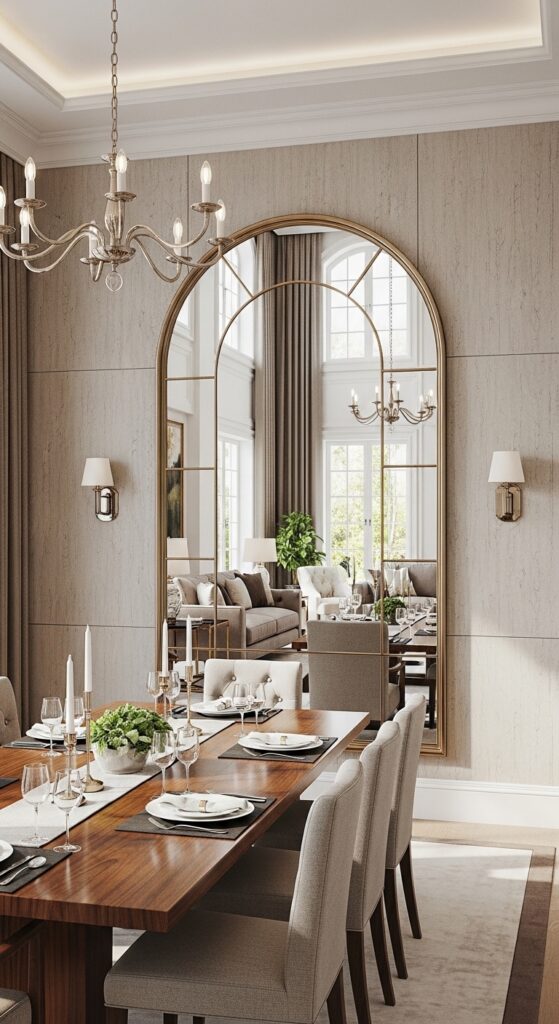
If your living/dining combo feels a bit tight, a “mirror wall” in the dining zone can change everything. A large, oversized arch mirror or a wall of “mirrored panels” reflects the entire living room back at you, creating the illusion that the house is twice its actual size. In Neo Deco styling, mirrors are used to bounce light and add glamour. By placing the mirror near the dining table, you create a “grand hall” atmosphere for meals while making the loungers in the living room feel like they are in a much more expansive, open sanctuary.
12. Using Ceiling Trim to “Frame” Zones
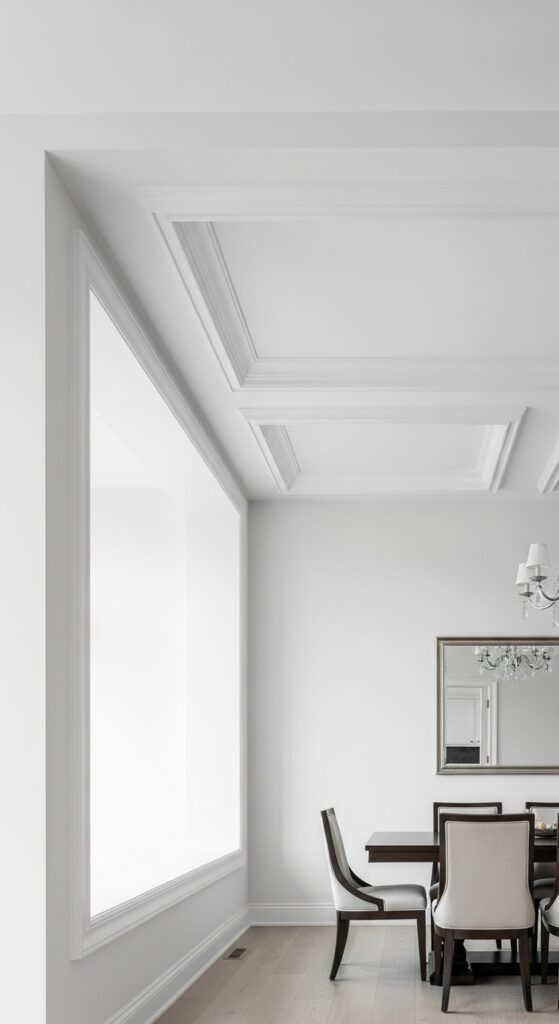
If you are handy with DIY, adding “box molding” or trim to the ceiling can define your zones from the top down. Create one large “frame” with molding above the living area and another above the dining area. You can even paint the inside of these frames in a “Fun Haus” stripe or a solid Jade green. This “architectural framing” tells the eye exactly where the boundaries are without taking up any floor or wall space. It’s a “secret” designer move that makes a room look incredibly custom and high-budget for just the cost of some trim.
Common Questions About Living & Dining Room Combos
1. How do I make a living room and dining room combo feel bigger? +
2. Should the furniture in both areas match? +
3. What is the best way to separate the two rooms without a wall? +
4. Where should I put the TV in a combo room? +
5. How do I choose the right size dining table for a combo room? +
Conclusion: Final Words
Mastering living room and dining room combo ideas is all about balance. It’s the art of creating “separation without isolation.” By using rugs to anchor your furniture, “color threading” to unify the palette, and smart layouts like the back-to-back sofa, you can turn a confusing open space into a high-end, functional home. Don’t be afraid to be bold with 2026 trends like Jade green or Neo Deco metallics—these elements provide the personality that makes an open floor plan feel like a curated sanctuary. Start by defining your rugs, and watch as your “one big room” finally starts to feel like the home of your dreams!
1 thought on “12 Stylish Living Room and Dining Room Combo Ideas for Modern Homes”