
There is something special about opening a sliding door after a long day and stepping into fresh air without leaving home. Even a narrow balcony can become the place where you drink your first coffee, read a few pages before dinner, or sit quietly while the city settles down. The challenge is rarely the square footage. It is knowing what deserves a place in such a compact area.
These apartment balcony decor ideas focus on comfort, visual harmony, and everyday use. You do not need an expensive makeover or a large terrace. A soft rug, one well-scaled chair, layered greenery, and warm lighting can give a plain balcony the calm feeling of a tiny outdoor room. The best results come from choosing fewer pieces with purpose and leaving enough breathing room to enjoy them.
Why Apartment Balcony Decor Matters
A balcony often sits between two worlds. It connects the comfort of your apartment with sunlight, breezes, plants, and a wider view. When you style it well, it can support small daily rituals that make home feel more restful. It may become a breakfast corner, a reading nook, a place to grow herbs, or a quiet spot for evening tea.
Small balconies also reward careful design. Architectural Digest notes that scale, traffic flow, greenery, floor treatments, and weather-resistant textiles all shape how comfortable a compact balcony feels. Before buying anything, check your building rules, balcony weight limits, drainage points, and fire-safety requirements. Then build a simple layout around how you actually want to use the space.
1. Start With a Slim Bistro Set for Morning Coffee
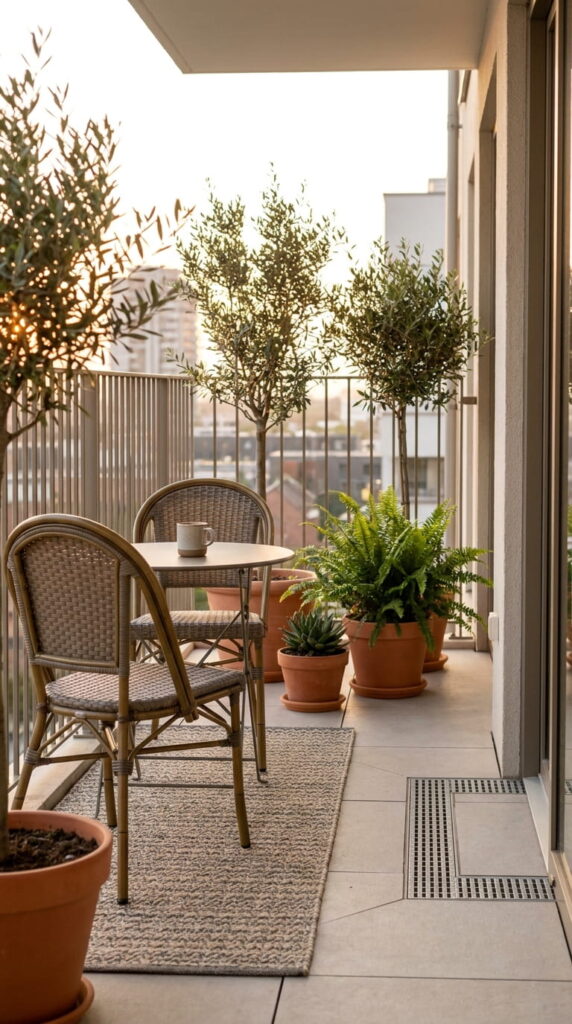
A small bistro table and two chairs create an instant purpose for a balcony. The compact footprint makes this arrangement ideal for narrow apartment balconies where a full outdoor dining set would block movement. Look for powder-coated metal, teak, or weather-resistant wood with a light visual profile. A round table usually works better than a square one because it softens tight corners and leaves a smoother walking path.
Choose folding chairs if you occasionally need the floor for stretching, gardening, or drying laundry. Keep at least one clear route from the door to the railing. The common mistake is squeezing in oversized dining furniture simply because it looks beautiful online. Measure first. A balcony should feel easy to enter, not like an obstacle course.
2. Use an Outdoor Rug to Define the Balcony
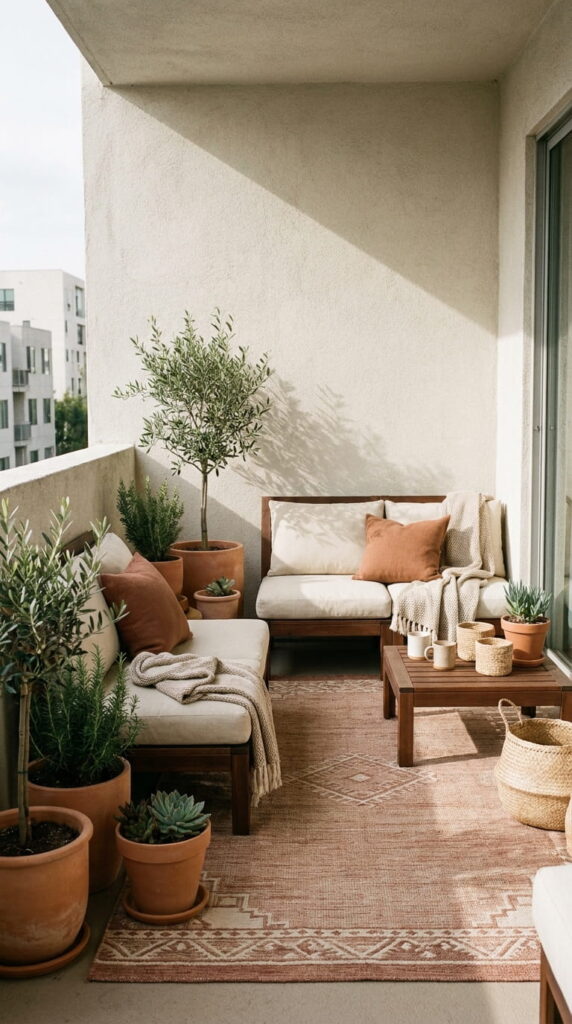
A rug can make a balcony feel connected to the apartment behind it. It adds softness underfoot, hides tired concrete, and visually anchors the furniture. Choose a flat-weave outdoor rug made for sun and moisture. Warm neutrals, faded stripes, muted terracotta, or a simple geometric pattern work well with organic modern decor and keep the area calm.
Measure the usable floor before ordering. The rug should sit beneath the front legs of your seating rather than float awkwardly in the center. Better Homes & Gardens has also highlighted the importance of using a rug large enough to frame outdoor furniture. Avoid indoor-only fabrics, deep-pile rugs, and tiny mats that make the balcony look smaller. For more flooring and texture inspiration, see AbodeMom’s spring porch decor ideas.
3. Build a Vertical Garden Instead of Crowding the Floor
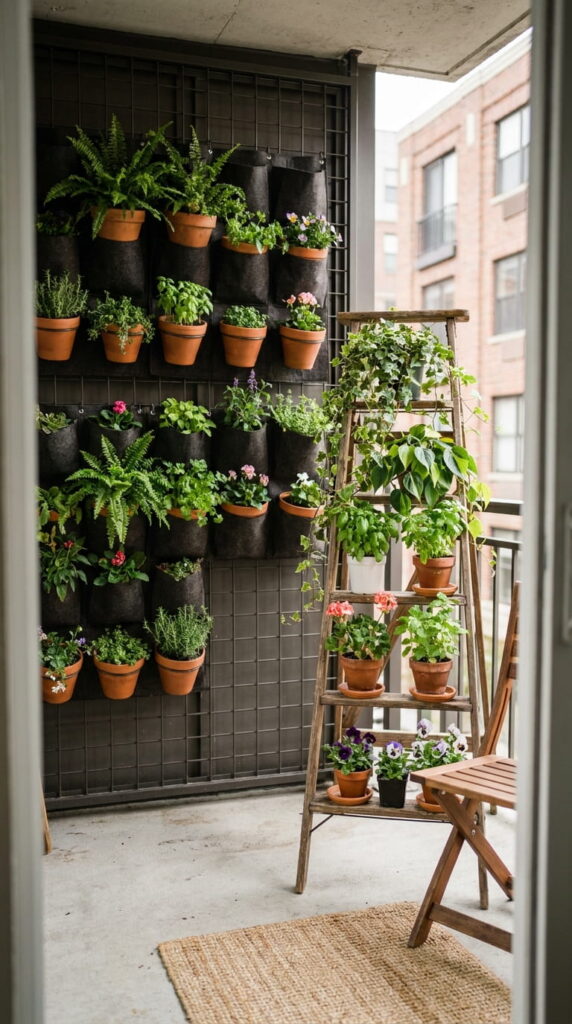
When floor space is limited, use the wall. A vertical garden adds lush greenery while keeping the balcony open and usable. Install a renter-friendly plant ladder, a freestanding trellis, or a slim shelving unit that does not require drilling. Mix herbs, trailing plants, and compact flowering varieties so the arrangement feels layered rather than flat.
Place sun-loving plants higher if that section receives more light, and keep shade-tolerant plants lower where the wall blocks direct sun. Elle Decor recommends considering balcony size, maintenance time, and growing conditions before choosing plants. Avoid lining every inch of the floor with small pots. That approach creates clutter and makes watering difficult. One structured plant wall usually looks more intentional than a scattered collection.
4. Add Railing Planters for Color Without Losing Space
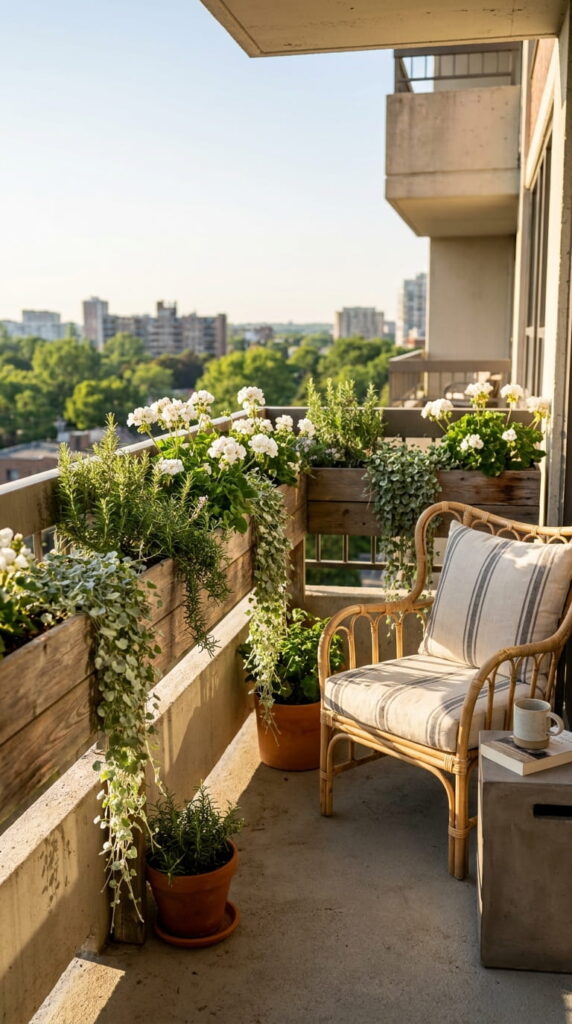
Railing planters bring flowers and herbs closer to eye level, which makes a small balcony feel greener without sacrificing valuable floor area. They work especially well on city balconies with limited wall space. Use secure brackets designed for your railing type, and choose lightweight containers with drainage holes and saucers if your building allows them.
A restrained palette looks more polished than a random mix. Try white blooms with leafy herbs, soft pink flowers with dusty green foliage, or terracotta planters filled with rosemary and thyme. Keep the exterior side of the railing clear unless building rules specifically permit outward-facing boxes. The common mistake is using heavy planters or loose hooks that can shift in strong wind. Safety matters more than styling.
5. Create Privacy With a Freestanding Screen and Greenery
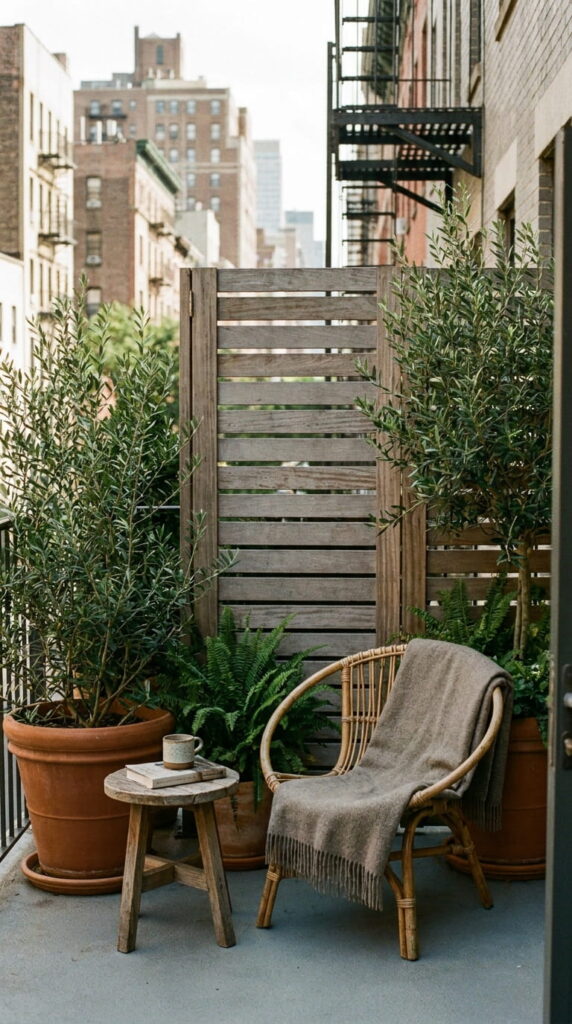
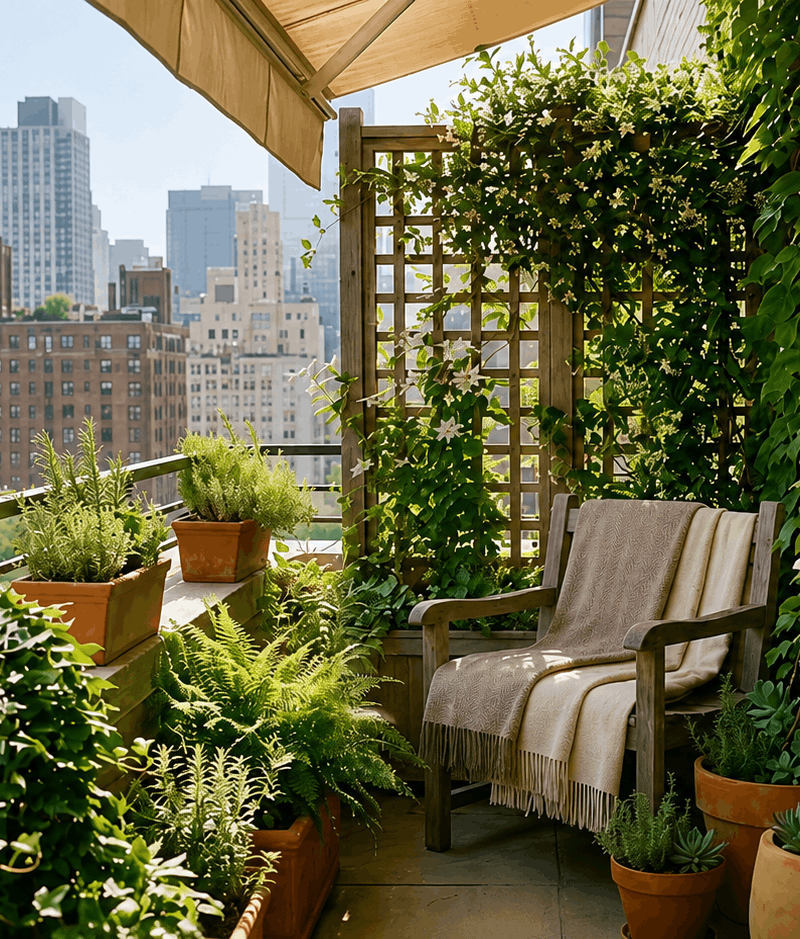
Privacy can change how often you use your balcony. A freestanding slatted screen, narrow trellis, or bamboo panel can soften views of neighboring windows while adding a cozy backdrop. Pair the screen with climbing plants or tall planters to create a more natural, biophilic design rather than a harsh visual barrier.
This idea works best along one side of the balcony, especially near the seating corner. Leave airflow, drainage, and emergency access completely clear. Choose a weather-resistant screen that can be secured safely without damaging the building. Do not cover every railing surface with dense material, since some buildings restrict balcony screening. If a blank exterior wall is the bigger issue, AbodeMom’s outdoor wall decor guide offers additional renter-friendly inspiration.
6. Layer Soft Cushions in an Earthy Palette
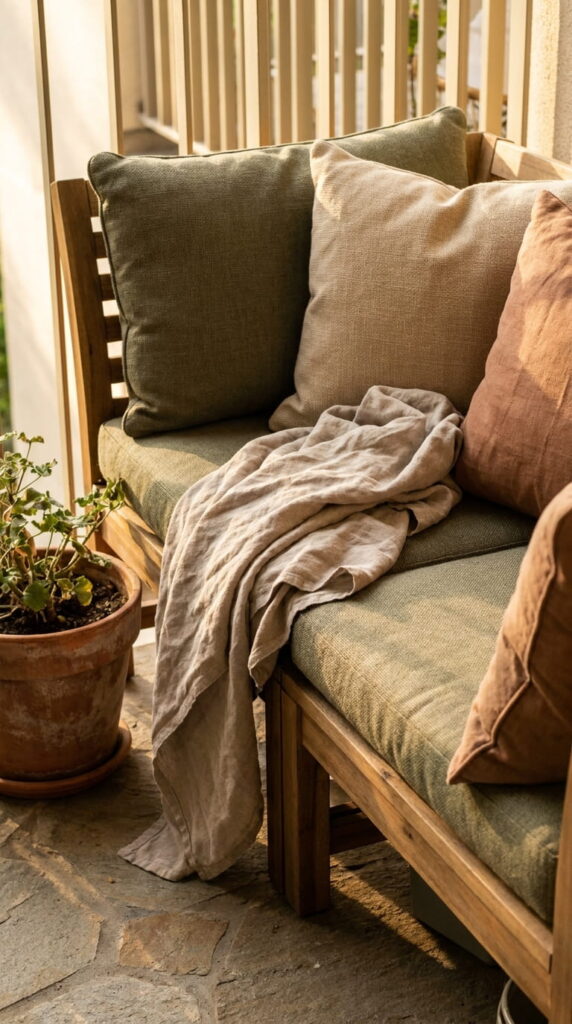
Textiles make a balcony feel less like leftover exterior space and more like a cozy outdoor room. Add one or two outdoor cushions in warm neutrals, muted olive, clay, sand, or soft charcoal. A small lumbar pillow often gives better support on a compact chair than several decorative pillows. For cooler evenings, keep a washable throw blanket indoors near the balcony door and bring it outside when needed.
Choose fabrics labeled for outdoor use so they resist fading and dry more easily after damp weather. Repeat one or two colors from the adjacent living room to create visual harmony between indoors and outdoors. The mistake to avoid is over-layering. Too many pillows can steal the seat you worked hard to create.
7. Use Warm Lighting for a Calm Evening Glow
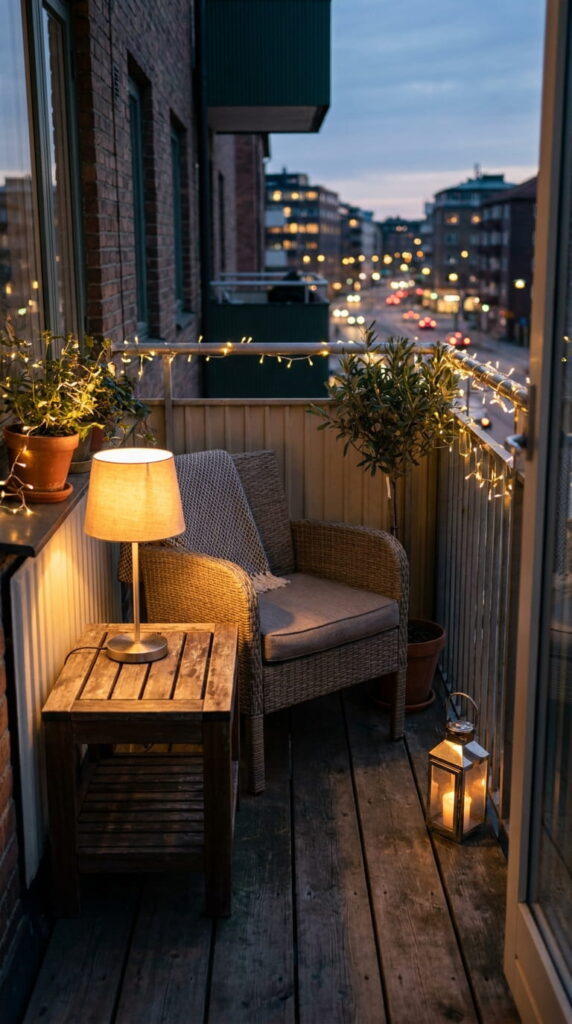
The right light can make a modest balcony feel inviting after sunset. Battery-operated lanterns, rechargeable table lamps, or outdoor-rated string lights create a gentle glow without harsh overhead brightness. If you use string lights, attach them securely along a wall, ceiling edge, or railing according to your building’s rules. Warm white bulbs usually feel more restful than cool-toned lighting.
Architectural Digest recommends portable or solar-powered lights when a balcony has no electrical outlet. Start with one main light source and add a small accent lantern if the balcony needs more depth. Avoid loose cords across the floor or overcrowded lighting. For a practical installation guide, read AbodeMom’s patio string lights tutorial.
8. Choose One Comfortable Lounge Chair
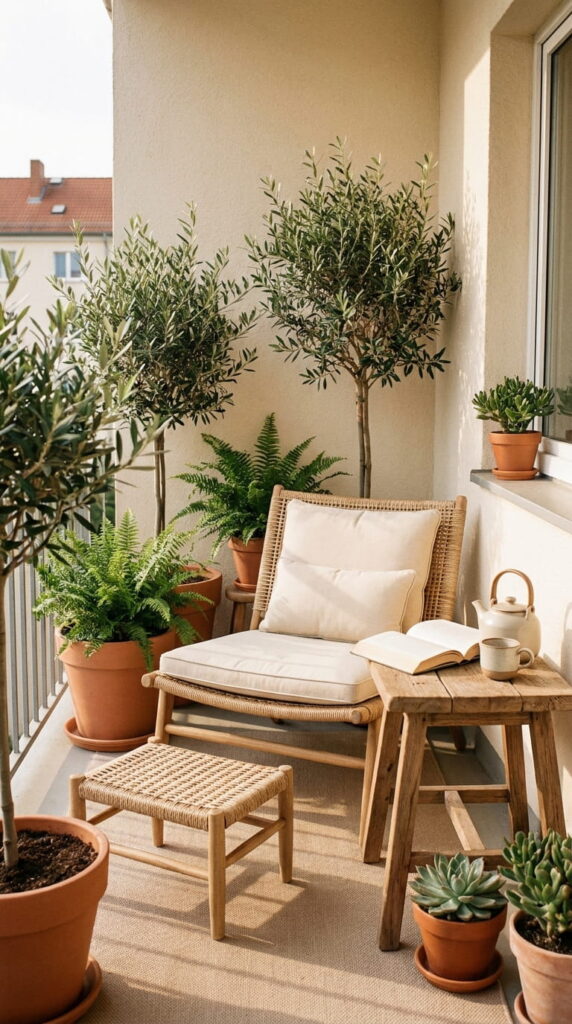
A balcony does not need a full seating set to feel complete. One comfortable lounge chair can create a restful reading corner and become the focal point of the layout. Look for a low-profile chair with a woven seat, slim metal frame, or warm wood grain. A small footstool can add flexibility if the balcony has enough depth.
Architectural Digest has shared a useful design observation: the ability to put your feet up encourages slower, more relaxed use of a balcony. Position the chair where it catches the best view while keeping the doorway clear. Add a compact side table for a cup or book. Avoid purchasing a deep chaise before measuring the space. Comfort should not come at the cost of movement.
9. Add a Compact Bench With Hidden Storage
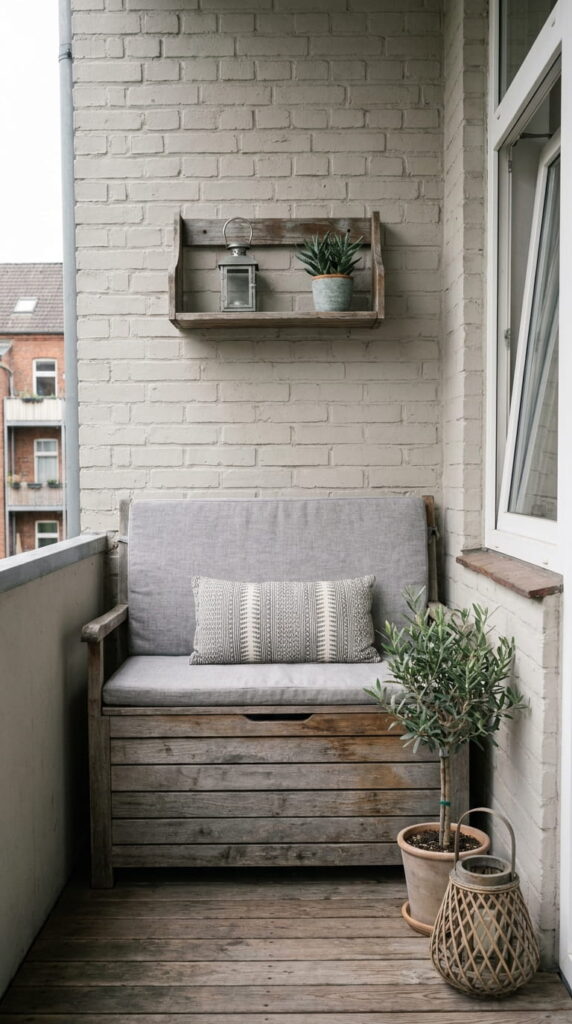
A storage bench earns its place on a small balcony because it solves two problems at once. It provides seating and gives you a contained spot for outdoor cushions, small gardening tools, or a folded watering can. Choose a narrow, weather-resistant design with a lid that opens easily without hitting the railing or wall.
This approach works best on a wider balcony or against a solid side wall. Style the bench with one seat cushion and one lumbar pillow to keep the silhouette clean. Use storage only for items suitable for outdoor conditions, and follow product instructions for moisture protection. Do not treat the bench like a general storage closet. Overfilling it creates clutter, adds unnecessary weight, and makes the balcony harder to maintain.
10. Bring in Terracotta Pots and Woven Elements
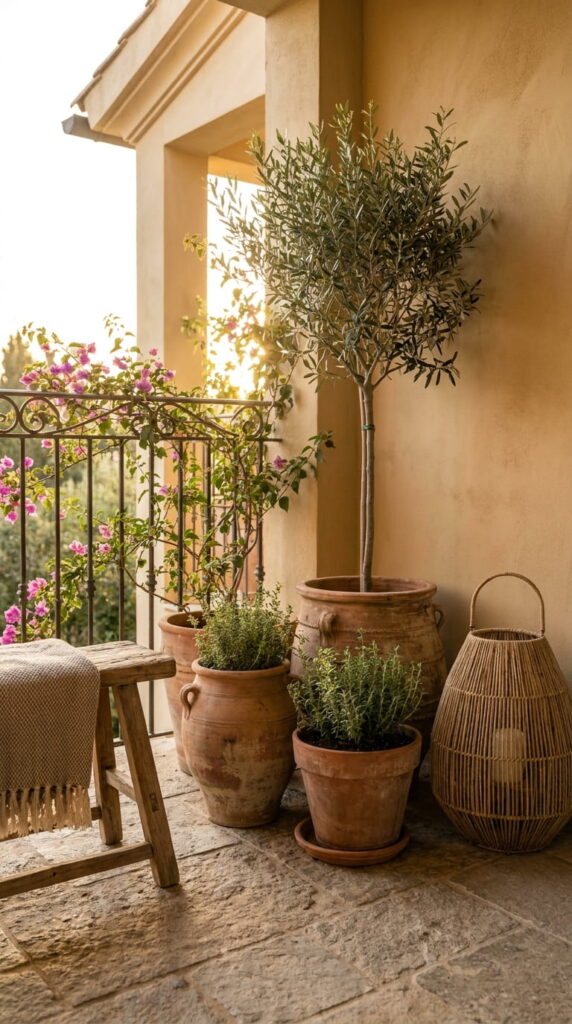
Natural materials soften hard balcony surfaces. Terracotta pots, a woven lantern, a small rattan-look tray, or a jute-inspired outdoor rug introduce tactile textures and earthy palettes without requiring a complicated redesign. These details suit organic modern, Mediterranean, cottage, and boho-inspired balconies.
Group pots in odd numbers and vary their height slightly. Use one medium planter as an anchor, then add two smaller containers nearby. This creates a curated look without blocking the floor. House Beautiful’s coverage of Provençal-inspired outdoor spaces also supports choosing fewer, stronger accents and allowing natural finishes to carry the mood. Avoid filling the balcony with fragile indoor baskets that can mildew or fade. Use outdoor-safe woven elements and bring delicate pieces inside during bad weather.
11. Style a Small Herb Garden Near the Kitchen Door
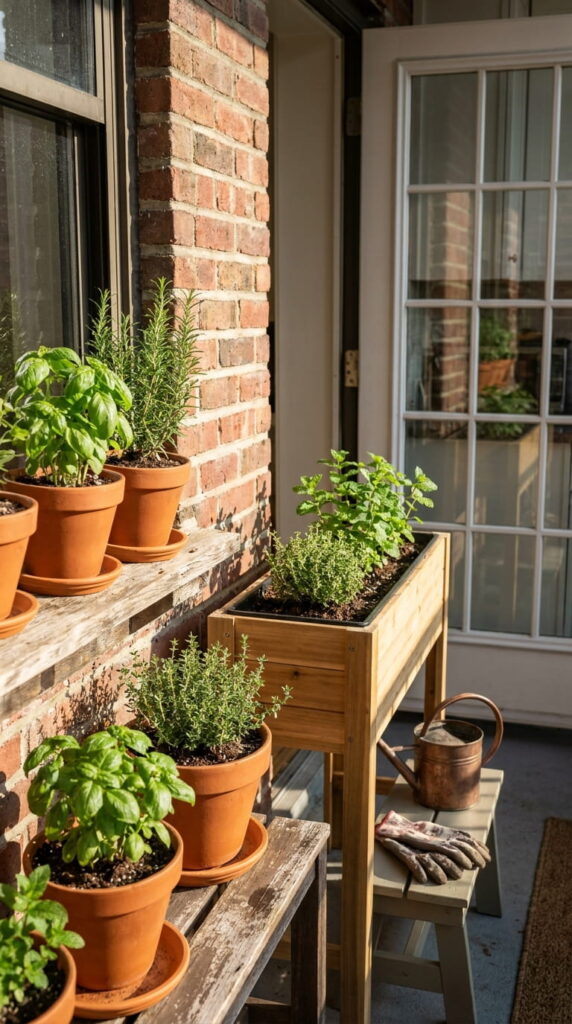
A balcony herb garden adds fragrance, greenery, and daily usefulness. Basil, mint, parsley, chives, rosemary, and thyme can work well in containers when their light and watering needs match your balcony conditions. Place the herb garden near the kitchen door so you can reach it easily while cooking.
Use matching pots or a slim raised planter to keep the arrangement tidy. Add simple plant markers if you grow several herbs. Check how much direct sun reaches the balcony before choosing varieties, and ask a local nursery for climate-specific guidance. Avoid planting mint directly with other herbs because it spreads quickly. A herb corner should feel easy to care for, not like a second job.
12. Add a Wall-Mounted Shelf for Small Decor
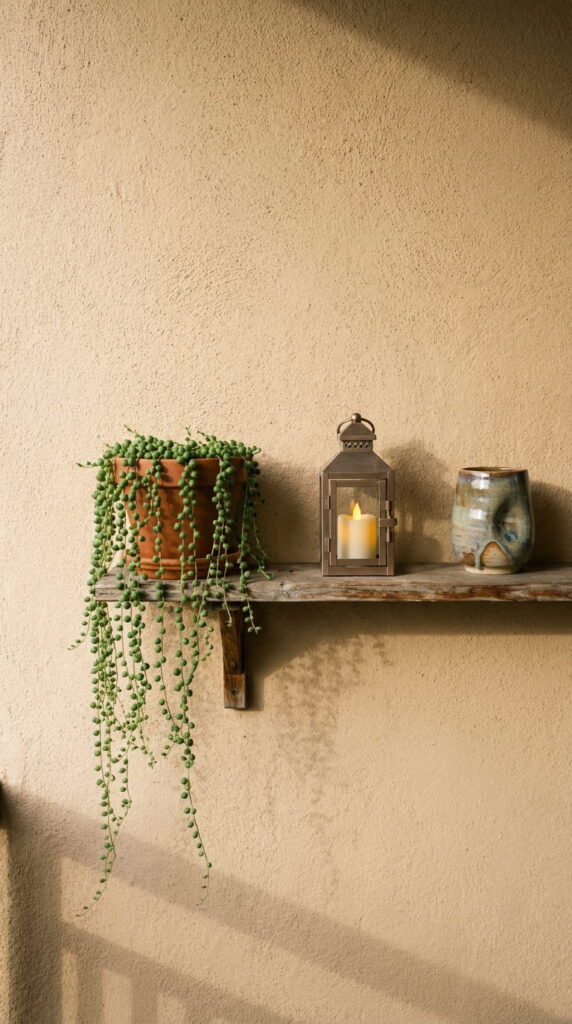
A narrow wall shelf can hold a lantern, a trailing plant, or a small ceramic pot while leaving the floor free. It works best on a sheltered wall where items will not catch strong wind. Renters can use a freestanding ladder shelf or a slim console-style plant stand when drilling is not allowed.
Keep the display restrained. One trailing plant, one lantern, and one small object often create enough character. Choose pieces with a shared material or color family so the shelf feels connected to the rest of the balcony. Do not place breakable items near the railing edge or stack several tiny decorations together. In a small area, every object becomes more visible, so clutter appears quickly.
13. Frame the Doorway With Indoor-Outdoor Continuity
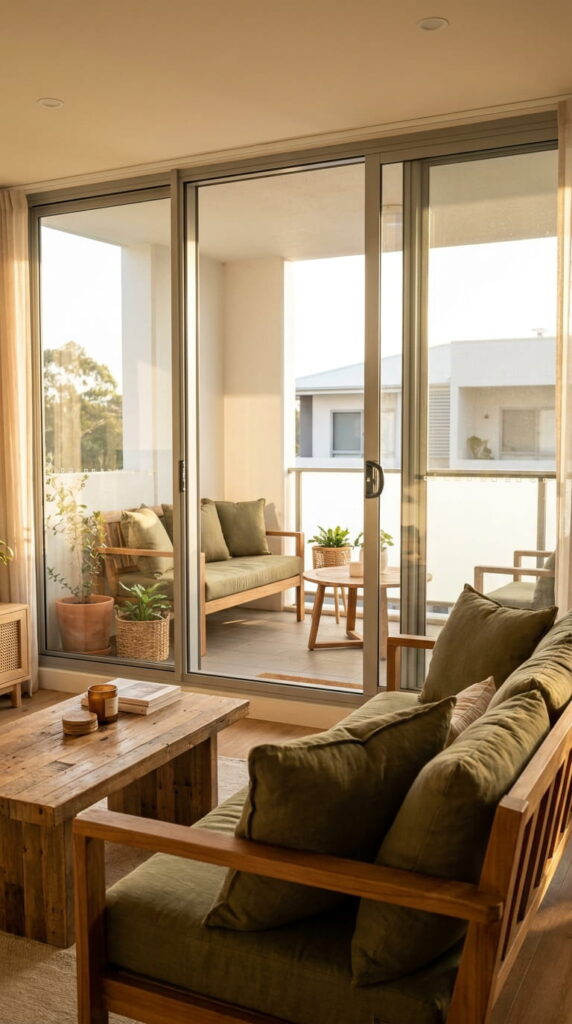
The balcony starts inside your apartment. When the doorway feels considered, the outdoor area looks larger and more cohesive. Repeat one material, tone, or pattern on both sides of the sliding door. For example, pair a warm wood indoor side table with a teak-look bistro table outside, or repeat an olive cushion color in the living room and balcony seating.
Keep the glass clean so natural light can move through the apartment. Use window treatments that open fully during the day and provide privacy at night. AbodeMom’s sliding glass door covering ideas can help you choose a practical treatment for balcony doors. Avoid heavy layers that block the doorway or make the transition feel cramped.
14. Make One Corner the Visual Focal Point
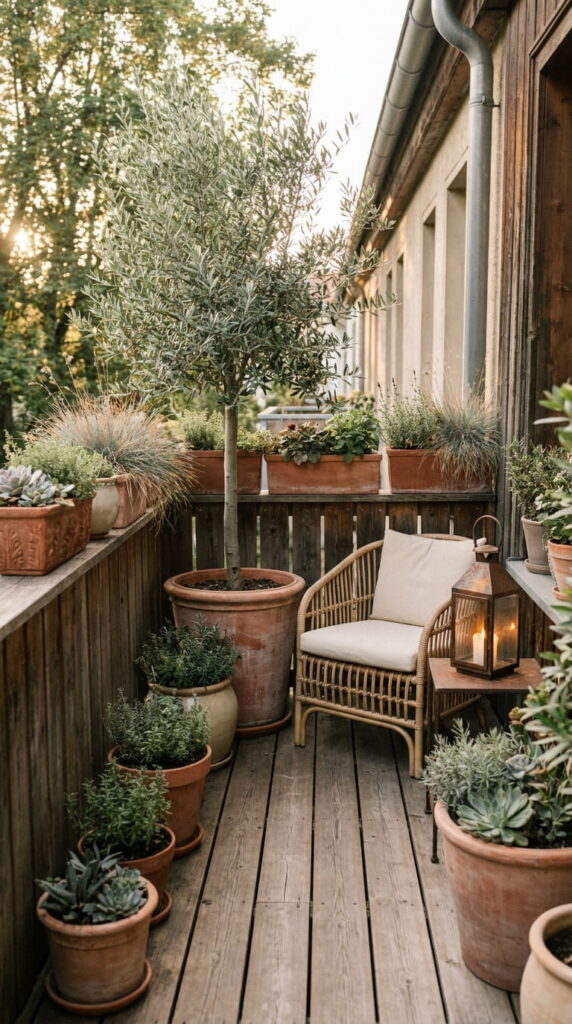
A compact balcony looks stronger when the eye has one clear place to land. Create a focal point with a tall olive-style plant, a cluster of terracotta pots, a slim privacy screen, or a comfortable chair paired with a lantern. The goal is not to decorate every surface. It is to give the balcony one memorable moment.
This technique works especially well on long, narrow balconies where scattered pieces can feel disconnected. Use different heights but keep the color palette controlled. Architectural Digest has noted that fragrant plants, natural stone, trellises, and thoughtfully chosen seating can create focal points in outdoor areas. Avoid placing several statement pieces side by side. When everything competes for attention, nothing feels special.
15. Keep the Final Layout Simple and Easy to Maintain
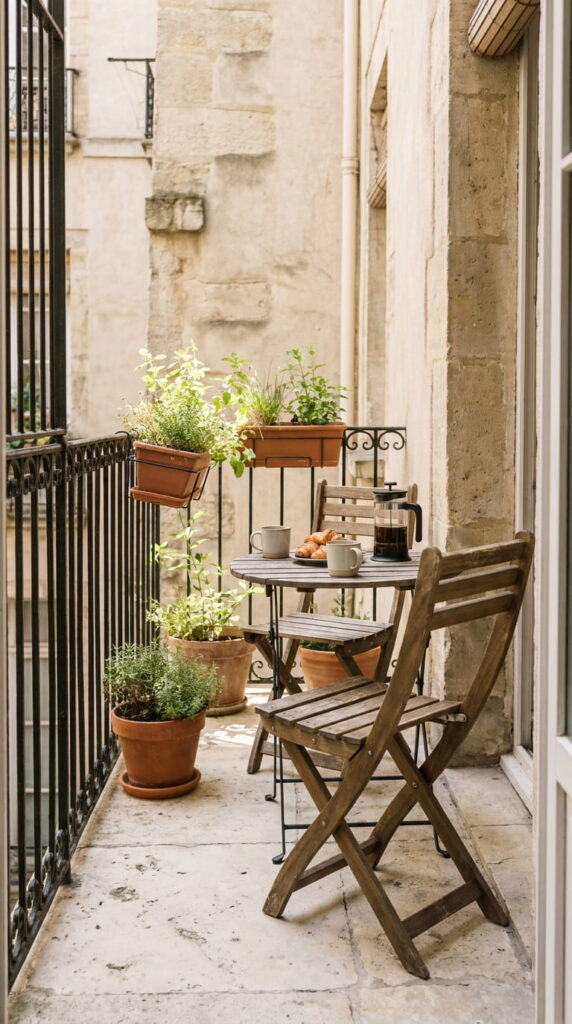
A cozy balcony should support real life. Leave space to sweep the floor, water plants, open the door fully, and sit down without moving several objects first. A useful final edit is to remove one item and see whether the balcony feels calmer. Small curated spaces often improve when you choose fewer pieces with better scale.
Before settling on the layout, check drainage, secure loose objects, and confirm your building’s rules. Store delicate textiles indoors during heavy rain or strong wind. If your balcony connects to a small porch-style entrance, AbodeMom’s modern small porch ideas can help you carry the same clean design language toward the front of your home. A balcony feels luxurious when it is comfortable, safe, and easy to use every week.
FAQs: Apartment Balcony Decor Ideas
Final Thoughts
A balcony does not need to be large to become a meaningful part of your home. The most inviting ones often feel personal rather than perfect. A chair you genuinely enjoy, herbs you use while cooking, a warm lantern at dusk, and a few plants chosen for your actual sunlight can bring more comfort than a crowded shopping list ever will.
Start with the way you want the balcony to feel and the small rituals you hope to enjoy there. Then choose each piece with care. Trust your eye, leave room for fresh air, and let the space develop slowly. Your balcony can become a quiet little chapter in the story of your home.


One comment