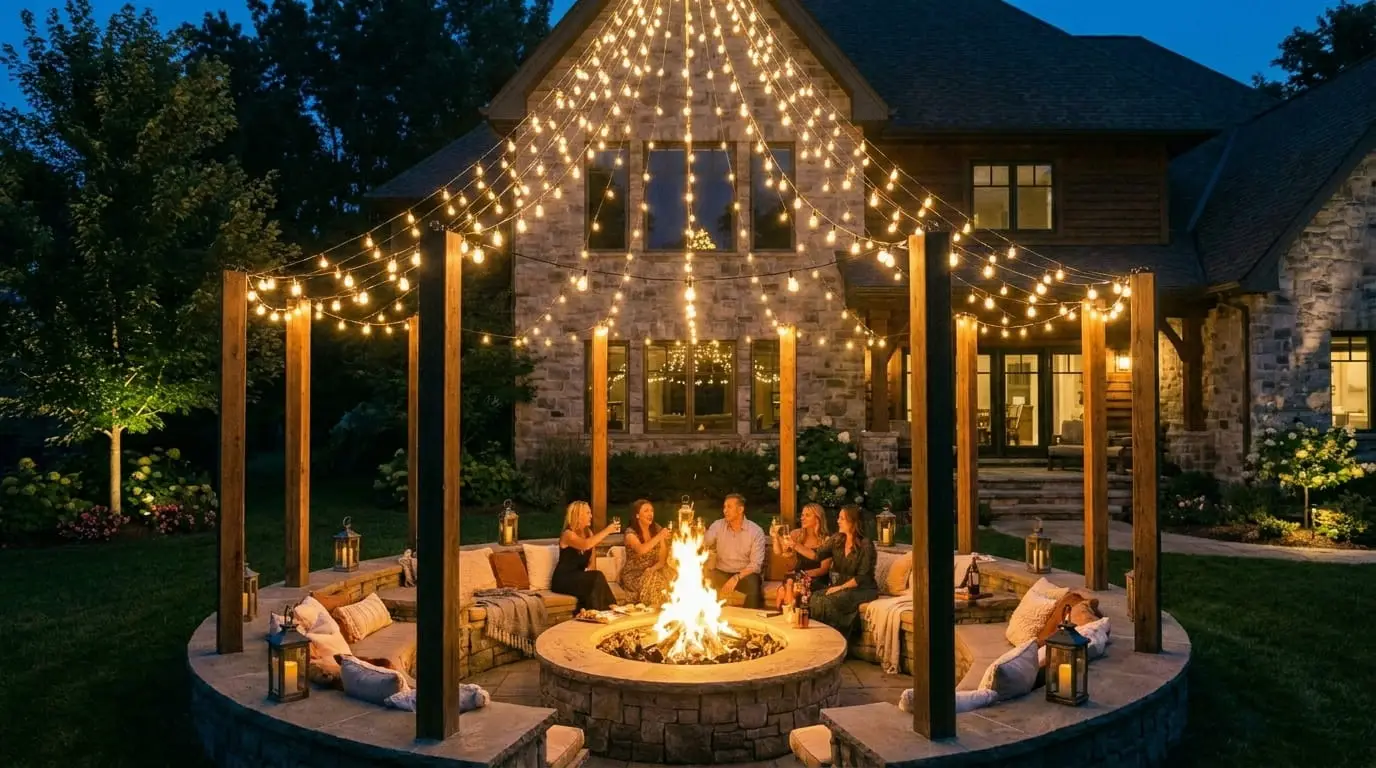
There is a specific magic that happens right as dusk settles, when the harsh glare of the afternoon sun softens into a deep, velvety twilight. You step outside with a cool drink, ready to unwind, but your open backyard patio feels a bit cold, exposed, and flat. It lacks that intimate, starry-night ambiance you see in luxury travel magazines. You want to weave a canopy of warm, glowing Edison bulbs overhead, but there is a major catch: you do not have a pergola, a roof overhang, or heavy timber beams to tie them to.
It is a common design dilemma that leaves many homeowners feeling stuck in the dark. But you do not need an expensive architectural structure to achieve a stunning, luminous outdoor living space. With a little spatial creativity, simple hardware, and clever anchor points, you can easily hang string lights across an empty, open patio. Let’s transform your backyard into an inviting oasis.
Why This Style Matters
In modern exterior styling, the backyard is no longer just a patch of grass; it is an extension of your indoor living room. Creating a cozy, layered lighting scheme is the fastest way to bridge that gap. When you hang string lights on a patio without a pergola, you solve a massive spatial problem: the lack of visual boundaries.
By lifting the glow overhead, you establish an “outdoor ceiling.” This simple design trick instantly makes a vast, open-air patio feel like an intimate, private room. It brings structural harmony to your landscape, defines your seating areas, and encourages family and guests to linger outside long after the sun goes down. Plus, doing it without a permanent structure keeps your yard looking clean, airy, and budget-friendly.
1. The Freestanding Planter Pole Method
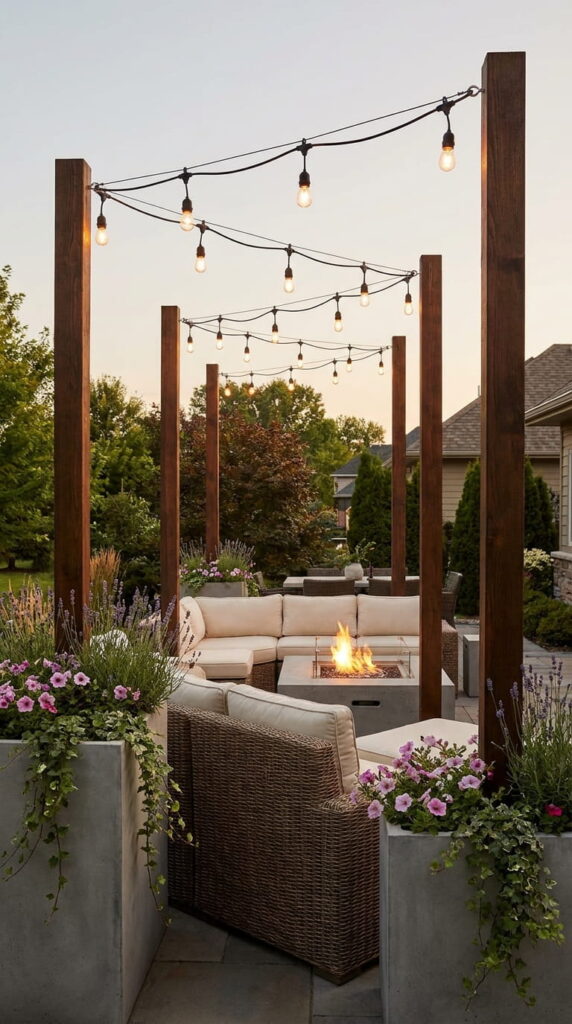
The absolute gold standard for open concrete patios is the heavy-duty DIY planter pole. This brilliant method allows you to create rock-solid, standalone anchor points exactly where you need them, without drilling into your ground. You take a large, heavy resin or terracotta planter, place a tall wooden or metal post right in the center, and secure the base with quick-setting concrete.
Once the concrete cures, you dress up the top with fresh potting soil and cascading green plants. It serves a dual purpose: a heavy, wind-resistant base to support your heavy light cords, and a beautiful addition to your container gardening layout.
2. Utilizing Sturdy Wooden Fence Posts
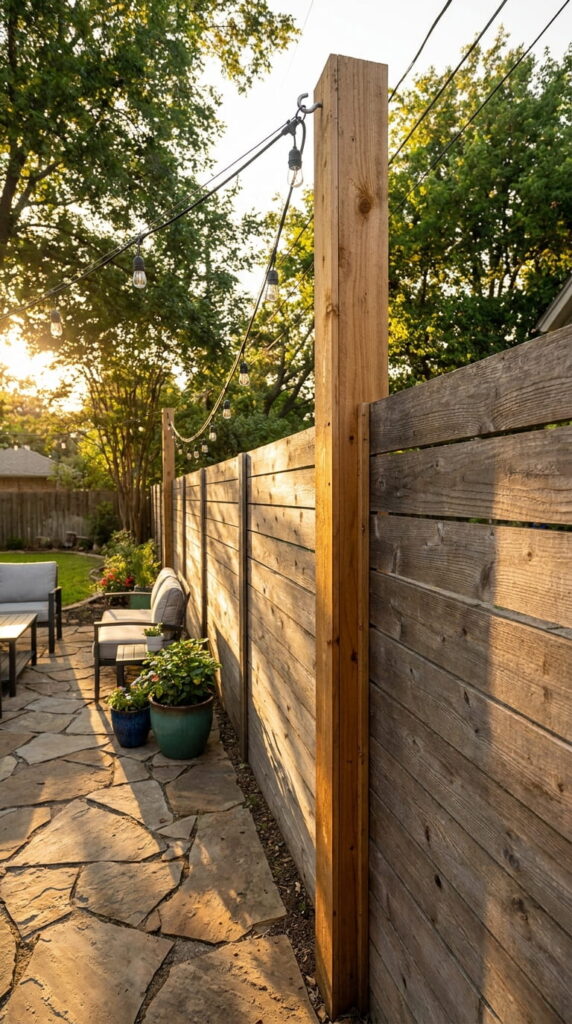
If your patio sits adjacent to a boundary fence, you already have half of your structural support ready to go. Wooden fence posts offer incredible structural integrity and a clean vertical line. Instead of mounting your lights low, attach tall 2×2 or 2×4 wooden extensions directly onto your existing fence posts using heavy-duty wood screws or exterior zip ties.
This instantly elevates your starting anchor points to an optimal 8 to 10 feet high. This method keeps the perimeter of your patio wide open while utilizing structures that blend seamlessly into your yard’s natural boundary lines.
3. Securing Eye Hooks into the House Fascia
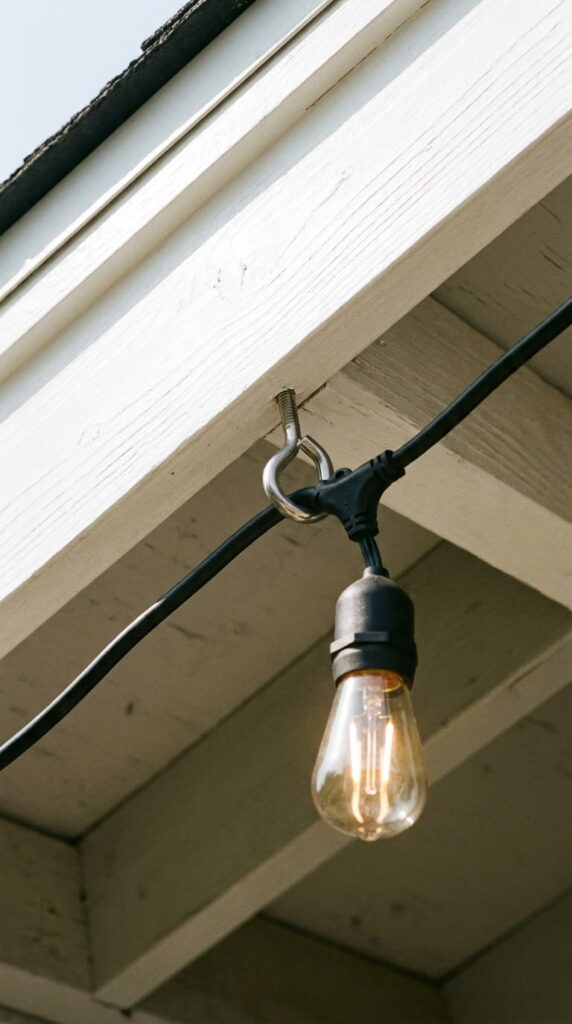
Your home’s exterior architecture is a premium, immovable anchor point. The wooden fascia board—the flat structural trim right along your roofline—is the perfect place to launch your string light pattern. By screwing stainless steel cup hooks or heavy pad eyes directly into solid exterior wood trim, you ensure your lights start from a safe, elevated height.
According to leading design authorities like Architectural Digest, starting your lighting layout from the home’s architecture creates a professional, intentional transition between indoor and outdoor living environments, making the patio feel like a true architectural extension.
4. Harnessing Mature Trees for a Natural Canopy
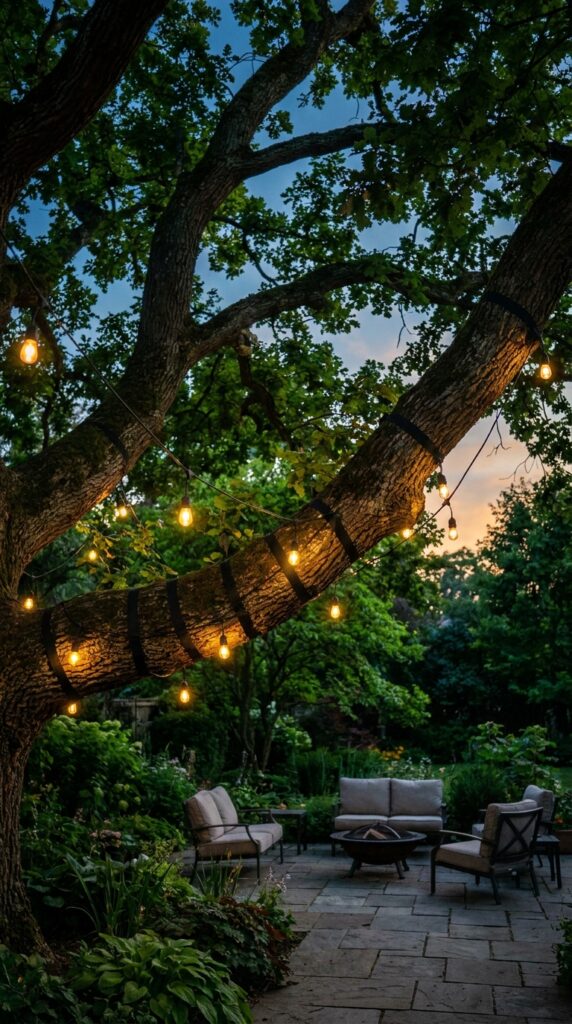
If your open patio is bordered by landscape foliage, nature has provided your anchor points. Mature tree trunks and thick, established branches are fantastic natural pillars for outdoor bistro lights. Instead of driving nails or metal screws directly into live wood—which can expose the tree to disease—use weather-resistant, tree-friendly nylon straps or thick utility wire wrapped over a protective rubber sleeve.
This preserves your bark while allowing your lights to weave naturally through the leaves, creating a soft, dappled forest-glade effect over your seating area.
5. Metal EMT Conduit Pipes for a Minimalist Look
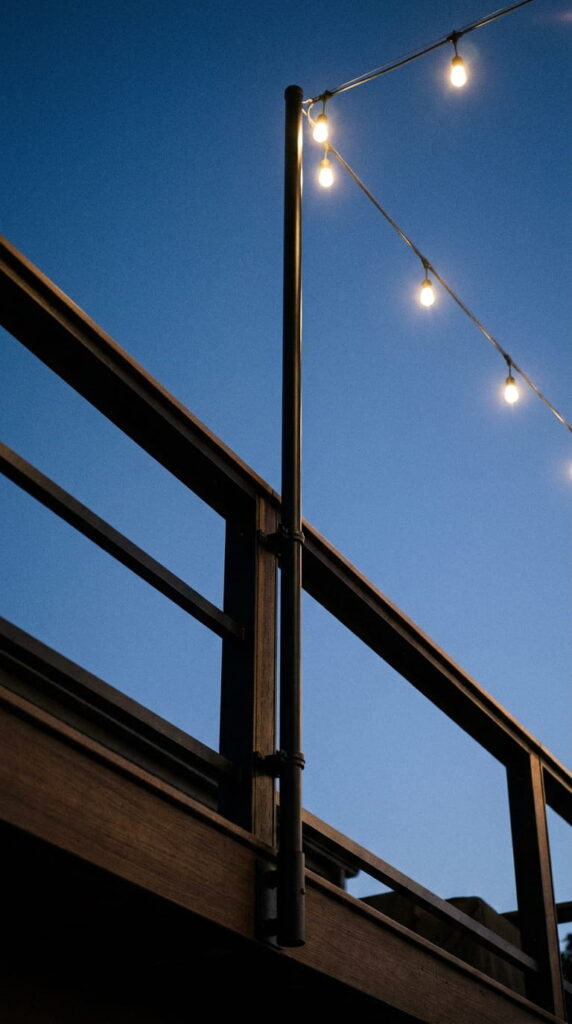
For a clean, modern aesthetic that disappears into the night sky, thin metal EMT conduit pipes are an exceptional alternative to chunky wooden posts. Available at any local hardware store, these slim steel tubes can be spray-painted matte black or metallic bronze to match your patio furniture.
You can attach them directly to deck railings using simple metal u-clamps or slip them into discrete ground sleeves driven into the turf. Their slim profile provides incredible tensile strength against wind while maintaining an elegant, minimalist footprint that does not disrupt your landscape views.
6. The Classic Zig-Zag Pattern Layout
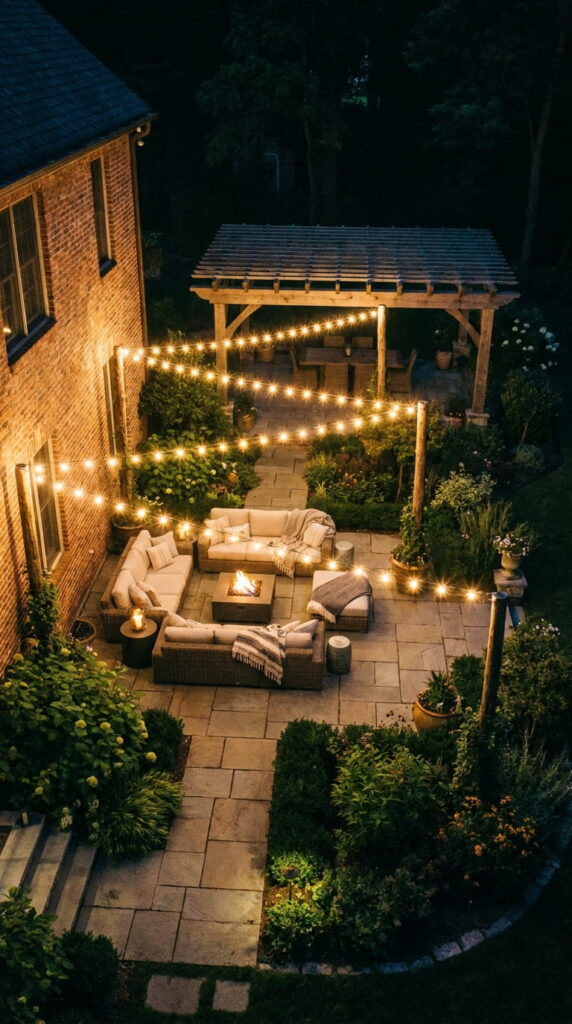
Once your anchors are set, you need a beautiful geometry. The classic zig-zag, or W-shape, pattern is highly effective for rectangular patios adjacent to a house wall. You start at an elevated point on your house fascia, stretch the cord out to a freestanding pole or fence post at the edge of the patio, bounce it back to the house wall, and repeat.
This pattern creates a dense, rich canopy of light that distributes illumination evenly across your entire dining or lounge area, giving it a festive, high-end cafe feel.
7. Perimeter Framing for Clean Lines
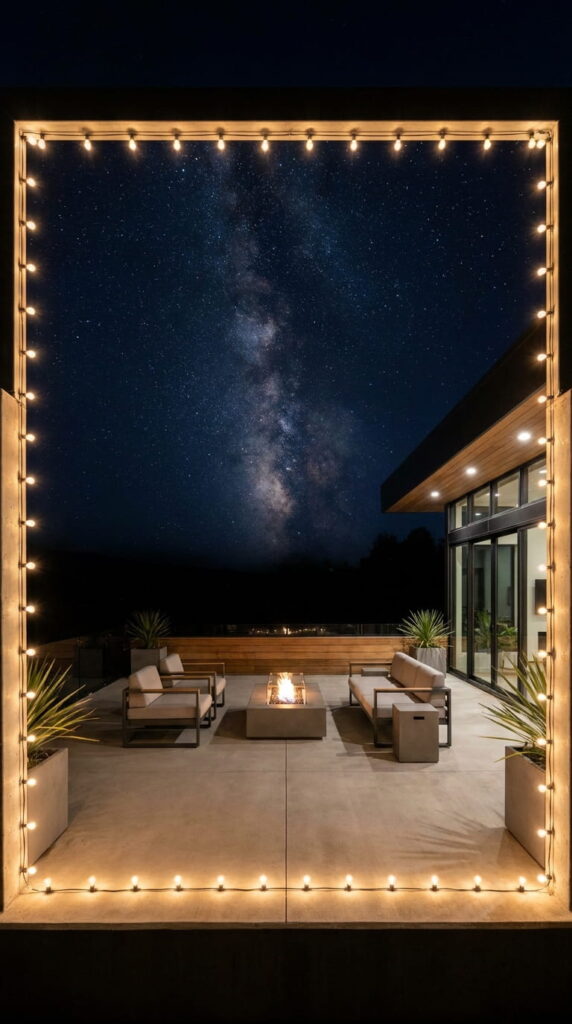
If you prefer an architectural, clean, and modern layout, skip the overhead crisscross and opt for perimeter framing. This involves running your string lights in a continuous, crisp border along the exact outer edges of your patio space.
By connecting your house corners to your outermost edge poles, you outline the square or rectangle of your living zone. This framing technique creates clear visual zoning, highlighting your patio’s footprint beautifully while keeping the center sky completely open for clear stargazing.
8. The Dramatic Maypole Tent Design
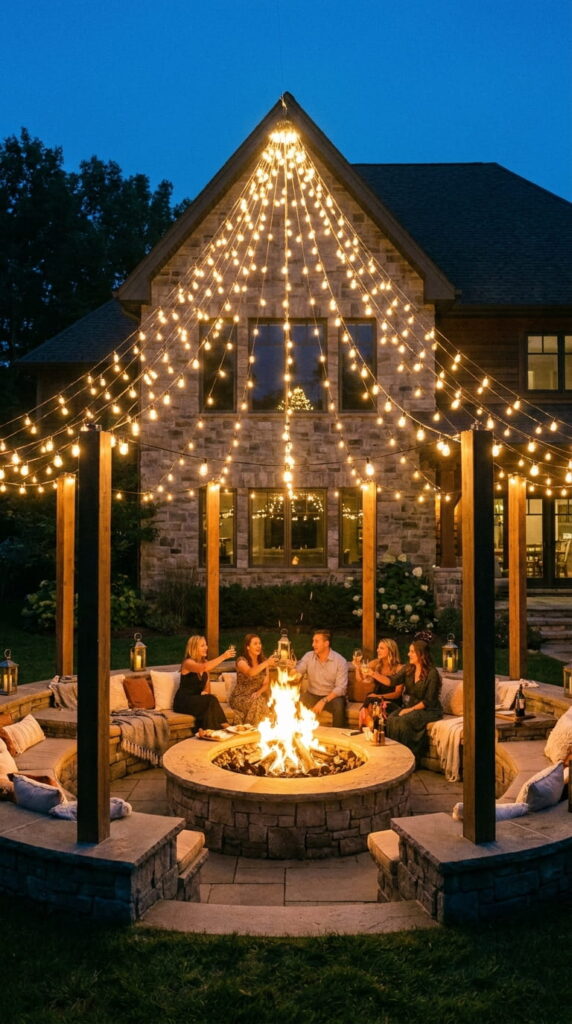
For large, square patios or circular fire pit zones, the maypole design offers unparalleled visual drama. This layout requires one high, central anchor point—such as a tall point on your roof peak or a central tree trunk—and radiates multiple strands of lights outward and downward to various shorter perimeter poles or fence lines.
The resulting tent-like canopy draws the eye upward, creating a grand sense of volume and space that mimics the atmosphere of an upscale outdoor wedding venue or a luxury resort lounge.
9. Threading a Stainless Steel Guide Wire
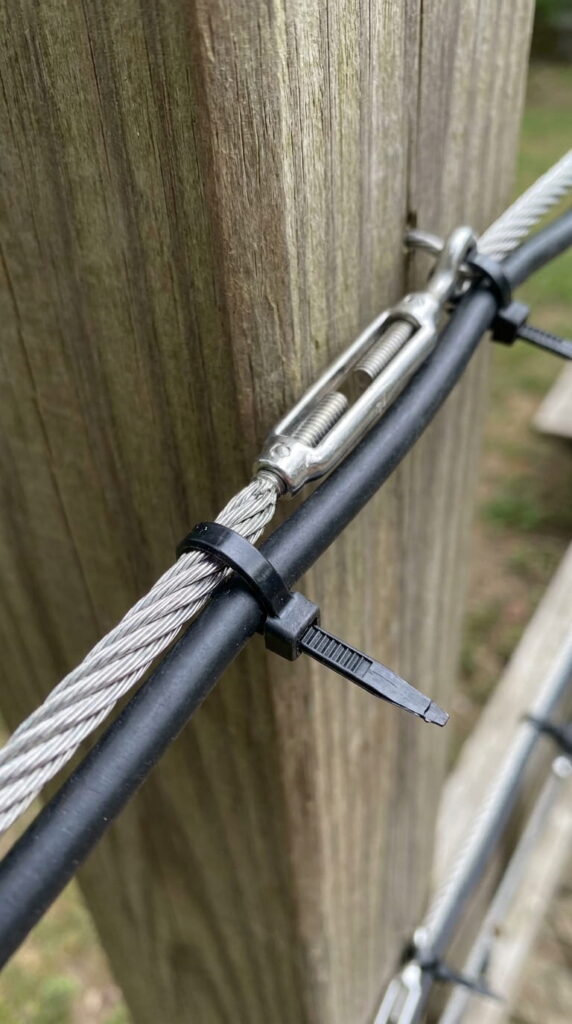
Outdoor string lights are deceptively heavy, especially when subjected to heavy rain, winter snow, or sudden gusts of summer wind. Over time, hanging cords will sag, strain, and eventually snap their internal copper wires. The ultimate pro-tip from House Beautiful is to always run a stainless steel guide wire cable between your anchor points first.
Using small turnbuckles to pull the steel wire perfectly taut provides a load-bearing backbone. You then clip or zip-tie your string lights directly to the wire, taking all physical tension off the electrical cord.
10. The Brick Clamp Trick for Brick Exteriors
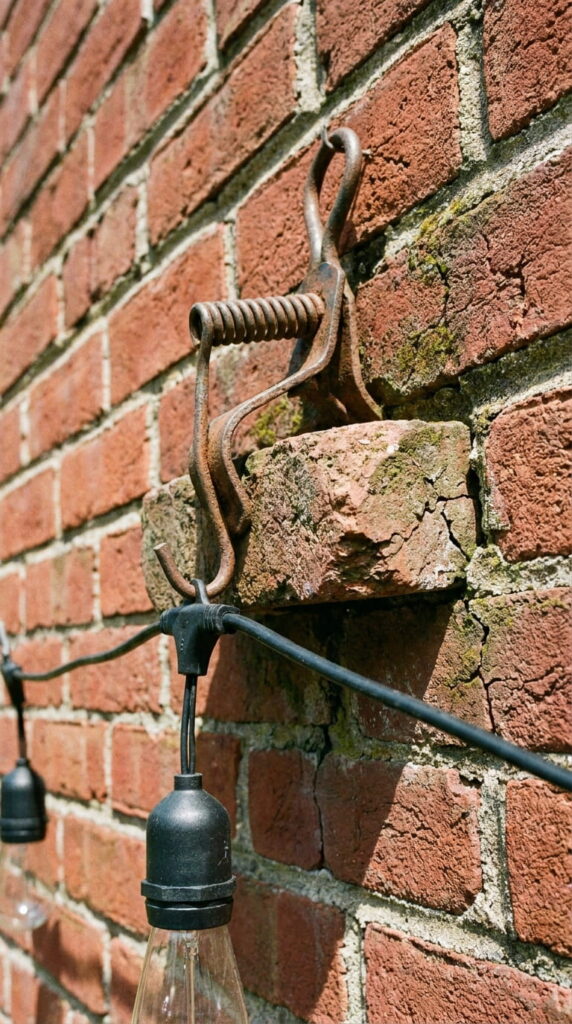
If your home features a beautiful brick facade and you are terrified of drilling permanent holes into your mortar, brick clamps are your ultimate solution. These clever, spring-metal clips grip onto the edges of individual bricks using tension alone, requiring absolutely zero tools or adhesive.
They can support surprising amounts of weight and can be popped off or repositioned in seconds. This temporary, damage-free anchor allows renters and design enthusiasts alike to enjoy dazzling patio lighting without risking structural masonry damage.
11. Heavy-Duty Deck Rail Clamps
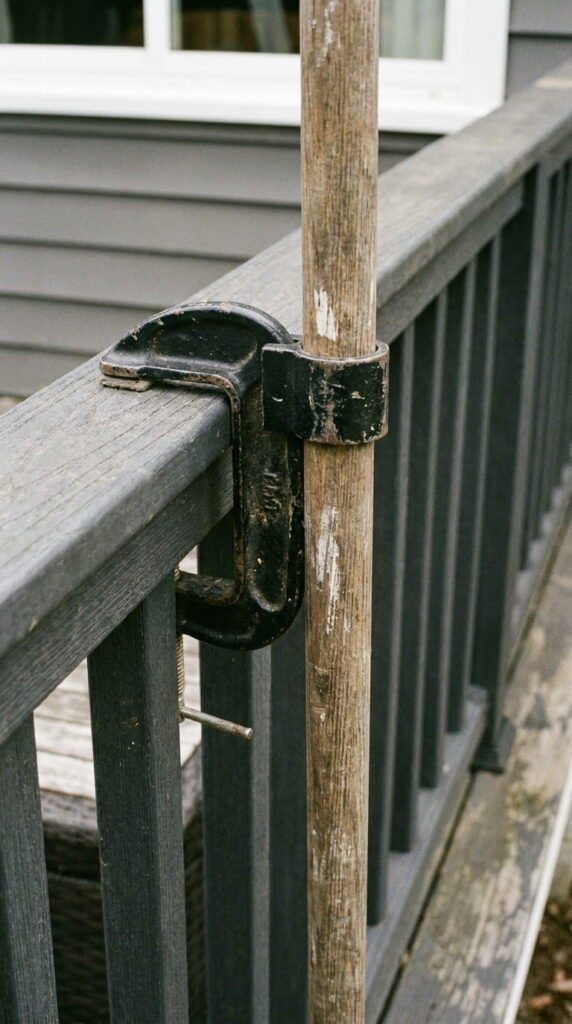
When your patio connects directly to an open wood or composite deck, look to your railings for support. Instead of drilling through your deck posts, utilize heavy-duty metal deck rail clamps. These adjustable C-clamp brackets lock onto your handrails or vertical balusters with a simple turn of a knob.
They hold your extension poles perfectly vertical and rigid. This setup is incredibly steady, fast to assemble, and can be completely dismantled in less than five minutes when winterizing your outdoor space.
12. Utilizing Heavy Patio Umbrellas
If you need a quick, zero-construction lighting solution for a weekend gathering, look no further than your market umbrella. The sturdy central pole and widespread rib canopy of a open patio umbrella provide a ready-made framework.
You can gently wrap lightweight LED string lights around the central pole and spiral them outward along the metal ribs. While it only illuminates the immediate dining table area, it provides an instant, intimate glow right where your guests are gathered without a single tool.
13. Incorporating Commercial-Grade Weatherproofing

When choosing your gear, skip the flimsy indoor holiday strands and invest in heavy-duty, commercial-grade outdoor string lights. Look for cables featuring weather-resistant PVC encapsulation, thick 14-gauge wiring, and fully weatherproofed rubber sockets that seal tightly around the base of each bulb.
As recommended by trend-setters at Elle Decor, opting for shatterproof LED Edison bulbs ensures your setup can withstand year-round exposure to extreme elements while drawing a fraction of the energy of traditional incandescent strands.
14. Smart Dimming and Automation Controls
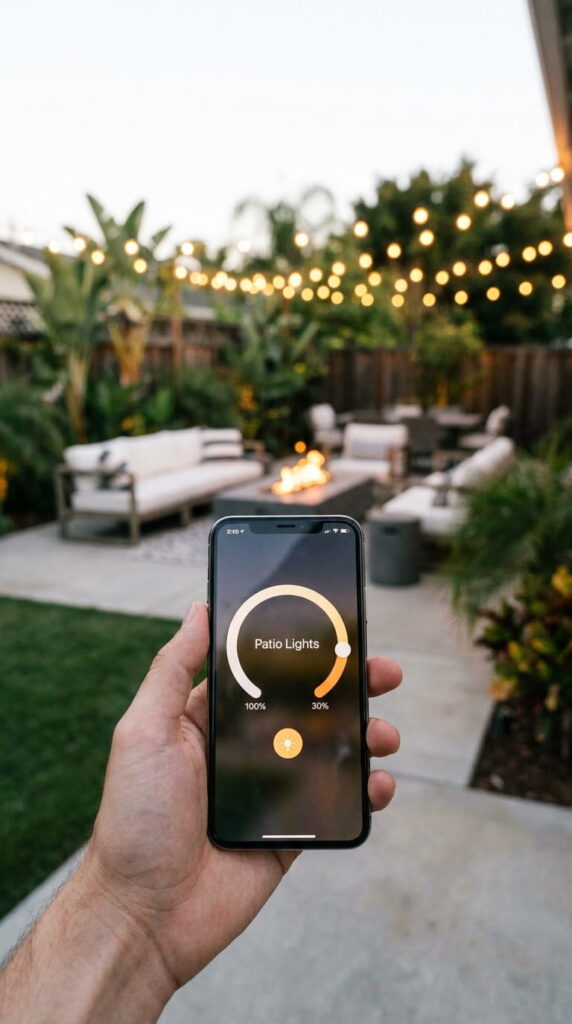
To truly elevate your patio’s ambiance, plug your string lights into an outdoor-rated smart dimmer plug. Being able to adjust the brightness level from a crisp 100% for outdoor cooking down to a romantic, low 20% glow for late-night conversation completely changes the user experience.
Integrating the system with your smart home network allows you to set automated timers, so your backyard sanctuary automatically glows to life exactly at sunset every single evening.
FAQs: Expert Patio String Lights Installation
Conclusion
An open patio should never limit your outdoor design dreams. By stepping away from the need for heavy construction and embracing smart, adaptive DIY solutions like freestanding planter poles, fence extensions, and guide wires, you can design a custom overhead lighting canopy tailored precisely to your lifestyle. It is a simple weekend project that yields immediate, breathtaking rewards.
The moment you flip that switch and watch your patio fill with a soft, warm, amber glow, your backyard transforms from an empty patch of concrete into the favorite room of your home. Gather your tools, map out your layout, and get ready to enjoy your beautiful, illuminated outdoor sanctuary.