
I still remember the first day I moved into my small studio apartment. The hallway was barely wide enough to walk through comfortably. Every time I came home with groceries, I’d bump into the wall or drop something. It felt less like an entrance and more like a narrow tunnel I just wanted to rush through.
For a long time, I ignored it completely. It was just a “pass-through” space in my mind. But one weekend, I decided to make a small change. I added a simple mirror and a floating shelf. Honestly, the difference surprised me. The light reflected better, the space felt wider, and walking in suddenly felt calmer.
That’s when I realized something important—your hallway sets the tone for your entire home. It’s the first thing you see when you enter and the last thing you pass before stepping out. With a few smart ideas, even the smallest hallway can feel welcoming and functional.
Why Tiny Hallway Decor Matters
Most people don’t pay much attention to their hallway, but it actually plays a big role in how your home feels. It’s not just about decoration—it’s about making your daily routine smoother. When your entryway is organized, you spend less time looking for keys, shoes, or bags, especially during busy mornings.
A well-designed hallway also improves how space is used. Even a narrow area can feel open if you use vertical storage and proper lighting. Small changes like better organization, smarter furniture, and good lighting can turn a cramped hallway into a space that feels comfortable instead of stressful.
Read Also: 18 Creative Bedroom Renter Friendly Ideas
18 Genius Ideas for Tiny Hallways
1. The Strategic Leaner Mirror
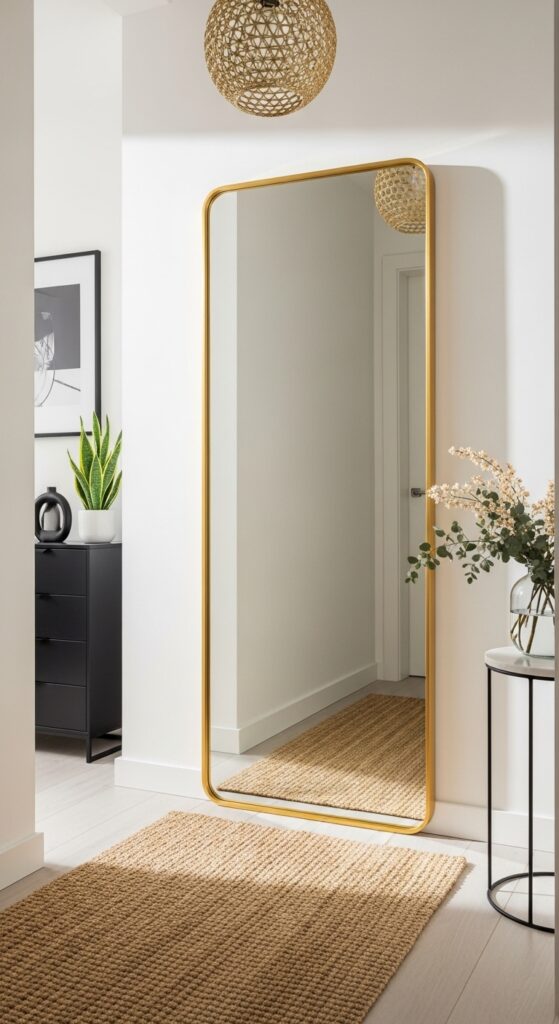
A large leaning mirror is one of the easiest ways to make a narrow hallway feel bigger. Instead of hanging it, just place it against the wall at a slight angle. It reflects both light and space, which makes the hallway look wider and brighter. This simple trick can instantly upgrade the feel of your entryway without taking up extra space.
2. Slimline “Accordion” Wall Pegs
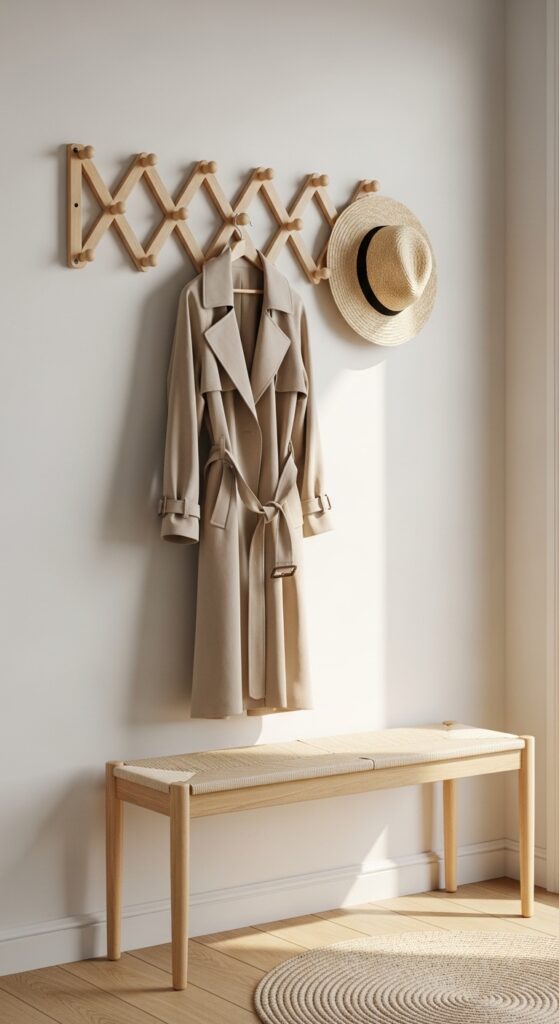
Bulky coat racks can make a small hallway feel even tighter. Accordion-style wall pegs are a smart alternative because they expand when needed and stay flat when not in use. You can hang jackets, bags, or accessories without cluttering the space. They also look decorative, so they add both function and style to your wall.
3. The High-Gloss Ceiling Trick
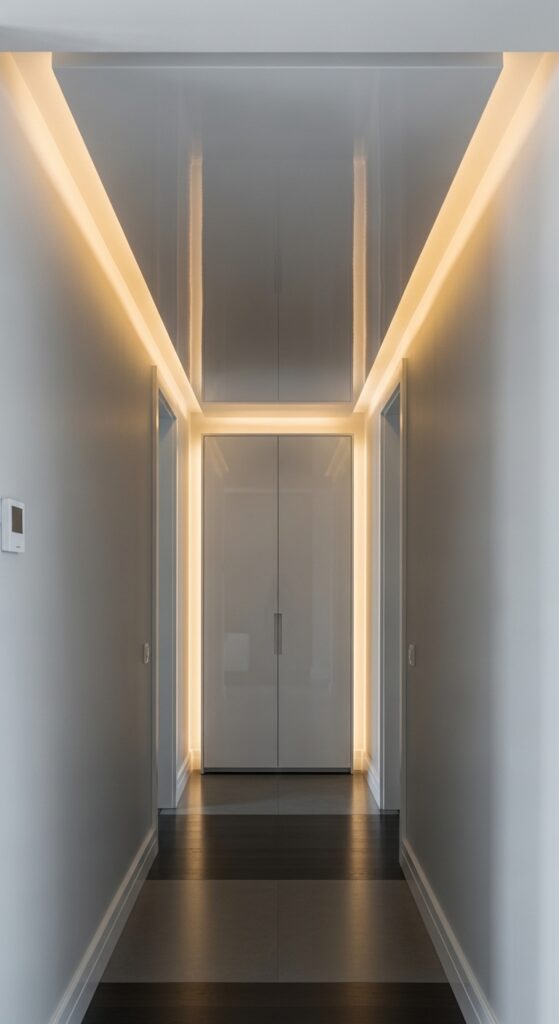
If your hallway feels low or closed in, the ceiling can actually help fix that. Using a light or slightly glossy paint reflects light and creates a more open feeling. It draws the eye upward and makes the space appear taller. This small change can make a noticeable difference without requiring major effort or cost.
4. Half-Moon Console Tables
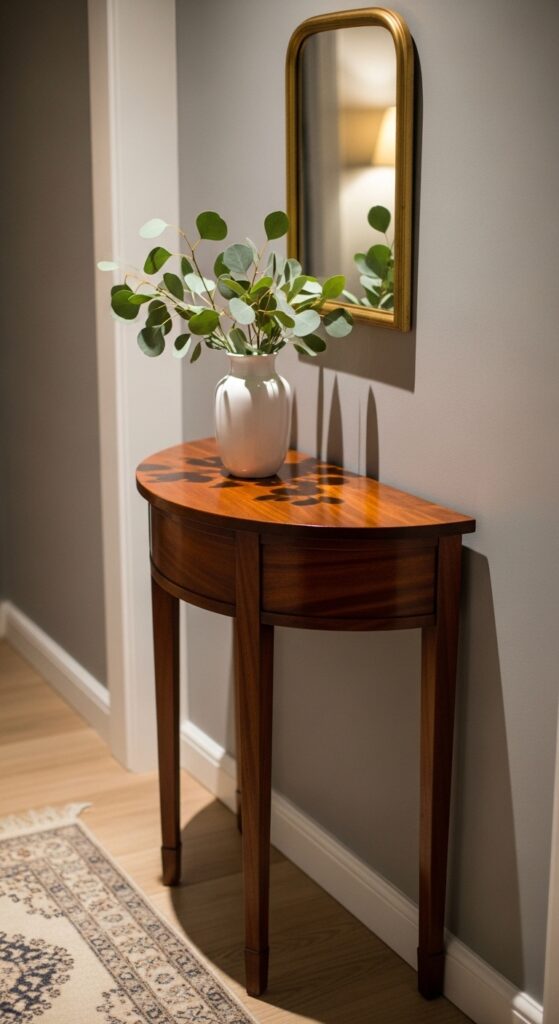
Sharp-edged furniture can be uncomfortable in tight spaces. A half-moon console table works better because of its curved shape. It fits neatly against the wall and gives you space for small items like keys or decor. At the same time, it allows smoother movement through the hallway without bumping into corners.
5. Floating Shoe Cabinets
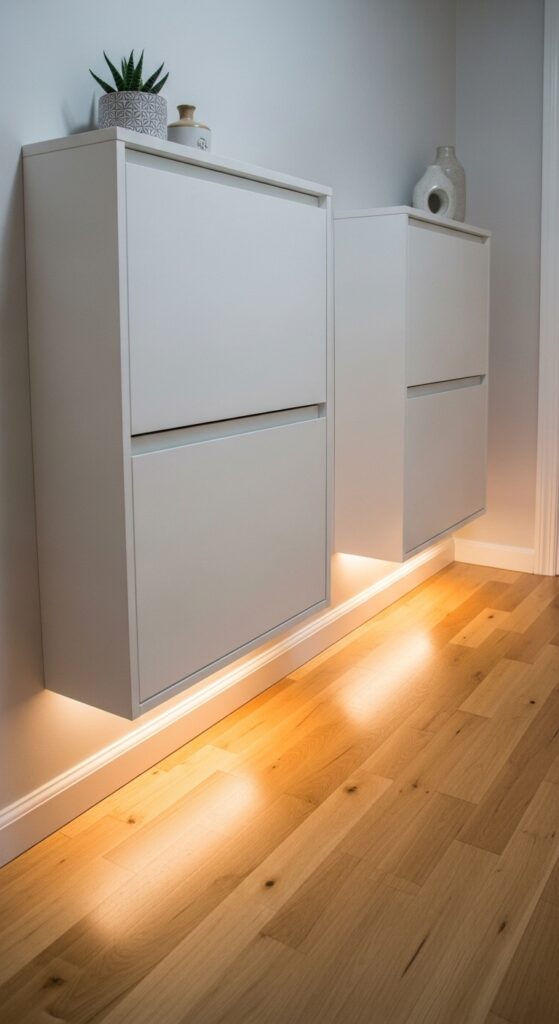
Shoes can quickly create clutter in a small hallway. A wall-mounted shoe cabinet helps keep everything organized while freeing up floor space. Because it’s slightly raised, the floor remains visible, which makes the area feel more open. It’s a practical solution that keeps your entryway clean and visually balanced.
6. Vertical “Library” Shelves

Even a narrow hallway can be used for storage if you think vertically. Slim, tall bookshelves can hold books, decor, or small items without taking much floor space. This turns your hallway into something more interesting instead of just a passage. It also adds personality and makes the space feel more complete.
7. Statement Sconce Lighting
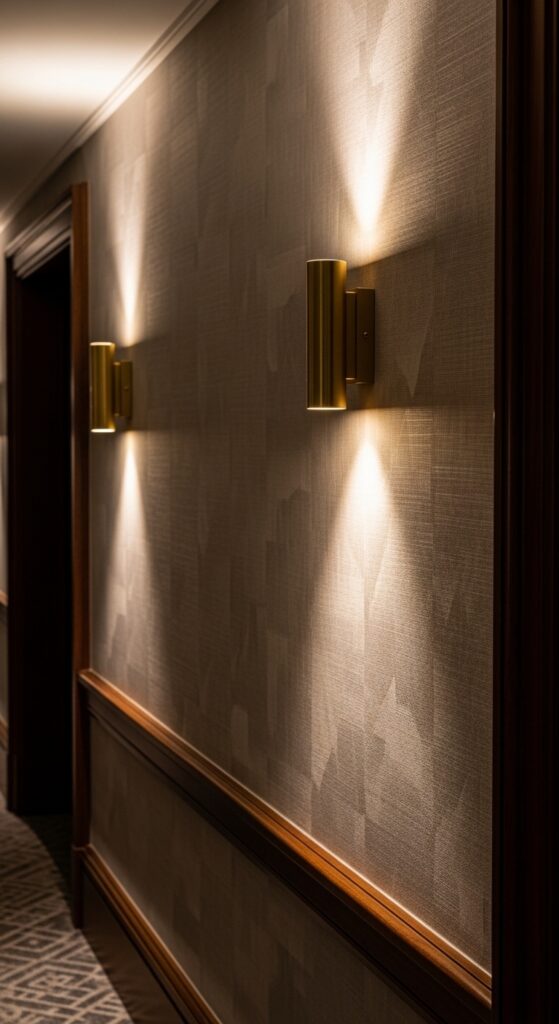
Instead of using a single overhead light, try wall-mounted lighting. Sconces provide softer, more balanced light and make the hallway feel warmer. They also don’t hang down, so they won’t make the ceiling feel lower. Choosing simple designs can add a modern touch while improving overall visibility.
8. Transparent Acrylic Furniture
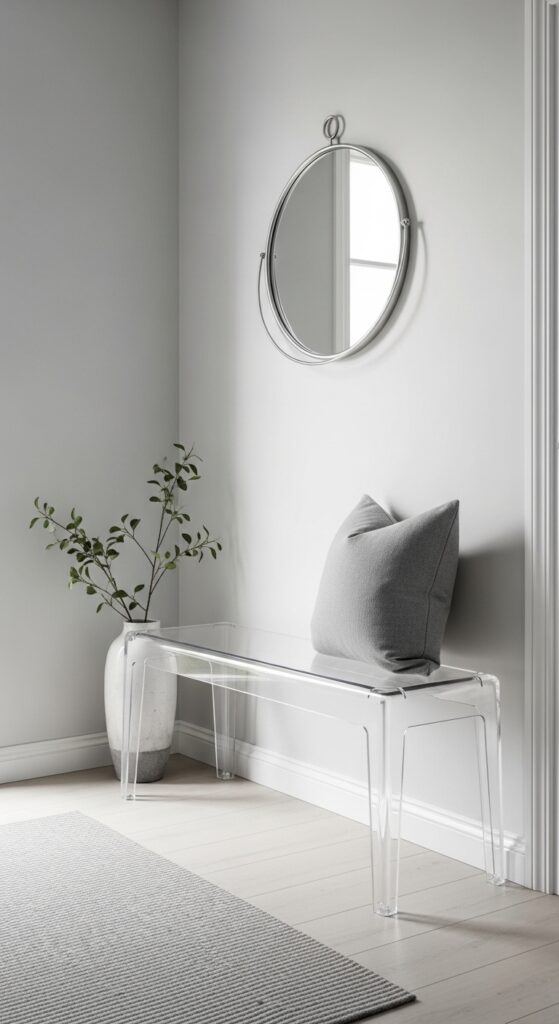
If you need a bench or small table in your hallway, transparent furniture is a smart choice. Acrylic pieces don’t block light, so they feel almost invisible. This helps keep the hallway looking open and uncluttered. It’s a simple way to add function without making the space feel crowded.
9. Monochromatic “Color Drenching”
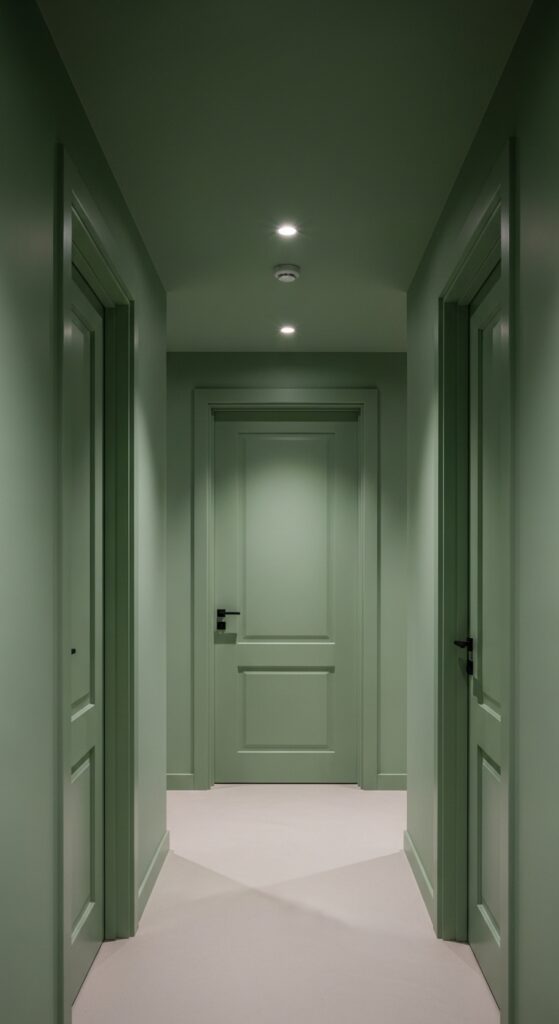
Using one consistent color throughout the hallway can make it feel more spacious. When walls, trims, and doors are painted in the same shade, the space looks smoother and less divided. This creates a clean, continuous look that helps reduce the feeling of tightness in narrow areas.
10. The “Artistic” Door Frame
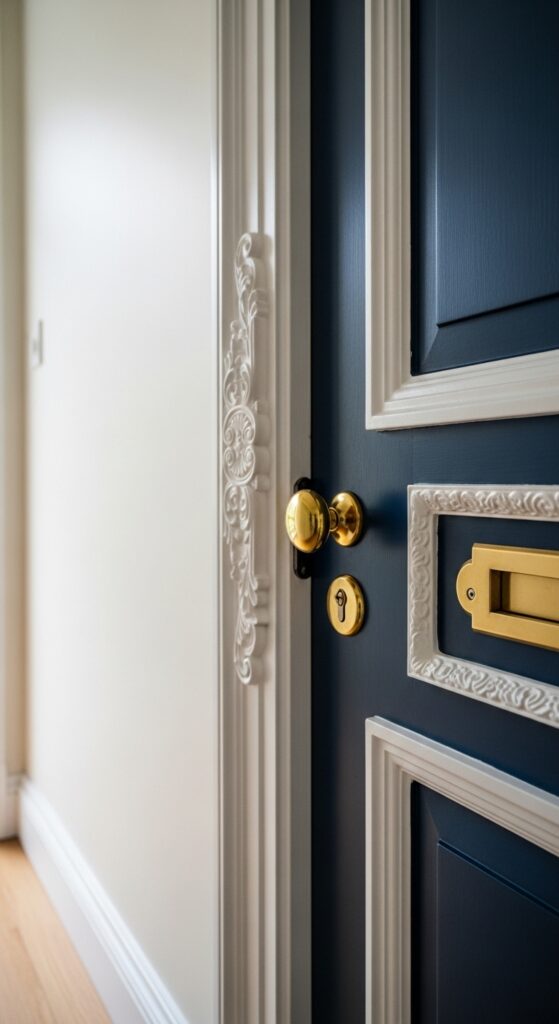
Doors are a big part of any hallway, so instead of ignoring them, you can use them as a design element. Painting the frames in a slightly different color or adding subtle detailing makes them stand out. This draws attention forward and makes the hallway feel more connected to the rest of the home.
11. Hanging Woven Basket Storage
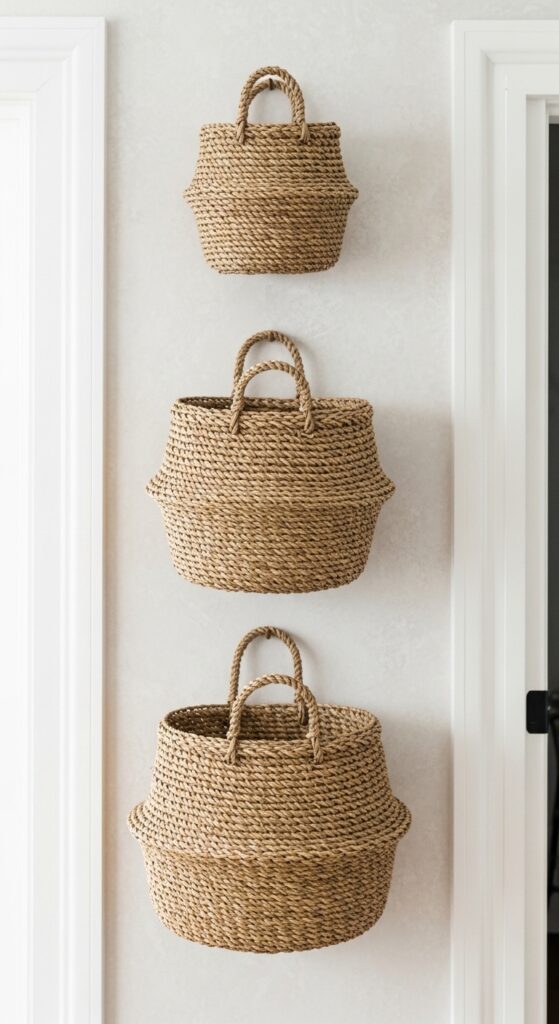
Small items like scarves, gloves, or accessories can create clutter quickly. Hanging baskets on the wall is an easy way to keep things organized. They don’t take up floor space and also add texture to the wall. This makes the hallway feel more styled while staying practical.
12. Low-Profile Picture Ledges
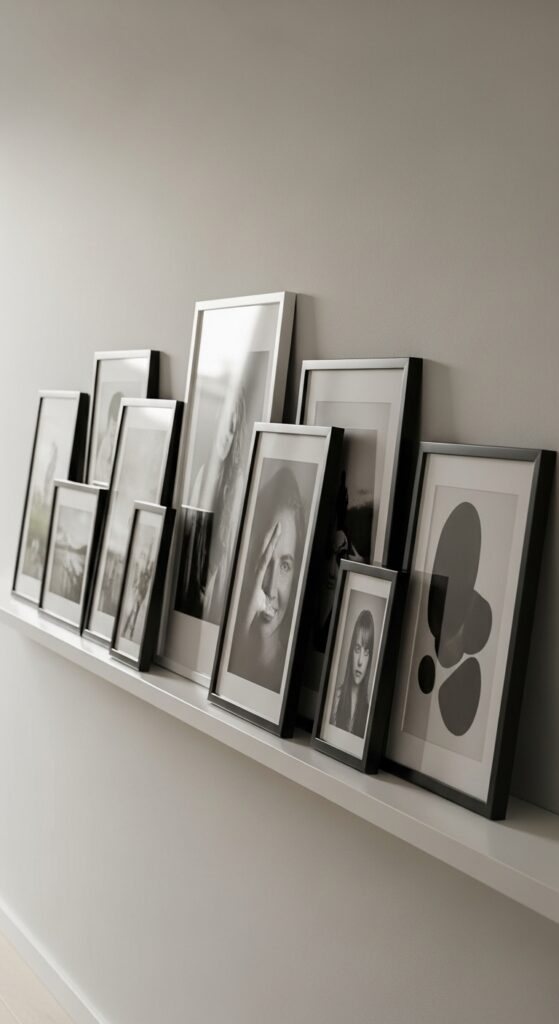
Deep frames can stick out too much in a narrow hallway. Picture ledges are a better option because they are slim and allow you to display photos or art easily. You can also change items anytime without drilling new holes. This keeps your hallway fresh and flexible.
13. Botanical “Jungle” Vibe
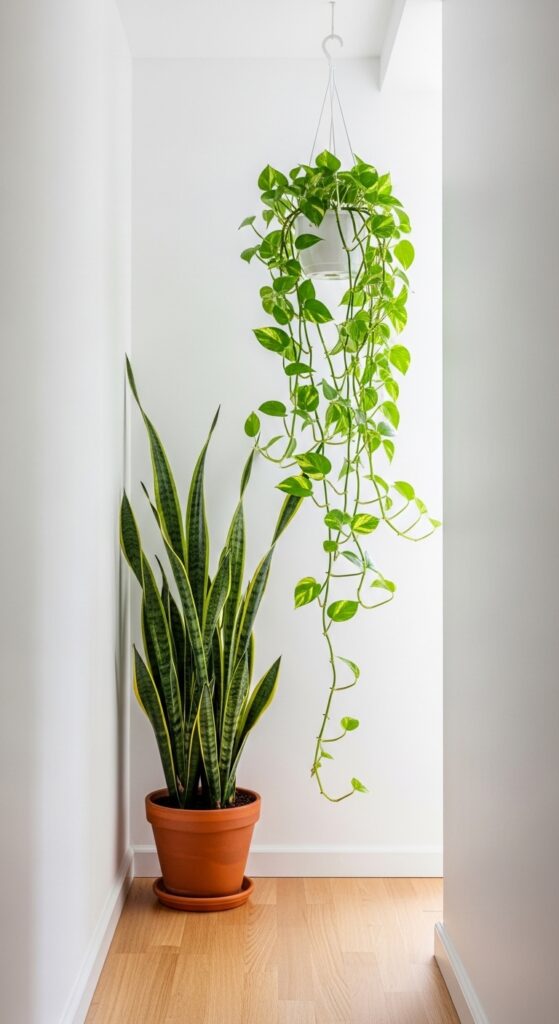
Adding plants to your hallway can instantly improve the atmosphere. Even low-light plants can bring a natural and refreshing feel to the space. Placing them on stands or hanging them keeps the floor clear. It’s a simple way to add life and make your hallway feel more welcoming.
14. Mirrored Closet Doors
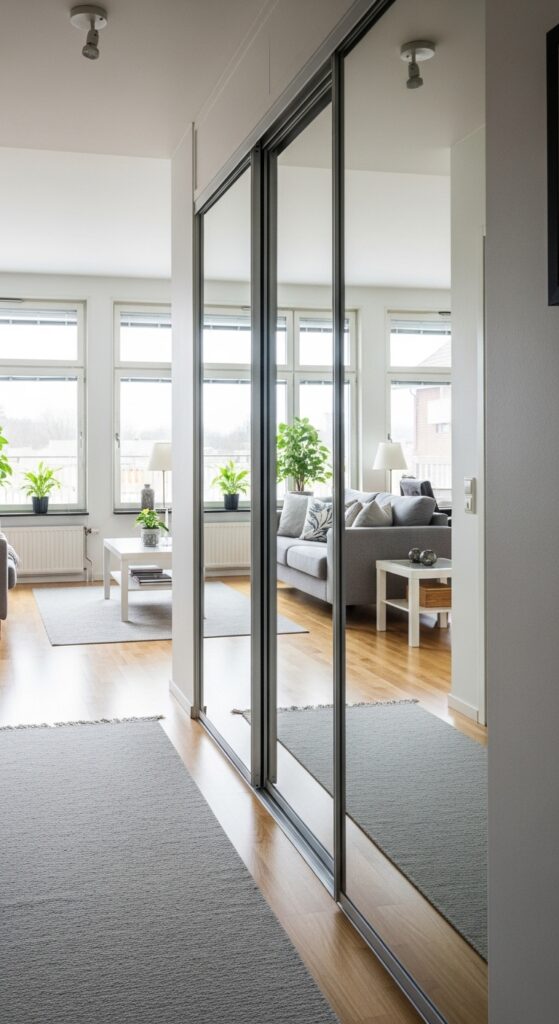
If your hallway includes storage, using mirrored doors can make a big difference. They reflect light and create the illusion of more space. This makes the hallway feel wider and brighter without changing the layout. It’s one of the most effective tricks for small areas.
15. Textured Wall Paneling (Wainscoting)
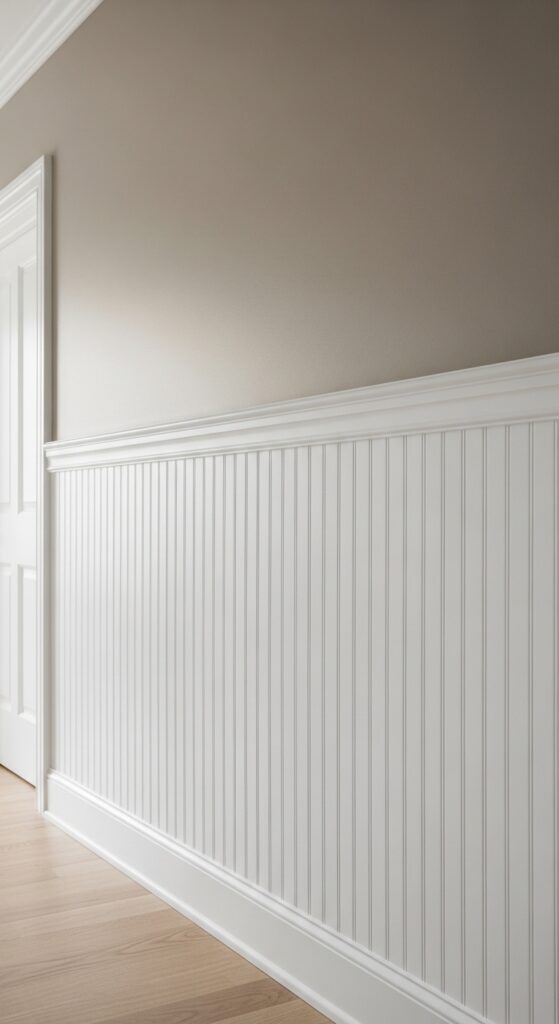
Adding simple wall paneling or texture can give your hallway more depth. Vertical lines can make the ceiling appear higher, while horizontal lines can make the space feel longer. This adds character without making the area feel crowded. It’s a subtle but effective design upgrade.
16. The “Zoned” Entrance Mat
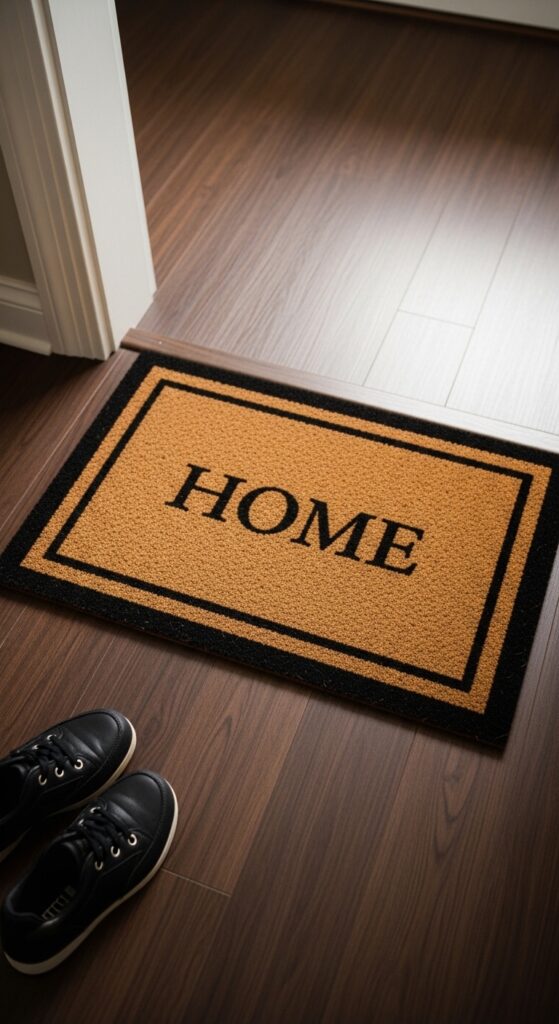
A well-placed entry mat can help define the start of your home. It creates a small zone where you can remove shoes or place items. Choosing a textured or patterned mat adds style while also being practical. It’s a small detail that helps your hallway feel more complete and organized.
Hacks & DIY Guides
15 Best Floating Shoe Storage Ideas
Read Article →14 Easter Table Decor Ideas
Read Article →16 Adorable Easter Bunny Decorations
Read Article →Cozy Cubicle Inspiration Ideas
Read Article →15 Genius Bedtime Survival Kits
Read Article →Deco Mesh Wreath Step-by-Step
Read Article →22 Gorgeous Ways to Hack IKEA IVAR
Read Article →20 Genius Shed Storage Ideas
Read Article →22 Useful IKEA Hacks
Read Article →FAQs: Expert Hallway Design & Organization
Conclusion:
A small hallway may seem like a difficult space to design, but with the right approach, it can become one of the most useful and attractive parts of your home. Simple changes like better lighting, smart storage, and thoughtful decor can make a big difference. By using these ideas, you can turn even the narrowest hallway into a clean, functional, and welcoming space.