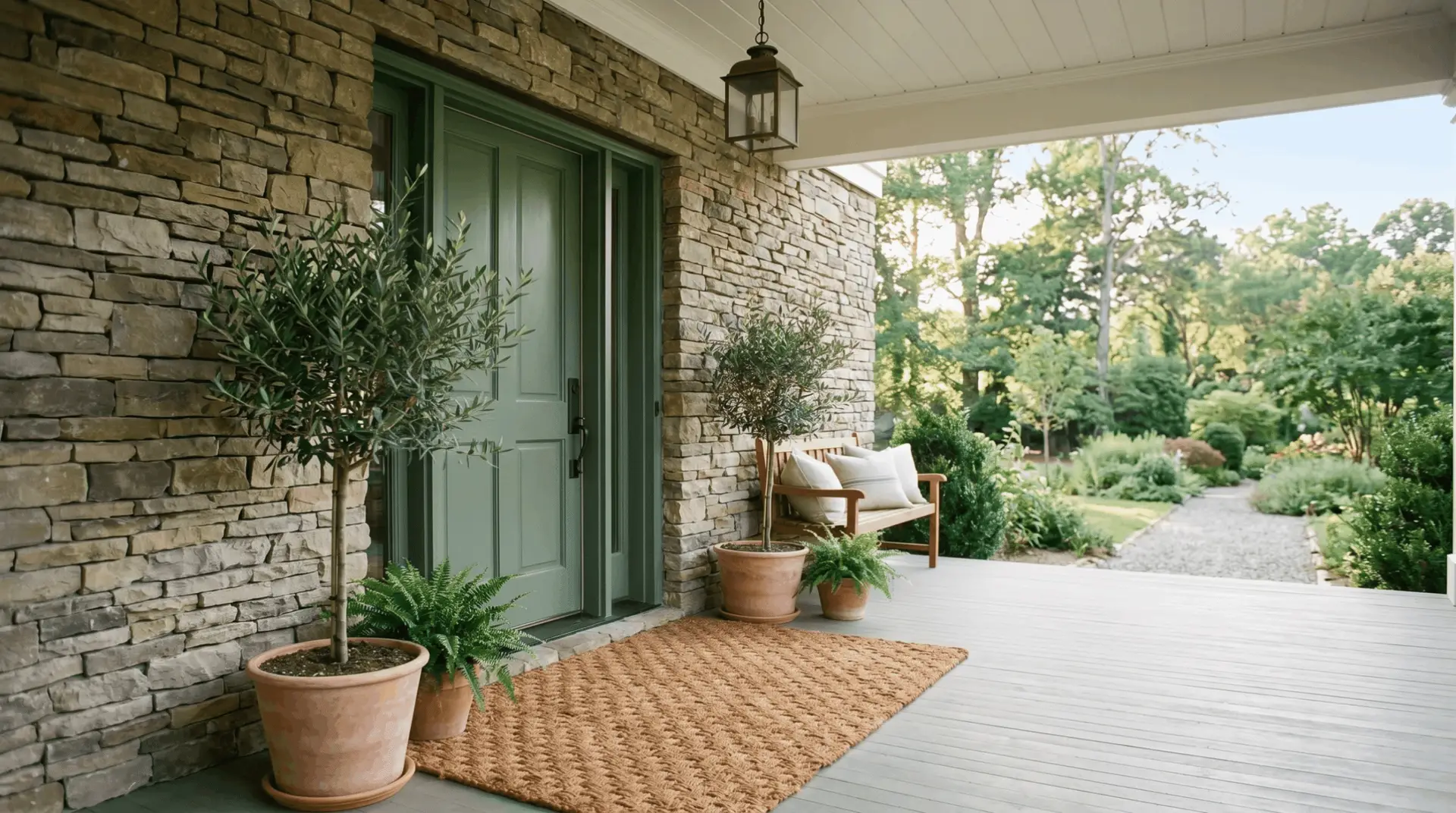
There is a quiet, magical moment that happens right before you turn the key in your front door. It is that brief pause after a long, exhausting day where your home rises to meet you. For years, I overlooked our entry, treating it merely as a transit point rather than an introduction. But the truth is, your entrance sets the entire emotional tone for what lies across the threshold.
If your current entrance feels a bit tired, uninspiring, or lost in a sea of neighborhood sameness, it is time for a change. Exploring fresh door exterior ideas isn’t just about aesthetics; it is about creating an intentional, welcoming boundary. Let’s look at twelve sophisticated design concepts that blend architectural integrity with deep visual harmony, transforming your exterior from a simple walkway into a gorgeous statement piece.
Why This Style or Topic Matters
In modern interiors, we often spend months obsessing over kitchen backsplashes or living room textiles while leaving the front entry as an afterthought. Yet, your entry door is the ultimate first impression. It bridges your interior design style with the outside world, anchoring your overall architectural story.
A thoughtful facade upgrade directly solves the common issue of a home looking flat, dated, or utterly devoid of personality. Right now, homeowners are craving organic textures, earthy palettes, and artisan craftsmanship to make their spaces feel less sterile. Investing a little time into your home’s presentation grounds the entire property, giving it an undeniable sense of permanence and thoughtful curation.
12 Front Door Exterior Ideas
1: The Warmth of Natural White Oak
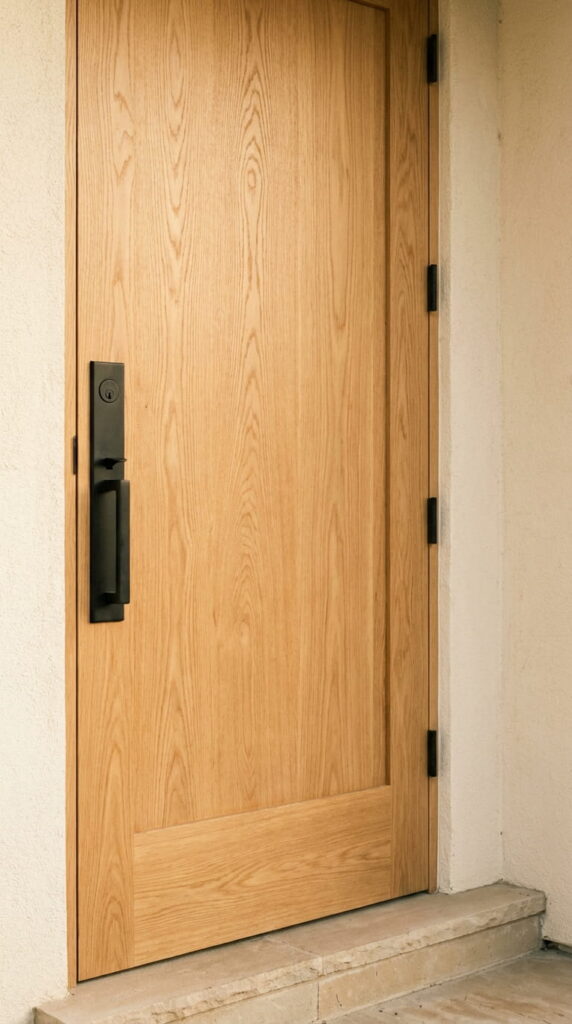
There is an unmistakable, grounding elegance to a solid white oak front door. This approach works beautifully for contemporary builds, organic modern spaces, and transitional homes alike. The light, prominent grain patterns catch the afternoon sun, instantly softening hard architectural concrete or stark brickwork. Pair a minimalist, vertical plank design with a simple matte black linear pull handle to ground the look. To protect the wood while highlighting its natural visual harmony, choose a high-quality clear matte marine varnish rather than a heavy, glossy stain.
- Design Impact: Adds instant organic texture and architectural warmth.
- Practical Tip: Apply a UV-blocking clear sealer annually to prevent graying from sun exposure.
2: Bold and Moody Charcoal Black
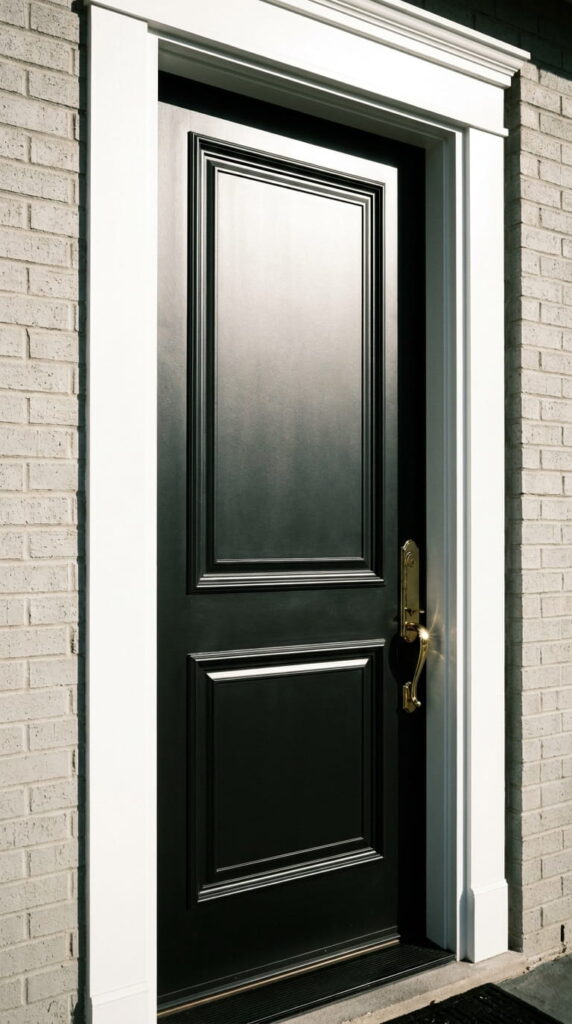
If you want your entryway to make an undeniable, confident statement, charcoal black is an incredible choice. Far more complex than a standard flat black, a deep charcoal with subtle blue or warm undertones shifts beautifully throughout the day. It provides a striking contrast against light stucco or cream-colored siding. For a truly high-end, editorial finish inspired by classic Architectural Digest layouts, opt for a sophisticated satin or semi-gloss finish. This reflects just enough natural light to highlight the door’s molding and architectural details without creating a harsh, blinding glare.
- Design Impact: Delivers a classic, high-contrast, timeless styling element.
- Common Mistake: Forgetting to paint the inner door jamb, which creates an awkward visual break when opened.
3: The Charm of a Split Dutch Door
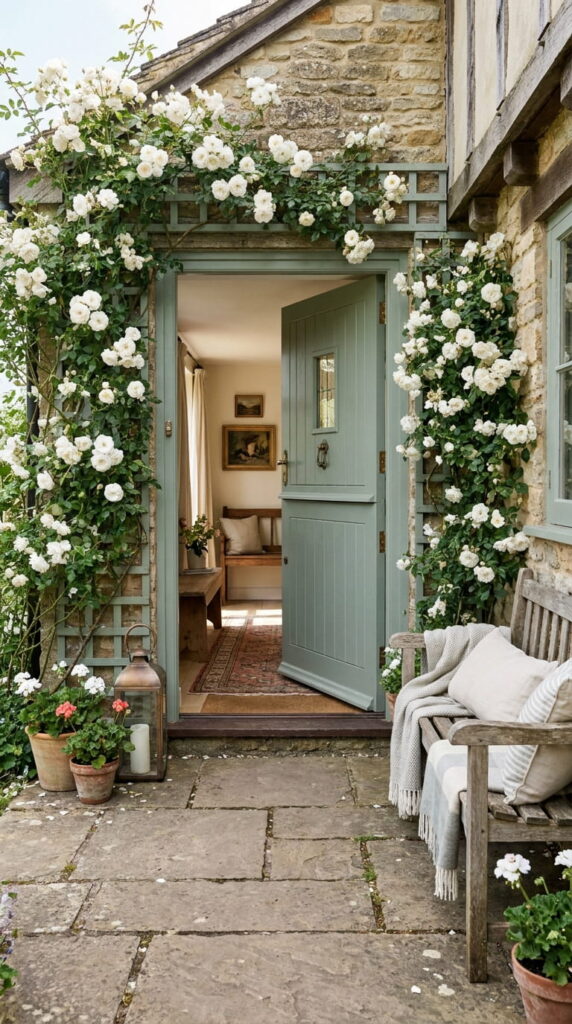
Perfect for cottage-style homes, modern farmhouses, or breezy coastal entries, a Dutch door splits horizontally across the middle. This allows you to keep the bottom secure while opening the top panel to welcome fresh air and conversations with passing neighbors. It bridges the gap between historical charm and practical, daily living. Paint it in a soft, welcoming pastel like sage green or dusty blue, and use solid brass hardware that will develop a stunning, authentic patina over time.
- Design Impact: Creates a cozy living spaces vibe packed with vintage personality.
- Where It Works Best: Active kitchens or side entries leading directly onto covered porches.
4: Industrial Steel and Glass Pivots
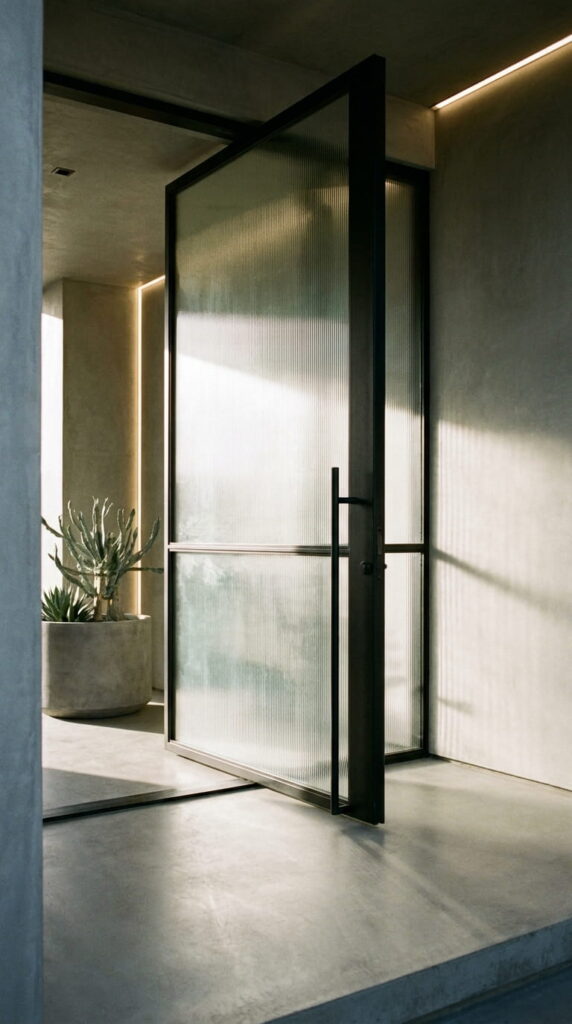
For true minimalist homes, an oversized steel-framed pivot door completely redefines modern interiors. Instead of hanging from traditional side hinges, these heavy doors rotate effortlessly on a floor-and-ceiling pivot mechanism. The expansive glass panels flood your dark interior hallway with gorgeous natural light, blurring the line between inside and out. Opt for frosted, reeded, or textured artisan glass if you want to keep your indoor living space entirely private while still prioritizing that beautiful, glowing luminosity.
- Design Impact: Offers a striking, ultra-modern architectural focal point.
- Styling Guidance: Keep surrounding porch decor incredibly minimal to let the structural frame shine.
5: Vibrant and Spirited Terracotta
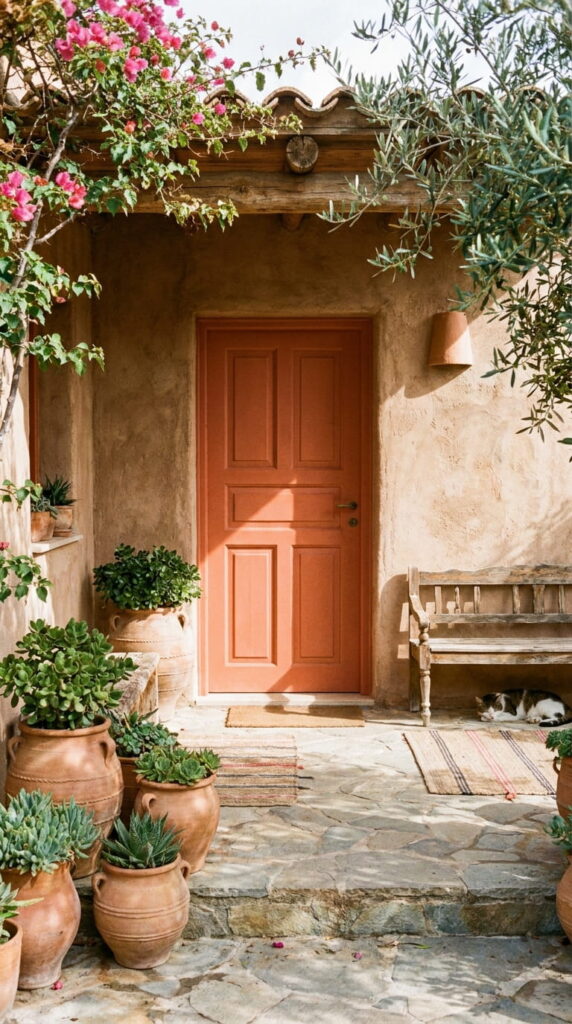
Injecting a rich, sun-baked terracotta hue into your entrance brings immediate life and cultural history to your facade. This earthy tone draws inspiration from historic southwestern design and classic Mediterranean villas. If you love unique structural elements, consider exploring cozy old Mexican home decor ideas to see how stunning clay tones pair beautifully with rustic surfaces. The velvety warmth of terracotta grounds your home, looking especially beautiful when framed by climbing green ivy or potted desert succulents.
- Design Impact: Infuses an earthy palette and welcoming warmth into simple entryways.
- Practical Tip: Pair this rich color with oil-rubbed bronze hardware to emphasize the rustic feel.
6: The Elegance of Architectural Reeded Wood
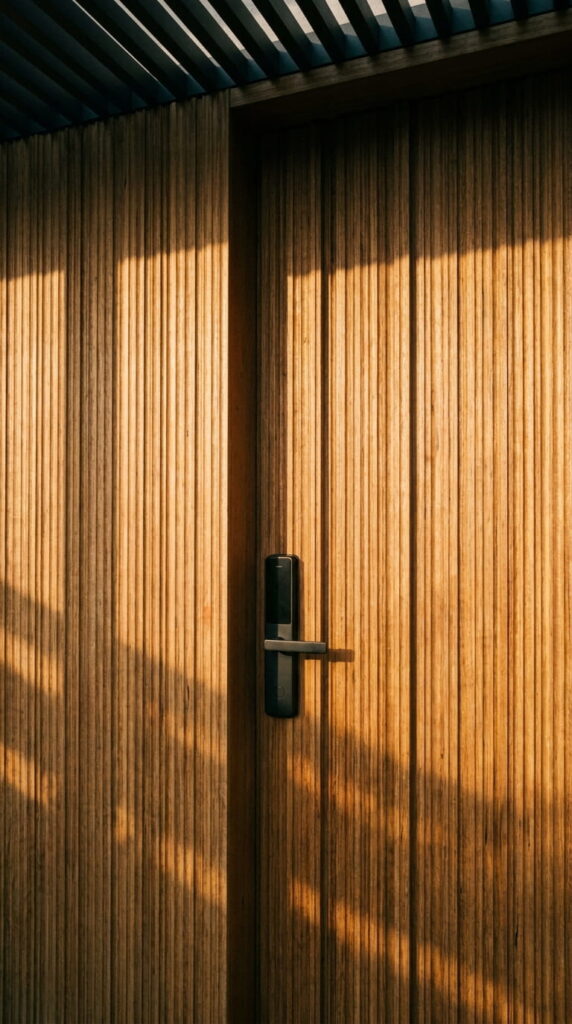
Reeded and fluted textures are taking over contemporary architecture, and for a very good reason. Incorporating vertical reeded detailing across your exterior door face creates a gorgeous, undulating play of light and shadow. The rhythmic lines draw the eye upward, giving modest entryways a taller, more grand appearance. This detailed woodwork celebrates artisan craftsmanship and pairs wonderfully with sleek, modern smart locks and streamlined, hidden handle sets.
- Design Impact: Introduces deep, layered decor texture into contemporary facades.
- Where It Works Best: Sheltered entries or deeply recessed porches that protect the intricate wood channels.
7: Sophisticated Deep Forest Sage
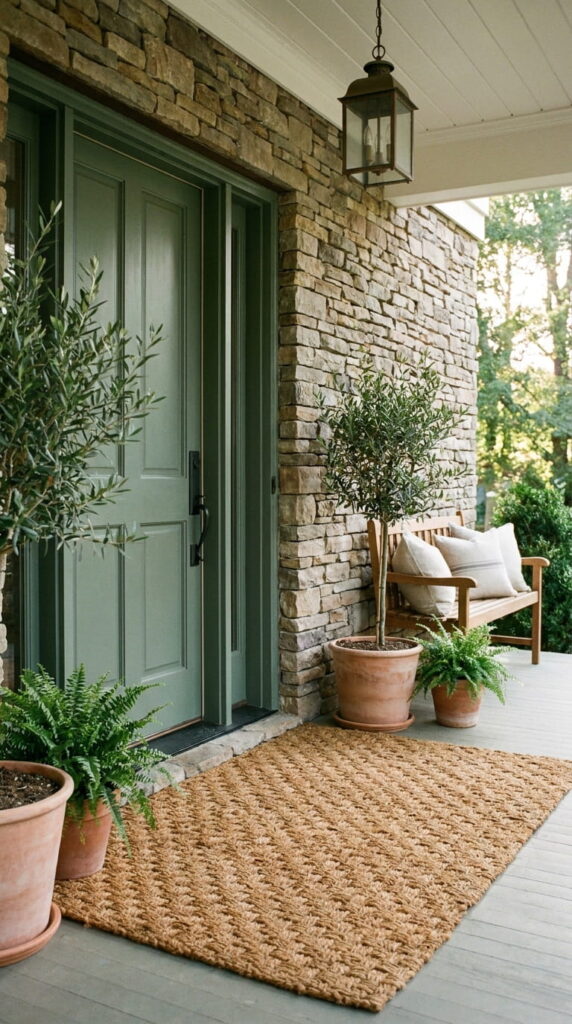
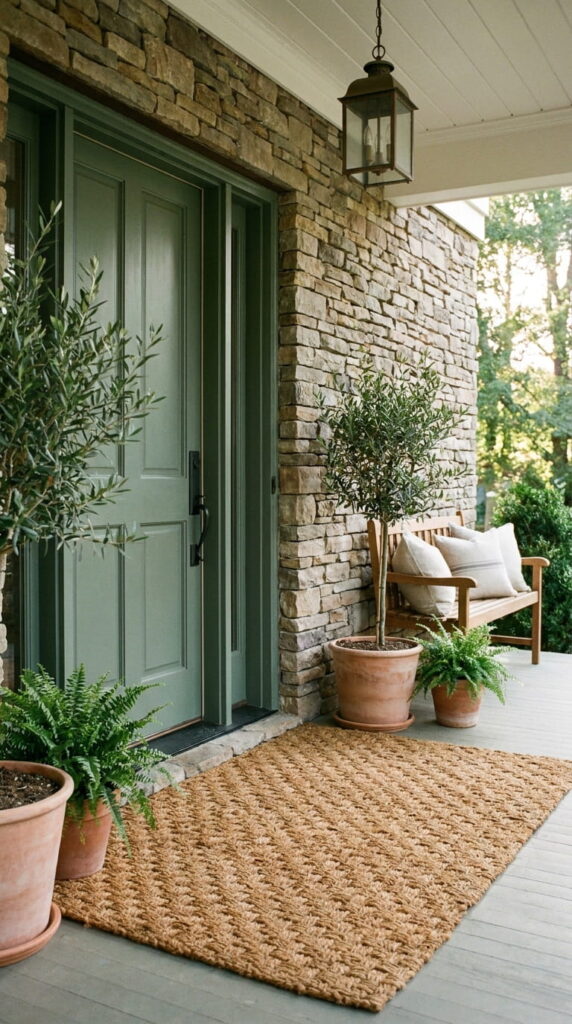
For a gentle, sophisticated look that blends seamlessly into your front garden, look no further than forest sage. This muted, grayish-green tone acts as an elegant neutral, evoking a peaceful, grounding sense of calm. It softens heavy stone masonry and complements classic cream trim beautifully. To elevate the entire vignette, style the surrounding porch with curated planters of varying heights, incorporating distinct textures like terracotta and raw concrete.
- Design Impact: Achieves a serene, timeless styling look that honors the natural landscape.
- Styling Guidance: Accentuate this soft green hue with polished nickel or bright chrome hardware for a crisp finish.
8: Historic Arched Entrances
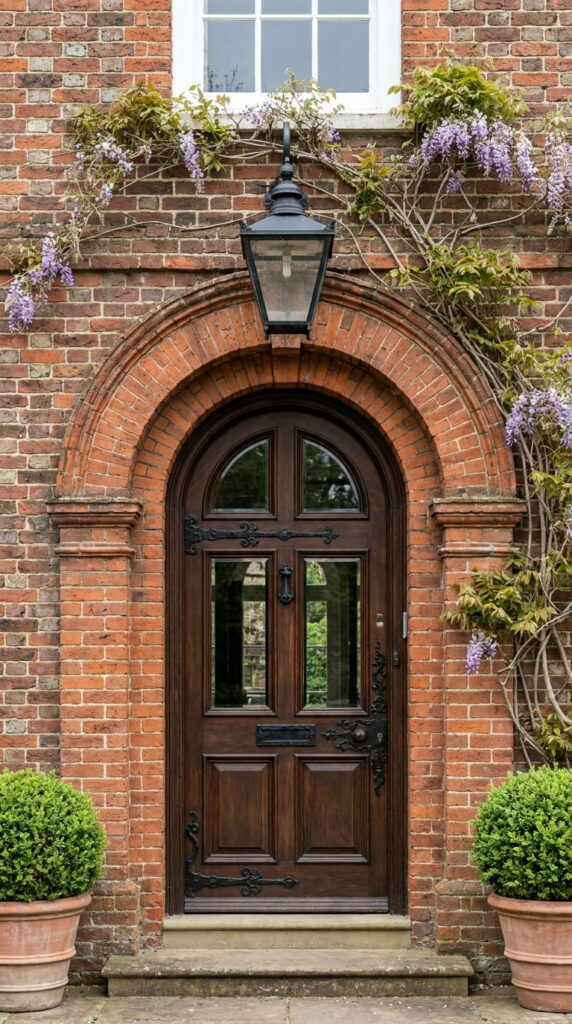
There is an undeniable, romantic architectural quality to a softly curved, arched front door. It breaks up the rigid, harsh straight lines that dominate most residential exteriors, adding instant character. Whether you choose a solid, heavy rustic wood panel or an elegant frame featuring delicate, curved glass panes, an arched top commands attention. To emphasize the beautiful curve, keep your overhead exterior porch lighting simple and symmetrical.
- Design Impact: Establishes a majestic, historic, and incredibly high-end aesthetic.
- Common Mistake: Forgetting to match the interior hallway trim to the unique exterior curve.
9: Striking Mid-Century Modern Asymmetry
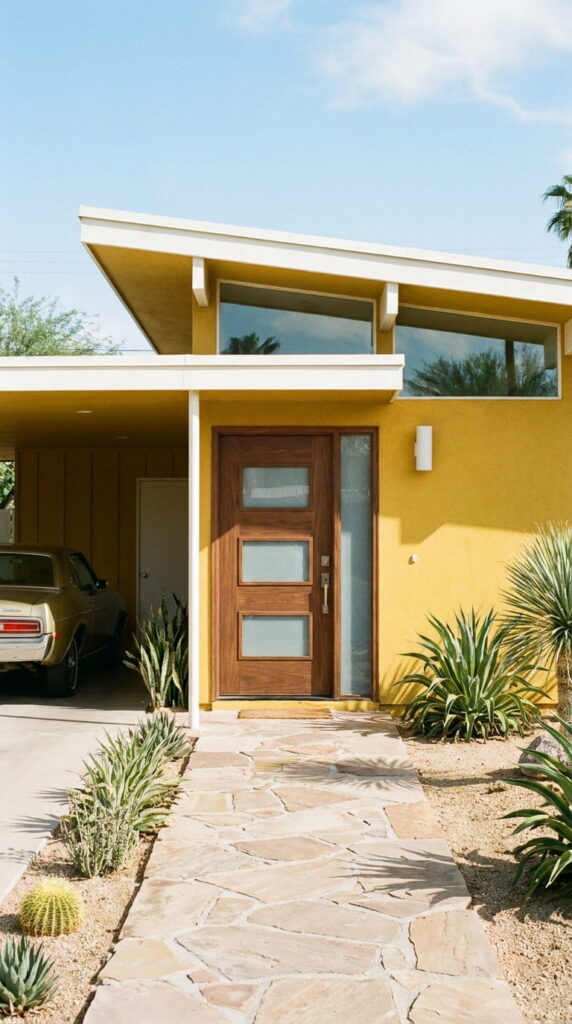
Embrace the playful, clean lines of mid-century design by choosing an asymmetrical front door layout. Think bold, rich walnut finishes featuring stacked horizontal glass inserts running down just one side. This iconic look celebrates mid-century styling while ensuring your interior hallway receives a soft, welcoming glow. If you want to lean into the authentic retro aesthetic, paint the door in a vibrant, confident hue like mustard yellow or bright teal.
- Design Impact: Delivers an eye-catching, retro-modern curb appeal boost.
- Where It Works Best: Single-story ranch homes or split-level mid-century builds.
10: Clean and Sophisticated Monochromatic Trim
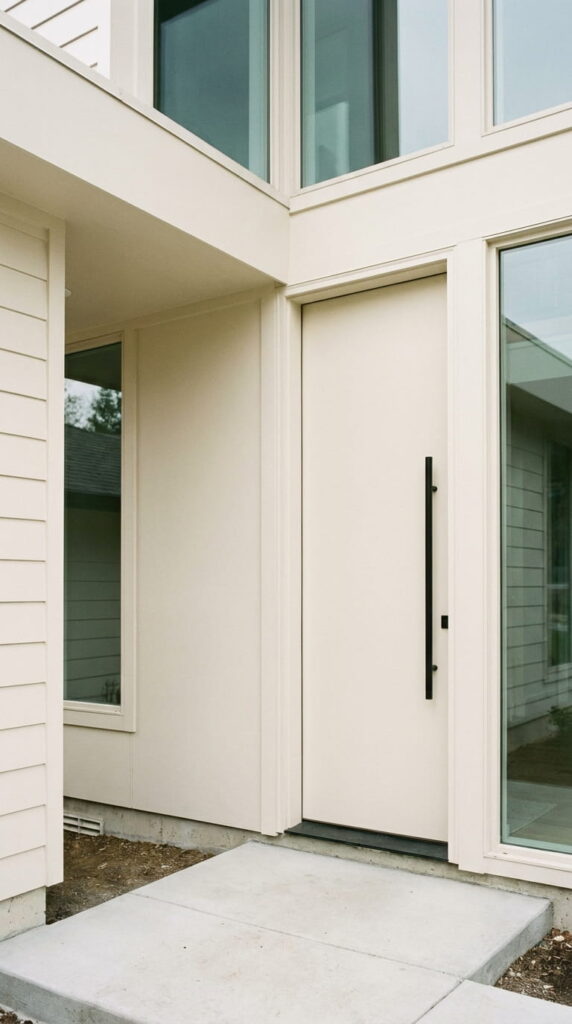
If you are completely satisfied with your existing door but want a high-impact upgrade, try painting your door, trim, and surrounding siding the exact same color. This monochromatic technique—often highlighted in publications like Elle Decor—creates a seamless, ultra-modern architectural statement. When your entire entry is coated in a unified hue, like a velvety soft grey or a rich cream, the door handles and light fixtures instantly pop as beautiful jewelry for your home.
- Design Impact: Makes modest front entries look significantly larger and cleaner.
- Styling Guidance: Balance the clean look by adding warmth through woven fiber doormats and textured planters.
11: Classic French Double Doors
If your entry layout permits, installing a pair of elegant French double doors brings a sense of airy sophistication to your home. This timeless style allows you to open both doors wide during gatherings, creating a seamless flow for entertaining. To create a beautiful interior connection, consider pairing your bright entry with one of the curated 15 bedroom color schemes that interior designers swear by to ensure your indoor living spaces feel just as cohesive, polished, and inviting.
- Design Impact: Provides a luxurious, grand, and breezy European aesthetic.
- Practical Tip: Install high-quality drop-bolts on the passive door to keep your entryway secure.
12: Minimalist Dark Walnut With Side Lites
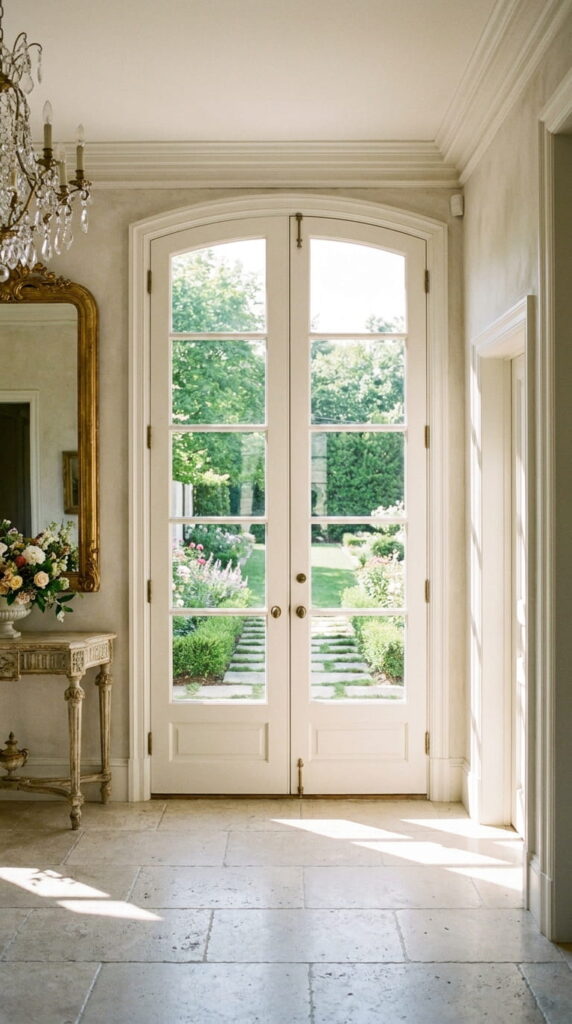
If you want a look that is modern yet warm, combine a dark, premium walnut door with matching glass side lites. The rich, chocolatey tones of walnut offer an upscale finish, while the glass flanking panels broaden your overall entry footprint. This combination feels incredibly balanced, grounding your home’s facade while keeping the interior entry bright and energetic.
- Design Impact: Enhances visual scale and brings a premium, grounded feel to your home.
- Styling Guidance: Keep the porch clean and bright to ensure the dark wood remains the true star.
How to Choose the Best Color for an Exterior Front Door
To select the perfect front door color, analyze your home’s permanent architectural elements, such as brick tone, stone masonry, or roof shingles. For a timeless, high-contrast look, opt for classic black, deep charcoal, or rich navy. If you prefer a warmer, organic look, choose natural wood stains like white oak or walnut. To introduce personality, opt for muted earth tones like sage green or terracotta. Always test paint swatches on your door to observe how the color shifts in morning light versus evening shadow before committing.
Internal Engagement Optimization
Upgrading your front entry is only the first step in crafting a beautiful exterior. If you have an empty entryway porch or a bare exterior garage wall nearby, adding structural art can tie the whole look together. You can explore these 15 creative outdoor wall decor ideas that will completely transform your space to find complementary metallic details, planters, and lighting that frame your new door perfectly. Once inside, you can continue that welcoming, textured feeling on the floor by checking out these 15 cute blue rugs for bedrooms to bring that same soft, cozy styling directly into your private rooms.
FAQs: Choosing & Maintaining Exterior Doors
Conclusion
Your front door is more than just a functional barrier against the elements; it is the physical punctuation mark at the end of every journey home. Whether you choose the grounding, organic warmth of a reeded white oak surface or the bold, confident style of a monochrome charcoal trim, transforming your entrance completely alters how you relate to your home. It breathes fresh life into your exterior facade and offers an inviting welcome to everyone who steps onto your porch. Take your time selecting textures, hardware, and lighting that resonate with your personal style, and enjoy creating an entrance that you look forward to returning to day after day.