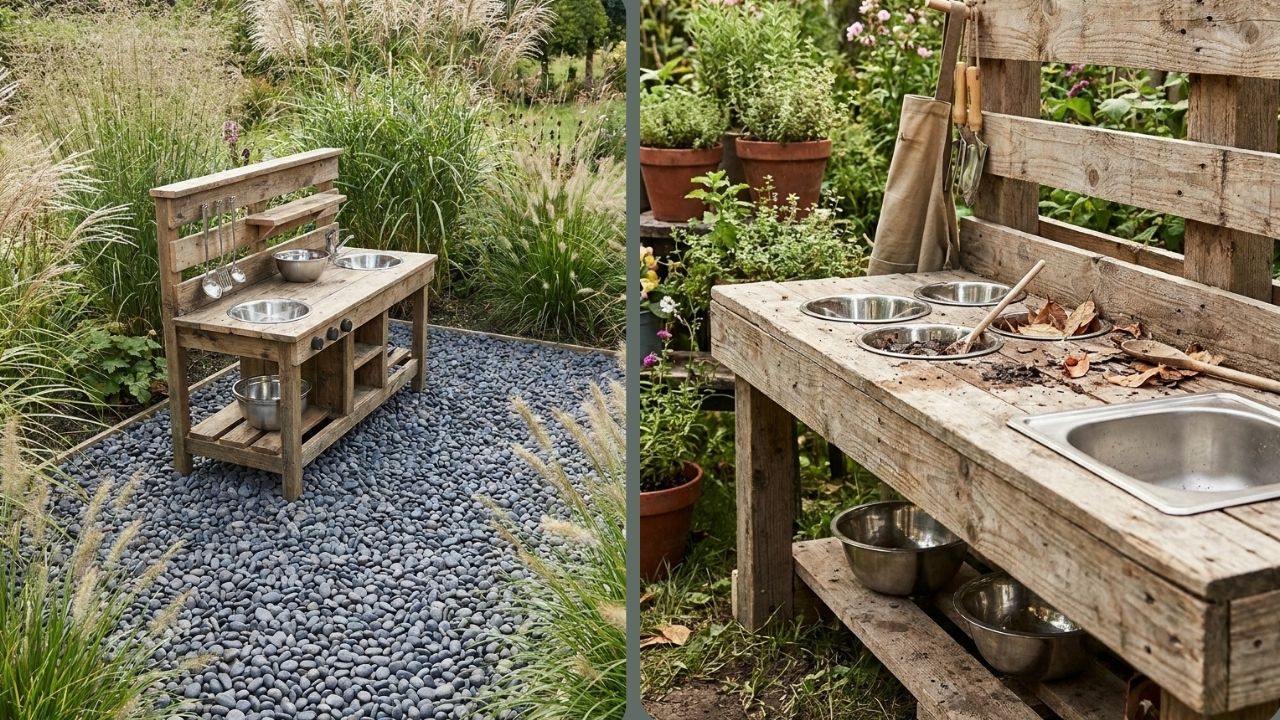
The best childhood memories always leave a little dirt under your fingernails. There is a quiet, magical focus that happens when a child mixes a handful of soil with a splash of rainwater, pretending it is a gourmet soup. Bringing an outdoor mud kitchen into your backyard creates a dedicated zone for this beautiful, messy realism. It keeps the chaos out of your main living spaces while giving your little ones a rich, tactile playground to explore.
By using raw finishes, natural materials, and smart storage, you can build a play space that sparks deep imagination without ruining your garden’s visual harmony. Let’s look at how a few thoughtful design choices can turn a basic pile of dirt into a beautiful, intentional play layout that your kids will return to day after day.
Why This Style or Topic Matters
Modern childhood involves a lot of glowing screens, which makes intentional outdoor play spaces more important than ever. An outdoor mud kitchen solves a common parental dilemma: encouraging messy, biophilic design play without turning the entire patio into a disaster zone. Psychologically, mixing textures like gritty sand, smooth water, and crushed leaves builds crucial fine motor skills and sensory processing.
Functionally, it gives children a curated space where they are finally allowed to say “yes” to the mud. Instead of fighting the elements, these ideas show you how to embrace earthy palettes and layered decor to blend a children’s play area seamlessly into a mature, organic modern backyard aesthetic.
15 Outdoor Mud Kitchen Ideas
1. The Reclaimed Pallet Station
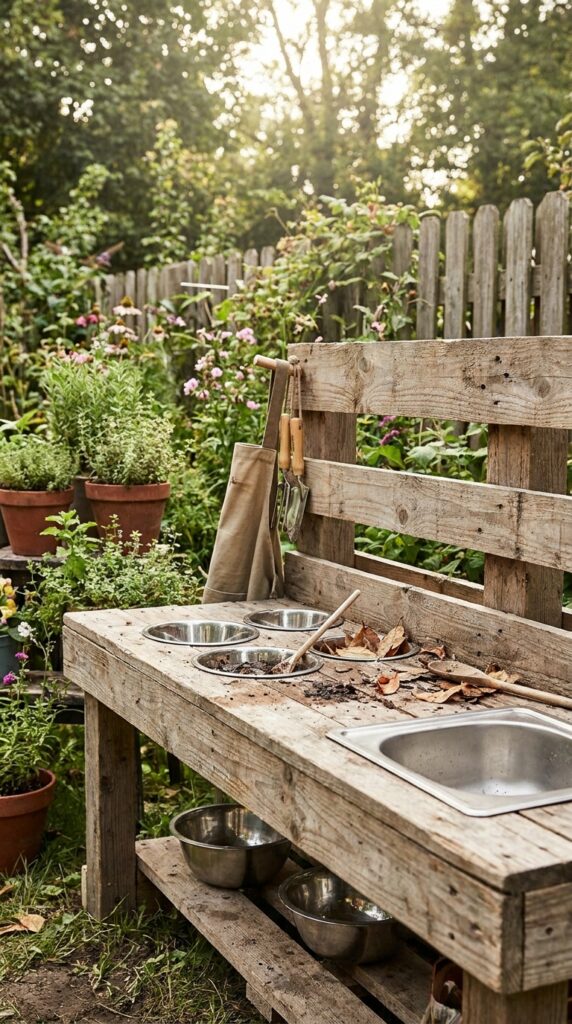
This setup relies on sturdy, weathered wood to form a self-contained play counter. Using pallet wood provides a rugged, raw finish that handles the elements beautifully while giving the space an instant, rustic character.
- Why it works & Design Impact: Upcycled wood brings an authentic, textured look that mimics professional farmhouse designs. It grounds the play area naturally within a garden setting.
- Where it works best: Tucked flat against a backyard fence or positioned near a raised garden bed.
- Practical Styling Guidance & Tips: Sand down the pallet faces thoroughly to prevent splinters. Apply a clear, non-toxic water sealant, then mount a couple of inexpensive stainless steel mixing bowls into precut openings on the top surface.
- Common Mistakes: Leaving the wood completely untreated, which causes rotting after a few heavy rainstorms.
2. The Living Wall Mud Kitchen
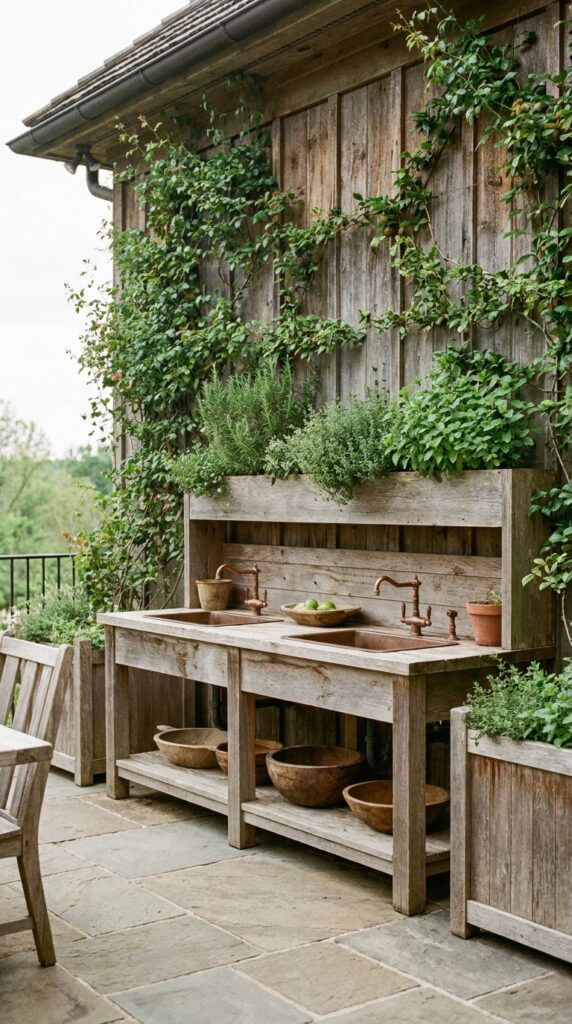
A vertical play setup that incorporates real plants directly into the structure. By attaching small planters or herbs to the backboard, kids can harvest real leaves and flower petals for their sensory recipes.
- Why it works & Design Impact: It embraces true biophilic design, connecting children with living flora. The pops of green against warm neutrals create a beautiful, striking focal point.
- Where it works best: Small patios, balconies, or narrow side yards where floor space is limited.
- Practical Styling Guidance & Tips: Mount weather-resistant cedar boards vertically. Attach small plastic pots filled with hardy, non-toxic plants like mint, rosemary, or marigolds at child-eye level.
- Common Mistakes: Choosing delicate or toxic plants that cannot handle enthusiastic harvesting.
3. The Minimalist Concrete Block Counter
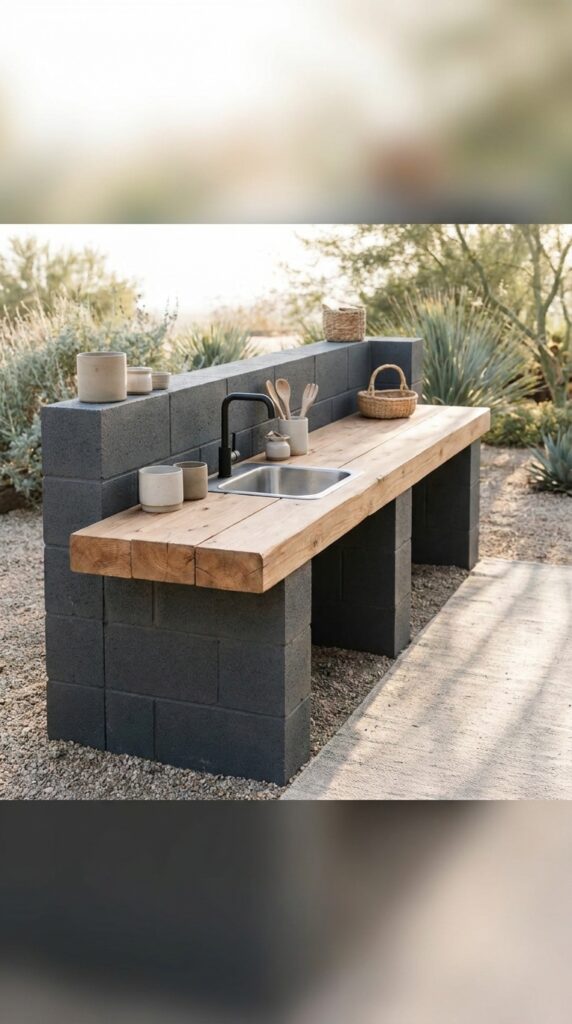
Clean lines meet raw utility. By stacking smooth concrete cinder blocks and topping them with a thick piece of flagstone or treated timber, you get an industrial-modern cooking station.
- Why it works & Design Impact: The heavy, tactile textures of the stone contrast beautifully with delicate garden foliage, offering an architectural layout that adults appreciate too.
- Where it works best: Modern, geometric backyards or minimalist paved patio areas.
- Practical Styling Guidance & Tips: Stack the blocks on a completely level gravel bed. Secure the top stone or wood slab with heavy-duty construction adhesive to keep it stable during active play.
- Common Mistakes: Setting the blocks directly on soft, uneven grass, which causes the structure to tilt and shift.
4. The Twin-Sink Ceramic Basin Station
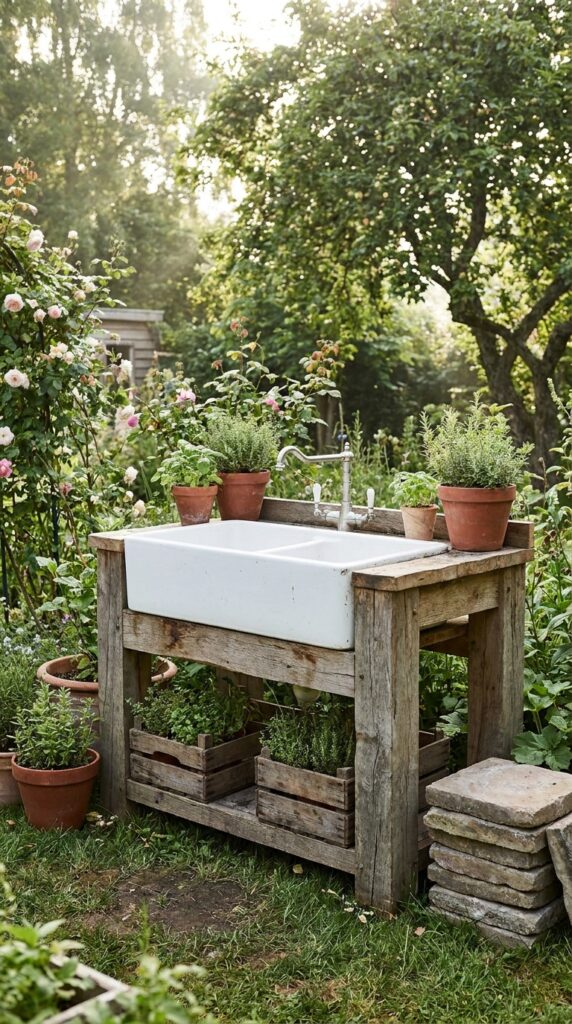
An old double-bowl ceramic farmhouse sink is rescued from a renovation and placed on a sturdy timber base, giving kids a massive area for water-heavy play.
- Why it works & Design Impact: The smooth glaze of a vintage sink provides a bright contrast to raw wooden frames, making it look like a high-end, intentional installation. According to Architectural Digest, repurposing architectural salvage adds unmatched soul to outdoor areas.
- Where it works best: A wide-open lawn area or underneath a large shade tree.
- Practical Styling Guidance & Tips: Build a thick frame out of pressure-treated four-by-fours to support the immense weight of the ceramic basin. Connect a simple flexible hose adapter to the drain so water empties directly into nearby flowerbeds.
- Common Mistakes: Underestimating the weight of the sink, leading to an unstable, top-heavy base.
5. The Trellis Herb Bakery
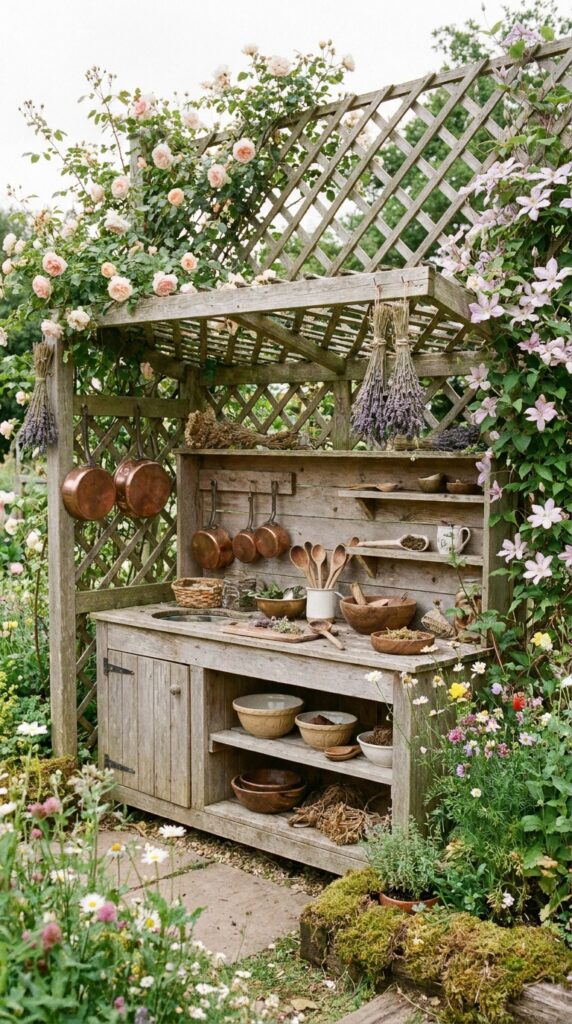
A creative play center featuring an overhead trellis or lattice backdrop where kids can hang copper pots, dried lavender bundles, and various cooking utensils.
- Why it works & Design Impact: This layout creates excellent vertical scale and structural depth. Woven elements on the trellis add a charming, cottage-core vibe to the backyard.
- Where it works best: Set against a bare brick wall or integrated into an active vegetable patch.
- Practical Styling Guidance & Tips: Secure a classic wooden lattice to the back of the play counter. Use S-hooks to hang vintage measuring cups, wooden spoons, and small bundles of drying weeds.
- Common Mistakes: Overcrowding the trellis with too many hanging pieces, which creates visual clutter and frustrates small hands.
6. The Rolling Mobile Mud Cart
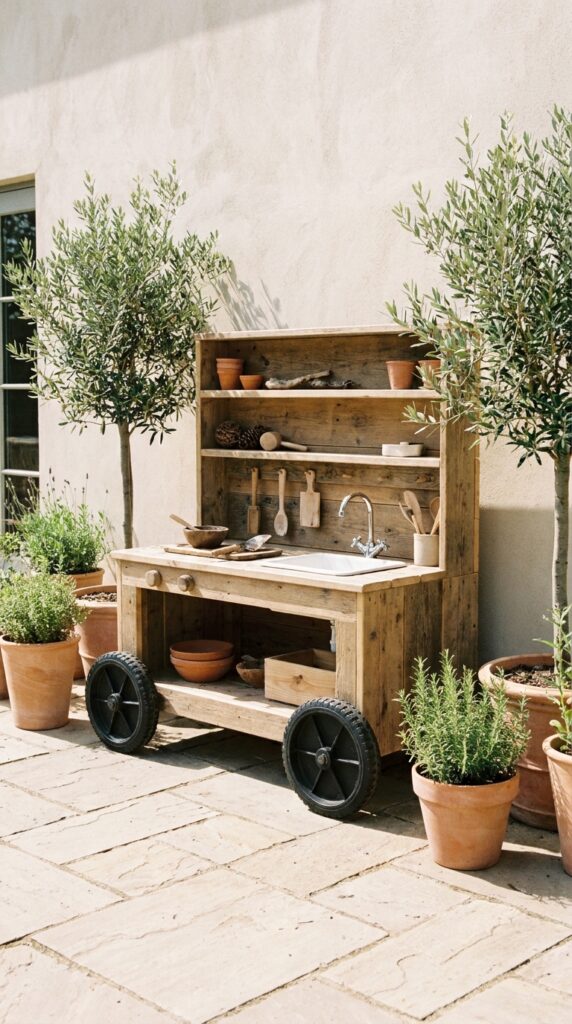
A compact kitchen built onto heavy-duty, lockable caster wheels, allowing you to move the entire sensory station wherever it is needed.
- Why it works & Design Impact: Flexibility is key for intentional layouts. Moving the station keeps the play experience fresh and lets you protect the grass from getting trampled in one permanent spot.
- Where it works best: Large paved areas, wraparound decks, or homes with changing seasonal shade.
- Practical Styling Guidance & Tips: Build the cart with a low center of gravity. Use large, industrial rubber wheels that can glide over bumpy grass just as easily as smooth concrete.
- Common Mistakes: Buying tiny plastic wheels that sink into the dirt and jam up instantly.
7. The Boho Willow-Screen Kitchen
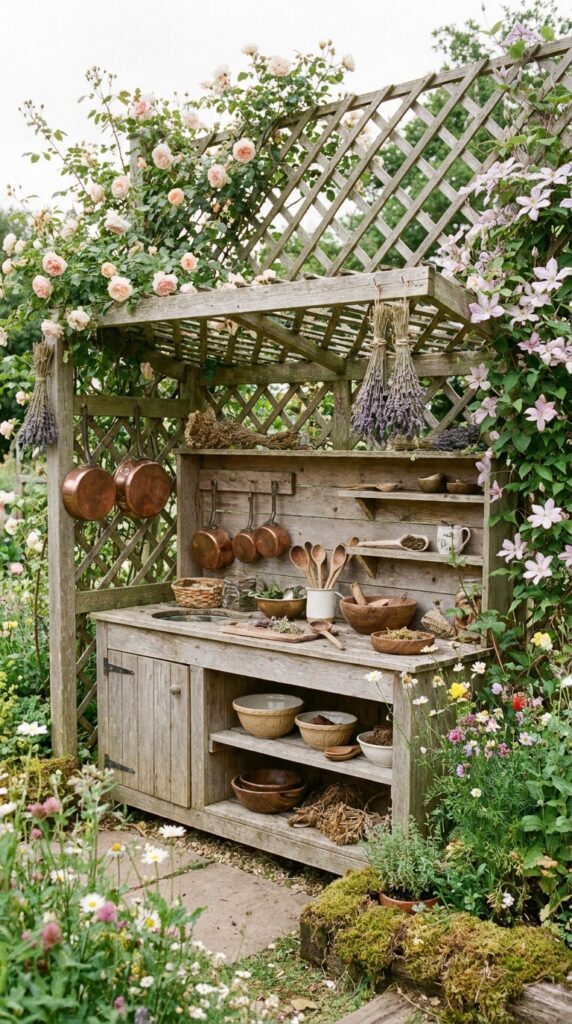
A soft, airy play space backed by natural willow or bamboo screening. This style leans heavily into tactile textures and muted tones for a relaxed, earthy feel.
- Why it works & Design Impact: The woven textures soften the backyard’s hard boundaries, creating a cozy, welcoming micro-environment that encourages hours of calm play.
- Where it works best: Shady corners surrounded by ornamental grasses or fern gardens.
- Practical Styling Guidance & Tips: Unroll a panel of willow fencing and secure it to sturdy posts behind a simple cedar play table. Decorate the surface with woven rattan baskets to hold dry pinecones and acorns.
- Common Mistakes: Forgetting to seal the wooden elements, leaving them vulnerable to damp autumn weather.
8. The Slate Slab Prep Table
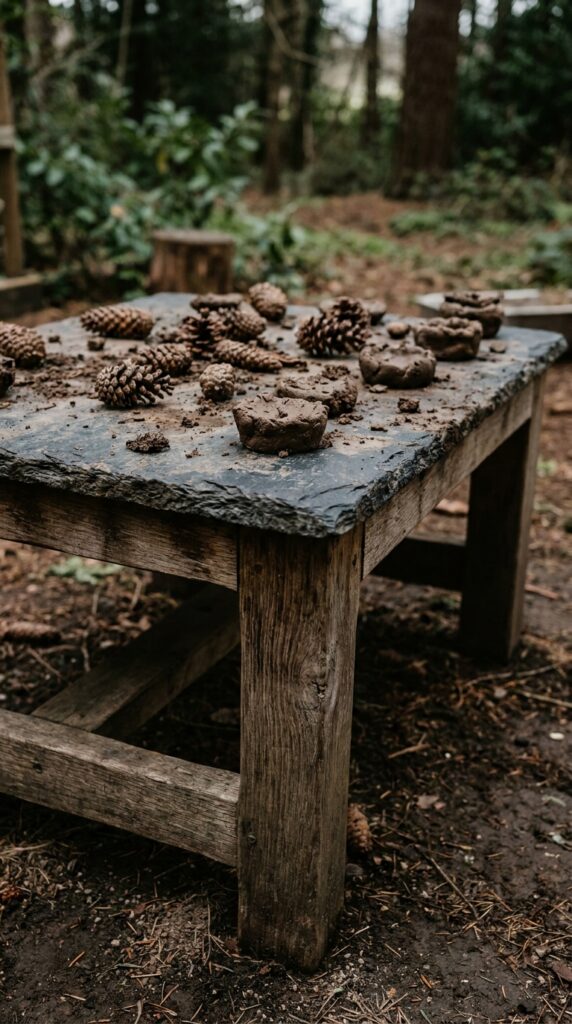
A low-slung, sturdy table topped entirely with dark slate tiles or a single piece of slate, perfect for chalk drawings, mud rolling, and pie-making.
- Why it works & Design Impact: The dark, rich grain of slate acts as a natural canvas. It hides mud stains perfectly while offering a cool, smooth surface to the touch.
- Where it works best: Under a pergola or integrated into a dedicated gravel play pit.
- Practical Styling Guidance & Tips: Use outdoor-grade thinset mortar to secure slate tiles to a thick marine-grade plywood base. Seal the grout lines thoroughly to prevent water from seeping underneath.
- Common Mistakes: Using thin, interior ceramic tiles that crack easily when heavy rocks drop on them.
9. The Tree Stump Artisan Station
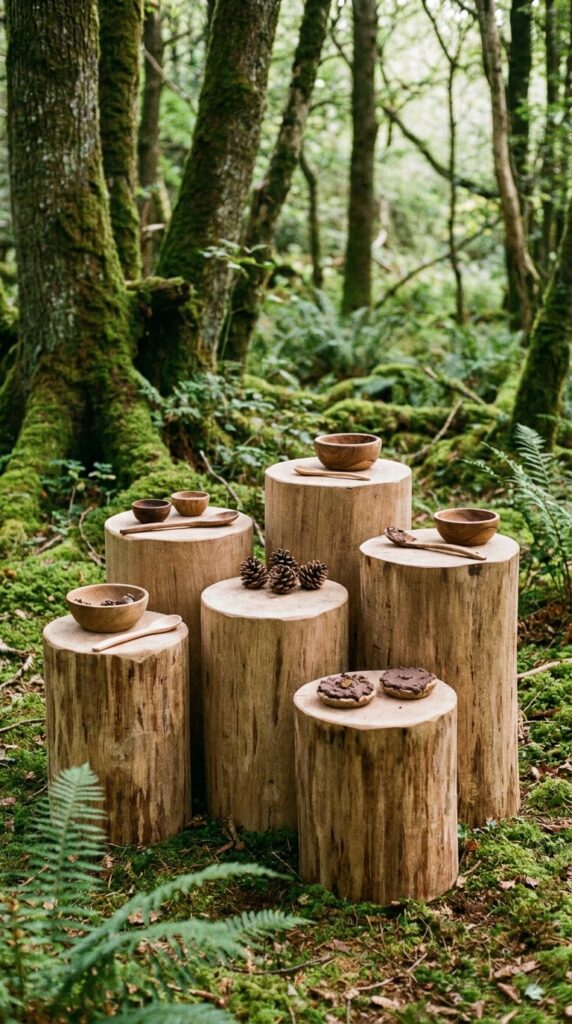
An ultra-natural approach that uses varying heights of thick, raw tree stumps grouped together to form prep surfaces, chopping blocks, and seating.
- Why it works & Design Impact: It completely bypasses manufactured straight lines for raw finishes. It feels like an organic extension of the woods, matching the biophilic design philosophies highlighted in House Beautiful.
- Where it works best: Wooded backyards, natural play spaces, or underneath mature trees.
- Practical Styling Guidance & Tips: Source hardwood logs like oak or maple. Strip the bark to prevent bugs, sand the top flat cuts completely smooth, and coat them with an exterior oil finish.
- Common Mistakes: Using soft, sap-heavy pine logs that leave sticky resin on little hands and clothes.
10. The Vintage Copper Pot Hook Station
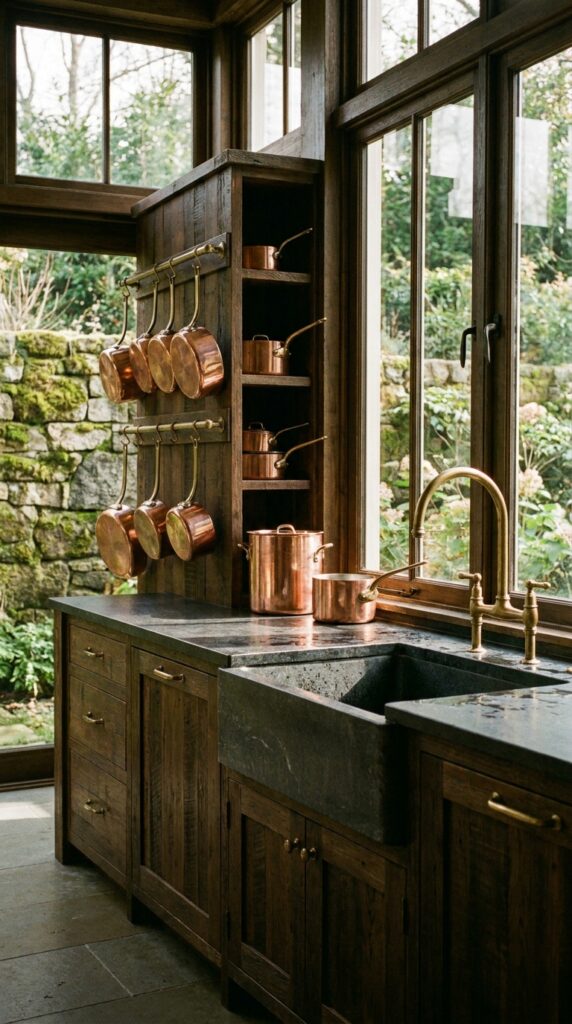
A classic wooden frame focused on deep, metallic accents. Rows of shining copper or brass pots hang neatly from heavy-duty hooks across the back panel.
- Why it works & Design Impact: Metallic elements catch the natural light beautifully against dark, muddy textures, adding a sense of artisan craftsmanship to a play space.
- Where it works best: Placed prominently near an outdoor seating area where parents can enjoy the view.
- Practical Styling Guidance & Tips: Scour local thrift stores for old copper jelly molds, copper pans, and brass ladles. Use solid brass screws to attach hooks so they never rust or stain the wood.
- Common Mistakes: Using cheap, shiny plastic toys that ruin the sophisticated, organic modern aesthetic.
11. The Gravel-Base Mud Corner
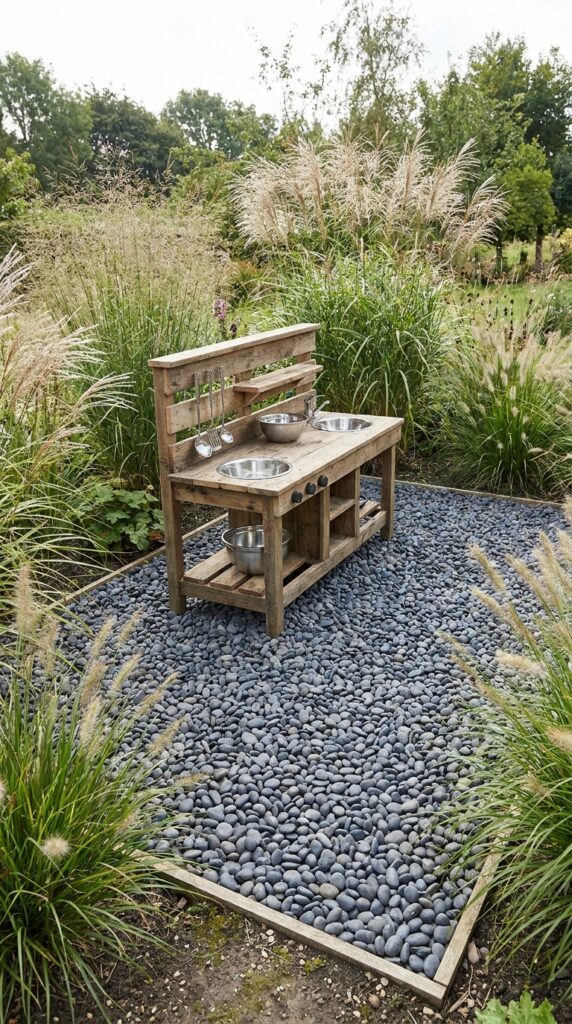
A complete zoning solution where the mud kitchen is placed inside a wide, defined bed of smooth river gravel or pea stone.
- Why it works & Design Impact: It creates a clear, intentional zone within your landscape. The stones drainage system keeps the immediate area clean and free of stagnant water pools.
- Where it works best: Damp areas of the yard where grass refuses to grow due to high foot traffic.
- Practical Styling Guidance & Tips: Dig down three inches, lay down heavy-duty landscape fabric to stop weeds, fill the space with washed pea gravel, and set your favorite timber mud kitchen right on top.
- Common Mistakes: Skipping the weed barrier fabric, which allows grass to aggressively choke out the gravel bed within months.
12. The Double-Decker Shelf Bakery
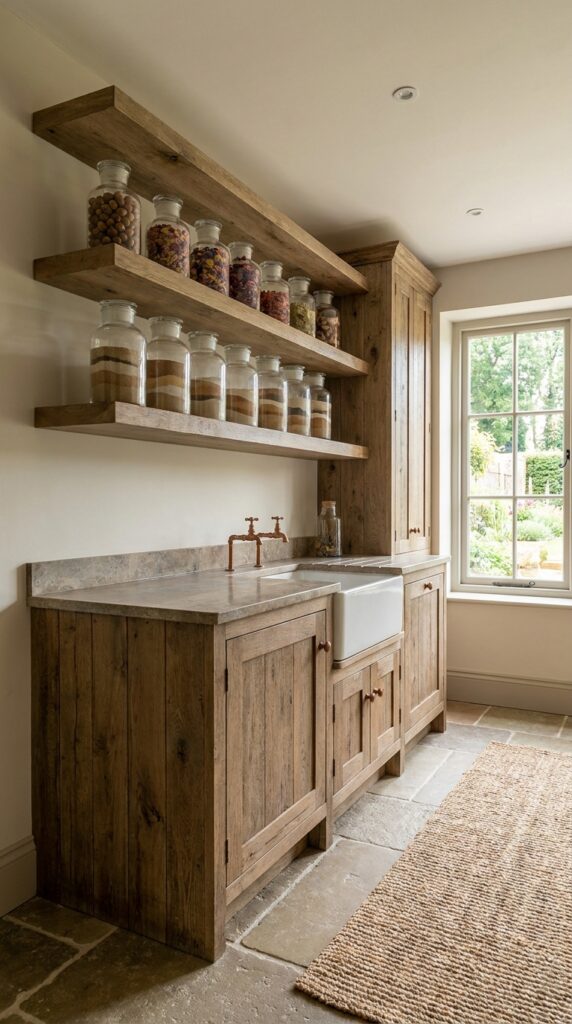
A mud kitchen that emphasizes tall vertical storage, utilizing multiple stacked shelves above the main workspace to display organized glass jars of natural ingredients.
- Why it works & Design Impact: It allows kids to sort their crafting items visually, mimicking a high-end pantry. It keeps the main workspace clear for active mixing and creating.
- Where it works best: Backed against a garage wall or sturdy garden shed.
- Practical Styling Guidance & Tips: Install deep shelves with a slight forward tilt or a lip rail so heavy rain can drain off rather than pooling around the display items.
- Common Mistakes: Making the top shelves too high, forcing kids to stretch dangerously to grab their play ingredients.
13. The Sand and Mud Combo Trough
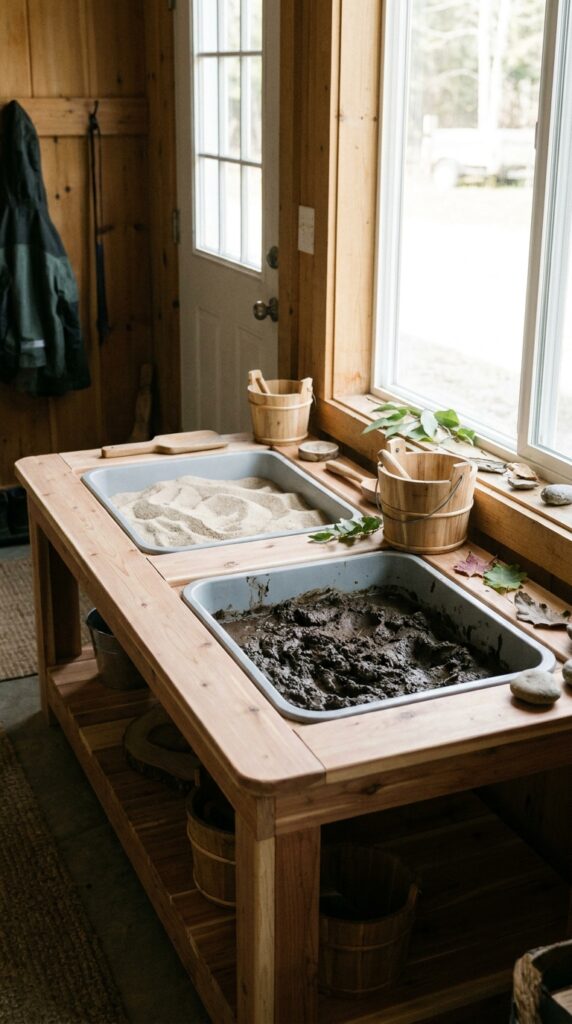
A wide layout featuring two separate deep plastic or stainless steel bins side-by-side—one filled with clean play sand and the other with rich garden soil.
- Why it works & Design Impact: It expands the sensory experience by allowing kids to experiment with different textures, density, and color combinations in one cohesive space.
- Where it works best: Large, open play zones where multiple children can gather and work together.
- Practical Styling Guidance & Tips: Use removable plastic bins with tight lids so you can seal the dry sand away from neighborhood cats and rainy weather when playtime is over.
- Common Mistakes: Fixing the bins permanently into the frame, making them incredibly difficult to empty, scrub, and refresh.
14. The Chalkboard Menu Kitchen
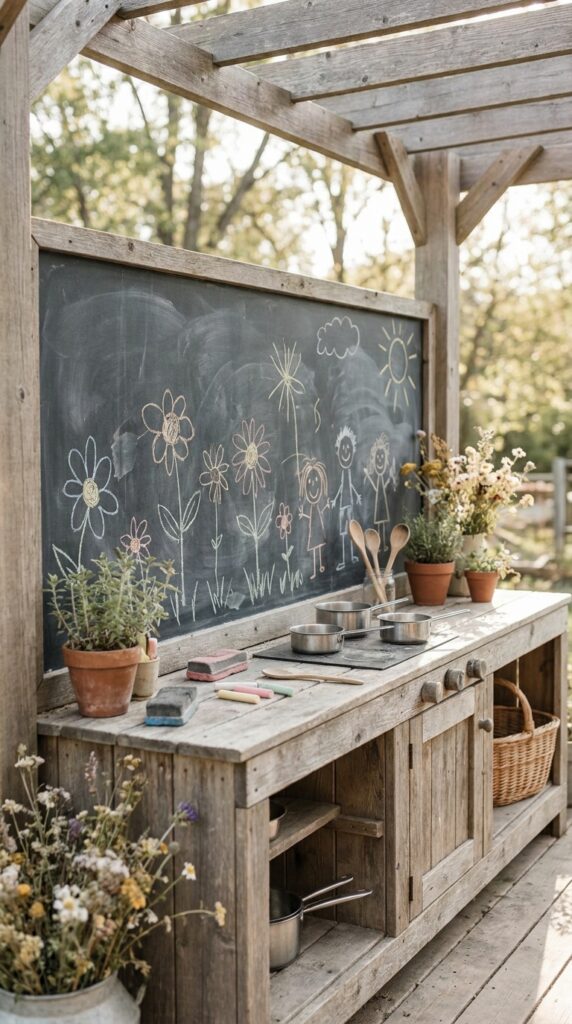
A fun, interactive setup featuring a massive, waterproof chalkboard paint backdrop spanning the entire rear wall of the kitchen counter.
- Why it works & Design Impact: It encourages early literacy and math skills as kids write out prices, daily menus, and mud pie recipes, combining learning with messy play.
- Where it works best: A covered patio or screened porch where the chalk drawings are safe from light afternoon drizzle.
- Practical Styling Guidance & Tips: Apply three coats of high-quality exterior chalkboard paint to a smooth sheet of exterior-grade plywood, then frame it with cedar trim.
- Common Mistakes: Using interior chalkboard paint, which bubbles, cracks, and peels off after its first exposure to morning dew.
15. The Wrap-Around Corner Station
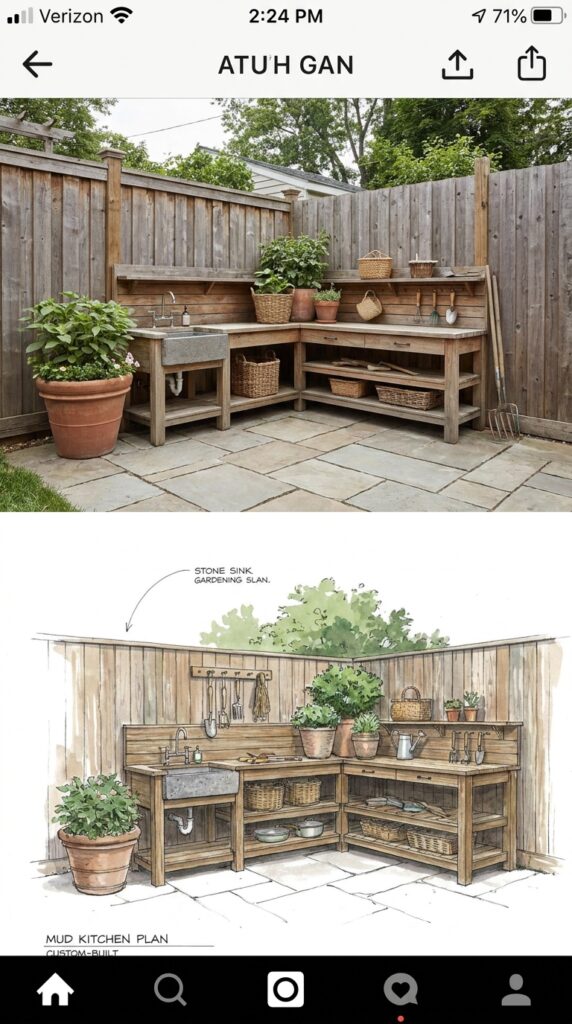
An expansive L-shaped play kitchen that maximizes corner spaces, offering distinct zones for mud mixing, water pouring, and mud-pie baking.
- Why it works & Design Impact: It mimics the efficient workflow of a real gourmet indoor kitchen, giving multiple children enough room to play together without bumping elbows.
- Where it works best: The intersection of two fences or an unused corner of a large deck.
- Practical Styling Guidance & Tips: Build the two intersecting counters at equal heights, ensuring the corner connection is thoroughly reinforced with heavy-duty corner brackets.
- Common Mistakes: Forgetting to round off the sharp inside corner point, which presents a bumping hazard during high-energy play.
6. EEAT Authority Citations
When planning a kid-centric area in your yard, design professionals often point out that open-ended play spaces yield the highest long-term engagement. Experts at Elle Decor emphasize that using natural materials like cedar, slate, and stone helps children’s play furniture blend seamlessly with mature landscaping, ensuring your yard maintains its curated aesthetic. Furthermore, landscape design features in House Beautiful showcase how defining specific zones with pea gravel or river rock keeps the mess contained while adding rich, tactile textures to the overall garden layout.
7. Google ‘People Also Ask’ (FAQs)
What wood is best for an outdoor mud kitchen?
Cedar and redwood are the absolute best choices for building an outdoor mud kitchen. These specific wood types contain natural oils that resist rot, decay, and wood-boring insects without requiring harsh chemical treatments. If you use standard pine, ensure it is treated with a non-toxic, food-safe exterior sealant.
How do you maintain an outdoor mud kitchen in winter?
To protect your mud kitchen during harsh winter months, scrub away caked-on dirt, dry the wood thoroughly, and apply a fresh coat of water-resistant sealant. If possible, move removable bins inside and cover the main timber structure with a heavy-duty, waterproof canvas tarp to prevent moisture damage.
Is mud play safe for young children?
Yes, mud play is incredibly beneficial and generally safe for young children when using clean garden soil. It stimulates the immune system, builds fine motor skills, and relaxes the mind. Always ensure the play area is free of sharp rocks, animal waste, and harmful garden chemicals or fertilizers.
How do you stop a mud kitchen from smelling?
A smelly mud kitchen is usually caused by stagnant water trapped in bowls or bins. To prevent odors, ensure all play basins have proper drainage holes and empty them completely after play. Wash down the wooden surfaces weekly with a mild solution of water and white vinegar to eliminate bacteria.
What accessories should I add to a mud kitchen?
Focus on real, durable kitchen items rather than cheap plastic toys. Stock the mud kitchen with stainless steel mixing bowls, old metal whisks, cast iron pans, wooden spoons, potato mashers, and copper measuring cups. These items offer better sensory weight and withstand rugged outdoor use much longer.
8. Conclusion
Building an outdoor mud kitchen is a wonderful way to step back and let your children connect with the raw textures of the earth. It is a space where mistakes do not exist, where broken mud pies are simply remixed, and where creativity flows freely. By skipping cheap plastic setups and embracing sturdy wood, metals, and stone, you create an inviting backyard feature that honors your home’s aesthetic while celebrating the beautiful chaos of growing up. Trust your design instincts, source a few vintage pieces, and build a play space that allows your family to write its own messy, sun-drenched stories right in the backyard.