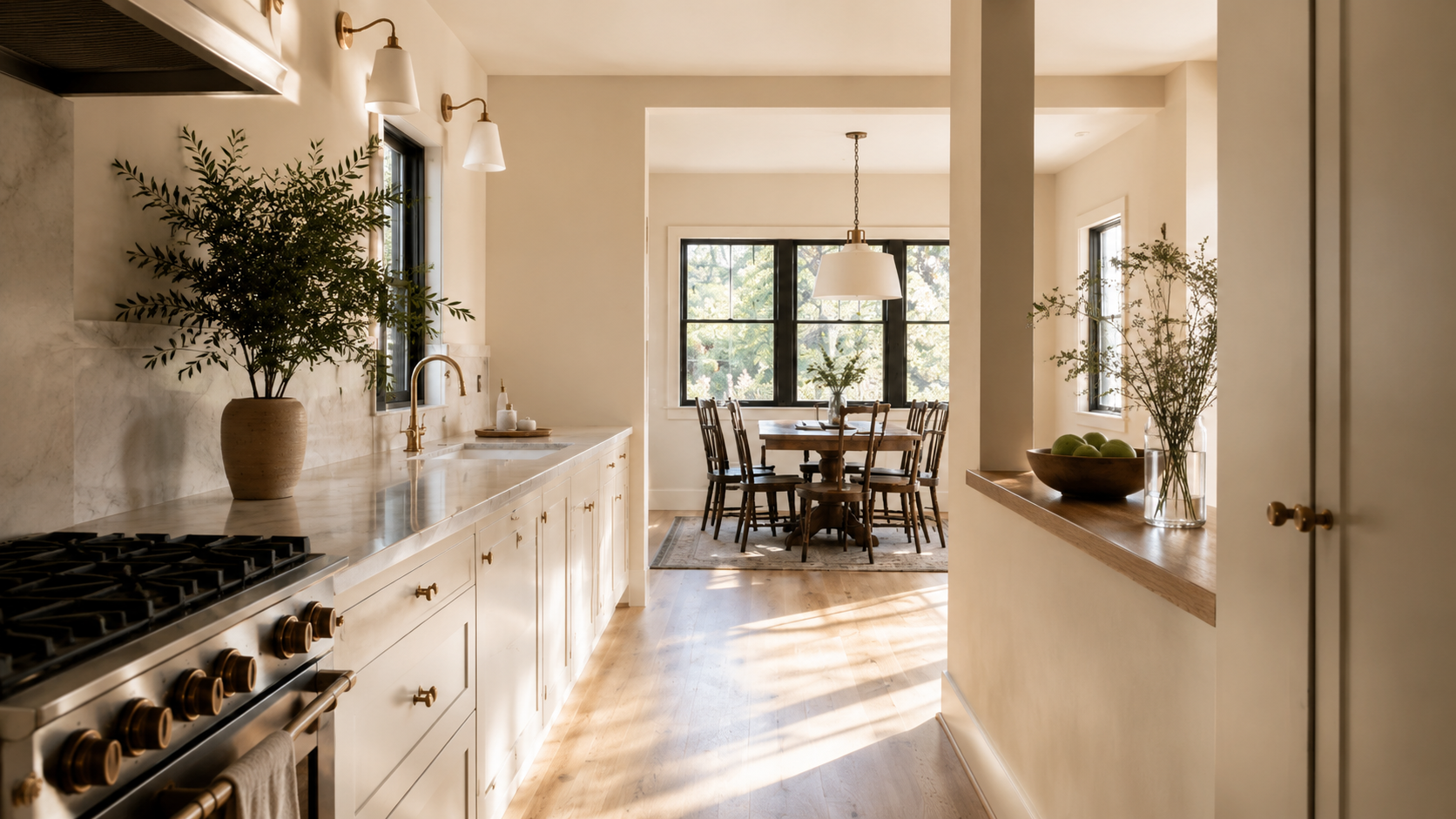
You step into the kitchen for your first cup of coffee, open the refrigerator, and suddenly realize there is nowhere comfortable to stand. A cabinet door blocks the walkway. The counters feel crowded. The room seems narrower with every extra appliance and storage jar.
A galley kitchen may have a compact footprint, but it does not need to feel cramped. The right galley kitchen ideas can turn a tight corridor into a polished, hardworking room with warmth and personality. Thoughtful cabinetry, better lighting, visual breathing room, and a few natural textures make a noticeable difference.
The aim is not to force a small kitchen to behave like a large one. It is to use every inch with care while keeping the room calm, practical, and easy to move through.
Why Galley Kitchen Design Deserves Careful Planning
A traditional galley kitchen places two parallel runs of cabinetry or counters along a narrow walkway. The layout often appears in apartments, historic homes, and smaller urban spaces because it packs useful storage and work surfaces into a limited footprint. ELLE Decor notes that the galley format continues to work well in smaller homes, although too many upper cabinets can make it feel enclosed. rs. A compact kitchen needs enough storage for daily routines, but it also needs light, clear movement, and visual pauses. When you plan the layout around the way you cook, wash dishes, and put away groceries, the room starts to feel easier.
These ideas combine practical improvements with timeless styling so your kitchen feels less like a passageway and more like a welcoming part of your home.
1. Keep One Side Visually Lighter
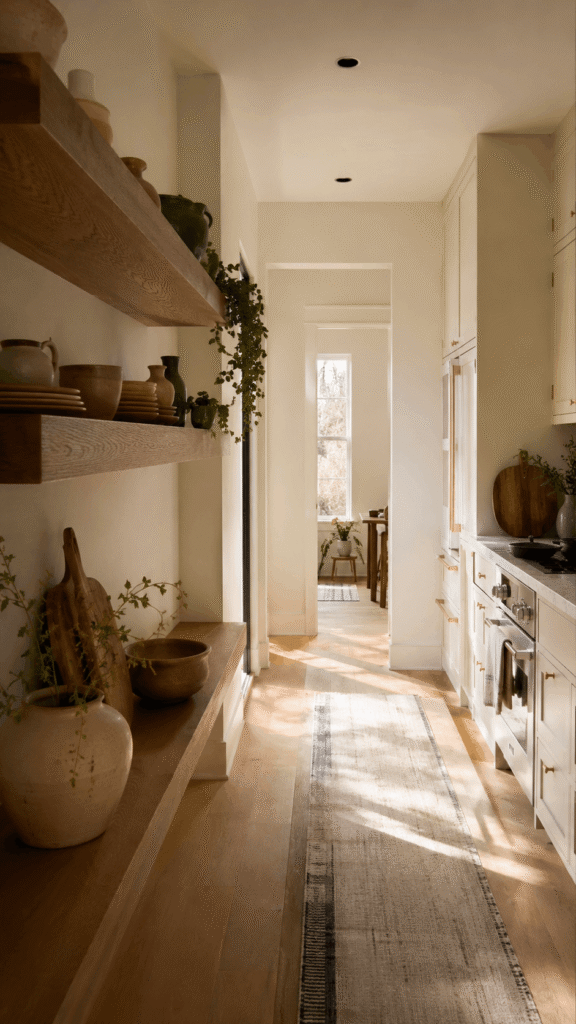
A galley kitchen can feel boxed in when both walls carry heavy upper cabinets from end to end. Create breathing room by keeping one side visually lighter. Replace a short section of upper cabinets with floating shelves, a rail system, or a clean stretch of backsplash.
This approach works best near a window, sink, or coffee corner where open space can make the room feel more relaxed. House Beautiful recommends floating shelves in small kitchens because they provide storage without blocking light or adding unnecessary shadows. everyday plates, glasses, and a few ceramics. Avoid filling every inch. Too many objects can replace cabinet bulk with visual clutter.
2. Use Warm Neutrals to Soften the Narrow Layout
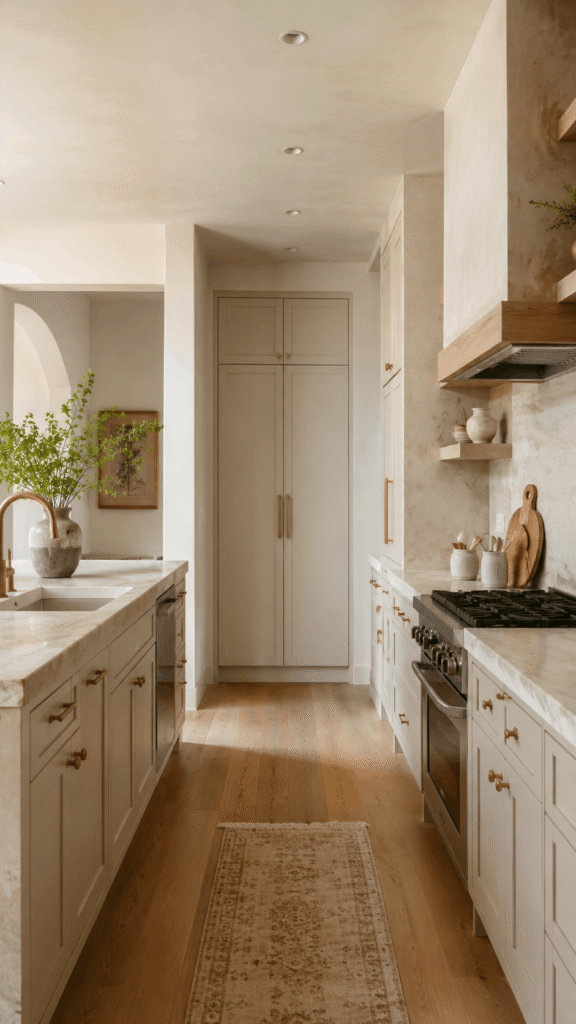
Light colors can make a compact room feel more open, but pure white is not the only option. Try warm white, soft putty, pale taupe, mushroom, or muted greige. These tones reflect light while adding a gentle sense of comfort.
This palette suits galley kitchens with limited daylight, especially when you pair it with natural wood, aged brass, or handmade tile. For more palette inspiration, see these neutral kitchen ideas.
Keep the undertones consistent. A creamy cabinet color can look disconnected beside a cool gray counter. Use sample boards and view them in morning and evening light. Avoid choosing paint from a small swatch alone because narrow rooms amplify even subtle undertone clashes.
3. Extend Cabinets to the Ceiling
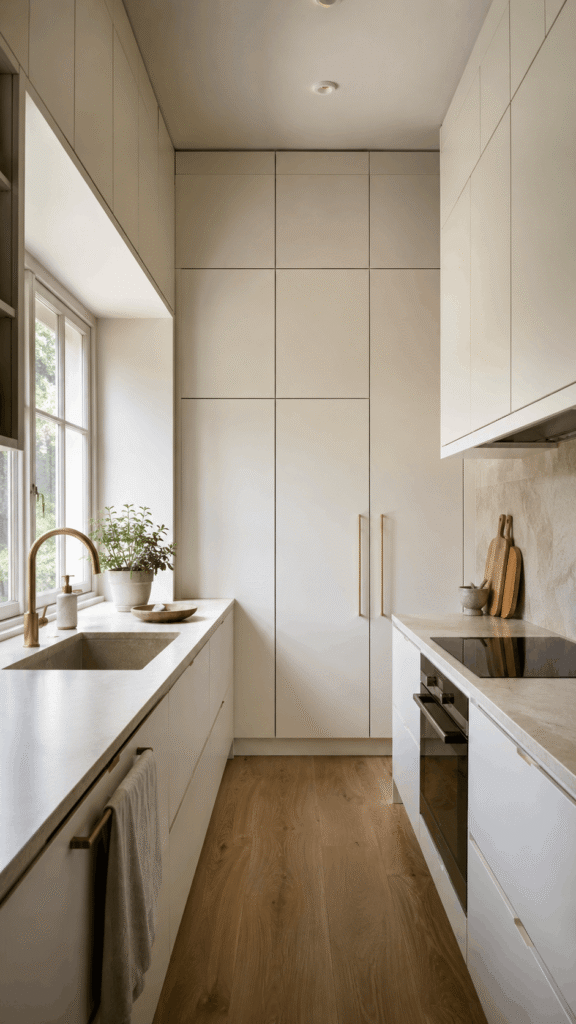
When floor space is limited, make the walls work harder. Ceiling-height cabinetry adds valuable storage for serving platters, baking tools, and appliances that you use less often. It also creates a cleaner vertical line, which can make the kitchen feel taller.
This solution works best on the more storage-heavy side of the galley layout. ELLE Decor cites designer Lauren Buxbaum Gordon’s advice to extend cabinets to the ceiling regardless of kitchen size. ms within easy reach and reserve the uppermost shelves for occasional pieces. Match the top cabinets to the wall color to reduce visual weight. Avoid stacking random baskets above short cabinets; the uneven line often makes a small room look busier.
4. Plan Appliance Doors Before Finalizing the Layout
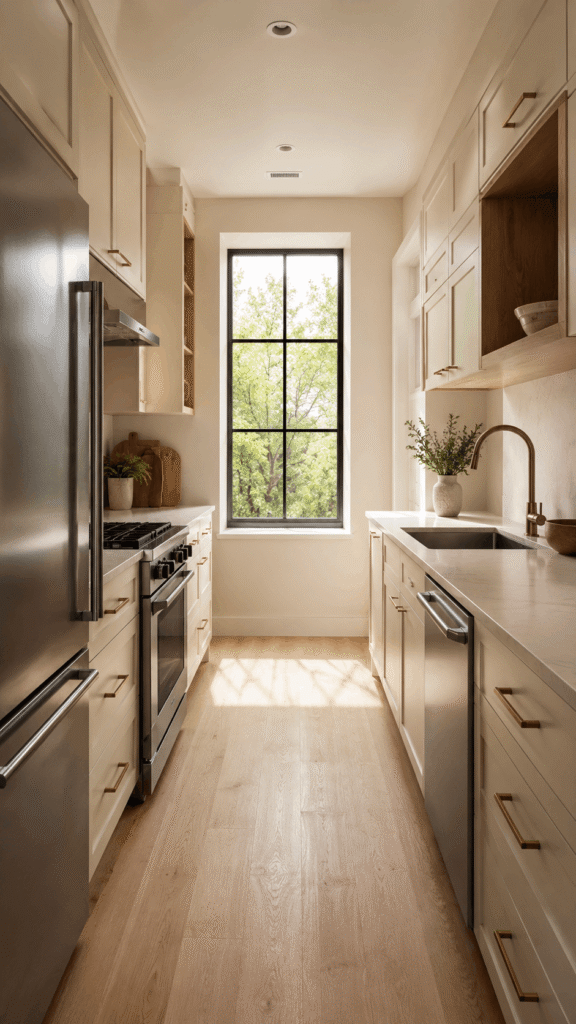
A stylish kitchen still needs to function during a busy morning. Before ordering cabinets, map the swing of every appliance door. Check whether the refrigerator, oven, and dishwasher can open without blocking each other or trapping someone in the walkway.
This step matters most in narrow kitchens where a few inches can affect the entire routine. ELLE Decor recommends spreading appliances along the length of a galley kitchen and avoiding placements where open doors compete for the same space. on the floor to mark door clearances. Walk through a typical cooking routine. Avoid placing the dishwasher directly across from the oven if both doors will need to open during meal prep.
5. Add Under-Cabinet Lighting for a Softer Glow
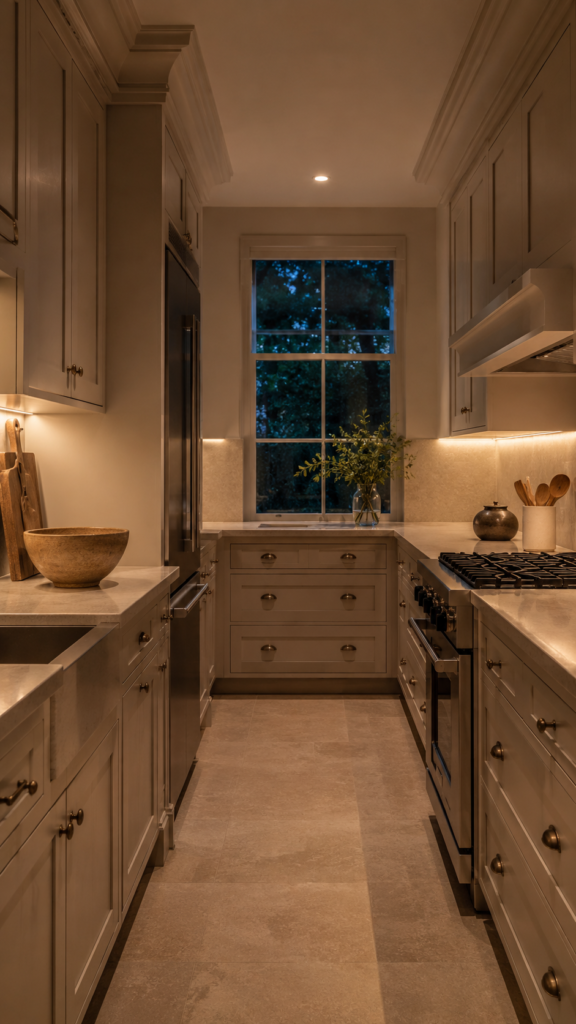
A single ceiling fixture rarely gives a galley kitchen enough useful light. Add under-cabinet lighting to brighten prep surfaces and reduce shadows. Warm LED strips or slim puck lights can make the counters feel clearer and the room more welcoming after sunset.
This idea works in every galley kitchen, but it helps most in spaces with limited windows. Architectural Digest recommends layered kitchen lighting, including pendants, wall sconces, and under-cabinet sources, because each layer supports a different task. r temperature that flatters natural materials. Hide visible cords and bulky fittings. Avoid overly cool lighting, which can make cream cabinets and wood finishes look flat.
6. Choose Reflective Finishes With Restraint
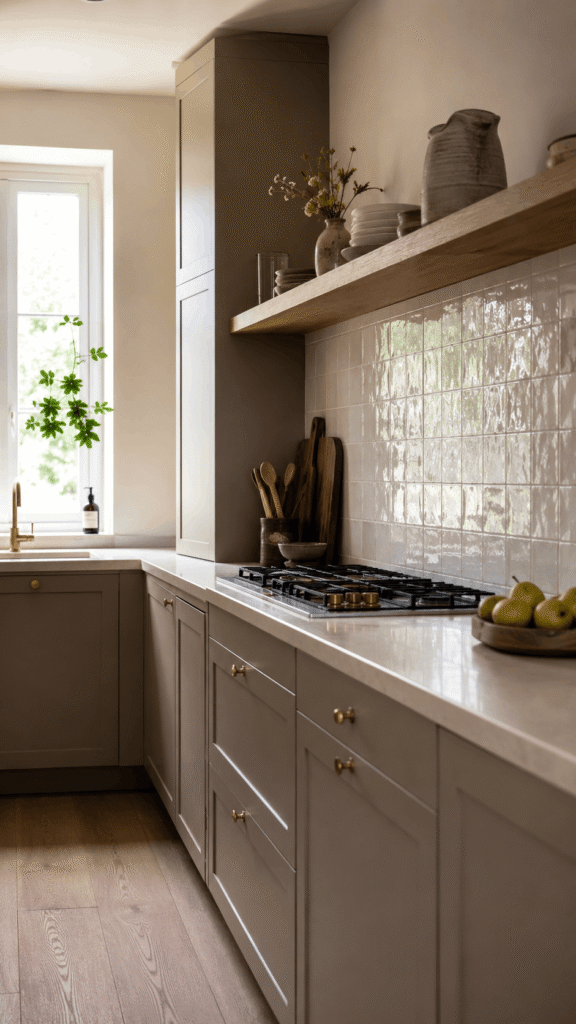
A gentle sheen can help light travel through a narrow kitchen. Consider satin cabinet paint, glazed tile, polished stone, or a lightly reflective backsplash. These surfaces catch daylight and add depth without making the room feel overly glossy.
This strategy works well in darker galley kitchens and older apartments where structural changes may not be practical. Architectural Digest suggests glossy surfaces as one way to increase reflected light in compact kitchens. finishes with matte textures such as oak shelves, linen blinds, or ceramic bowls. Avoid using shiny surfaces on every plane. Too much reflection can create glare and make the kitchen feel colder rather than brighter.
7. Install a Runner to Draw the Eye Forward
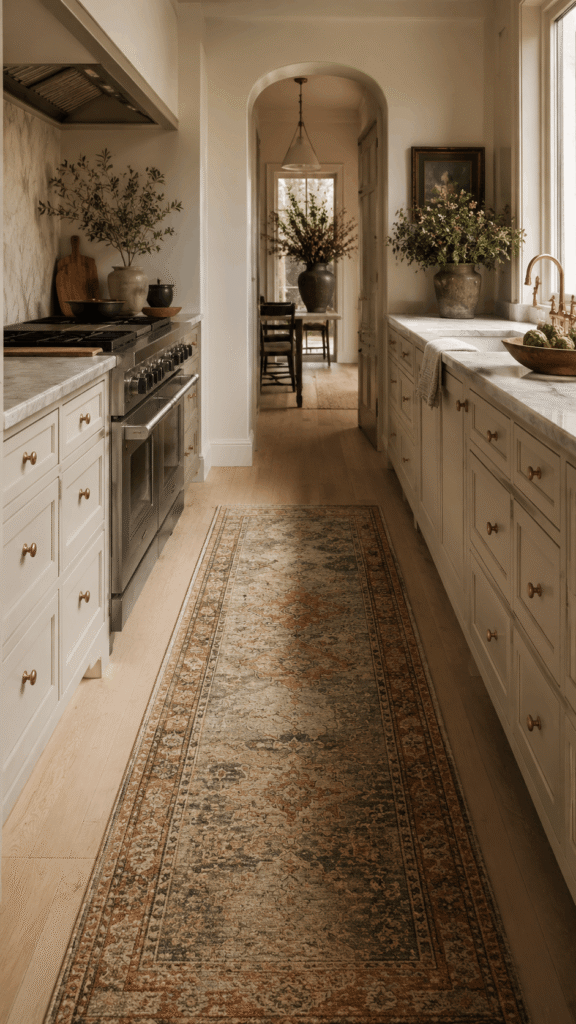
A runner creates a clear visual path through a galley kitchen. It softens hard flooring, adds warmth underfoot, and guides the eye toward the far end of the room. Choose a low-pile, washable style in muted tones or a subtle vintage-inspired pattern.
This works especially well in rental kitchens where cabinetry and flooring cannot change. Select a runner that leaves a small border of floor visible on both sides. The border helps the room feel balanced.
Use earthy palettes such as rust, faded olive, sand, or charcoal for a collected look. Avoid rugs that are too wide, too thick, or difficult to clean. A runner should support daily movement, not create a tripping hazard.
8. Use Open Shelving Only Where It Helps
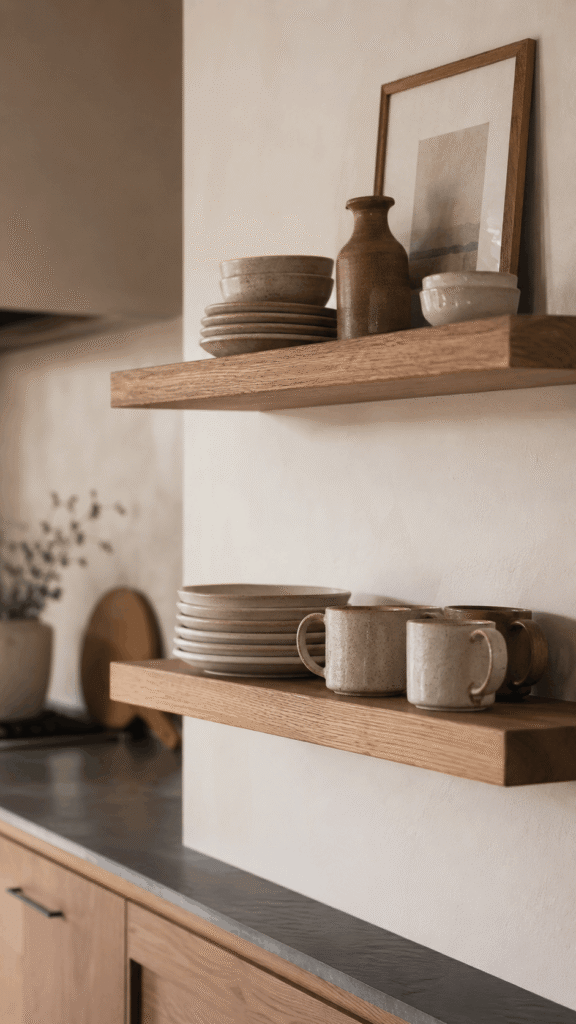
Open shelves can break up a long wall of cabinets, but they need discipline. Place a pair of wood shelves near the sink, above a short counter, or beside a window. Use them for items you reach for often: bowls, plates, mugs, or a small stack of cookbooks.
ELLE Decor highlights the value of mixing upper cabinets with open shelves in a galley kitchen to reduce monotony and prevent the room from feeling claustrophobic. t also shows how open shelving can suit modern, minimalist, and cozy kitchens alike. arely used objects that gather dust. Keep the arrangement useful, edited, and easy to maintain.
9. Create a Clear Countertop Routine
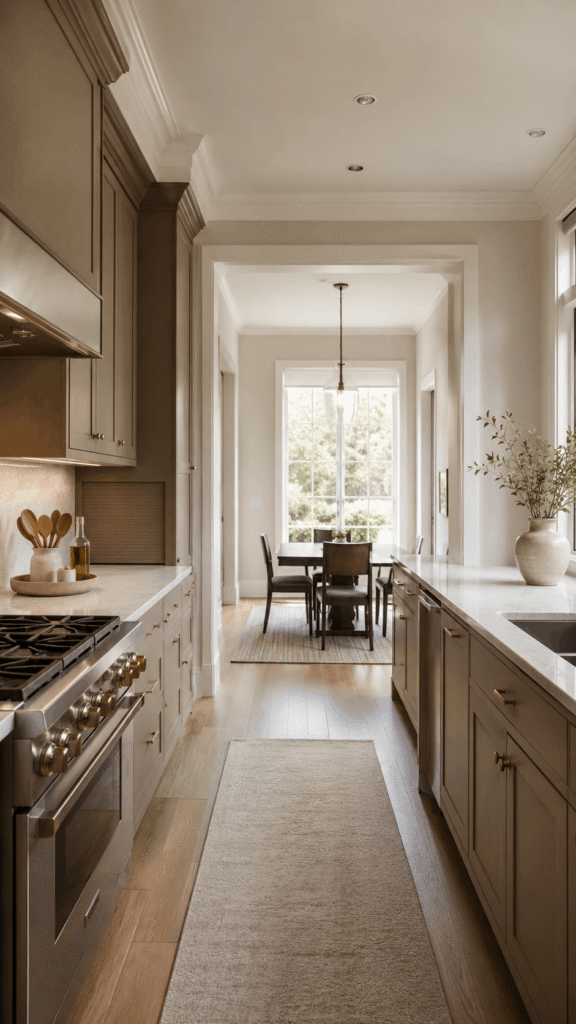
A galley kitchen feels calmer when the counters stay mostly open. Start by identifying the appliances you use every day. Keep only the essentials within reach, such as the kettle or coffee maker. Store everything else in a cabinet, pantry drawer, or appliance garage.
This idea works in any narrow kitchen because clear counters create both prep space and visual breathing room. Architectural Digest’s small-kitchen guidance includes concealed storage, cabinet organization, and carefully planned prep surfaces as ways to improve function. and cooking utensils on one small tray near the stove. Avoid lining the backsplash with unrelated jars and gadgets. A few intentional objects look warmer than a crowded row of supplies.
10. Add Vertical Storage Without Crowding the Walls
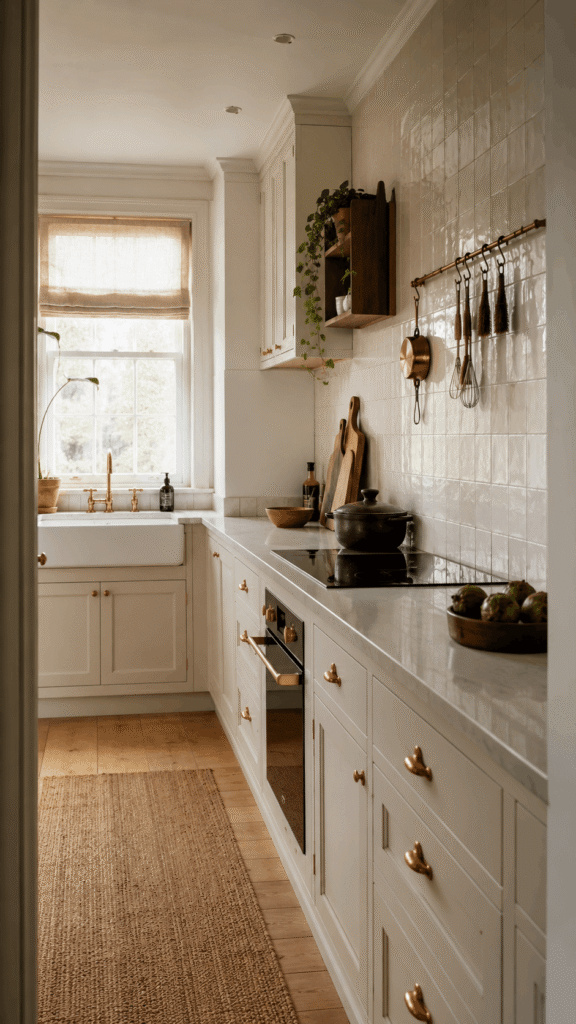
When cabinets cannot hold everything, use narrow vertical storage. A slim rail can hold utensils. A wall-mounted magnetic strip can keep knives within reach. Pegboards, hooks, and ceiling-mounted pot racks can free up valuable drawers.
Architectural Digest recommends vertical storage ideas such as pot racks and hooks for small kitchens, especially when homeowners need to make use of walls, ceilings, and overlooked surfaces. s best when you group similar items together and leave empty wall space around them. Choose tools with finishes that suit the kitchen, such as wood, stainless steel, or matte black. Avoid hanging every utensil you own. Practical storage should still look edited.
11. Introduce Wood for Warmth and Visual Balance
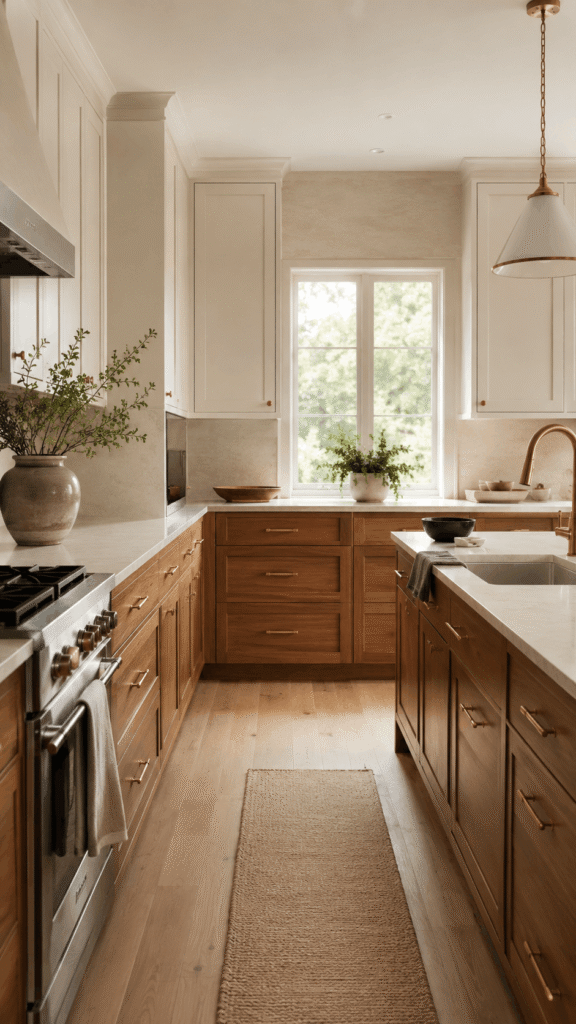
Wood can stop a narrow kitchen from feeling clinical. Use it on base cabinets, shelves, a butcher-block counter section, or a small dining ledge. Oak brings an airy softness. Walnut creates a richer mood. Both work beautifully with warm neutrals and muted tones.
Architectural Digest recommends placing heavier materials on lower cabinetry and lighter finishes above to make a compact galley kitchen feel balanced. The same source notes that wood base cabinets can bring a furniture-like quality to the room. in visible and repeat the tone once or twice through stools or cutting boards. Avoid mixing too many wood species in a narrow sightline. One dominant finish usually feels calmer.
12. Turn the End Wall Into a Focal Point
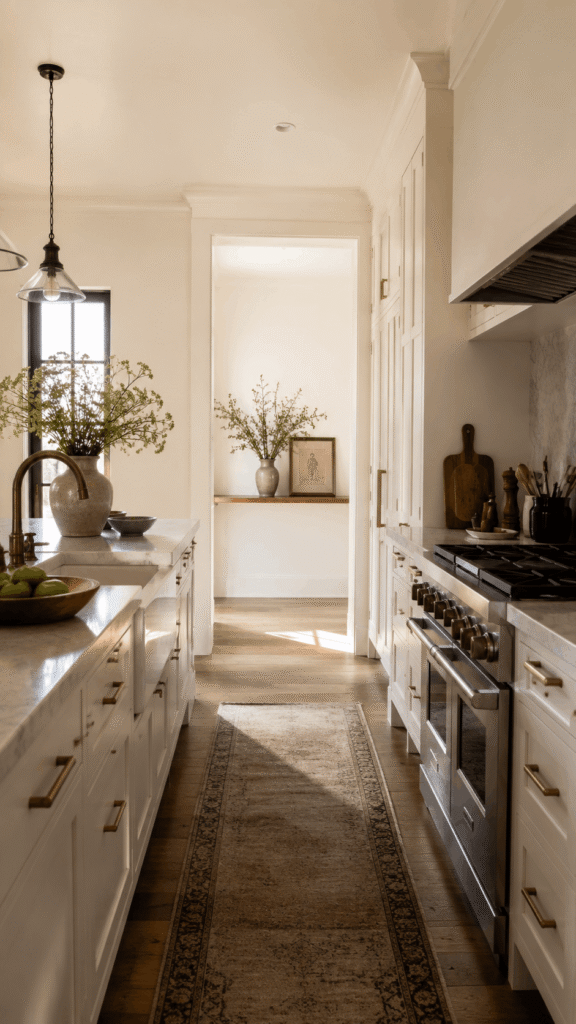
The far end of a galley kitchen naturally draws attention. Give it purpose. Add a framed artwork, a softly colored backsplash, a compact breakfast shelf, a window seat, or a vase filled with seasonal branches.
This technique works especially well when the kitchen ends at a blank wall. A focal point gives the eye somewhere to land and makes the corridor feel intentional. Keep the styling simple. One strong feature creates more impact than several competing accents.
For a biophilic design touch, place a potted herb near a window or add olive branches in a handmade ceramic vessel. Avoid oversized art or deep shelving that interrupts movement. The focal point should bring character without stealing useful floor space.
13. Consider a Partial Opening Instead of Removing a Wall
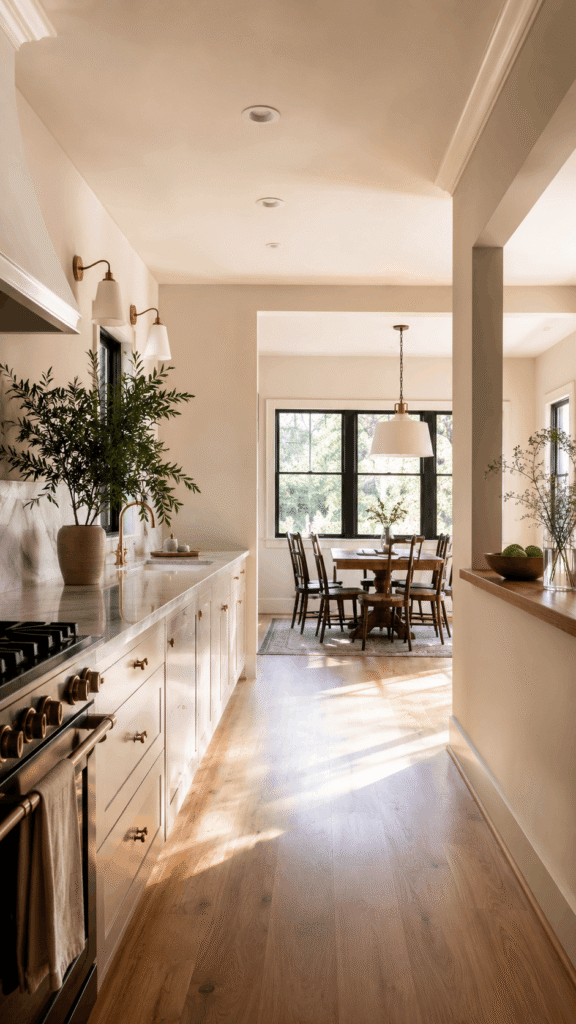
A full open-plan renovation does not suit every home. A partial opening can connect the galley kitchen to a dining room or living area while preserving storage. Consider a pass-through window, a wide internal opening, or a short stretch of open shelving between rooms.
Architectural Digest recommends partial openings as a way to visually connect compact kitchens with adjacent areas without demolishing an entire wall. best when the kitchen feels isolated but still needs defined zones. Keep the opening wide enough to admit light and create a useful view. Avoid removing storage before planning where dishes, pantry items, and small appliances will go.
14. Choose a Practical Backsplash for the Way You Cook
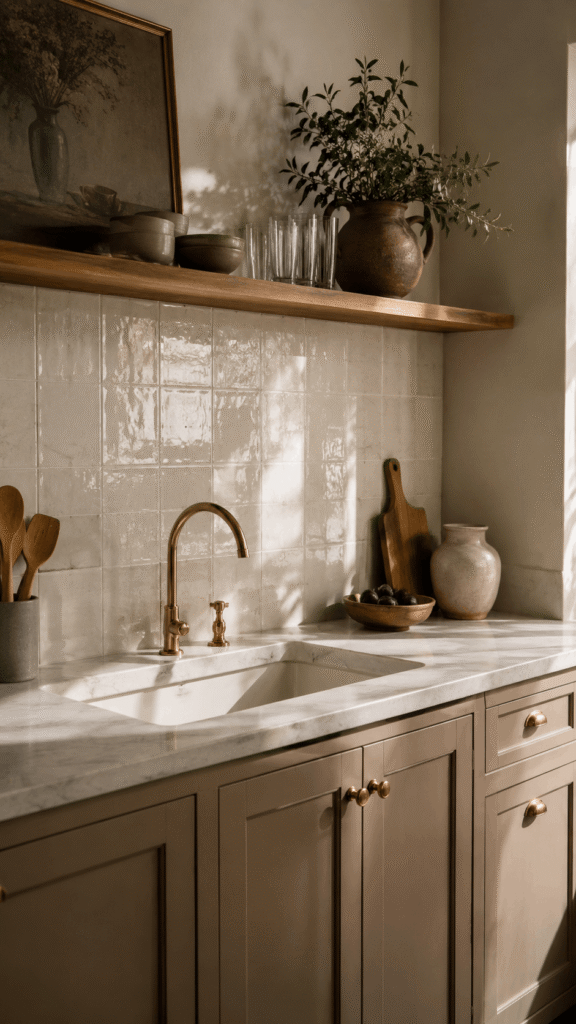
A backsplash can bring tactile texture and artisan craftsmanship into a compact kitchen. Softly glazed ceramic, zellige-style tile, stone, or a simple half-height backsplash can add personality without overwhelming the room.
Consider your routine before choosing a material. House Beautiful advises homeowners to match backsplash materials to the way they cook and clean, noting that uneven pale tile may show splatters more easily in an active kitchen. olor and keep the pattern simple if the cabinets already carry visual detail. A subtle backsplash works especially well behind a range or along one uninterrupted wall. Avoid combining bold tile, busy counters, and ornate hardware in the same narrow space.
15. Add One Personal Detail That Makes the Room Yours
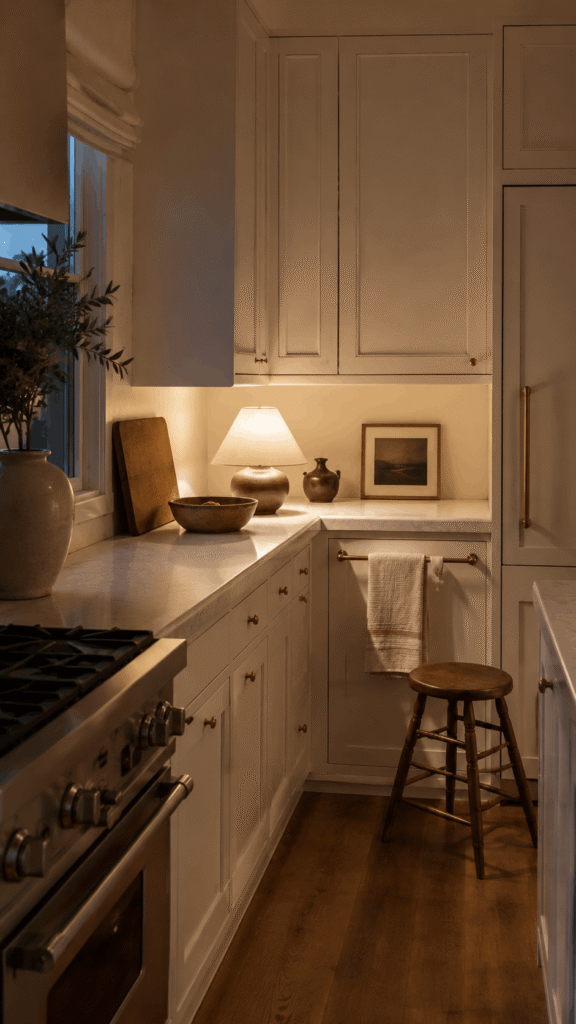
A small kitchen still deserves character. Add a vintage stool, a tiny lamp, a framed sketch, a handmade bowl, or a brass rail for tea towels. These details make the room feel lived-in rather than purely functional.
This approach works best after you solve storage and lighting. Start with one piece that has meaning or beauty, then give it enough space to stand out. A small lamp on a counter can bring a cozy evening glow. A weathered wood stool can introduce rich grain and history.
Avoid filling every open surface with decor. Galley kitchens benefit from restraint. One memorable object can create more warmth than a collection of accessories competing for attention.
Frequently Asked Questions
How can I make a galley kitchen look wider?
Use lighter upper cabinetry, keep counters clear, and add reflective surfaces in moderation. A long runner can guide the eye forward, while open shelves or a partial wall opening can reduce visual heaviness. Consistent flooring and layered lighting also help the room feel more open.
What color works best in a small galley kitchen?
Warm white, putty, pale taupe, soft greige, and muted sage work well in compact galley kitchens. These shades reflect light without looking stark. Pair them with natural wood, aged brass, or handmade tile to add warmth and keep the room from feeling flat.
Should a galley kitchen have open shelving?
Open shelving works well when you use it selectively. Replace a short section of upper cabinetry rather than an entire wall. Keep everyday dishes and glasses within reach, and leave some empty space. A curated shelf can make the kitchen feel lighter without creating clutter.
How do I add storage to a narrow galley kitchen?
Extend cabinets to the ceiling, organize deep drawers, add slim vertical storage, and use hooks or rails for frequently used tools. Store occasional items on higher shelves. Keep small appliances behind closed doors where possible so your counters remain useful for cooking.
Can a galley kitchen feel stylish without a full renovation?
Yes. Paint cabinets, update hardware, add a washable runner, install warm under-cabinet lighting, and style one focal point. Even small changes can improve visual harmony. Focus first on clutter, lighting, and scale because these elements affect how the room feels every day.
A Small Kitchen With a Strong Sense of Place
A well-designed galley kitchen does not hide its narrow shape. It works with it. The cabinetry supports your routine. Light reaches the counters where you need it. A runner softens the walkway, and a few meaningful details keep the room from feeling generic.
Use these galley kitchen ideas as a guide, then pay attention to the way you move through your own kitchen. Keep the features that make your mornings easier. Remove the objects that create noise. Choose materials with warmth, rich grains, and honest texture.
A compact room can still feel generous. When every detail earns its place, even the smallest kitchen starts to tell a story that feels distinctly yours.
Great content! Keep up the good work!