Some balconies look lovely from the living room but feel awkward the moment you step outside. You carry out a mug of coffee, settle into a chair, and suddenly notice the direct view from the neighboring unit or the busy street below. It is hard to relax when your outdoor corner feels exposed.
The best Apartment Balcony Privacy Ideas do not turn a small balcony into a dark box. They soften sightlines, keep fresh air moving, and add a sense of comfort without crowding the floor. A slim trellis, a row of leafy plants, or a light outdoor curtain can make the space feel gently sheltered. The result is not a closed-off balcony. It is a personal little retreat where you can read, enjoy breakfast, or sit outside at the end of the day.
Read Also: 15 Apartment Balcony Decor Ideas for a Cozy
Why Balcony Privacy Matters in an Apartment
Privacy changes how often you use a balcony. When the space feels too open, it can become an ignored strip of concrete rather than a true extension of your home. Thoughtful screening creates a visual boundary while reducing street distractions and softening hard railings. It can also introduce shade, greenery, and a calmer mood.
The key is restraint. Apartment balconies usually have limited floor area, changing weather, and building rules. Start by checking your lease or management guidelines. Then choose one main privacy layer and add smaller details around it. A balanced layout keeps the balcony open, bright, and easy to maintain.
1. Attach a Natural Reed Screen to the Railing
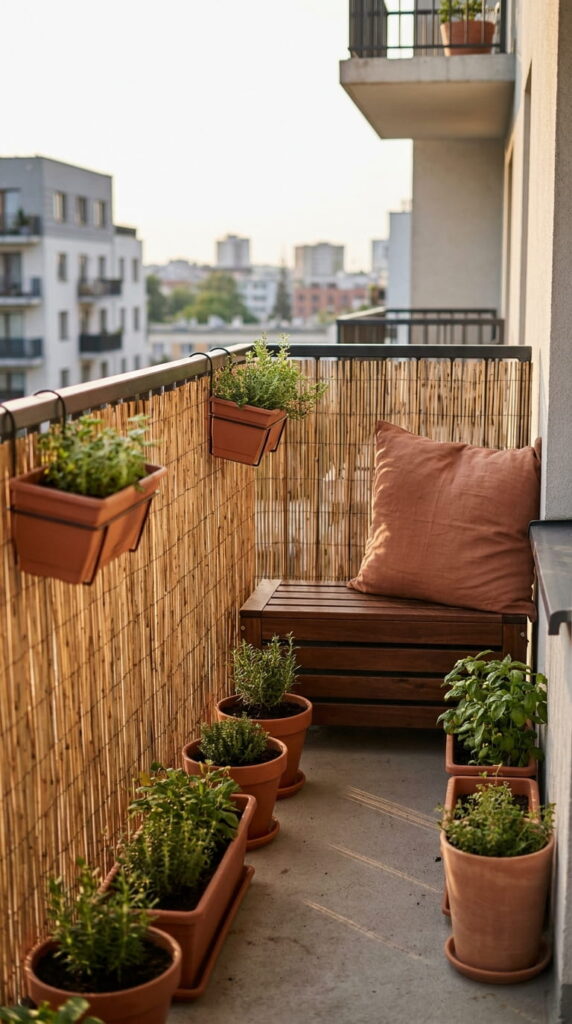
A reed screen gives an exposed railing a softer, more grounded look within minutes. Its warm tone works well with terracotta pots, muted cushions, and organic modern styling. It works best on narrow balconies where privacy is needed at seated eye level rather than from floor to ceiling.
Measure the railing carefully, choose an outdoor-grade roll, and secure it evenly with weather-resistant ties. Trim only after you confirm the final height. Keep drainage gaps and emergency access clear. Avoid loose edges, especially on windy upper floors. A sagging screen looks temporary and can become unsafe. Use one clean run rather than layering several mismatched pieces.
2. Grow a Living Wall With Climbing Plants
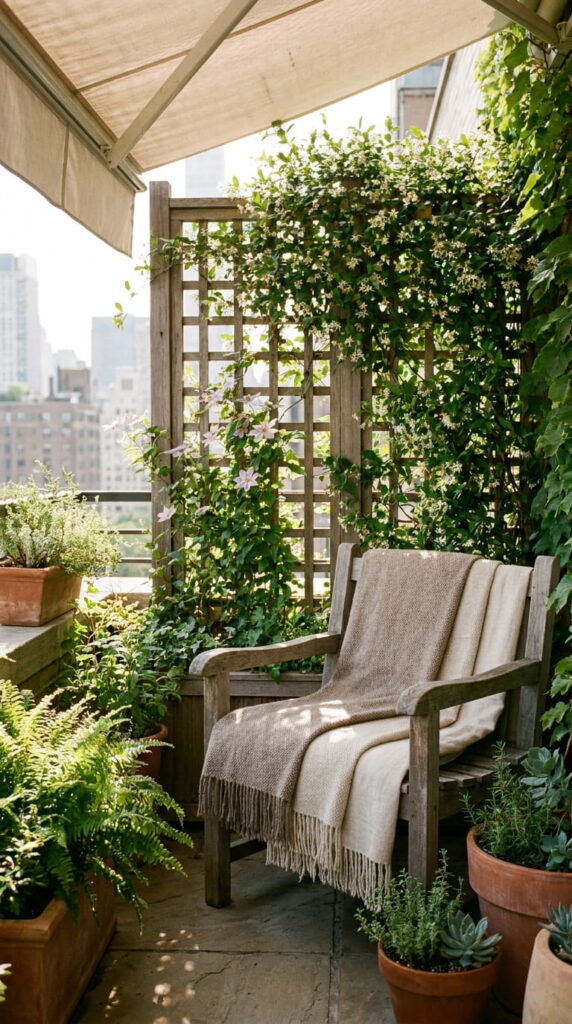
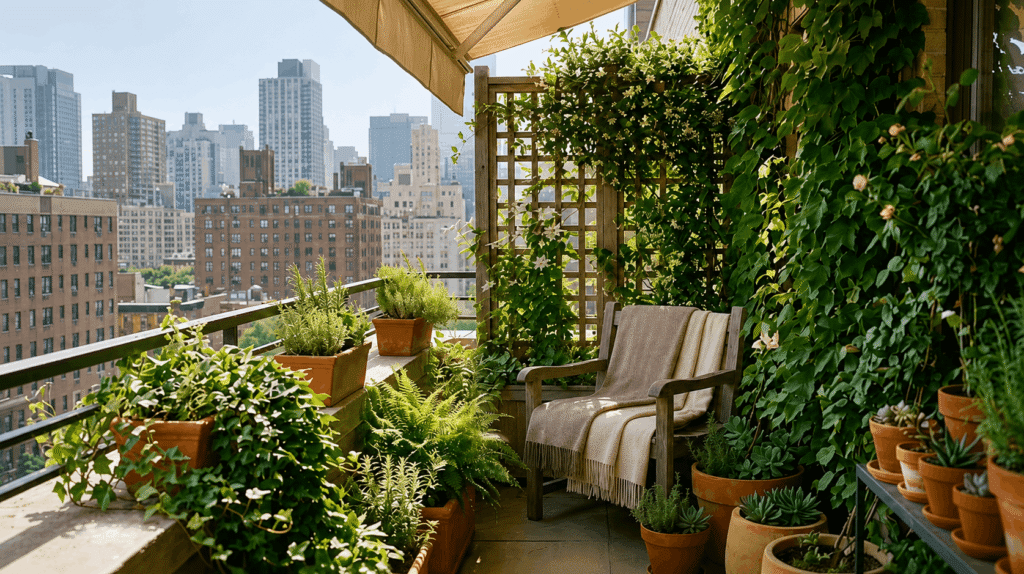
A trellis covered with vines creates privacy while bringing biophilic design into a compact outdoor space. Greenery softens hard architectural lines and makes a balcony feel more settled. Architectural Digest also notes that plants can provide privacy while drawing the eye outward, which helps a small balcony feel larger.
Place a freestanding trellis against one side wall or along the most exposed edge. Choose plants that suit your sunlight, climate, and watering routine. Train stems gently with soft ties. Avoid placing heavy planters on unstable shelves or blocking the door. A living screen works best when it feels cared for, not overgrown.
Read Also:13 Smart Cheap Garage Organization Ideas
3. Hang Airy Outdoor Curtains
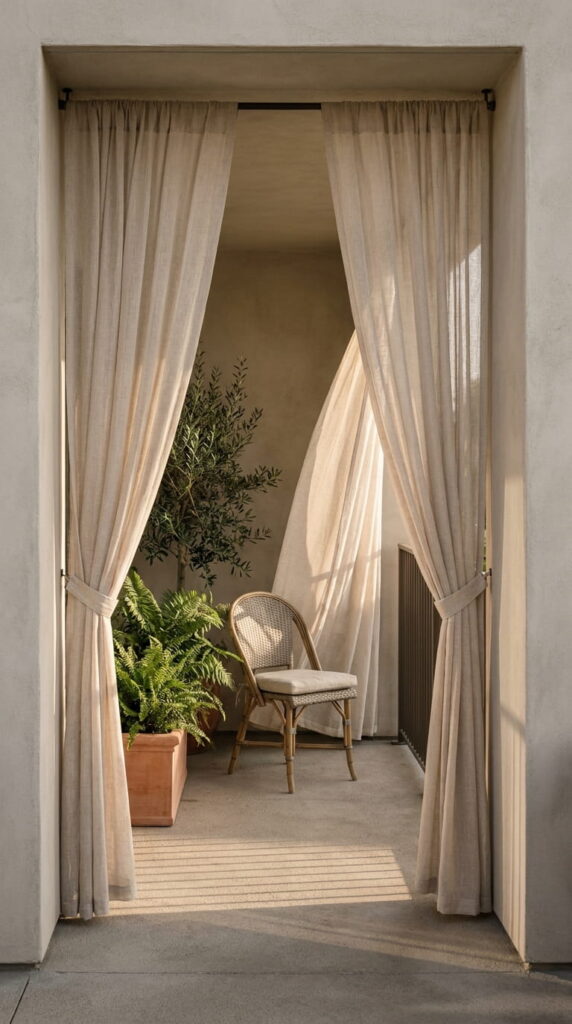
Outdoor curtains add softness and movement without making a balcony feel rigid. They work especially well on recessed balconies, covered patios, and small seating nooks where you want flexible privacy during certain hours. The Spruce recommends light curtains because they help maintain an open, sunlit feel.
Use weather-resistant fabric in warm white, oatmeal, or muted beige. Install curtains only where your building allows a secure rod or tension system. Add simple tiebacks so you can open the fabric on breezy days. Avoid indoor cotton panels, which can stay damp and collect dust. The most polished result comes from one or two well-fitted panels, not heavy layers.
4. Use Tall Planters as a Green Privacy Border
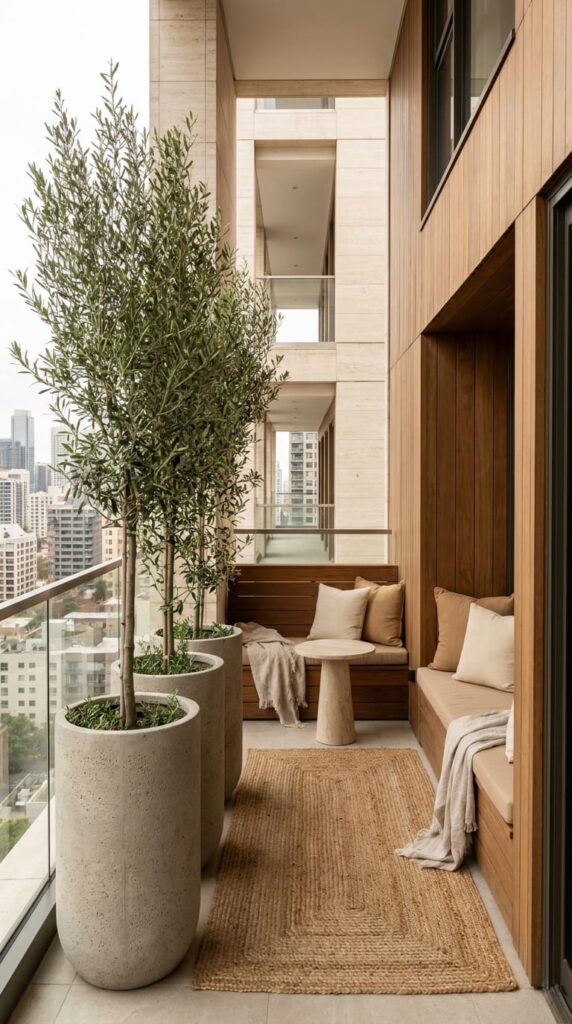
Tall containers can create a leafy boundary without permanent installation. This idea suits balconies with a long open edge or a direct view toward another apartment. Choose upright plants with attractive foliage, then repeat two or three matching planters to create visual harmony.
Use lightweight outdoor pots with drainage, secure saucers, and a wide base. Group the containers where they screen the view while preserving a clear walkway. Mix one taller plant with a slightly lower companion for a relaxed rhythm. Avoid filling every inch with pots. Too many containers add weight, make watering difficult, and reduce usable space. Leave room for air movement and easy cleaning.
5. Add a Freestanding Wood Slat Panel
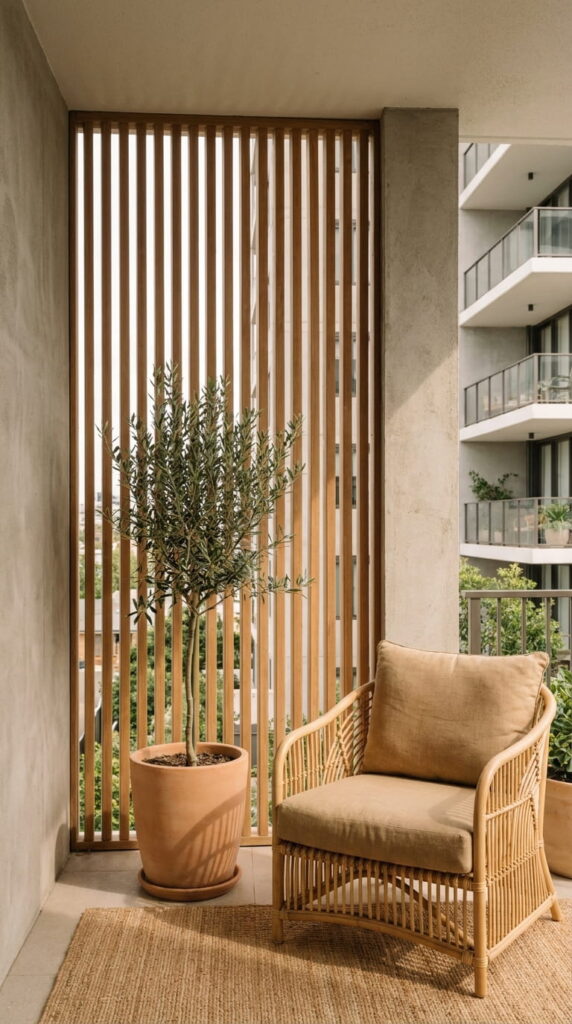
A slim wood slat panel adds privacy with a clean architectural feel. Because the gaps allow light and air to pass through, the panel looks less bulky than a solid wall. It fits organic modern balconies, urban apartments, and cozy reading corners with simple furniture.
Choose a freestanding design with a stable base so you do not need to drill into exterior walls. Position it on the side with the strongest sightline, then soften the base with one planter or a woven basket. Use an outdoor-safe finish if the wood is exposed to rain. Avoid panels that are too tall, heavy, or loosely anchored. On a windy balcony, stability matters more than styling.
6. Create a Privacy Corner With a Trellis and Bench
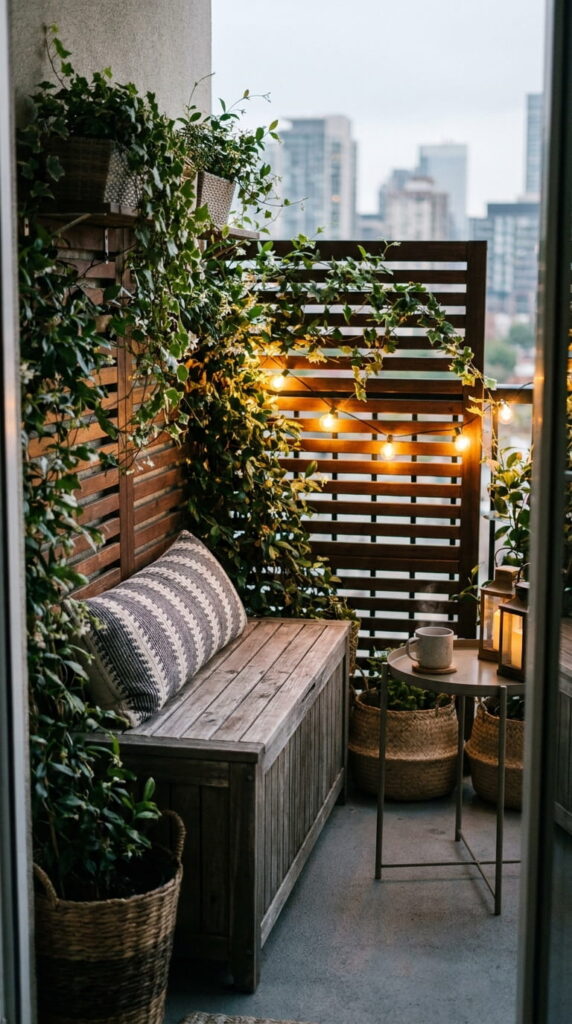
A corner layout gives a small balcony a clear purpose. Place a narrow bench against the least exposed wall, then add a trellis beside or behind it to make the seating area feel sheltered. This arrangement works well when you want a quiet breakfast spot without covering the full railing.
Choose a bench with hidden storage if space is tight. Add one lumbar cushion, a compact side table, and a trailing plant to soften the edges. Keep the doorway and main walkway fully open. Avoid pushing bulky furniture into the center of the balcony. The layout should guide you naturally toward the seat while leaving enough breathing room around it.
7. Try Frosted Balcony Film on Glass Railings
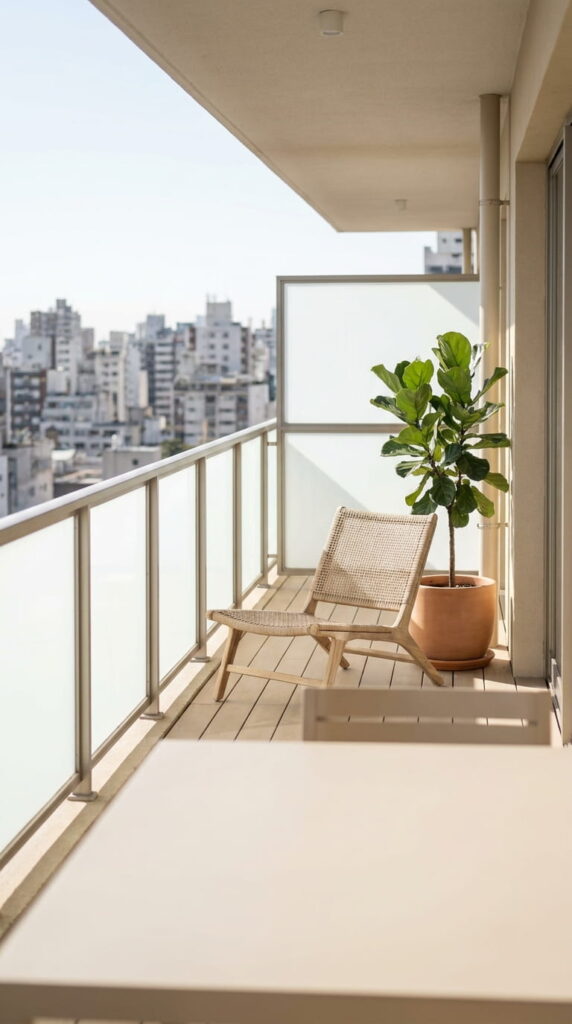
Frosted film works well when a balcony has clear glass panels and the main problem is visibility from below or nearby buildings. It creates a clean, minimal look while still allowing daylight to filter through. This is one of the simplest balcony privacy ideas for apartments with modern glass railings.
Check whether your building permits removable exterior film and whether the product suits outdoor exposure. Clean the glass thoroughly, apply the film carefully, and use a squeegee to remove bubbles. Cover only the area that needs screening. Avoid permanent adhesives unless you own the property or have written permission. A neat lower section often looks more refined than fully covered glass.
8. Place a Folding Privacy Screen Where You Need It Most
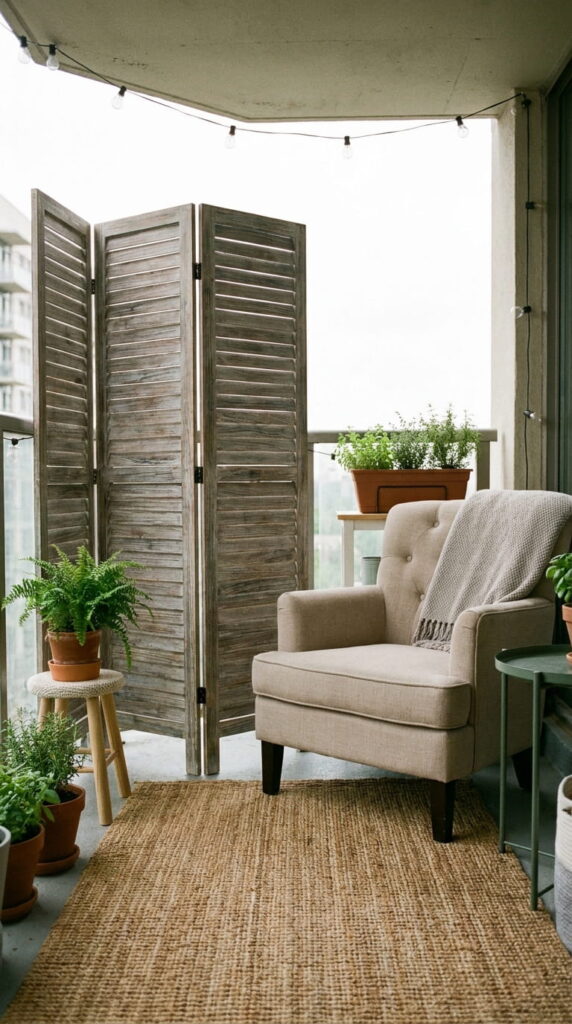
A folding screen gives renters flexibility. You can open it when you want a protected seating corner and fold it away when you need more room. It works best on sheltered balconies with enough floor area for a stable base.
Choose an outdoor-rated screen made from weather-resistant wood, resin wicker, or powder-coated metal. Position it against a wall or in a corner rather than leaving it exposed to strong wind. Pair it with a single chair and a small plant so the arrangement feels intentional. Avoid using a lightweight indoor room divider outdoors. It may warp, tip over, or become difficult to store after damp weather.
9. Combine Railing Planters With Trailing Greenery
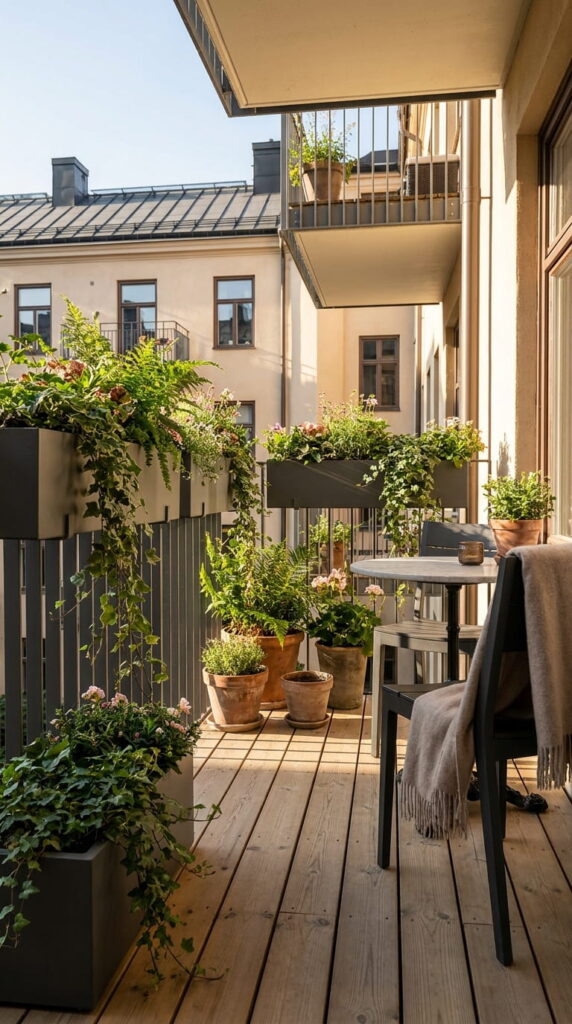
Railing planters create privacy without taking up valuable floor area. Use them along the section that faces the street or neighboring balconies, then add trailing plants to blur the view gently. This layered approach works beautifully on compact city balconies where every inch matters.
Choose brackets designed for your railing shape and weight limits. Use lightweight containers with secure drainage and place plants where falling leaves or water will not disturb neighbors below. Repeat the same planter style for a calm, curated look. Avoid overloading the railing or mixing too many colors. A restrained palette of leafy green, clay, and soft charcoal feels richer than a crowded row of unrelated pots.
10. Layer Bamboo With Soft Outdoor Textiles
Bamboo screening can feel warm and relaxed, especially when paired with tactile textures. Add a flat-weave outdoor rug, one neutral cushion, and a small woven lantern to keep the balcony from looking like a utility area. This combination suits earthy palettes and cozy living spaces with natural materials.
Keep the bamboo panel neatly aligned with the railing and choose textiles made for outdoor conditions. Repeat one color from the room inside so the balcony feels connected to the apartment. Avoid using too many woven elements at once. Bamboo, rattan, jute-inspired fibers, and cane can compete when every surface carries texture. Let one material lead and use the others as accents.
11. Use a Compact Pergola-Style Frame With Vines
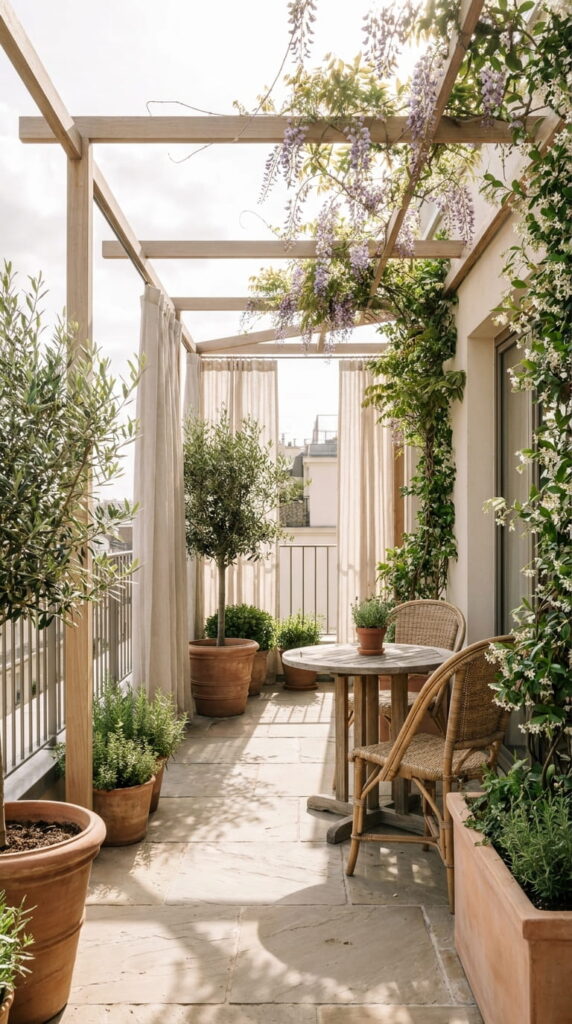
A small pergola-style frame can define a balcony corner and support climbing plants, provided the building allows it. This idea works best on larger balconies or terraces with enough room for a slim structure and secure placement. It creates partial privacy overhead and along the sides while keeping the center open.
Select a lightweight, weather-resistant frame and confirm that it can handle local wind conditions. Train vines along one or two sides rather than covering every beam. Add a narrow chair or bistro table underneath. Avoid creating a heavy canopy that blocks natural light or feels cramped. The best version creates filtered shade and gentle enclosure, not a dense roof.
12. Build a Herb Screen Near the Seating Area
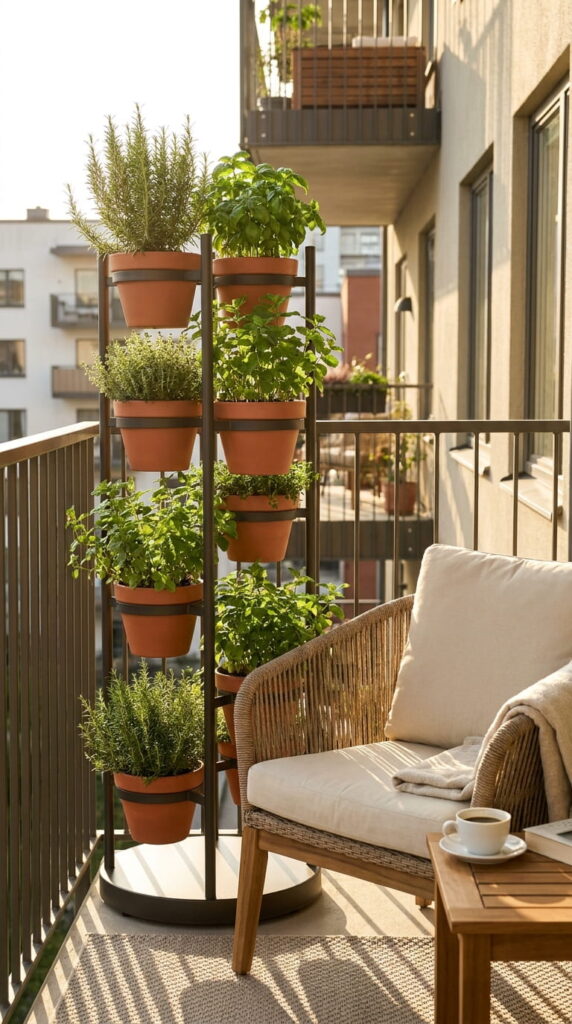
A herb screen adds privacy and gives the balcony a useful daily purpose. Rosemary, mint, basil, thyme, and compact edible plants bring fragrance, movement, and rich green tones close to a small table or reading chair. Use a vertical stand or slim ladder planter to keep the floor open.
Place sun-loving herbs where they receive enough light and group plants with similar watering needs. Keep frequently used herbs at an easy height. Avoid packing tiny pots onto unstable shelves. They dry out quickly and can look messy when the arrangement lacks a clear structure. A few healthy plants in matching containers look more inviting than a crowded collection that becomes difficult to maintain.
13. Position a Large Outdoor Umbrella for Flexible Screening
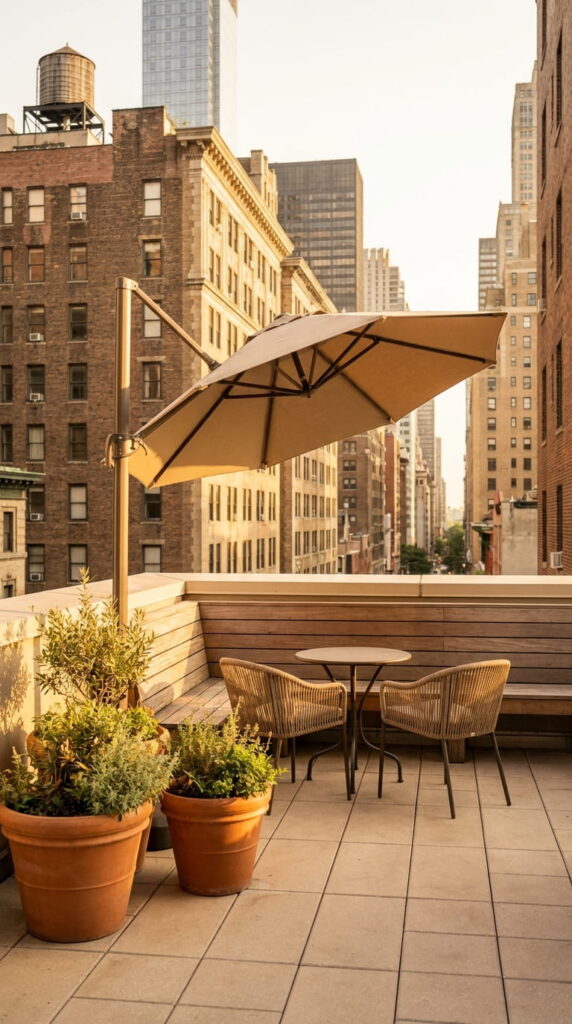
An adjustable umbrella can provide shade and partial privacy at the same time. It works well on a sunny balcony where the strongest sightline changes during the day. A tilted canopy can shield a seating corner from nearby windows without enclosing the full space.
Choose a compact balcony umbrella with a sturdy, weighted base and a shape that suits your layout. Keep the canopy closed during strong winds and when the balcony is unattended. Use a muted tone such as sand, olive, or warm gray so the umbrella blends with the setting. Avoid oversized patio models. They can dominate a small balcony, block light indoors, and create a safety issue in gusty weather.
14. Add Decorative Metal Screening for a Refined Look
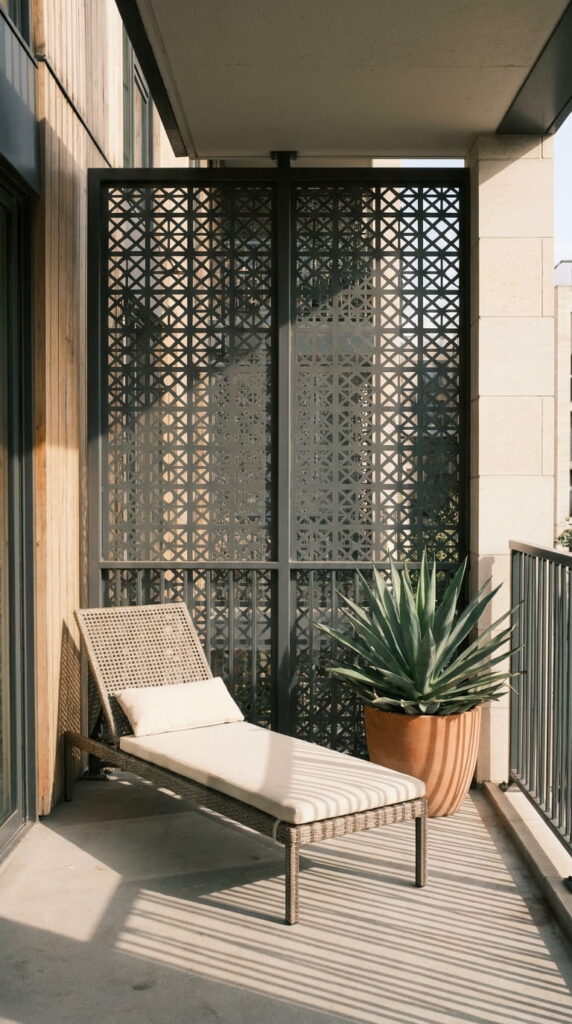
A decorative metal panel can act as both a privacy screen and a focal point. Laser-cut patterns cast subtle shadows and add visual interest without requiring a full wall. This works best on a modern balcony with simple seating, a limited color palette, and one or two sculptural plants.
Choose a rust-resistant outdoor panel and place it against the most visible side. Keep the pattern open enough to allow airflow. A matte finish usually feels calmer than a glossy one. Avoid combining ornate screening with busy rugs, patterned cushions, and too many accessories. Let the panel carry the design. The surrounding decor should support it rather than compete for attention.
15. Use a Vertical Garden Shelf for Layered Privacy
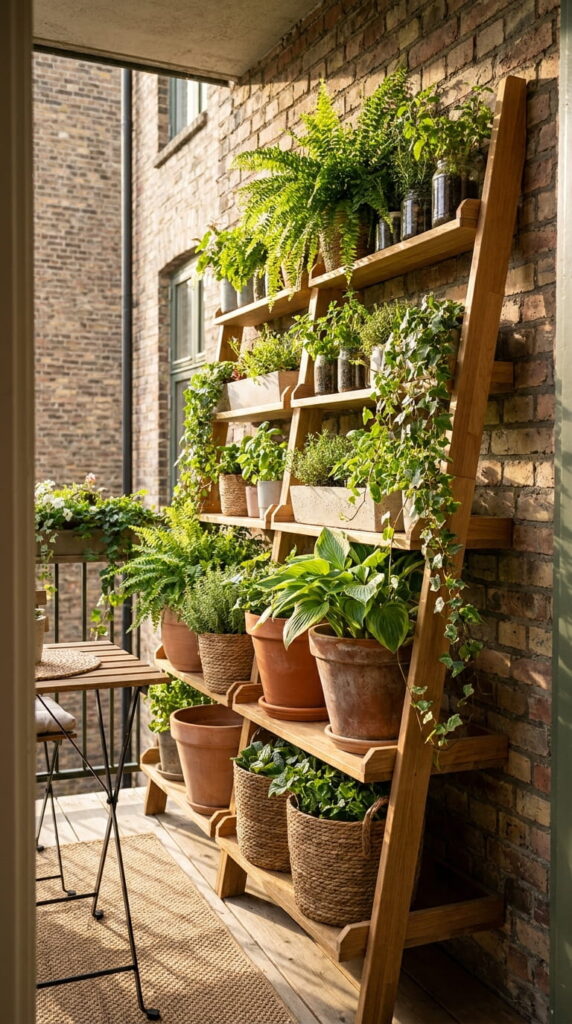
A narrow outdoor shelf can become a green divider when you fill it with carefully chosen plants. It works well beside a chair, along a side wall, or between the seating area and a neighboring view. The varied heights create a more natural screen than one solid block.
Select a weather-resistant shelf with a stable footprint. Place heavier pots on the lower levels and lighter plants higher up. Mix upright foliage with trailing varieties for a layered look. Leave some open space between pots so the arrangement stays airy. Avoid overloading the top shelf or using fragile ceramics where wind can reach them. Stability and easy watering should guide every choice.
16. Create a Soft Privacy Zone With a Shade Sail
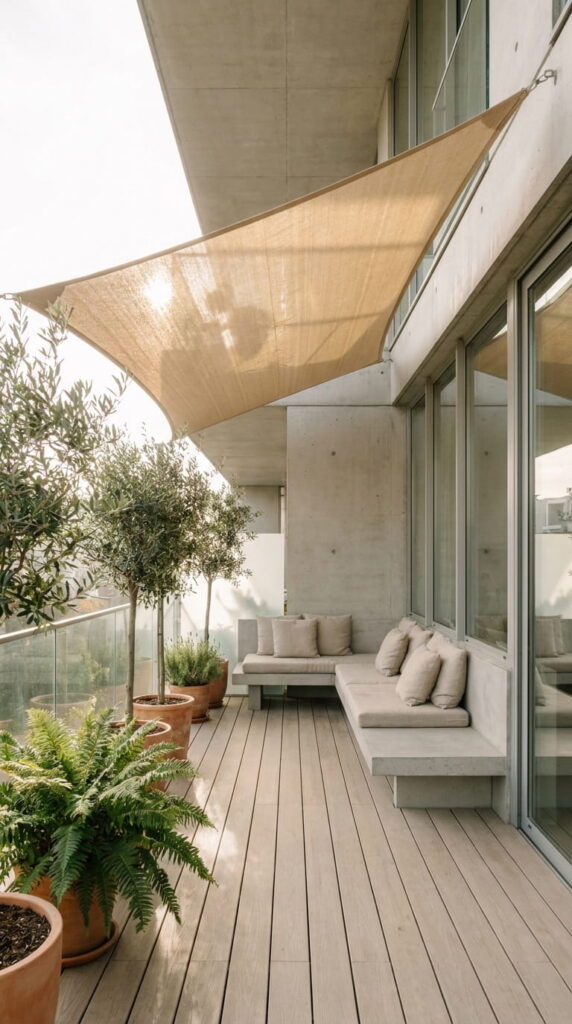
A shade sail can reduce overhead exposure while making a balcony feel more intimate. It suits sunny terraces and larger apartment balconies where the seating zone needs shade during the warmest part of the day. Choose a light neutral fabric to keep the atmosphere bright.
Install a sail only with secure, building-approved anchor points and select a size that does not pull harshly against the structure. Keep it angled so rainwater can drain properly. Avoid improvised attachments or loose fabric that catches wind. A well-fitted shade sail should feel quiet and architectural. Pair it with minimal furniture and a few plants so the layout remains open.
17. Blur the View With Layered Plants and One Simple Screen
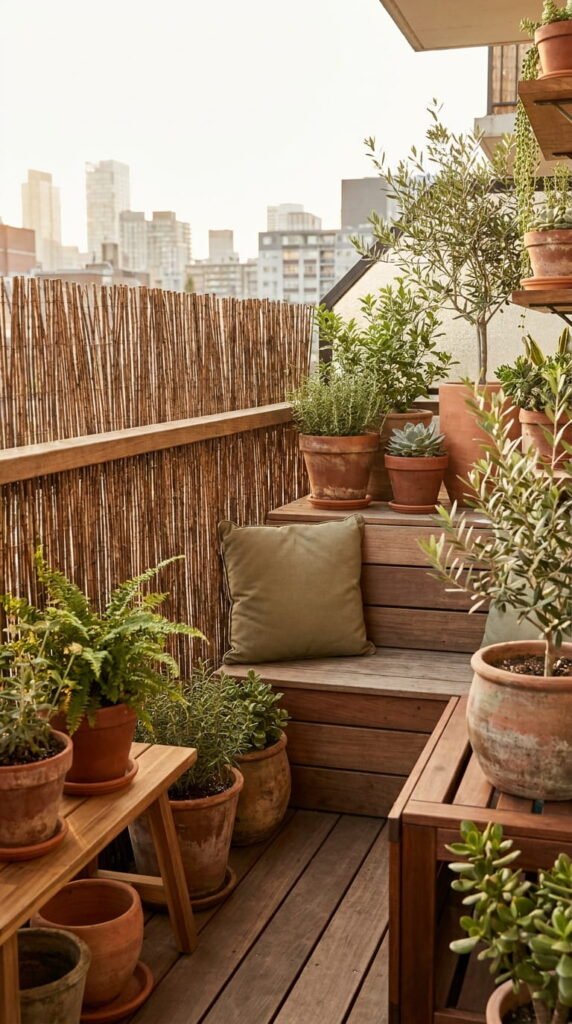
The most natural-looking balcony privacy ideas for apartments often combine two quiet layers rather than one heavy barrier. Start with a simple reed, bamboo, or slatted screen at railing height. Then add two or three plants in different heights to soften the outline and create depth.
Use this approach on balconies that need privacy but still receive valuable daylight. Repeat materials and colors so the design feels cohesive: clay pots, leafy greens, warm wood, and one muted textile are enough. Avoid chasing complete coverage. A balcony often feels more comfortable when the view is filtered rather than fully blocked. Leave small openings for light, breeze, and a sense of connection to the outdoors.
More Ideas for a Cozy Apartment Balcony
Privacy works best when the rest of the balcony also feels comfortable and usable. For seating, lighting, rug, planter, and storage inspiration, read 15 Apartment Balcony Decor Ideas for a Cozy Space. You can also browse the Outdoor Decor category for more small-space outdoor styling ideas.
FAQs: Balcony Privacy Ideas for Apartments
How can I make my apartment balcony private without drilling?
Use freestanding wood slat panels, folding screens, tall planters, railing screens secured with approved ties, or vertical plant stands. Choose lightweight pieces with stable bases. Always check your lease and building rules before attaching anything to a railing or exterior surface.
What is the best privacy screen for a windy apartment balcony?
A low, securely attached screen usually performs better than a tall, loose panel. Slatted screens allow air to pass through, which can reduce pressure from wind. Check building rules, use outdoor-rated hardware, and avoid lightweight folding dividers in exposed areas.
How can I add privacy to a balcony without blocking sunlight?
Use open wood slats, light curtains, frosted film on the lower part of a glass railing, or a trellis with spaced greenery. These options blur sightlines while allowing daylight and airflow to remain part of the space.
Which plants work best for balcony privacy?
Choose plants based on your climate, sunlight, and balcony exposure. Upright grasses, compact shrubs, climbing vines, and leafy container plants can all work. Start with a few healthy plants in stable pots rather than buying too many varieties at once.
Can renters install balcony privacy screens?
Many renters can use temporary privacy solutions, but building rules vary. Ask management before installing screens, film, curtains, or trellises. Keep drainage, railings, fire access, and walkways clear. Choose removable options and secure every item against wind.
A Balcony Should Feel Like a Pause in the Day
A private balcony does not need to feel hidden away from the world. It only needs enough shelter to help you exhale. Start with the view that bothers you most. Add one thoughtful screen, a few plants, and a comfortable place to sit. Then stop and notice how the space feels.
The most welcoming balconies are not crowded with every trend. They carry a sense of care. Warm neutrals, natural materials, filtered light, and a little greenery can turn an exposed apartment balcony into a quiet extension of home. Trust your instincts, respect the limits of the space, and choose details that support the way you want to live.